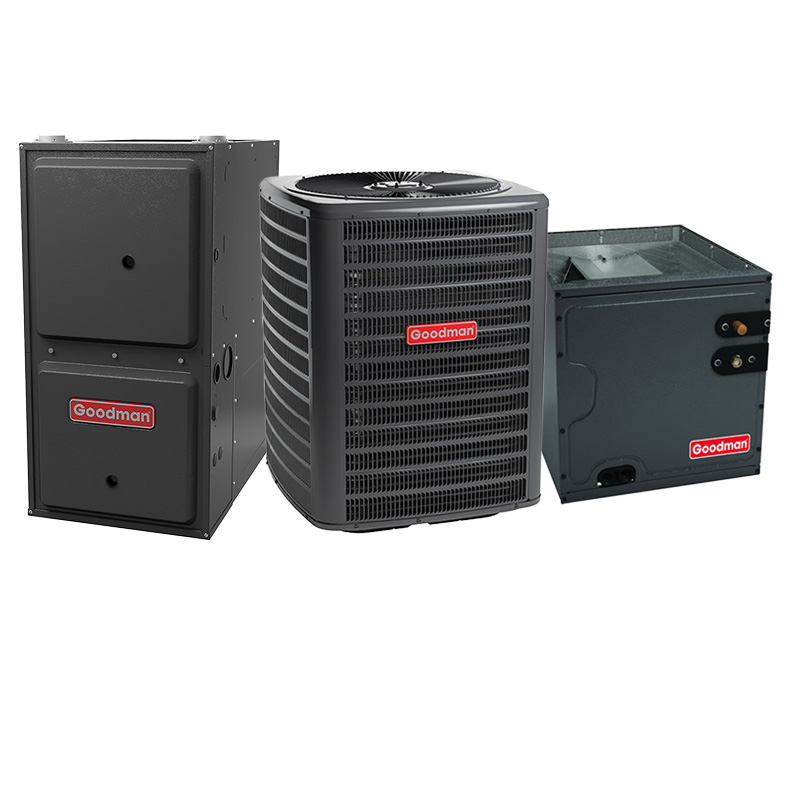
Goodman 1.5 Ton 14 SEER2 40000 BTU 96% AFUE Multi-Speed ECM Gas Furnace System – Downflow | R32
View on AC Direct see your lowest price →Check current price on AC Direct →
Key features
- 1.5-ton cooling capacity with 14 SEER2 efficiency rating, meeting current federal minimums for most northern regions
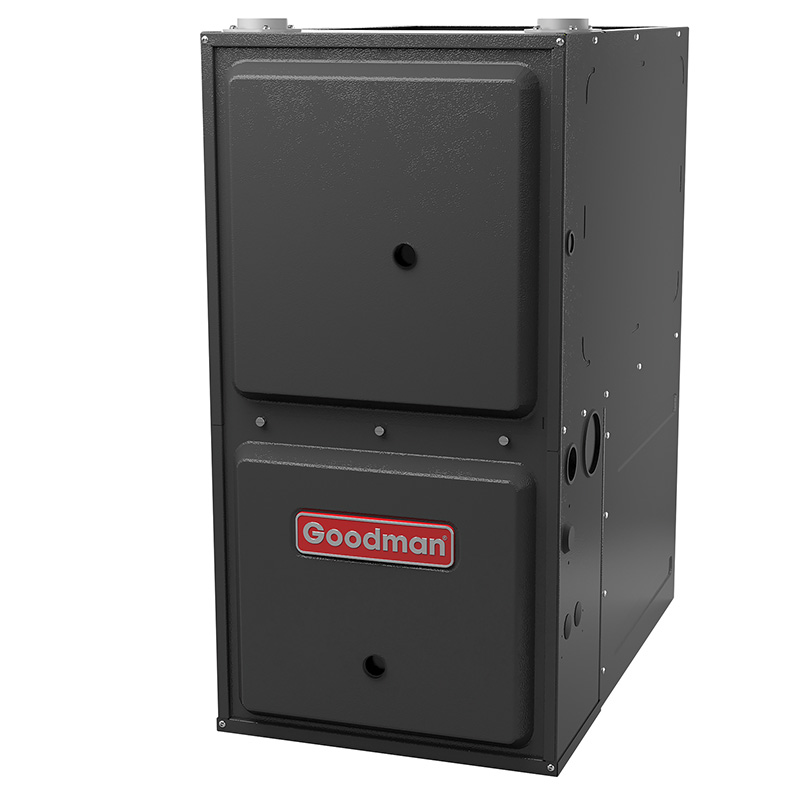
- 40,000 BTU, 96% AFUE two-stage or multi-speed gas furnace for reduced heating fuel waste
- Multi-speed ECM blower motor lowers electricity use and improves humidity and comfort control versus PSC motors
- Downflow configuration designed for installations where supply air exits at the bottom, such as over a crawlspace or finished basement
- R-32 refrigerant, a lower global warming potential alternative to R-410A with improving technician availability
- Factory-matched system from a single manufacturer, simplifying warranty claims and parts sourcing
About this system
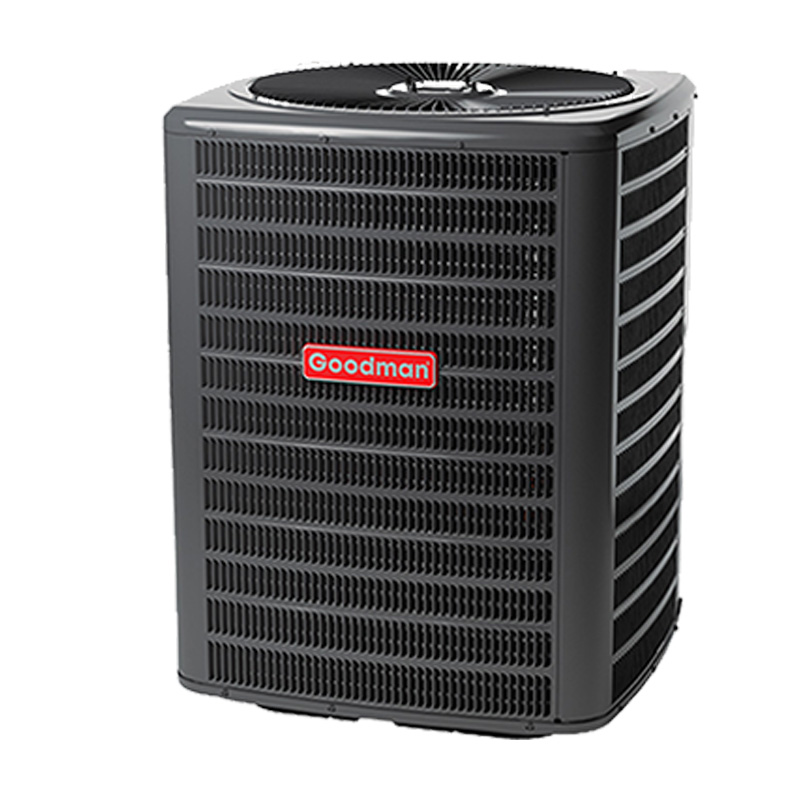
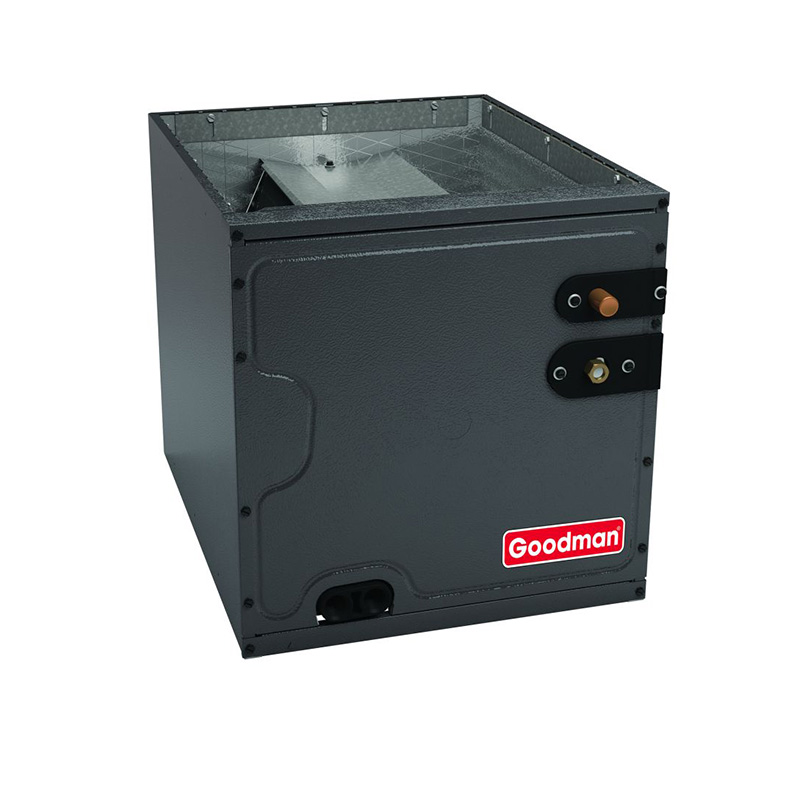
The Goodman 1.5-ton 14 SEER2 downflow system pairs a compact cooling section with a 40,000 BTU, 96% AFUE multi-speed ECM gas furnace, making it a practical choice for smaller homes, conditioned basements, or additions where the air handler sits above the living space and blows downward. At 1.5 tons, this unit is sized for spaces roughly in the 500 to 700 square foot range, though a proper Manual J load calculation should always confirm that before purchase. The R-32 refrigerant charge is a forward-looking choice: R-32 has a lower global warming potential than the R-410A it replaces and is becoming the new industry baseline, so long-term refrigerant availability looks solid.
The 96% AFUE rating means 96 cents of every dollar spent on gas becomes usable heat, which sits at the upper tier of gas furnace efficiency and can meaningfully reduce heating bills in cold climates compared to an 80% unit. The multi-speed ECM blower motor adjusts airflow more precisely than a standard PSC motor, improving humidity control, reducing temperature swings, and lowering blower electricity draw. The 14 SEER2 cooling efficiency meets the current federal minimum for most northern U.S. regions, so this is a code-compliant baseline system rather than a high-efficiency outlier. Buyers who prioritize upfront affordability over long-term energy savings will find this combination a reasonable fit, provided installation is handled carefully by a licensed technician.
This Goodman bundle delivers 96% AFUE heating efficiency and a code-compliant 14 SEER2 cooling package at a price point that undercuts Carrier, Trane, and Lennox by a meaningful margin. The trade-off is a reliability track record that sits a step below premium brands, with documented weak points in capacitors, evaporator coils, and compressor longevity. For buyers who want an honest value play and accept that some maintenance expenses may arrive earlier than with premium equipment, this system is a reasonable choice in the right hands.
Overall score is the average of the five ratings above.
What we like
- 96% AFUE furnace is in the top efficiency tier and reduces heating costs compared to standard 80% units
- Multi-speed ECM blower motor cuts fan electricity use and provides more even temperature and humidity management
- R-32 refrigerant is a future-ready, lower-impact choice as the industry moves away from R-410A
- Priced roughly 15 to 25 percent below comparable Trane, Lennox, and Carrier systems, lowering the upfront investment
- Downflow configuration fills a specific niche that not all brands offer at this efficiency and price tier
Trade-offs
- Dual-run capacitors are the most commonly reported failure point, typically requiring a 300 to 600 dollar service call
- Evaporator coil leaks appear in a meaningful share of owner reports, which can be an expensive mid-life repair
- Compressor lifespan averages 10 to 14 years versus the 15 to 20 years more commonly seen in premium brands
- A minority of owners report refrigerant leaks in the first year, often traced to install quality rather than the unit itself, underscoring the importance of choosing an experienced installer
What homeowners and pros say about Goodman
Homeowners who post about Goodman equipment online tend to split into two camps, and both are instructive. On ConsumerAffairs, where the brand scores around 2.5 out of 5, the recurring frustration is repair bills that start climbing after year 7, with dual-run capacitor failures and evaporator coil leaks cited most often. Those are real failure modes backed by enough owner reports to take seriously. On Google dealer reviews, where Goodman-installed systems score closer to 3.8 out of 5 across several hundred reviews per location, affordability is the most common reason for praise, and satisfied owners frequently credit a good local installer as the reason their system runs well. The pattern that emerges is consistent: Goodman equipment performs closer to its potential when the installation is clean, refrigerant charge is accurate, and the system is commissioned properly.
HVAC technicians who comment publicly on Goodman tend to be blunt about the same points. Capacitors are viewed as a predictable maintenance item rather than a surprise, and most techs treat them as a near-certain replacement by year 6 to 8 on any Goodman unit. Compressor longevity averaging 10 to 14 years versus the 15 to 20 years more common in Trane or Carrier equipment is another trade-off pros acknowledge openly, not as a condemnation but as a realistic expectation priced into the lower upfront cost. For this specific downflow 96% AFUE system, the multi-speed ECM blower is a genuine step up from the brand’s entry-level blowers, and technicians generally view that as a positive for long-term motor reliability. The bottom line from both groups: Goodman is a workable choice if you shop installer quality as carefully as you shop price.
Sources: ConsumerAffairs Goodman owner reviews, AHRI Directory of Certified Product Performance, U.S. DOE appliance and equipment efficiency standards, Goodman product specification sheets.
What it costs to run
At 14 SEER2, cooling this 1.5-ton system for a typical 1200-hour cooling season at the U.S. average electricity rate of $0.17/kWh works out to roughly $262 per year in cooling, about $12 less per year than a minimum-efficiency 13.4 SEER2 unit of the same size. Your real cost depends on your climate and local rate.
Method: (18,000 BTU/hr ÷ 14 SEER2) × 1200 hours ÷ 1000 × $0.17/kWh. Rate source: U.S. EIA average; cooling hours: moderate-climate estimate.
How it compares
| Brand | Comparable model | SEER2 | Stage | Price position |
|---|---|---|---|---|
| Goodman | 1.5 Ton 14 SEER2 / 96% AFUE Downflow ECM Bundle | 14 | Multi-speed | Value pick |
| Carrier | Comfort Series (24ACC / 58TP) | 14-15 | Single-stage | Typically 15 to 25 percent more than this Goodman |
| Trane | XR14 / S9X1 Series | 14-15 | Single-stage | Typically 15 to 25 percent more than this Goodman |
| Lennox | Merit Series (ML14 / MPB) | 14-15 | Single-stage | Typically 15 to 25 percent more than this Goodman |
Competitor rows are comparable single-stage units at similar efficiency; price is relative position, not a quote.
Questions about this system
Is a downflow configuration right for my home, and can I convert this unit to upflow or horizontal?
Downflow means the furnace pulls return air from the top and pushes conditioned air out the bottom, which suits installations over a crawlspace, slab, or finished basement. This unit is specifically rated for downflow; using it in an upflow or horizontal application would require a different model. Verify your duct layout with your installer before ordering.
What does the multi-speed ECM blower actually do differently from a standard blower, and is it worth it?
An ECM motor runs at multiple speed steps to match airflow to the actual heating or cooling load, rather than simply blasting at full speed. This reduces electricity consumption for the blower, lowers noise at partial loads, and improves humidity control in cooling mode. For most homeowners, the comfort improvement is noticeable and the energy savings are real, though modest.
R-32 refrigerant is newer to residential systems. Will local technicians be able to service it?
R-32 has been standard in mini-split systems for years and is now rolling into central systems as R-410A is phased out, so technician familiarity is growing steadily. Confirm your local HVAC service companies carry R-32 and have technicians trained on it before installation, particularly in rural areas where adoption may lag slightly behind urban markets.
Goodman's ConsumerAffairs score is around 2.5 out of 5. Should I be worried about reliability?
ConsumerAffairs skews toward owners who had problems, so the score overstates failure rates relative to the full owner population. That said, documented issues like capacitor failures, evaporator coil leaks, and compressor lifespans averaging 10 to 14 years are real trade-offs versus premium brands. Budgeting for a service call around years 5 to 8 is a realistic expectation with Goodman equipment.
Does Goodman require professional registration to activate the full warranty on this system?
Yes, Goodman's longer parts warranty coverage typically requires the system to be registered within a specific window after installation by a licensed HVAC contractor. Failing to register usually drops coverage to a shorter base period. Confirm the registration deadline and process with your installer on the day the system is commissioned.
Specifications
| Cooling capacity | 1.5 Ton |
| Efficiency | 14 SEER2 |
| Furnace output | 40000 BTU |
| Furnace efficiency | 96% AFUE |
| Configuration | Downflow |
| Refrigerant | R-32 |