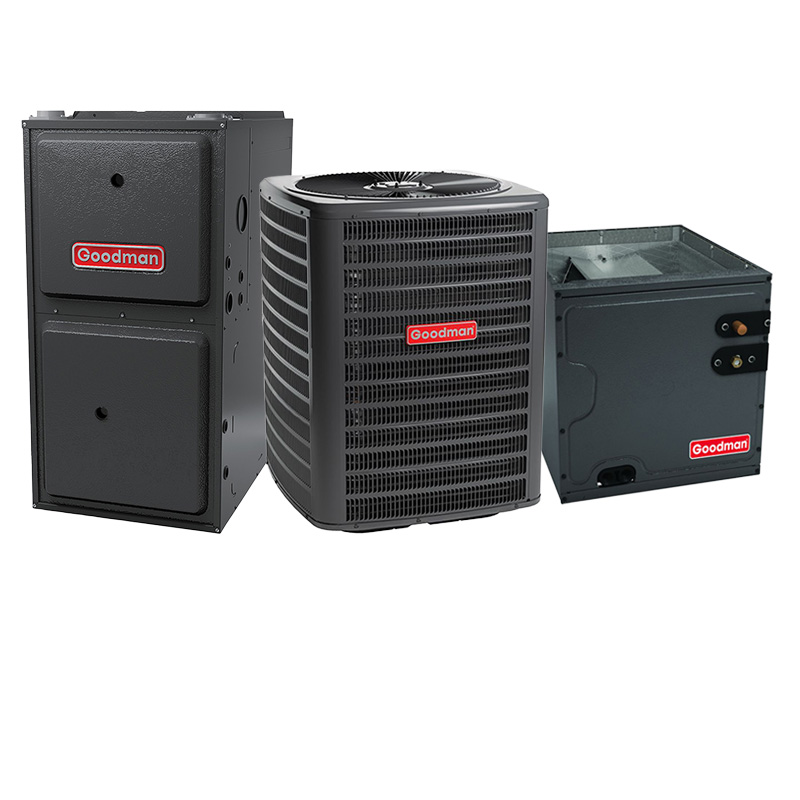
Goodman 1.5 Ton 14 SEER2 60000 BTU 96% AFUE Multi-Speed ECM Gas Furnace System – Upflow | R32
View on AC Direct see your lowest price →Check current price on AC Direct →
Key features
- 96% AFUE gas furnace with multi-speed ECM blower for lower operating costs
- 1.5-ton cooling capacity suited to spaces roughly 600-900 sq ft
- 14 SEER2 seasonal efficiency meets current federal northern-region minimums
- R-32 refrigerant with lower global warming potential than R-410A
- Upflow configuration for basements and utility closets with overhead ductwork
- Goodman 10-year parts limited warranty when registered within 60 days of install
About this system
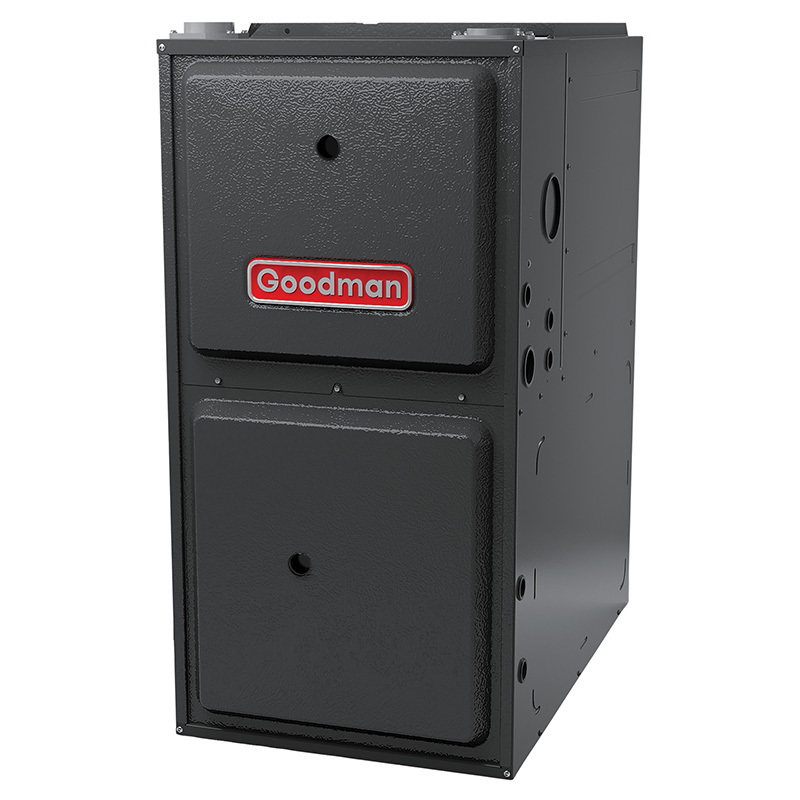
The Goodman 1.5-ton, 14 SEER2, 96% AFUE upflow system pairs a modest-sized air conditioner with a genuinely high-efficiency furnace, making it a reasonable fit for smaller homes, conditioned basements, or additions in the 600-to-900-square-foot range where whole-home comfort is needed without oversizing the equipment. The 60,000 BTU furnace at 96% AFUE sits in the top tier of gas efficiency, meaning very little heat escapes through the flue and monthly gas bills reflect that. The multi-speed ECM blower motor is a meaningful upgrade over single-speed alternatives: it ramps airflow gradually, cuts fan energy use compared to a PSC motor, and tends to deliver more even temperatures throughout a space.
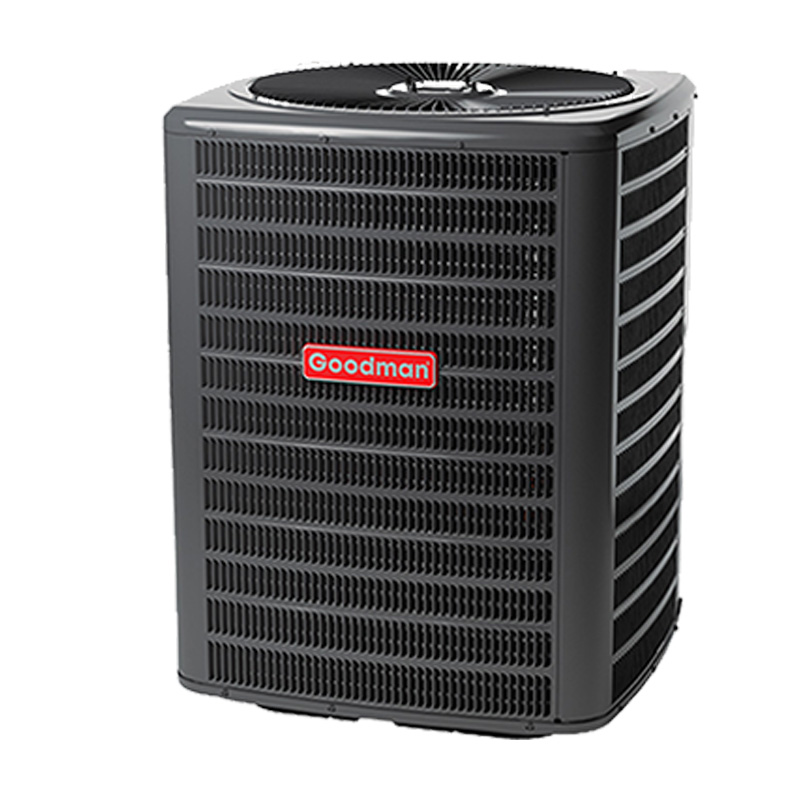
On the cooling side, 14 SEER2 meets the current federal minimum for northern U.S. regions and falls just below the minimum for many southern states, so confirm your local requirement before purchasing. R-32 refrigerant is a forward-looking choice: it carries a lower global warming potential than the R-410A it replaces and is increasingly supported by HVAC technicians. The upflow configuration means the unit discharges conditioned air upward through ductwork above the unit, which suits basements and utility closets where the duct system runs through the floors and ceiling above. This is not a universal fit for every home layout, so verify your existing duct orientation before ordering.
This system delivers a genuinely efficient furnace and a competent entry-level air conditioner at a price point that undercuts comparable Carrier, Trane, and Lennox equipment by 15 to 25 percent. The trade-off is a brand track record that shows real reliability concerns after year seven and component failure modes that owners should budget for. For budget-conscious buyers with a skilled installer and realistic expectations, it earns its place; for those prioritizing long-term peace of mind over upfront savings, premium alternatives are worth comparing.
Overall score is the average of the five ratings above.
What we like
- 96% AFUE furnace efficiency is genuinely high-tier and reduces gas costs meaningfully
- ECM multi-speed blower improves comfort and lowers fan electricity use versus basic PSC motors
- R-32 refrigerant is more environmentally responsible and increasingly well-supported in the field
- Price point is typically 15 to 25 percent below Carrier, Trane, and Lennox equivalents
- 10-year registered parts warranty is competitive for a value-tier brand
Trade-offs
- Dual-run capacitors are the most commonly reported failure, usually appearing after a few years and costing $300 to $600 to repair
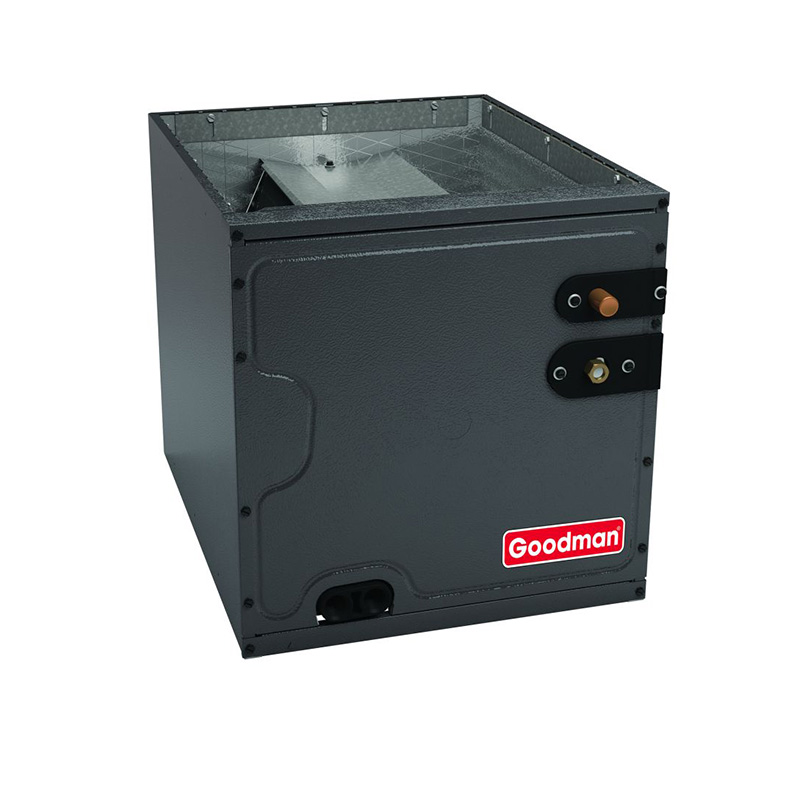
- Evaporator coil leaks appear in a meaningful share of owner reviews and can be a costly mid-life repair
- Compressor lifespan averages 10 to 14 years versus 15 to 20 for premium brands, meaning earlier replacement risk
- A minority of owners report refrigerant leaks within the first year, most often tied to install or factory charge issues rather than a design defect
What homeowners and pros say about Goodman
Homeowners who choose Goodman most often point to the price as the deciding factor, and that comes through clearly in Google dealer reviews, where the brand averages around 3.8 out of 5 stars across locations and affordability is the most frequently praised attribute. The picture is more complicated on ConsumerAffairs, where Goodman sits at roughly 2.5 out of 5, a score that reflects the complaint-heavy nature of that channel but also highlights a real pattern: repair costs climbing after approximately year seven, which aligns with the documented compressor lifespan of 10 to 14 years, notably shorter than the 15 to 20 years more commonly associated with Carrier, Trane, and Lennox equipment.
HVAC technicians tend to have a measured view of Goodman. Most will install it without hesitation, and many note that a properly installed and commissioned Goodman system performs reliably through its warranty period. The caution they consistently raise centers on the specific failure modes that show up in the field: dual-run capacitors failing and needing replacement in the $300 to $600 range, evaporator coil leaks that can be expensive to address mid-life, and a minority of first-year refrigerant leaks that almost always trace back to installation quality rather than the equipment leaving the factory. For this 1.5-ton upflow system, those same risks apply, and the advice from pros is consistent: spend what you save on upfront cost on a thorough install from a technician with real experience, and budget for at least one capacitor replacement before the decade mark.
Sources: ConsumerAffairs Goodman owner reviews, AHRI Directory of Certified Product Performance, U.S. DOE appliance and equipment efficiency standards, Goodman product specification sheets.
What it costs to run
At 14 SEER2, cooling this 1.5-ton system for a typical 1200-hour cooling season at the U.S. average electricity rate of $0.17/kWh works out to roughly $262 per year in cooling, about $12 less per year than a minimum-efficiency 13.4 SEER2 unit of the same size. Your real cost depends on your climate and local rate.
Method: (18,000 BTU/hr ÷ 14 SEER2) × 1200 hours ÷ 1000 × $0.17/kWh. Rate source: U.S. EIA average; cooling hours: moderate-climate estimate.
How it compares
| Brand | Comparable model | SEER2 | Stage | Price position |
|---|---|---|---|---|
| Goodman | GSXH5-18/GCVC96-60 Series (this system) | 14 | Single-stage | Value pick |
| Carrier | Comfort 24ACC4 / 58TP0 Series | 14-15 | Single-stage | Typically 15 to 25 percent more than this Goodman system |
| Trane | XR14c / S9V2 Series | 14-15 | Single-stage | Typically 15 to 25 percent more than this Goodman system |
| Lennox | Merit ML14XC1 / ML196V Series | 14-15 | Single-stage | Typically 15 to 25 percent more than this Goodman system |
Competitor rows are comparable single-stage units at similar efficiency; price is relative position, not a quote.
Questions about this system
Is 14 SEER2 legal to install in my state?
14 SEER2 meets the federal minimum for northern U.S. climate regions as of January 2023 but falls below the 15 SEER2 minimum required for new installations in many southern states. Check your state or local jurisdiction's current minimum efficiency requirement before purchasing, and confirm with your installer.
What does the upflow configuration mean, and will it work with my existing ductwork?
Upflow means the air handler draws return air from the bottom of the unit and discharges conditioned supply air from the top. This works well when your ductwork is located above the unit, as in a basement installation with ducts running through the floor joists above. If your system is in an attic or crawlspace with different duct routing, you may need a downflow or horizontal configuration instead.
What are the most common repairs on Goodman systems and what do they cost?
Dual-run capacitors are the most frequently reported failure point and are generally a straightforward, low-cost repair in the $300 to $600 range. Evaporator coil leaks and refrigerant leaks are also documented in owner reviews and can run considerably higher. Setting aside a maintenance fund after year five is a practical step given Goodman's track record.
Does R-32 refrigerant require any special handling or affect future service costs?
R-32 is mildly flammable and requires EPA Section 608 certification for handling, which any licensed HVAC technician already holds. It is becoming more common in residential systems and is well-supported in the field. In most markets it is not meaningfully more expensive to service than R-410A, though very rural areas may have fewer technicians familiar with it yet.
How important is the installer, and how do I find a good one for a Goodman system?
Installer quality is widely cited by HVAC technicians as the single biggest factor in how long a Goodman system lasts and how reliably it performs. First-year refrigerant leaks, for example, are most often tied to install or charge issues rather than the equipment itself. Look for a licensed contractor with documented Goodman or Daikin (Goodman's parent company) experience, pull the required permits, and verify the technician performs a full startup checklist including refrigerant charge verification.
Specifications
| Cooling capacity | 1.5 Ton |
| Efficiency | 14 SEER2 |
| Furnace output | 60000 BTU |
| Furnace efficiency | 96% AFUE |
| Configuration | Upflow |
| Refrigerant | R-32 |