Goodman 1.5 Ton 14 SEER2 60000 BTU 96% AFUE Two Stage Multi-Speed ECM Gas Furnace System – Horizontal | R32
View on AC Direct see your lowest price →Check current price on AC Direct →
Key features
- 96% AFUE two-stage gas furnace for high heating efficiency and reduced temperature swings
- 1.5-ton / 60,000 BTU output sized for smaller homes and single-zone applications
- 14 SEER2 cooling efficiency meets current federal minimum standards for most U.S. regions
- Multi-speed ECM blower motor for quieter operation and better humidity management
- R-32 refrigerant with lower global warming potential than legacy R-410A systems
- Horizontal cabinet orientation engineered for attic and crawlspace installations
About this system
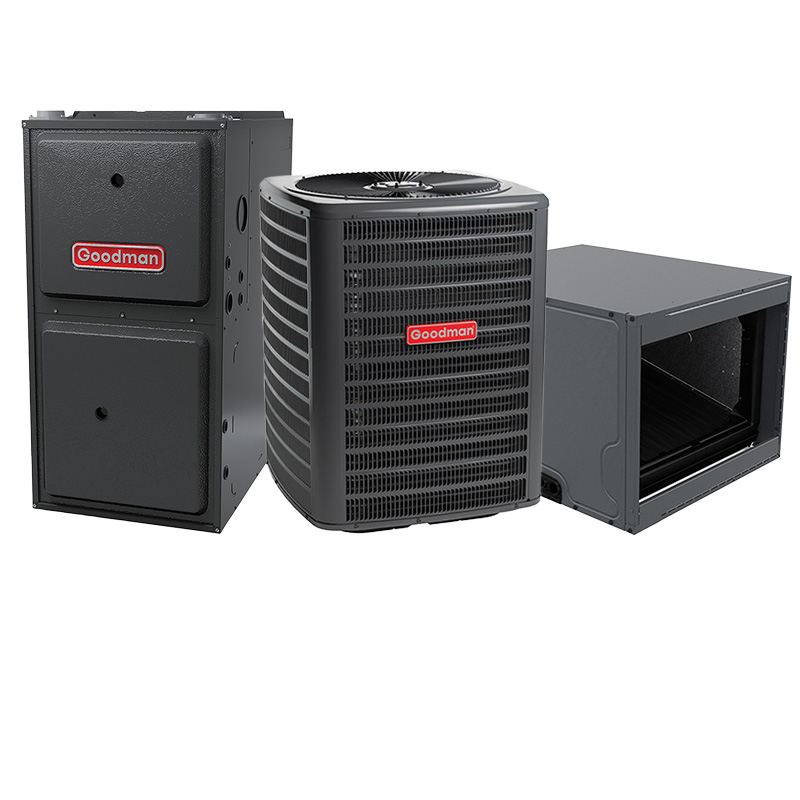
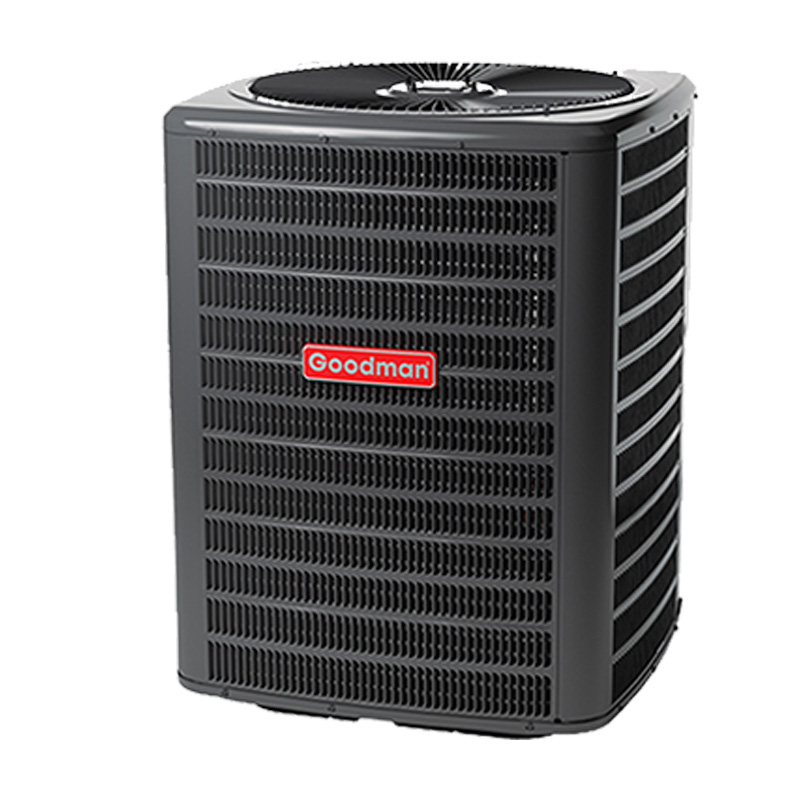
The Goodman 1.5 Ton 14 SEER2 Horizontal system pairs a 60,000 BTU, 96% AFUE two-stage gas furnace with a 14 SEER2 air conditioner designed for horizontal attic or crawlspace installations. The 1.5-ton cooling capacity is well-suited to smaller homes, conditioned zones, or additions in the 500 to 800 square foot range, depending on local climate, insulation, and ceiling height. The R-32 refrigerant charge is a forward-looking choice: R-32 has a lower global warming potential than the R-410A it replaces and is increasingly common in new residential equipment.
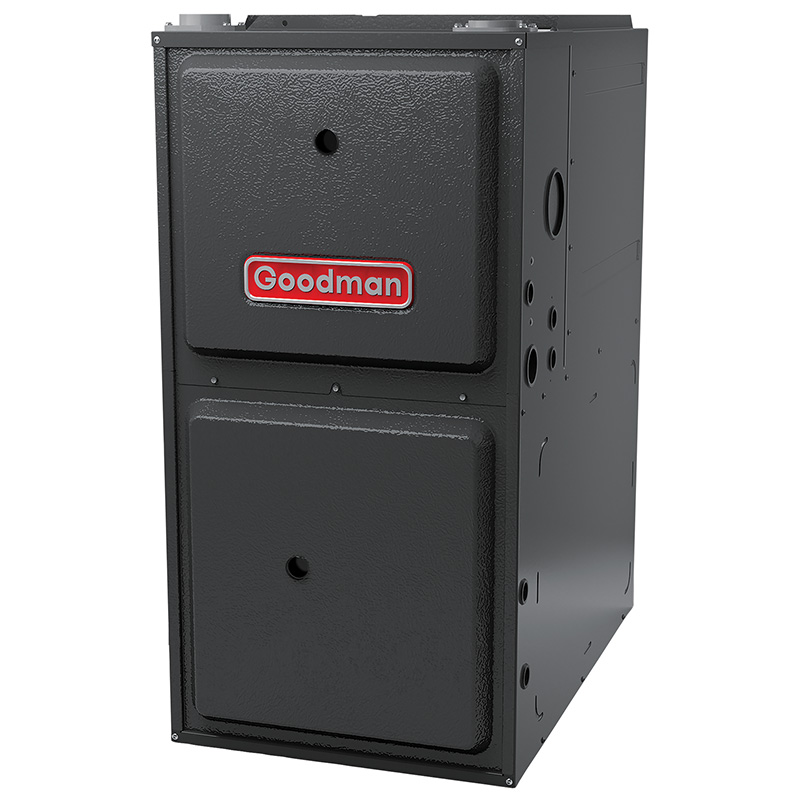
The furnace side is where this bundle earns its keep on paper. A 96% AFUE rating means only four cents of every heating dollar goes up the flue, which is solidly high efficiency. Two-stage operation lets the furnace run at a lower first-stage output on milder days, reducing temperature swings and short-cycling. The multi-speed ECM blower motor adjusts airflow incrementally, which helps with humidity control, quieter operation, and modest energy savings versus a standard PSC motor. Together these features push comfort noticeably beyond entry-level single-stage systems.
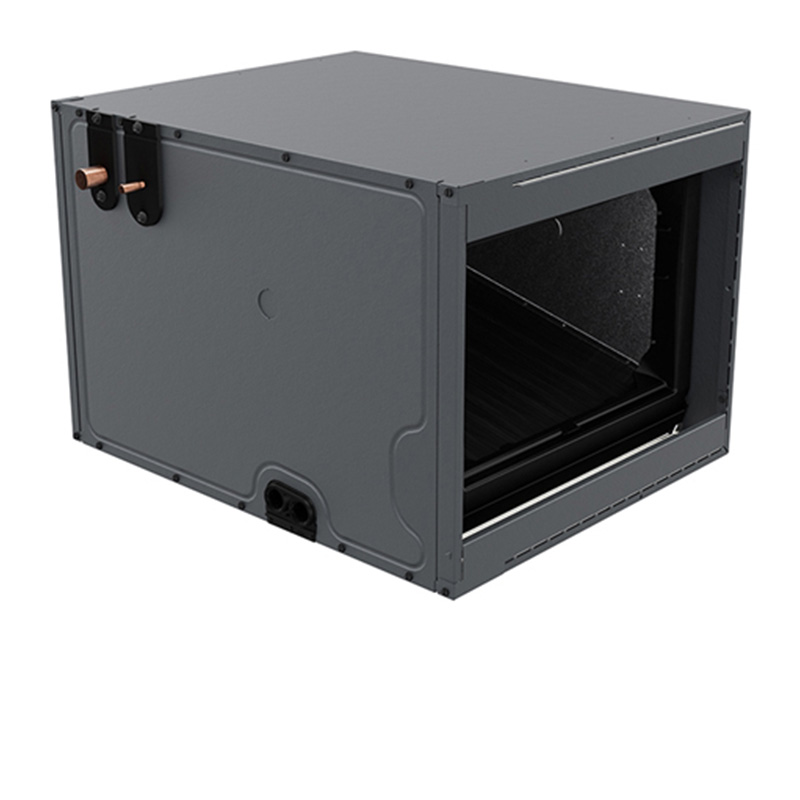
Horizontal configuration means this unit installs on its side, typically in a tight attic or crawlspace where a vertical cabinet simply will not fit. That orientation adds complexity to the installation: proper condensate drainage, refrigerant line routing, and cabinet sealing all require more care than a standard upflow install. Buyers should budget for an experienced installer, since Goodman’s own performance record is closely tied to how well the system is commissioned on day one.
This Goodman bundle offers a genuinely capable furnace spec at a price point that undercuts Carrier, Trane, and Lennox by a meaningful margin, making it a reasonable choice for budget-conscious buyers who can secure a skilled installer. The 96% AFUE two-stage furnace is the standout component, while the 14 SEER2 cooling side sits at the regulatory floor rather than anything exceptional. Long-term ownership costs hinge heavily on installation quality and a willingness to budget for component repairs, particularly after the seven-year mark.
Overall score is the average of the five ratings above.
What we like
- 96% AFUE furnace rating delivers high heating efficiency and lower monthly gas bills versus 80% AFUE alternatives
- Two-stage furnace operation reduces short-cycling, improves comfort, and cuts temperature swings on mild days
- ECM blower motor runs more quietly and uses less electricity than standard PSC motors
- R-32 refrigerant is environmentally preferable and increasingly well-supported by technicians
- Purchase price is typically 15 to 25 percent below comparable Carrier, Trane, or Lennox configurations
Trade-offs
- Dual-run capacitors are the most frequently reported failure point and while the fix is usually low cost, it is a known recurring issue
- Evaporator coil leaks appear in a meaningful share of owner feedback, potentially requiring costly repairs outside the basic warranty window
- Compressor lifespan averages 10 to 14 years versus 15 to 20 years documented for premium-brand compressors
- Horizontal installation is more complex than upflow, raising labor costs and increasing the consequences of poor commissioning
What homeowners and pros say about Goodman
Homeowners who post about Goodman equipment on review platforms tend to sort into two camps: those who got a clean install and years of trouble-free service, and those who encountered repair bills that eroded the upfront savings. On ConsumerAffairs, Goodman scores roughly 2.5 out of 5, a figure shaped by that platform’s complaint-heavy audience, where the recurring frustration is repair costs climbing after around year seven. Google dealer reviews land higher, around 3.8 out of 5 across multiple dealer locations, where affordability is the most consistently mentioned reason buyers chose the brand. For this specific horizontal system, installers on HVAC trade forums note that attic and crawlspace jobs require extra attention to condensate routing and cabinet sealing, and that a rushed install is where Goodman’s reputation most often takes a hit.
On the hardware side, the failure modes that show up most in owner feedback are consistent with the broader Goodman ownership experience. Dual-run capacitors are the most commonly reported repair, generally a straightforward fix in the 300 to 600 dollar range but one that some owners encounter more than once over a system’s life. Evaporator coil leaks surface in a notable share of reviews and carry higher repair costs. Compressor longevity averages 10 to 14 years in practice, a shorter window than the 15 to 20 years more commonly seen with premium-brand compressors. A small number of owners report refrigerant leaks in the first year, which HVAC technicians typically attribute to installation or initial charge issues rather than a defect in the equipment itself. For a buyer who goes in with clear eyes about these trade-offs and invests in a skilled installer, this system can deliver strong value over its useful life.
Sources: ConsumerAffairs Goodman owner reviews, AHRI Directory of Certified Product Performance, U.S. DOE appliance and equipment efficiency standards, Goodman product specification sheets.
What it costs to run
At 14 SEER2, cooling this 1.5-ton system for a typical 1200-hour cooling season at the U.S. average electricity rate of $0.17/kWh works out to roughly $262 per year in cooling, about $12 less per year than a minimum-efficiency 13.4 SEER2 unit of the same size. Your real cost depends on your climate and local rate.
Method: (18,000 BTU/hr ÷ 14 SEER2) × 1200 hours ÷ 1000 × $0.17/kWh. Rate source: U.S. EIA average; cooling hours: moderate-climate estimate.
How it compares
| Brand | Comparable model | SEER2 | Stage | Price position |
|---|---|---|---|---|
| Goodman | 1.5 Ton 14 SEER2 96% AFUE Two-Stage Horizontal R-32 | 14 | Two-stage | Value pick |
| Carrier | Performance 96 / 24ACC6 series (matched 1.5-ton system) | 14-15 | Two-stage | Typically 20 to 25 percent more than this Goodman system |
| Trane | S9V2 furnace / XR14 air conditioner (matched 1.5-ton system) | 14 | Two-stage furnace / single-stage AC | Typically 20 to 30 percent more than this Goodman system |
| Lennox | ML196 furnace / 14ACX condenser (matched 1.5-ton system) | 14 | Two-stage furnace / single-stage AC | Typically 25 to 35 percent more than this Goodman system |
Competitor rows are comparable single-stage units at similar efficiency; price is relative position, not a quote.
Questions about this system
Why is this system listed as horizontal only, and can I install it upflow or downflow instead?
Goodman engineers horizontal cabinet models specifically for attic and crawlspace applications where the unit lies on its side. The internal drain pan, coil orientation, and refrigerant circuit are designed around that position, so installing it upright is not supported and can cause condensate and performance problems. If you need upflow or downflow, you would need a different cabinet configuration.
Is R-32 refrigerant harder or more expensive to service than R-410A?
R-32 is becoming more common in residential systems, but it is mildly flammable (classified A2L), which means technicians need specific handling certification and some older recovery equipment may not be rated for it. Most established HVAC companies are already equipped, but it is worth confirming before you hire a service tech, particularly in rural areas.
What does two-stage mean in practice for a furnace this size, and does it matter on a 1.5-ton system?
Two-stage means the furnace fires at a reduced capacity (typically around 65 percent) on milder days and ramps to full output only when needed. On a small 1.5-ton system serving a tight zone, this matters because it reduces the on-off cycling that causes drafts and temperature swings, and it lets the blower run longer at lower speed for better air distribution and humidity control.
What are the most common repairs I should budget for after the warranty period?
Dual-run capacitor replacement is the most frequently reported issue on Goodman equipment and typically costs between 300 and 600 dollars including labor. Evaporator coil leaks are the next concern and are more expensive to address. Keeping a service agreement after year five is a practical way to catch capacitor and refrigerant issues before they cascade.
Does Goodman's warranty require professional installation, and what does it actually cover?
Yes, Goodman's registered limited warranty requires installation by a licensed contractor and registration within a set window after install. Coverage typically includes parts for ten years on registered systems, but labor is not covered, which means a compressor or coil replacement in year eight still carries significant out-of-pocket labor costs. Read the warranty certificate for this specific model before purchase to confirm current terms.
Specifications
| Cooling capacity | 1.5 Ton |
| Efficiency | 14 SEER2 |
| Furnace output | 60000 BTU |
| Furnace efficiency | 96% AFUE |
| Configuration | Horizontal |
| Refrigerant | R-32 |