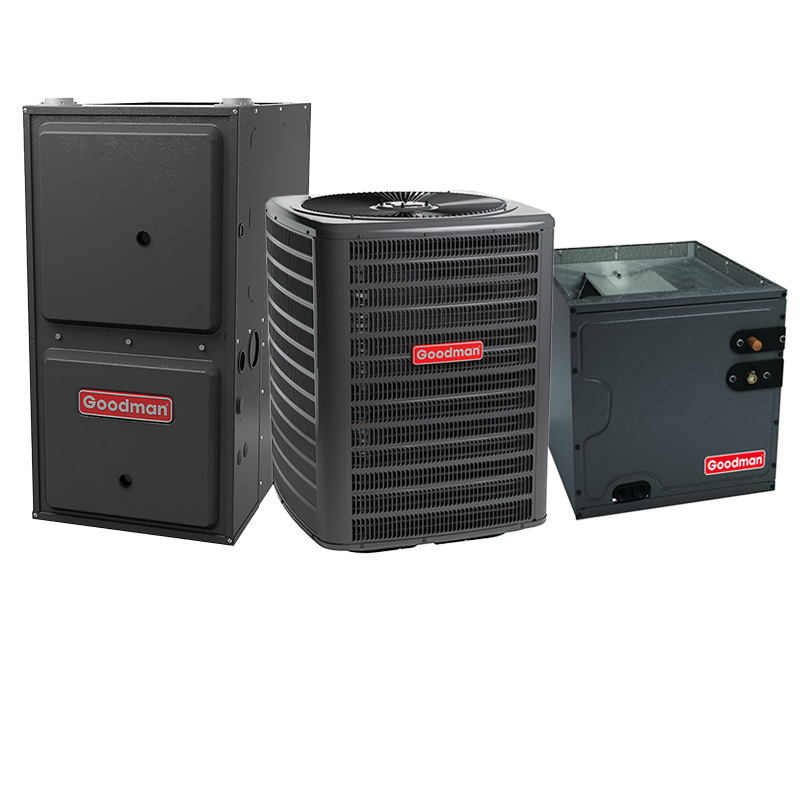
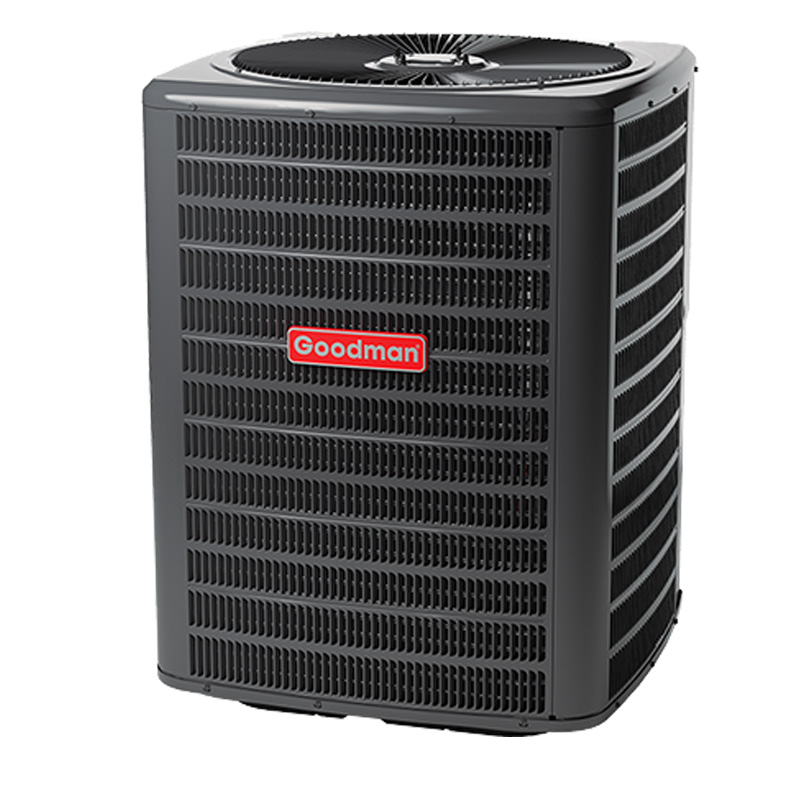
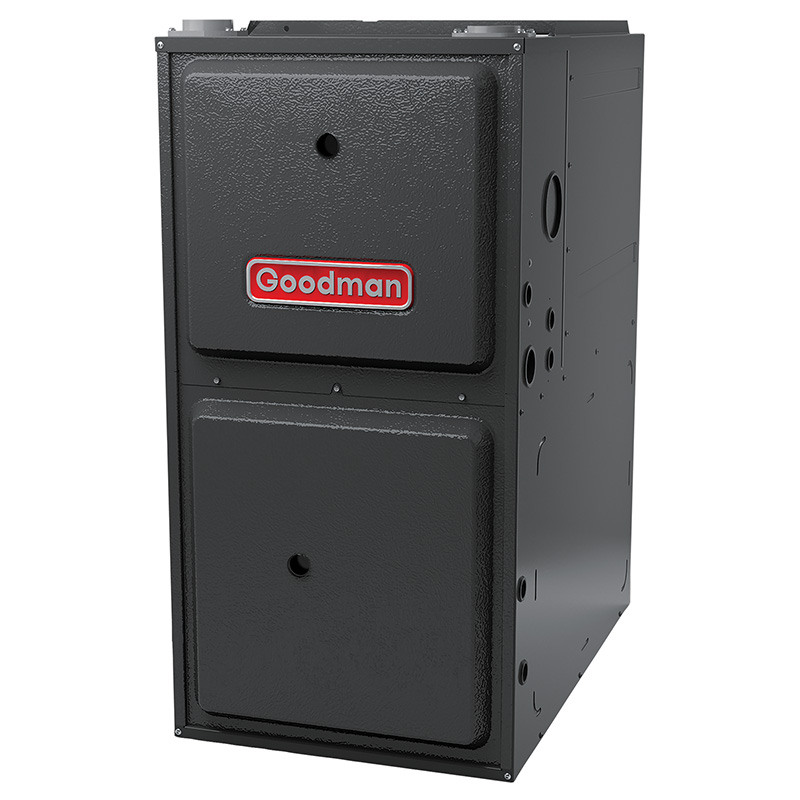
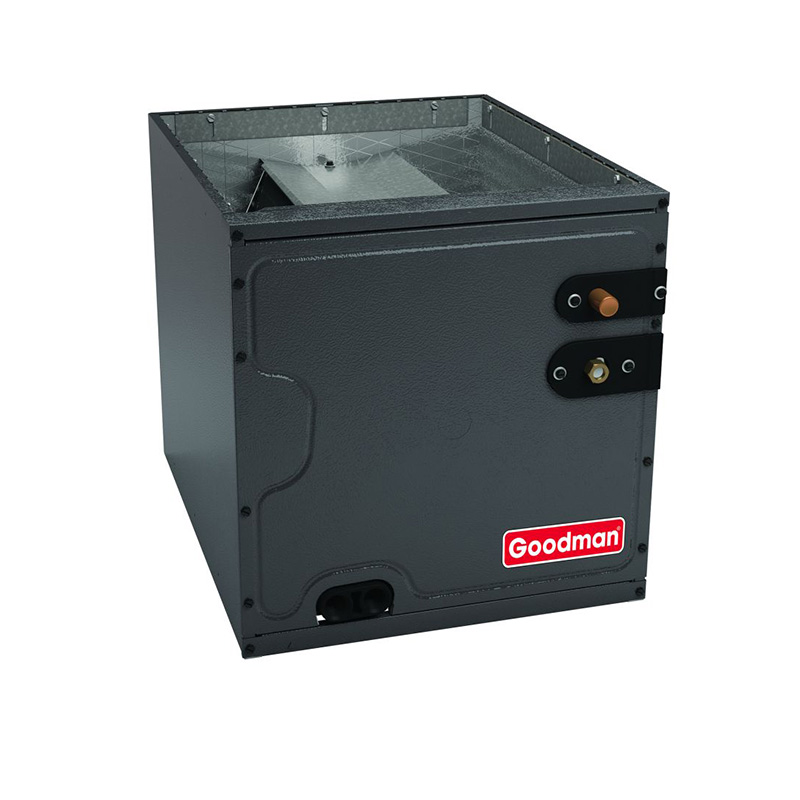
Goodman 1.5 Ton 15.2 SEER2 R32 AC System with 40,000 BTU 96% AFUE Gas Furnace – California & Colorado Ultra Low NOx, Upflow, Multi-Speed ECM
View on AC Direct see your lowest price →Check current price on AC Direct →
Key features
- 15.2 SEER2 cooling efficiency meets 2023+ federal minimum standards with moderate headroom
- 96% AFUE gas furnace extracts near-maximum heat from each unit of fuel burned
- R-32 refrigerant: lower global warming potential, California and Colorado regulatory compliant
- Ultra Low NOx burners satisfy South Coast AQMD and Colorado air quality rules
- Multi-speed ECM blower motor reduces energy use and improves dehumidification vs. PSC motors
- Upflow configuration supports basement, utility closet, and ground-level air handler installs
About this system
The Goodman 1.5-ton, 15.2 SEER2 R-32 air conditioner paired with a 40,000 BTU, 96% AFUE upflow gas furnace is a compact, high-efficiency package aimed squarely at smaller homes, conditioned spaces under roughly 600 to 900 square feet, or zone applications where oversizing would hurt humidity control and runtime efficiency. The 96% AFUE furnace sits near the top of the gas-heating efficiency tier, meaning it extracts 96 cents of heat from every dollar of gas burned, a real advantage in colder climates and in states like Colorado where heating loads are substantial. The system ships configured for upflow installation, so it works cleanly in basement or closet applications where supply air rises into the duct system above.
Two specifications here are worth understanding before you buy. First, this system uses R-32 refrigerant rather than the outgoing R-410A. R-32 has a lower global warming potential, is now accepted under California and Colorado regulatory frameworks, and tends to operate at slightly higher pressures, which means your installing technician needs to confirm that all components and line sets are rated for it. Second, the Ultra Low NOx rating satisfies the stricter nitrogen oxide emissions rules enforced in California (South Coast AQMD and SCAQMD-compliant districts) and Colorado, so if you are in either state this qualification is not optional; it is a legal requirement for new installations. The multi-speed ECM blower motor improves airflow efficiency and dehumidification compared with single-speed PSC motors, and it tends to run more quietly at lower speeds during mild weather.
This Goodman system delivers a genuinely efficient heating and cooling package at a price point that undercuts premium brands by 15 to 25 percent, and the R-32 and Ultra Low NOx credentials make it a legally valid choice in California and Colorado. The trade-off is a brand with a mixed long-term reliability record: capacitor failures and evaporator coil leaks are documented recurring issues, and compressor longevity lags behind premium competitors. For buyers who prioritize upfront value and are prepared for the possibility of maintenance costs after year seven, it competes well; for buyers who want to install and forget, the gap to Carrier or Trane is worth considering.
Overall score is the average of the five ratings above.
What we like
- 96% AFUE furnace is among the most fuel-efficient ratings available for gas heating
- Priced 15 to 25 percent below comparable Trane, Lennox, and Carrier systems
- R-32 refrigerant is compliant with current and near-term California and Colorado regulations
- Multi-speed ECM blower lowers blower energy costs and improves comfort vs. single-speed motors
- Ultra Low NOx certification removes the legal barrier to installation in regulated California air districts
Trade-offs
- Dual-run capacitors are the most frequently reported failure, typically surfacing within the first several years of use
- Evaporator coil leaks appear in a meaningful share of owner reviews, a potentially costly repair if it occurs outside the parts warranty window
- Compressor lifespan averages 10 to 14 years versus 15 to 20 years for premium-brand compressors
- Overall performance is heavily dependent on install quality; a poor installation amplifies every reliability risk the brand already carries
What homeowners and pros say about Goodman
Homeowners who follow Goodman online land in two camps, and the split is visible in the numbers. On ConsumerAffairs, Goodman scores around 2.5 out of 5, a platform where dissatisfied buyers are far more likely to post than satisfied ones, and the recurring theme in those reviews is repair costs that start climbing after roughly year seven. Google dealer reviews tell a modestly more balanced story at around 3.8 out of 5, where affordability is the most cited reason buyers chose the brand in the first place. For this 1.5-ton R-32 system, the feedback pattern would likely echo the broader brand experience: buyers who got a careful, properly charged installation and registered the warranty tend to report solid early-year performance, while those who did not are more exposed to the documented weak points.
HVAC technicians who work on Goodman equipment regularly point to three specific issues that show up more often than they would on premium brands. Dual-run capacitors are the most common service call, a relatively low-cost repair but an inconvenience nonetheless. Evaporator coil leaks appear in a meaningful share of owner reports and are a more expensive fix, particularly once the parts warranty has expired. And compressor longevity, which technicians estimate at roughly 10 to 14 years for Goodman versus 15 to 20 years for Carrier or Trane, is the longer-term consideration that experienced installers cite when advising clients on total cost of ownership. The consistent message from the trade is that install quality is the single biggest variable: a Goodman put in correctly by an experienced technician will outperform a premium brand installed carelessly every time.
Sources: ConsumerAffairs Goodman owner reviews, AHRI Directory of Certified Product Performance, U.S. DOE appliance and equipment efficiency standards, Goodman product specification sheets.
What it costs to run
At 15.2 SEER2, cooling this 1.5-ton system for a typical 1200-hour cooling season at the U.S. average electricity rate of $0.17/kWh works out to roughly $242 per year in cooling, about $32 less per year than a minimum-efficiency 13.4 SEER2 unit of the same size. Your real cost depends on your climate and local rate.
Method: (18,000 BTU/hr ÷ 15.2 SEER2) × 1200 hours ÷ 1000 × $0.17/kWh. Rate source: U.S. EIA average; cooling hours: moderate-climate estimate.
How it compares
| Brand | Comparable model | SEER2 | Stage | Price position |
|---|---|---|---|---|
| Goodman | 1.5T 15.2 SEER2 R-32 AC + 96% AFUE Furnace (this system) | 15.2 | Single-stage | Value pick |
| Carrier | Comfort Series (24ACC / 58CVA pairing) | 15.2 | Single-stage | Typically 15 to 25 percent more than this Goodman system |
| Trane | XR15 / S9X1 pairing | 15.2 | Single-stage | Typically 15 to 25 percent more than this Goodman system |
| Lennox | Merit Series (13ACX / ML196 pairing) | 15.2 | Single-stage | Typically 15 to 25 percent more than this Goodman system |
Competitor rows are comparable single-stage units at similar efficiency; price is relative position, not a quote.
Questions about this system
Is R-32 refrigerant actually approved for use in California and Colorado, and do I need a special technician to handle it?
Yes, R-32 is approved under current California Air Resources Board and Colorado regulations, and it is the reason this specific model carries the Ultra Low NOx designation for those states. R-32 operates at higher pressure than R-410A, so your technician should confirm that their equipment and any line sets are rated for R-32 before the job starts; most modern recovery and charging equipment handles it, but it is worth asking up front.
What does the Ultra Low NOx rating actually mean, and do I need it if I live in California?
Ultra Low NOx means the furnace burners emit nitrogen oxides below the threshold set by California's South Coast Air Quality Management District and similar Colorado regulations. If your home is in a regulated air district in either state, you are legally required to install a compliant unit; this furnace meets that requirement. If you are outside those regulated districts, the rating does no harm but is not strictly necessary.
How worried should I be about the dual-run capacitor failing, and what does that repair cost?
Capacitor failure is the most commonly reported issue on Goodman equipment, and it is also one of the least expensive HVAC repairs, typically running between 300 and 600 dollars including labor. It is a well-understood, routine fix for any qualified technician. Keeping a service agreement in place after the parts warranty period makes this kind of repair far less disruptive.
Is 1.5 tons enough for my space, and what happens if the system is undersized?
A 1.5-ton system is designed for roughly 600 to 900 square feet depending on insulation quality, ceiling height, window area, and local climate; your HVAC contractor should perform a Manual J load calculation to confirm sizing before purchase. An undersized system will run continuously on hot days without reaching setpoint, driving up energy bills and accelerating wear on the compressor.
What does Goodman's warranty actually cover on this system, and are there conditions I need to meet?
Goodman's standard residential warranty is 10 years on covered components including the compressor and heat exchanger when registered within 60 days of installation by a licensed contractor; failure to register typically drops coverage to 5 years. Parts are covered but labor is not, which means out-of-pocket service costs still apply if a component fails outside a service agreement. Confirm current warranty terms at the time of purchase, as program details can change.
Specifications
| Cooling capacity | 1.5 Ton |
| Efficiency | 15.2 SEER2 |
| Furnace output | 40,000 BTU |
| Furnace efficiency | 96% AFUE |
| Configuration | Upflow |
| Refrigerant | R-32 |