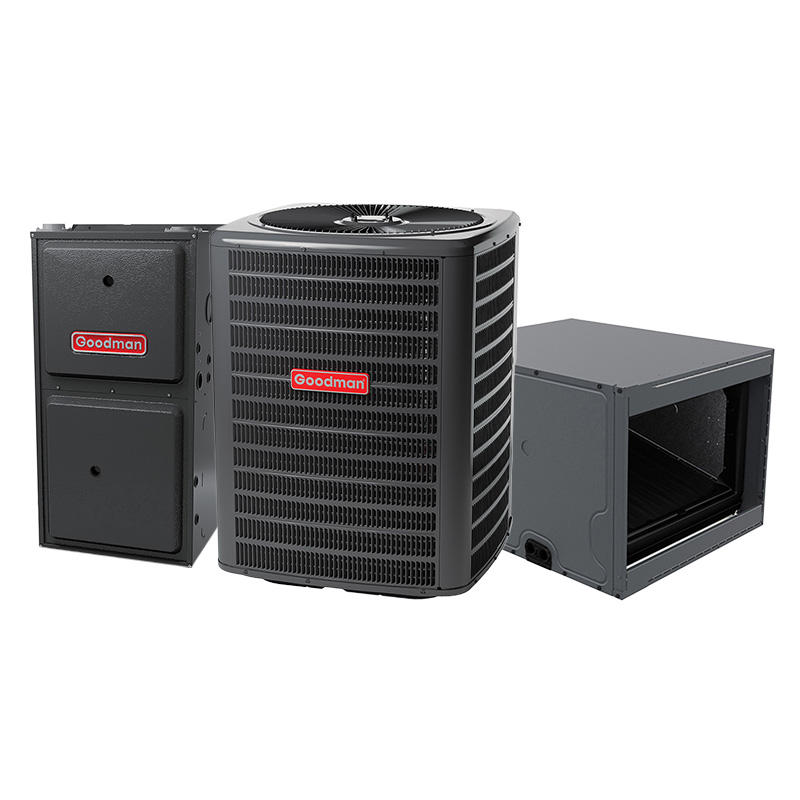
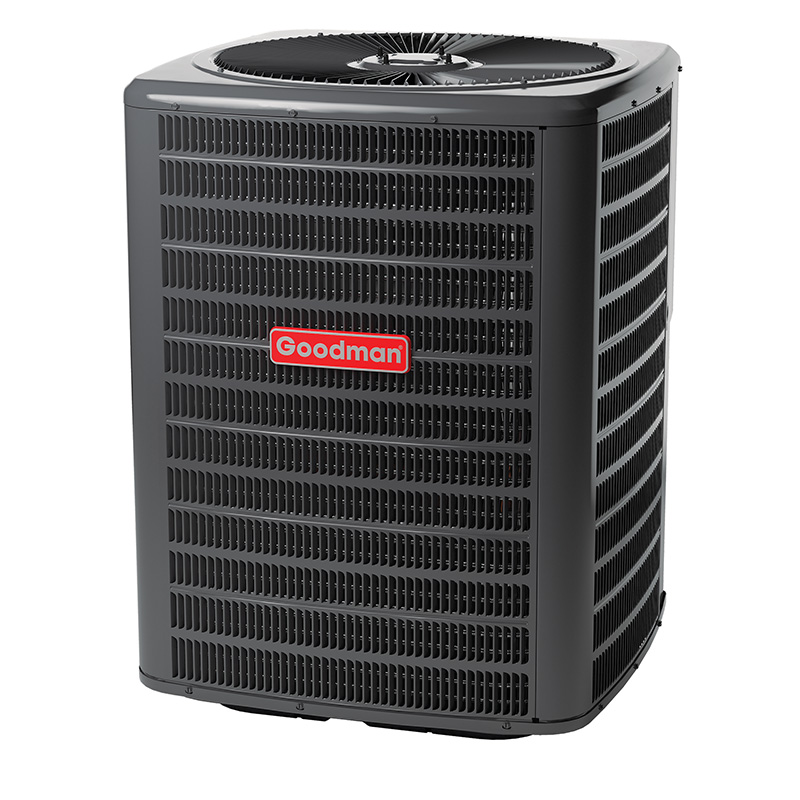
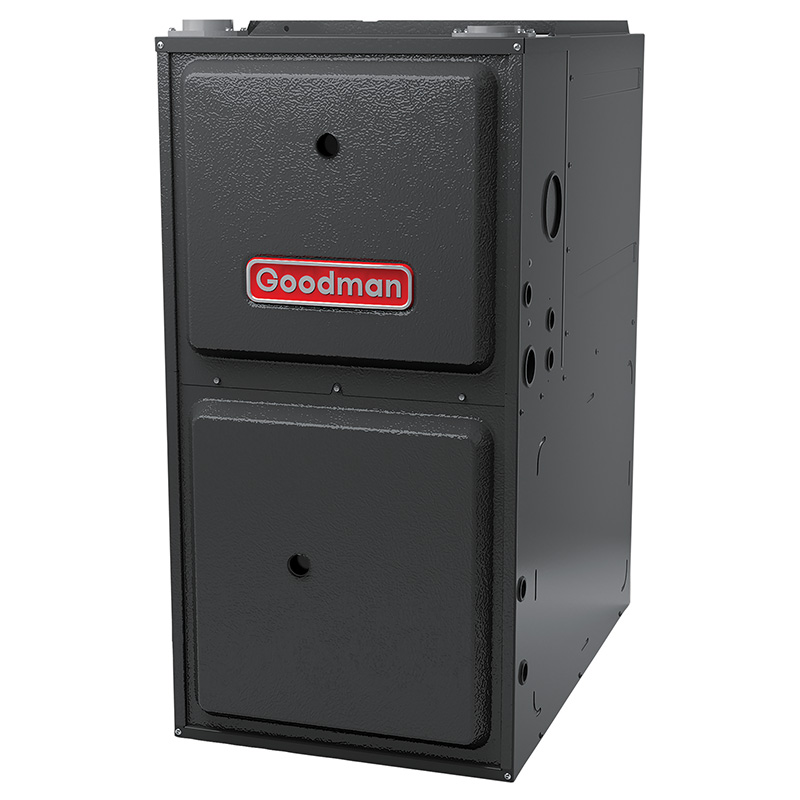
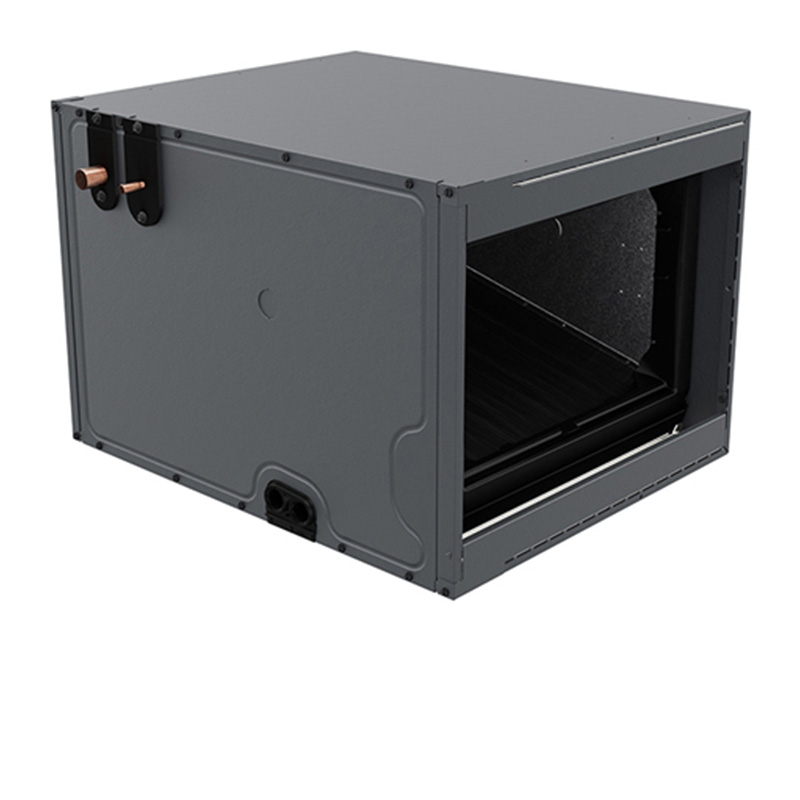
Goodman 1.5 Ton 15.2 SEER2 AC & Gas Furnace System – Modulating Variable-Speed, 60000 BTU Gas Furnace, 97% AFUE, Horizontal, R32
View on AC Direct see your lowest price →Check current price on AC Direct →
Key features
- 1.5-ton cooling capacity, 15.2 SEER2 efficiency rating
- 97% AFUE modulating gas furnace, 60,000 BTU output
- Variable-speed blower for quieter operation and better humidity control
- Horizontal configuration designed for attic and crawlspace installs
- R-32 refrigerant with lower global warming potential than R-410A
- Priced approximately 15 to 25 percent below comparable Trane, Carrier, and Lennox systems
About this system
The Goodman GLXS5BA1810D is a 1.5-ton, 15.2 SEER2 split system paired with a 60,000 BTU modulating, variable-speed gas furnace rated at 97% AFUE. It is sized for smaller homes, condos, additions, or single-zone applications in the 600 to 900 square foot range, depending on local climate and insulation. The horizontal configuration makes it a deliberate choice for attic or crawlspace installs where upflow or downflow units simply will not fit, so if your air handler sits on its side, this system is built with that in mind from the start.
The 97% AFUE furnace is near the top of what residential gas equipment can achieve, meaning only about 3 cents of every dollar spent on gas escapes unused. Modulating heat output and variable-speed airflow work together to maintain steady indoor temperatures and lower humidity, rather than blasting on and off at full capacity. R-32 refrigerant replaces the older R-410A with a lower global warming potential and slightly better thermal efficiency, though it requires a certified technician familiar with the mildly flammable classification. Taken together, the specs are genuinely strong for a value-tier brand, but how well they hold up over time depends heavily on who installs and commissions the system.
This system delivers genuinely high-efficiency heating and respectable cooling at a price that undercuts the major premium brands by a meaningful margin, making it an honest value for budget-conscious buyers who hire a skilled installer. The trade-off is a brand track record that shows a shorter average compressor lifespan and recurring reports of capacitor failures and coil leaks after the first several years. It earns its place in the market, but buyers should go in with realistic expectations about long-term reliability compared to premium alternatives.
Overall score is the average of the five ratings above.
What we like
- 97% AFUE furnace keeps heating costs near the practical ceiling for residential gas equipment
- Modulating, variable-speed operation provides more even temperatures and quieter cycling than single-stage systems
- Horizontal configuration is a genuine fit for attic and crawlspace applications that exclude most upflow units
- R-32 refrigerant is more climate-friendly and is increasingly well-supported by certified technicians
- Entry price sits roughly 15 to 25 percent below Carrier, Trane, and Lennox equivalents at similar efficiency
Trade-offs
- Compressor longevity averages 10 to 14 years, shorter than the 15 to 20 years reported for premium brands
- Dual-run capacitor failures are the most commonly documented repair, typically adding 300 to 600 dollars per event around or after year 7
- Evaporator coil leaks appear in a meaningful share of owner reports and can be costly to address outside warranty
- A minority of owners report refrigerant leaks in the first year, an issue tied to install quality rather than the equipment itself but still a real risk
What homeowners and pros say about Goodman
Homeowners who chose Goodman equipment most often point to affordability as the deciding factor, and that sentiment shows up clearly in Google dealer review scores that sit around 3.8 out of 5. When installs go well, owners report years of reliable operation with energy bills that reflect the rated efficiency. However, the ConsumerAffairs profile for the brand averages roughly 2.5 out of 5, and while that channel skews toward dissatisfied voices, the pattern in those complaints is consistent: repair costs begin to climb around year 7, with dual-run capacitor failures cited most frequently as the first thing to go. Capacitor replacements typically run 300 to 600 dollars and are not catastrophic, but they are a maintenance reality owners should plan for.
HVAC technicians tend to hold a more nuanced view. Many will install Goodman without hesitation for price-sensitive customers, while noting that the equipment rewards a careful, thorough startup: proper refrigerant charge, verified airflow, and confirmed drainage paths matter more on this brand than on premium alternatives, where tighter manufacturing tolerances give a wider margin for error. Specific to this model’s documented failure modes, evaporator coil leaks are a real concern that owners cite in reviews, and compressor longevity averaging 10 to 14 years falls short of the 15 to 20 years commonly associated with Trane and Carrier compressors. A small but noted share of owners also report refrigerant leaks within the first year, an issue professionals attribute to install or initial charge quality rather than the equipment leaving the factory. For a modulating, variable-speed system like this one, having a contractor who knows how to commission advanced controls is not optional; it is the difference between getting the full value of the specs or leaving efficiency and comfort on the table.
Sources: ConsumerAffairs Goodman owner reviews, AHRI Directory of Certified Product Performance, U.S. DOE appliance and equipment efficiency standards, Goodman product specification sheets.
What it costs to run
At 15.2 SEER2, cooling this 1.5-ton system for a typical 1200-hour cooling season at the U.S. average electricity rate of $0.17/kWh works out to roughly $242 per year in cooling, about $32 less per year than a minimum-efficiency 13.4 SEER2 unit of the same size. Your real cost depends on your climate and local rate.
Method: (18,000 BTU/hr ÷ 15.2 SEER2) × 1200 hours ÷ 1000 × $0.17/kWh. Rate source: U.S. EIA average; cooling hours: moderate-climate estimate.
How it compares
| Brand | Comparable model | SEER2 | Stage | Price position |
|---|---|---|---|---|
| Goodman | GLXS5BA1810D | 15.2 | Variable / Modulating | Value pick |
| Carrier | Performance 15 Series (24ACC6) | 15.2 | Single-stage | Typically 15 to 25 percent more than the Goodman |
| Trane | XR15 Series | 15.0 to 16.0 | Single-stage | Typically 15 to 25 percent more than the Goodman |
| Lennox | Merit ML15 Series | 15.0 to 15.5 | Single-stage | Typically 15 to 25 percent more than the Goodman |
Competitor rows are comparable single-stage units at similar efficiency; price is relative position, not a quote.
Questions about this system
Is 1.5 tons enough for my home, or should I go up to 2 tons?
A 1.5-ton unit is generally sized for roughly 600 to 900 square feet in a moderately insulated home in a mixed climate, though the right answer depends on your local design temperatures, ceiling height, window area, and insulation levels. An oversized unit short-cycles, hurting humidity control and efficiency, so a proper Manual J load calculation by your installer is the only reliable way to confirm sizing before you buy.
Why does the horizontal configuration matter, and can I install this unit in other orientations?
The horizontal designation means the air handler is engineered to lie on its side, which is necessary for attic rafters or tight crawlspaces where vertical units will not fit. Installing a unit in an orientation it was not designed for risks condensate drainage problems and can void the warranty, so this configuration should be selected only when the install space genuinely requires it.
What should I know about R-32 refrigerant before buying?
R-32 has a global warming potential roughly 68 percent lower than R-410A and transfers heat efficiently, which helps the system reach its rated SEER2. It is classified as mildly flammable (A2L), so any service or recharge must be performed by a technician certified to handle A2L refrigerants, which is increasingly common but still worth confirming with your service provider before you need a repair.
Goodman's ConsumerAffairs score is low. Should I be concerned?
ConsumerAffairs is a complaint-skewed channel, meaning satisfied owners rarely leave reviews there, so the roughly 2.5 out of 5 score overstates failure rates relative to the full install base. Google dealer reviews average around 3.8 out of 5 and reflect a wider range of experiences, with affordability as the most common praise. The real takeaway from the negative reviews is that repair costs tend to climb after year 7, particularly from capacitor failures and coil leaks, so budgeting for eventual maintenance is prudent.
Does Goodman's warranty cover the compressor and coil on this system?
Goodman's standard registered warranty on this equipment covers the compressor and covered components for 10 years when registered within 60 days of installation by a licensed contractor. Parts are covered but labor is not, which means an out-of-warranty coil leak or a compressor replacement in year 11 can still carry a substantial labor bill. Reviewing the specific warranty certificate for this model before purchase is recommended, as terms can vary by product line.
Specifications
| Cooling capacity | 1.5 Ton |
| Efficiency | 15.2 SEER2 |
| Furnace output | 60000 BTU |
| Furnace efficiency | 97% AFUE |
| Configuration | Horizontal |
| Refrigerant | R-32 |
| Model | GLXS5BA1810D |