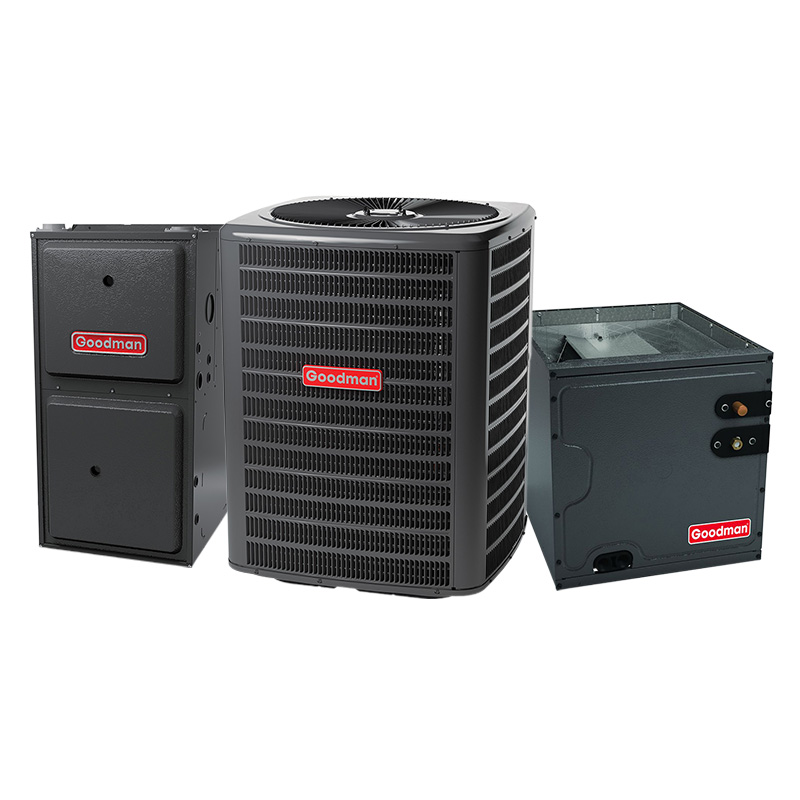
Goodman 1.5 Ton 15.2 SEER2 AC & Gas Furnace System – Multi-Speed, 40000 BTU Gas Furnace, 92% AFUE, Upflow, R32
View on AC Direct see your lowest price →Check current price on AC Direct →
Key features
- 1.5-ton single-stage cooling rated at 15.2 SEER2 for entry-level efficiency
- 40,000 BTU upflow gas furnace at 92% AFUE, suited for moderate heating climates
- Multi-speed ECM-style blower motor for adjustable airflow and improved dehumidification
- R-32 refrigerant with lower global warming potential than legacy R-410A systems
- Matched system design allowing eligibility for Goodman's parts and labor warranty when registered
- Compact 1.5-ton capacity targeting smaller homes or zoned spaces to avoid oversizing
About this system
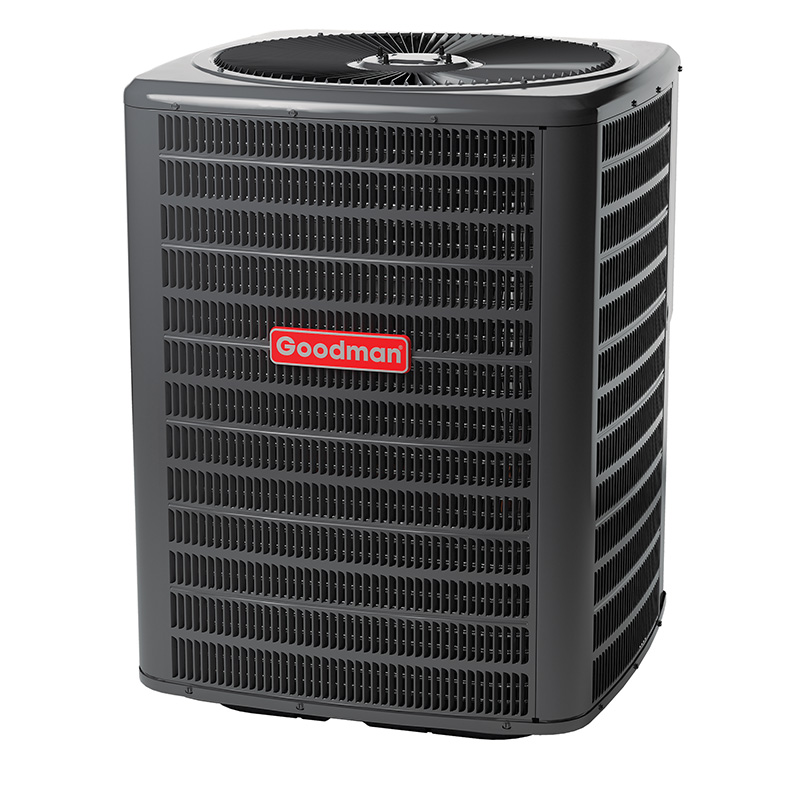
The Goodman GLXS5BA1810D pairs a 1.5-ton, 15.2 SEER2 single-stage air conditioner with a 40,000 BTU, 92% AFUE upflow gas furnace in an R-32 refrigerant system. At 1.5 tons, this is sized for smaller homes, conditioned spaces in the 600 to 900 square foot range depending on climate and insulation, or zone additions where oversizing would cause short-cycling and humidity problems. The 15.2 SEER2 rating clears the federal minimum threshold for most U.S. regions and lands in the entry-level efficient tier, delivering meaningful savings over older 13 or 14 SEER equipment without reaching the price premium of 17 or 18 SEER2 systems.
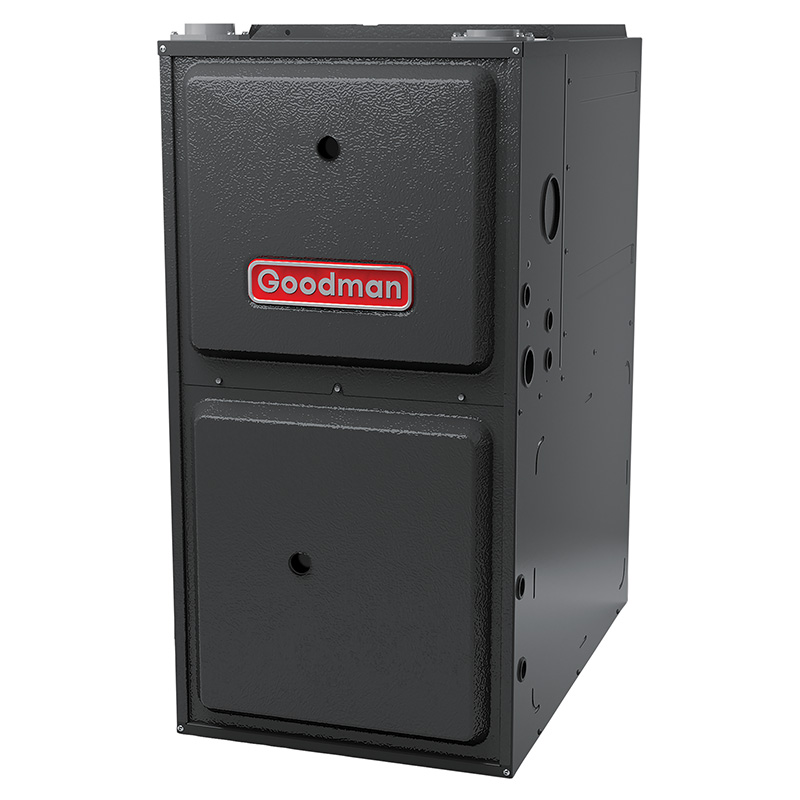
The 92% AFUE furnace means roughly 92 cents of every dollar spent on gas becomes usable heat, a solid mid-efficiency figure that suits homeowners in mild to moderate heating climates who want to step above the 80% AFUE baseline without paying for a 96 or 98% condensing furnace. The upflow configuration directs conditioned air upward through floor or basement duct systems, so this system suits homes where the furnace sits in a basement, utility closet with overhead ducts, or crawlspace application. R-32 refrigerant carries a lower global warming potential than the R-410A it is replacing industry-wide, and it is becoming the standard for new residential equipment. The multi-speed blower on the furnace allows some adjustment to airflow for comfort and coil performance, though the outdoor unit itself runs at a single stage.
The Goodman GLXS5BA1810D is a competent entry-level system that delivers adequate efficiency and solid heating performance at a price point that is reliably 15 to 25 percent below comparable Carrier, Trane, or Lennox equipment. Its long-term performance depends heavily on installation quality and a willingness to budget for periodic component repairs, particularly after year seven. For cost-conscious buyers who vet their installer carefully, it is a reasonable choice; for buyers prioritizing long-run durability with minimal maintenance surprises, premium alternatives deserve a serious look.
Overall score is the average of the five ratings above.
What we like
- Purchase price is typically 15 to 25 percent below comparable premium-brand systems
- 92% AFUE furnace provides meaningful gas savings over 80% AFUE baseline equipment
- R-32 refrigerant is forward-compatible with the industry's direction on lower-GWP refrigerants
- Multi-speed blower improves comfort consistency and dehumidification relative to fixed-speed units
- Matched factory system simplifies warranty registration and parts sourcing through a wide Goodman dealer network
Trade-offs
- Dual-run capacitors are the most frequently reported failure point, typically appearing before year 10 and adding 300 to 600 dollars per service call
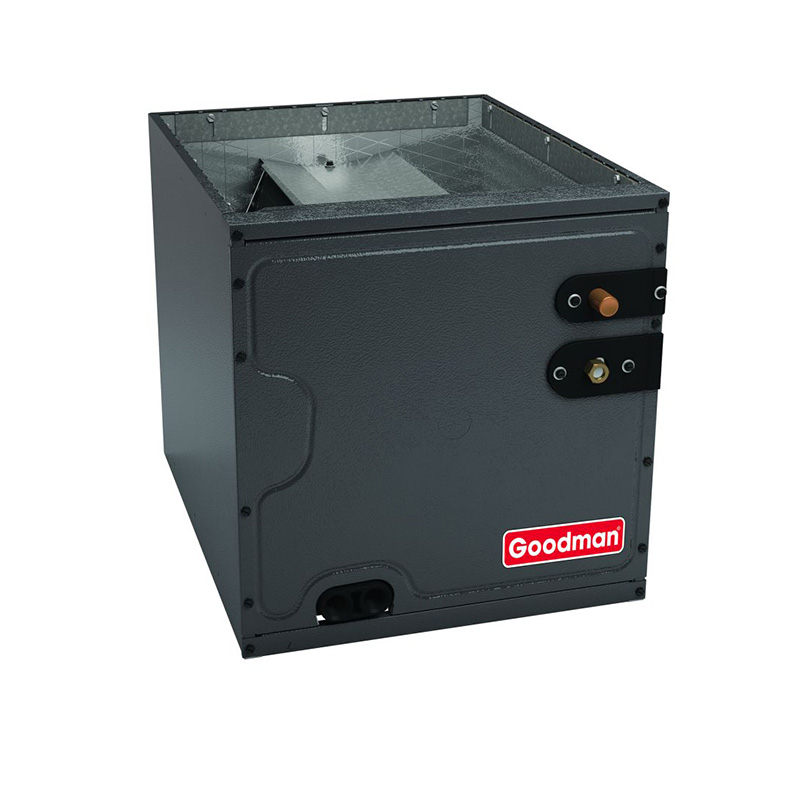
- Evaporator coil leaks appear in a meaningful portion of owner reports, a pattern that can become costly if the coil needs replacement outside warranty
- Compressor lifespan averages 10 to 14 years versus 15 to 20 years documented for premium brands, meaning a second compressor or full system replacement may arrive sooner
- Single-stage outdoor unit provides no part-load modulation, which limits humidity control and efficiency on mild days compared to two-stage or variable systems
What homeowners and pros say about Goodman
Homeowners who research Goodman online encounter a split picture. On ConsumerAffairs, the brand scores around 2.5 out of 5, a channel where dissatisfied owners are more likely to post, and the recurring complaint centers on repair costs climbing after roughly year seven. Google dealer reviews land closer to 3.8 out of 5 across locations where installers maintain an active presence, and in those reviews the most consistent praise is straightforward: the system cost less upfront and it cools and heats as expected when installed correctly. The affordability argument is real and well-documented. The repair cost concern is also real and should be factored into any honest cost-of-ownership estimate for this 1.5-ton system.
HVAC technicians who service Goodman equipment regularly point to dual-run capacitor failure as the most common call they make on these outdoor units, a repair that runs 300 to 600 dollars and is generally not catastrophic but does accumulate over a system’s life. Evaporator coil leaks show up in a meaningful share of owner reports and can be a more expensive problem if the coil needs replacement outside of the parts warranty window. Compressor longevity is the longer-term concern: documented averages of 10 to 14 years for Goodman versus 15 to 20 years for premium brands mean buyers should weigh whether the upfront savings offset a potentially earlier full-system replacement. A small minority of owners report refrigerant leaks within the first year, which technicians attribute to installation or initial charge issues rather than a manufacturing defect in most cases, reinforcing why installer selection matters as much as brand selection for this particular system.
Sources: ConsumerAffairs Goodman owner reviews, AHRI Directory of Certified Product Performance, U.S. DOE appliance and equipment efficiency standards, Goodman product specification sheets.
What it costs to run
At 15.2 SEER2, cooling this 1.5-ton system for a typical 1200-hour cooling season at the U.S. average electricity rate of $0.17/kWh works out to roughly $242 per year in cooling, about $32 less per year than a minimum-efficiency 13.4 SEER2 unit of the same size. Your real cost depends on your climate and local rate.
Method: (18,000 BTU/hr ÷ 15.2 SEER2) × 1200 hours ÷ 1000 × $0.17/kWh. Rate source: U.S. EIA average; cooling hours: moderate-climate estimate.
How it compares
| Brand | Comparable model | SEER2 | Stage | Price position |
|---|---|---|---|---|
| Goodman | GLXS5BA1810D | 15.2 | Single-stage | Value pick |
| Carrier | Comfort 15 Series (24ACC6) | 15.2 | Single-stage | Typically 15 to 25 percent more than Goodman |
| Trane | XR15 Series | 15.0 to 16.0 | Single-stage | Typically 15 to 25 percent more than Goodman |
| Lennox | Merit ML15 Series | 15.2 | Single-stage | Typically 15 to 25 percent more than Goodman |
Competitor rows are comparable single-stage units at similar efficiency; price is relative position, not a quote.
Questions about this system
Is 1.5 tons enough for my house, or should I size up?
A 1.5-ton unit is generally appropriate for conditioned spaces in the 600 to 900 square foot range in average climates, though proper Manual J load calculation by your installer is the only reliable answer for your specific home. Oversizing to a 2-ton unit to be safe will cause short-cycling, poor humidity removal, and faster wear, so resist the urge to size up without the calculation backing it.
What warranty comes with this system and what do I need to do to activate it?
Goodman typically offers a 10-year parts warranty on registered systems, and some matched systems include a limited labor or unit replacement warranty when installed by a registered dealer and registered within 60 days of installation. Failure to register usually drops coverage to five years, so registration is a step worth completing immediately after install.
How does R-32 refrigerant affect service and maintenance compared to R-410A?
R-32 requires technicians with the appropriate EPA certification and equipment rated for its slightly higher operating pressures, but most current HVAC technicians are already equipped or transitioning to handle it. Refrigerant availability is growing as the industry shifts, so servicing this system should not be a problem through its expected lifespan.
What is the most common repair I should budget for over the life of this system?
Dual-run capacitor failure is the most frequently documented repair on Goodman outdoor units and typically runs 300 to 600 dollars including labor. Setting aside a small annual maintenance fund for this type of component, rather than treating it as an unexpected emergency, is a practical approach with this brand.
Does the upflow configuration work if my furnace is in a basement or utility room?
Yes, upflow means the furnace pulls return air in from the bottom and discharges conditioned air out the top into overhead ductwork, which is exactly the layout found in most basement and main-floor utility room installations. If your ductwork runs under the floor or your equipment sits in an attic, a downflow or horizontal configuration would be needed instead.
Specifications
| Cooling capacity | 1.5 Ton |
| Efficiency | 15.2 SEER2 |
| Furnace output | 40000 BTU |
| Furnace efficiency | 92% AFUE |
| Configuration | Upflow |
| Refrigerant | R-32 |
| Model | GLXS5BA1810D |