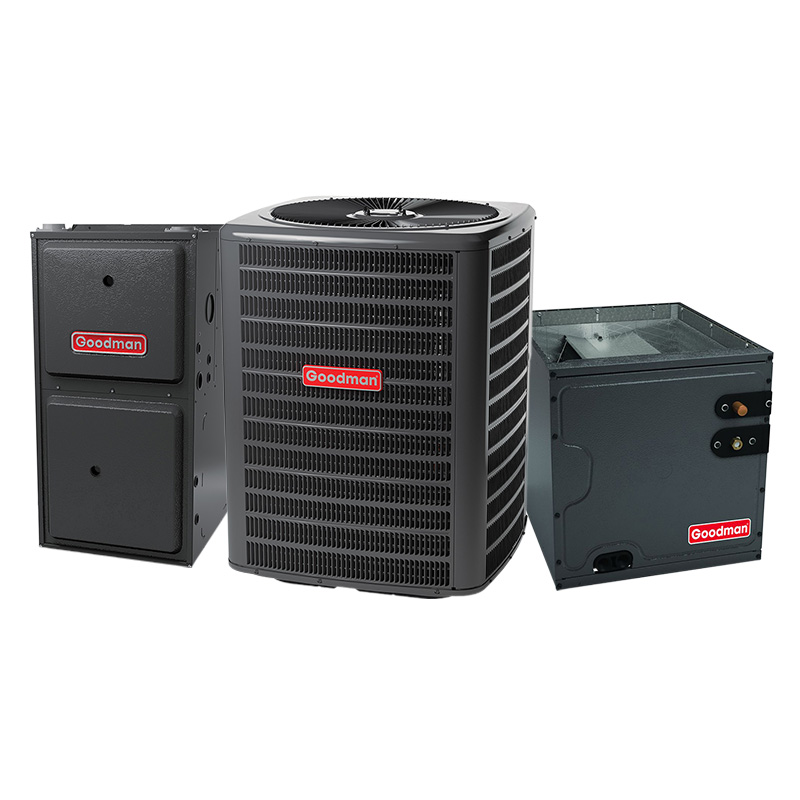
Goodman 1.5 Ton 15.2 SEER2 AC & Gas Furnace System – Multi-Speed, 60000 BTU Gas Furnace, 92% AFUE, Upflow, R32
View on AC Direct see your lowest price →Check current price on AC Direct →
Key features
- 1.5-ton cooling capacity matched to smaller homes and individual zones
- 15.2 SEER2 efficiency rating, meets or exceeds current federal minimums for most regions
- 92% AFUE gas furnace, 60,000 BTU upflow configuration
- Multi-speed blower for improved airflow balance and humidity control
- R-32 refrigerant, lower global-warming potential than outgoing R-410A
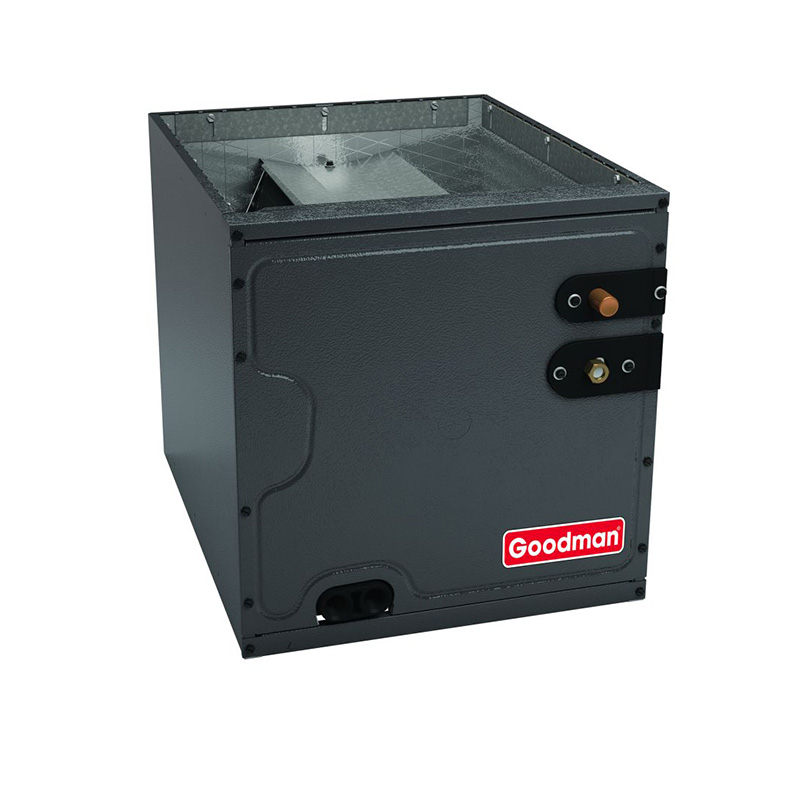
- Factory-matched system designed for straightforward coil and air handler pairing
About this system
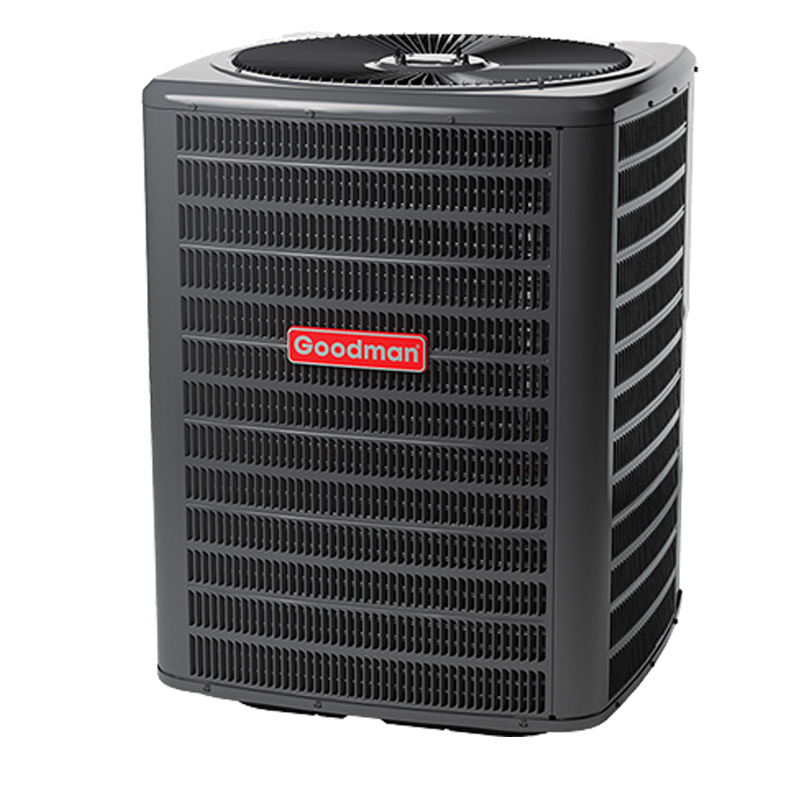
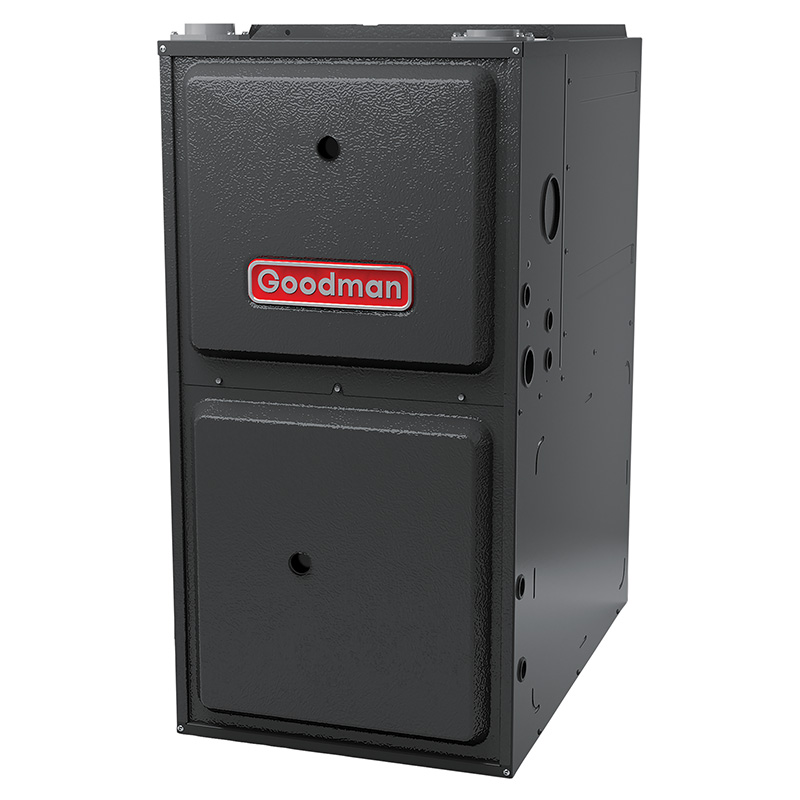
The Goodman GLXS4BA1810 pairs a 1.5-ton, 15.2 SEER2 central air conditioner with a 60,000 BTU, 92% AFUE upflow gas furnace in a single matched system. At 1.5 tons, it is sized for smaller homes, conditioned additions, or zones in the 600 to 900 square foot range, depending on local climate, insulation, and ceiling height. The 15.2 SEER2 rating sits just above the current federal minimum for most U.S. regions, meaning you get a modest efficiency step up without paying for a premium variable-speed unit. The 92% AFUE furnace converts 92 cents of every dollar of natural gas into usable heat, a solid mid-tier number that outperforms older 80% units but falls short of the 96 to 98% AFUE condensing furnaces at the top of the market.
The system uses R-32 refrigerant, a lower global-warming-potential refrigerant that is becoming the industry standard as R-410A is phased down. The multi-speed blower in the furnace section helps with airflow consistency and humidity management compared to a single-speed unit, a meaningful comfort benefit in a smaller application. Upflow configuration means the furnace discharges heated or cooled air upward through supply ducts above the unit, the standard choice for basements and closet installs where ductwork runs overhead. This is a straightforward, competitively priced system for homeowners who want reliable climate control without the premium cost of a brand-name variable-speed setup.
The Goodman GLXS4BA1810 delivers a functional, budget-accessible matched system at a price point 15 to 25 percent below comparable Carrier, Trane, and Lennox equipment. Efficiency and features are honest but unremarkable, and long-term performance depends heavily on installation quality and maintenance. It is a reasonable choice for cost-conscious buyers who understand the trade-offs in reliability and compressor longevity.
Overall score is the average of the five ratings above.
What we like
- Price comes in 15 to 25 percent below comparable premium-brand systems
- R-32 refrigerant is forward-looking as R-410A is phased out industry-wide
- Multi-speed blower improves comfort and humidity control over single-speed alternatives
- 92% AFUE furnace offers a meaningful efficiency gain over older 80% units
- Factory-matched components simplify sizing and reduce coil compatibility guesswork
Trade-offs
- Dual-run capacitors are the most commonly reported failure, typically surfacing within the first several years and costing $300 to $600 to repair
- Compressor lifespan averages 10 to 14 years, notably shorter than the 15 to 20 years often seen with premium brands
- Evaporator coil leaks appear in a meaningful share of owner reports, a potentially costly repair
- A minority of owners report refrigerant leaks in the first year, usually traced to installation or initial charge quality rather than the equipment itself
What homeowners and pros say about Goodman
Homeowners who review Goodman equipment through channels like ConsumerAffairs give the brand roughly 2.5 out of 5, a score that reflects a complaint-heavy audience where repair costs climbing after year seven is the most repeated theme. Google dealer reviews tell a somewhat different story, averaging around 3.8 out of 5 across hundreds of location-level reviews, with affordability cited most often as the reason buyers chose the brand. The gap between those two scores is telling: buyers who get a clean install and stay current on maintenance tend to report satisfaction, while those who encounter problems often find that service costs accumulate faster than they expected past the mid-life mark of the system.
Among HVAC professionals, Goodman has a reputation as a workable brand that rewards a careful installer and punishes a sloppy one. The documented failure points are specific and worth understanding before you buy: dual-run capacitors are the most frequently reported repair and are generally inexpensive to fix, but evaporator coil leaks show up in a meaningful share of owner reports and represent a more serious cost. Compressor longevity averaging 10 to 14 years on the GLXS4BA1810 is a real gap compared to the 15 to 20 years commonly seen with premium brands. A small but documented share of owners also report refrigerant leaks within the first year, a pattern technicians typically attribute to installation or initial charge rather than a factory defect in the unit itself.
Sources: ConsumerAffairs Goodman owner reviews, AHRI Directory of Certified Product Performance, U.S. DOE appliance and equipment efficiency standards, Goodman product specification sheets.
What it costs to run
At 15.2 SEER2, cooling this 1.5-ton system for a typical 1200-hour cooling season at the U.S. average electricity rate of $0.17/kWh works out to roughly $242 per year in cooling, about $32 less per year than a minimum-efficiency 13.4 SEER2 unit of the same size. Your real cost depends on your climate and local rate.
Method: (18,000 BTU/hr ÷ 15.2 SEER2) × 1200 hours ÷ 1000 × $0.17/kWh. Rate source: U.S. EIA average; cooling hours: moderate-climate estimate.
How it compares
| Brand | Comparable model | SEER2 | Stage | Price position |
|---|---|---|---|---|
| Goodman | GLXS4BA1810 | 15.2 | Single-stage | Value pick |
| Carrier | Comfort 14 Series (24ACC4) | 15.2 | Single-stage | Typically 15 to 25 percent more than Goodman |
| Trane | XR15 Series | 15.2 | Single-stage | Typically 15 to 25 percent more than Goodman |
| Lennox | Merit ML14XC1 Series | 15.2 | Single-stage | Typically 15 to 25 percent more than Goodman |
Competitor rows are comparable single-stage units at similar efficiency; price is relative position, not a quote.
Questions about this system
Is 1.5 tons enough for my home?
A 1.5-ton system is generally appropriate for roughly 600 to 900 square feet of conditioned space, but the right size depends on your local climate, insulation quality, window area, and ceiling height. An HVAC contractor should perform a Manual J load calculation before selecting tonnage, because an oversized or undersized unit will cause comfort problems and shorten equipment life regardless of brand.
What does R-32 refrigerant mean for me as an owner?
R-32 has a lower global-warming potential than the R-410A it is replacing and is being adopted across the industry as new regulations take effect. As an owner, the practical impact is that service technicians will need R-32 certification and equipment to service your system, but availability is growing quickly and should not be a concern in most markets within the next few years.
How often do the capacitors fail on Goodman systems, and what does it cost?
Dual-run capacitors are the single most commonly reported repair on Goodman equipment, and the failure can show up within the first few years of operation. The repair is generally straightforward and runs in the $300 to $600 range when you include a service call, making it one of the less costly HVAC repairs, but it is worth budgeting for as a likely maintenance item.
Does Goodman's warranty cover parts and labor?
Goodman's registered limited warranty covers parts, including a 10-year parts warranty on the compressor and covered components when the unit is registered within 60 days of installation. Labor is not covered by the manufacturer, so your out-of-pocket cost for any warranty repair will include the technician's service and labor charges. Confirm registration requirements with your installer at the time of setup.
How much does install quality actually matter with this system?
It matters significantly. HVAC technicians consistently cite installation quality as the primary driver of how long a Goodman system lasts and how efficiently it runs. Refrigerant charge accuracy, duct sealing, proper airflow, and correct electrical connections at startup all affect both reliability and efficiency. The minority of owners who report refrigerant leaks in the first year typically trace the issue back to installation rather than a factory defect.
Specifications
| Cooling capacity | 1.5 Ton |
| Efficiency | 15.2 SEER2 |
| Furnace output | 60000 BTU |
| Furnace efficiency | 92% AFUE |
| Configuration | Upflow |
| Refrigerant | R-32 |
| Model | GLXS4BA1810 |