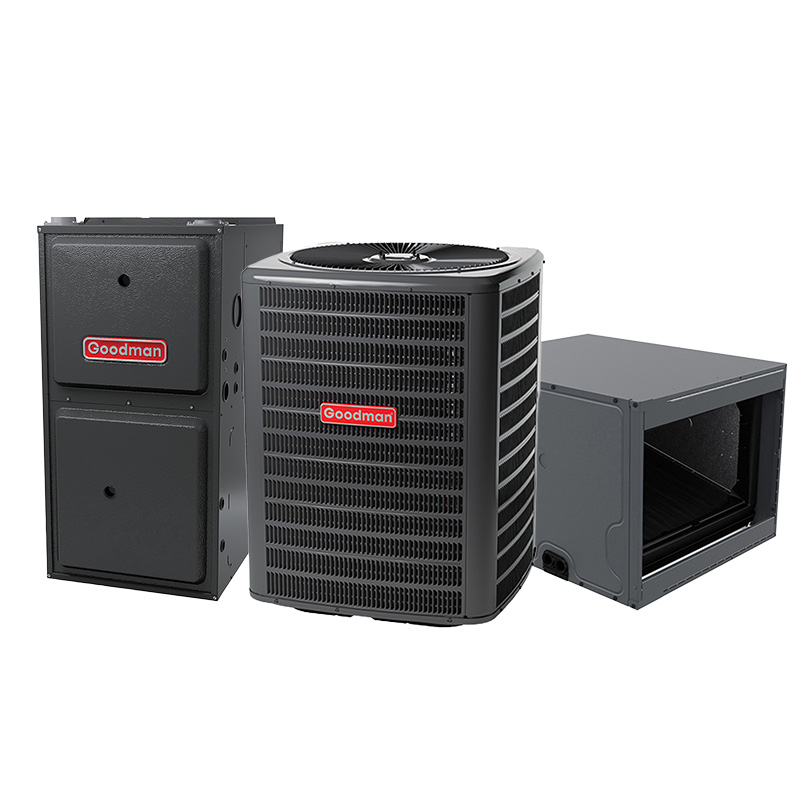
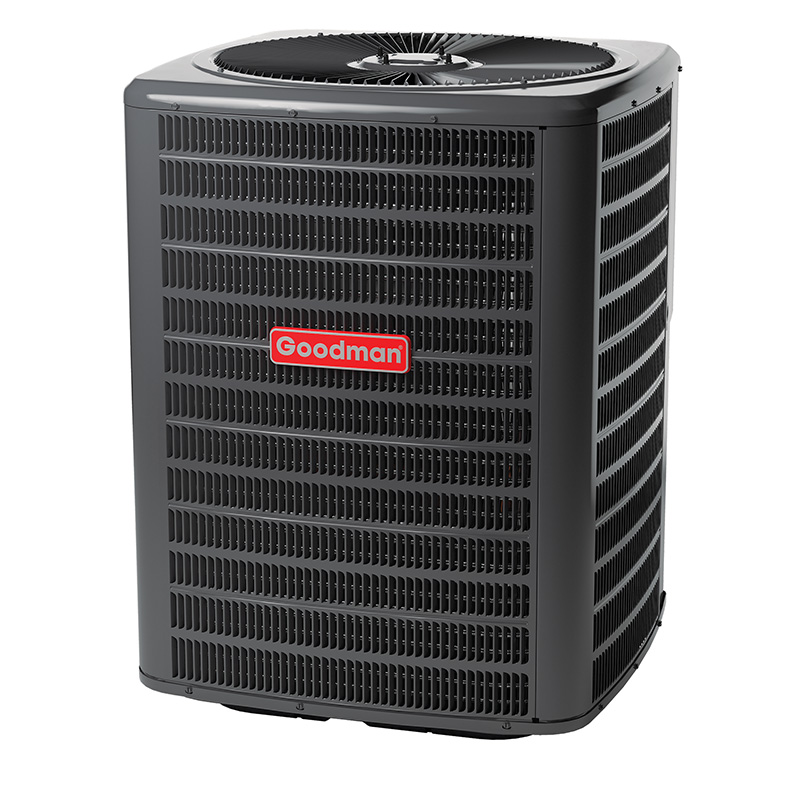
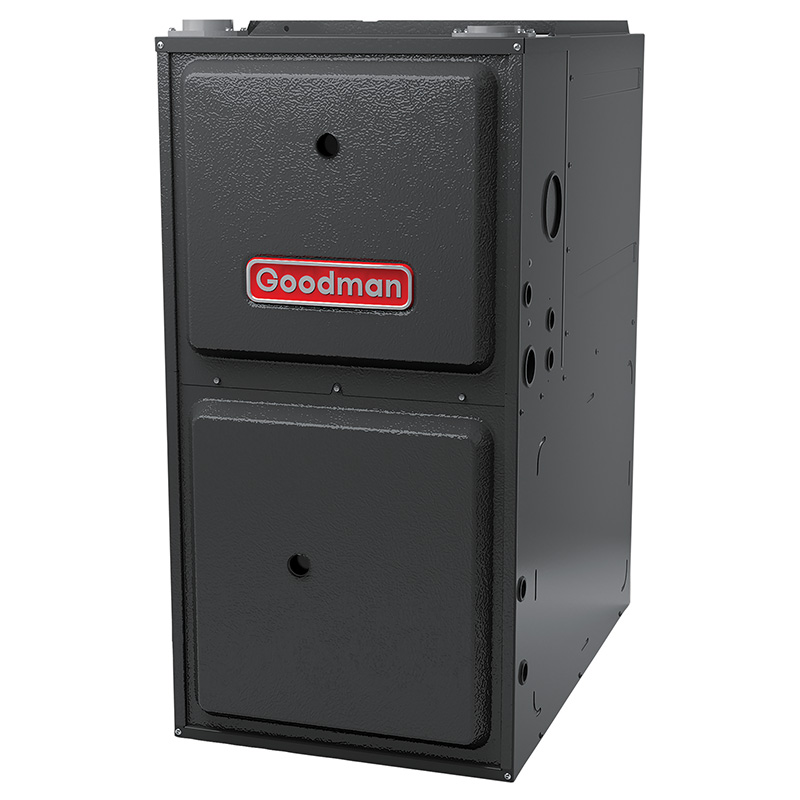
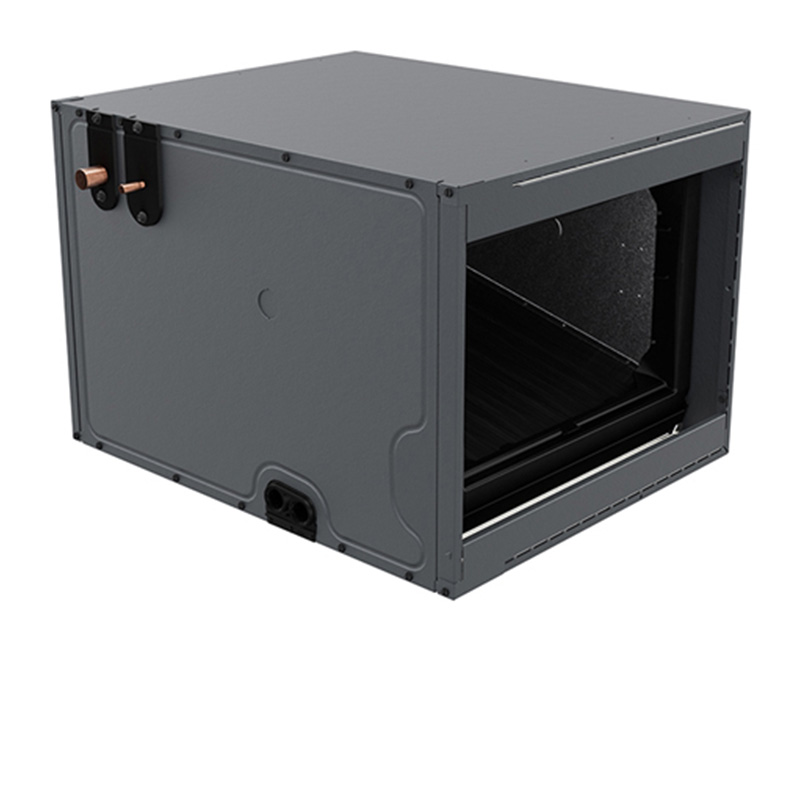
Goodman 1.5 Ton 15.2 SEER2 AC & Gas Furnace System – Two Stage Variable-Speed, 40000 BTU Gas Furnace, 96% AFUE, Horizontal, R32
View on AC Direct see your lowest price →Check current price on AC Direct →
Key features
- 15.2 SEER2 two-stage compressor for quieter, more consistent cooling
- 96% AFUE, 40,000 BTU gas furnace with horizontal orientation for crawlspace or attic installs
- Variable-speed ECM blower motor reduces energy use and improves humidity control
- R-32 refrigerant with lower global-warming potential than R-410A
- Two-stage operation cuts full-load run time and reduces indoor temperature swings
- Qualifies for federal energy-efficiency tax credits under current IRA guidelines
About this system
The Goodman 1.5-ton, 15.2 SEER2 two-stage split system pairs a variable-speed air handler with a 40,000 BTU, 96% AFUE gas furnace sized for smaller homes and tight floor plans, typically under 700 square feet in moderate climates. The horizontal configuration makes it a strong candidate for crawlspace installs, attic platforms, or manufactured housing where vertical clearance is limited. R-32 refrigerant carries a lower global-warming potential than the R-410A it replaces, and it operates at slightly lower pressures, which can modestly reduce long-run leak risk compared to older refrigerants.
Two-stage cooling means the compressor runs at a reduced capacity most of the time, cycling to full output only on the hottest days. Combined with the variable-speed blower, that translates to longer, quieter run cycles, better humidity removal, and a more even temperature across the conditioned space than a single-stage system delivers. At 96% AFUE, the furnace converts 96 cents of every heating dollar into usable heat, a genuine efficiency tier that qualifies for federal tax credits under current Inflation Reduction Act guidance. This is a capable mid-tier system at a value-brand price, and it suits budget-conscious buyers who want better-than-entry-level comfort without moving into premium-brand territory.
This Goodman package delivers genuine two-stage comfort and high-efficiency heating at a price roughly 15 to 25 percent below comparable Trane, Lennox, or Carrier configurations, making it a compelling choice for cost-conscious buyers who will invest in quality installation and maintenance. The trade-off is a shorter expected compressor lifespan and a documented history of capacitor and coil issues that premium brands handle more reliably over the long run. If the install is done right and you budget for a service call around year 7, this system earns its price point.
Overall score is the average of the five ratings above.
What we like
- Two-stage cooling and variable-speed blower meaningfully improve comfort and humidity control over single-stage entry systems
- 96% AFUE furnace is a legitimate high-efficiency rating that cuts annual heating costs and qualifies for federal tax credits
- Horizontal configuration addresses install scenarios where vertical units simply will not fit
- R-32 refrigerant is more environmentally responsible and operates at lower pressure than R-410A
- Lower upfront cost versus premium brands frees budget for a thorough professional install or a service contract
Trade-offs
- Dual-run capacitors are the most commonly reported failure point, with repair costs typically in the $300 to $600 range, often appearing after year 7
- Evaporator coil leaks appear in a meaningful share of owner reviews and can be expensive to resolve
- Compressor lifespan averages 10 to 14 years, noticeably shorter than the 15 to 20 years often seen with Trane, Lennox, and Carrier equipment
- A minority of owners report refrigerant leaks within the first year, usually tracing back to install quality rather than manufacturing, which underscores how heavily performance depends on the technician
What homeowners and pros say about Goodman
Homeowners who follow Goodman equipment online tend to cluster into two camps: buyers who got a clean install and years of trouble-free operation, and those who hit repair bills around or after year 7, which aligns with the recurring complaint theme on ConsumerAffairs where the brand scores roughly 2.5 out of 5. That channel skews toward people motivated to leave a review after a frustrating experience, so it captures real failure patterns more than it reflects the average owner’s outcome. Google dealer reviews land at around 3.8 out of 5 across hundreds of reviews per location, where affordability is consistently the top praise and the complaints that do appear often circle back to service responsiveness rather than the equipment itself.
Among HVAC technicians, the honest consensus is that Goodman builds a workable product but that the install quality matters more for this brand than for premium competitors. The dual-run capacitor is the part most likely to need replacing, typically a straightforward repair when caught on an annual tune-up. Evaporator coil leaks and refrigerant loss within the first year are also documented failure modes worth knowing about before you buy. Compressor longevity averaging 10 to 14 years versus 15 to 20 for Trane or Carrier is a real difference over the life of a home, but for buyers whose priority is getting a two-stage, high-efficiency system into a horizontal application without a premium-brand price, this system is a defensible choice provided the contractor is skilled and the maintenance schedule is kept.
Sources: ConsumerAffairs Goodman owner reviews, AHRI Directory of Certified Product Performance, U.S. DOE appliance and equipment efficiency standards, Goodman product specification sheets.
What it costs to run
At 15.2 SEER2, cooling this 1.5-ton system for a typical 1200-hour cooling season at the U.S. average electricity rate of $0.17/kWh works out to roughly $242 per year in cooling, about $32 less per year than a minimum-efficiency 13.4 SEER2 unit of the same size. Your real cost depends on your climate and local rate.
Method: (18,000 BTU/hr ÷ 15.2 SEER2) × 1200 hours ÷ 1000 × $0.17/kWh. Rate source: U.S. EIA average; cooling hours: moderate-climate estimate.
How it compares
| Brand | Comparable model | SEER2 | Stage | Price position |
|---|---|---|---|---|
| Goodman | GSXH5 / AMST / GMVC96 Series | 15.2 | Two-stage | Value pick |
| Carrier | Performance 16 (24ACC6) | 15.2 | Single-stage | Typically 15 to 25 percent more than this Goodman system |
| Trane | XR15 Series | 15.0-15.5 | Single-stage | Typically 15 to 25 percent more than this Goodman system |
| Lennox | Merit ML15XC1 Series | 15.5 | Single-stage | Typically 15 to 25 percent more than this Goodman system |
Competitor rows are comparable single-stage units at similar efficiency; price is relative position, not a quote.
Questions about this system
Is a 1.5-ton system actually enough for my home, or should I size up to be safe?
Oversizing is one of the most common and damaging HVAC mistakes. A 1.5-ton unit is typically appropriate for conditioned spaces around 600 to 750 square feet in moderate climates, though insulation quality, ceiling height, and local design temperatures all affect the real number. Have a contractor perform a Manual J load calculation before purchasing; an oversized two-stage system will still short-cycle and underperform on humidity removal.
What does the horizontal configuration actually mean, and does it limit where this system can be installed?
Horizontal means the air handler is oriented on its side rather than standing upright, which is required in low-clearance spaces like crawlspaces, attic platforms with limited headroom, and some manufactured housing installations. It is not a limitation so much as a specific fit; if your application needs vertical airflow, this configuration is the wrong choice and you would need a different model.
How worried should I be about the capacitor and coil failure issues mentioned in Goodman reviews?
Dual-run capacitor failures are the most commonly reported issue and are generally a low-cost, quick repair in the $300 to $600 range when caught early, which is why annual maintenance visits matter. Evaporator coil leaks are more serious and more expensive; keeping the system on a maintenance schedule and addressing any refrigerant loss promptly reduces the risk of a slow leak going unnoticed and causing compressor damage.
Does this system qualify for the federal energy-efficiency tax credit?
The 96% AFUE furnace meets the efficiency threshold for the federal 25C tax credit under current IRA rules, and 15.2 SEER2 meets the minimum cooling efficiency requirement for split systems in most climate zones. You should confirm the specific credit amount and any certificate requirements with a tax professional, as the rules apply to the installed system and have income and annual cap provisions.
R-32 is newer to residential HVAC in the US. Will finding a technician who can service it be a problem?
R-32 has been widely used in residential equipment in Europe and Asia for years and is increasingly common in US systems as R-410A is phased out under EPA regulations. Any EPA Section 608-certified technician can work with it, though some older recovery equipment may need an update. It is not yet as universally stocked in service vans as R-410A was, so confirming your service contractor carries it before signing a maintenance agreement is a reasonable step.
Specifications
| Cooling capacity | 1.5 Ton |
| Efficiency | 15.2 SEER2 |
| Furnace output | 40000 BTU |
| Furnace efficiency | 96% AFUE |
| Configuration | Horizontal |
| Refrigerant | R-32 |