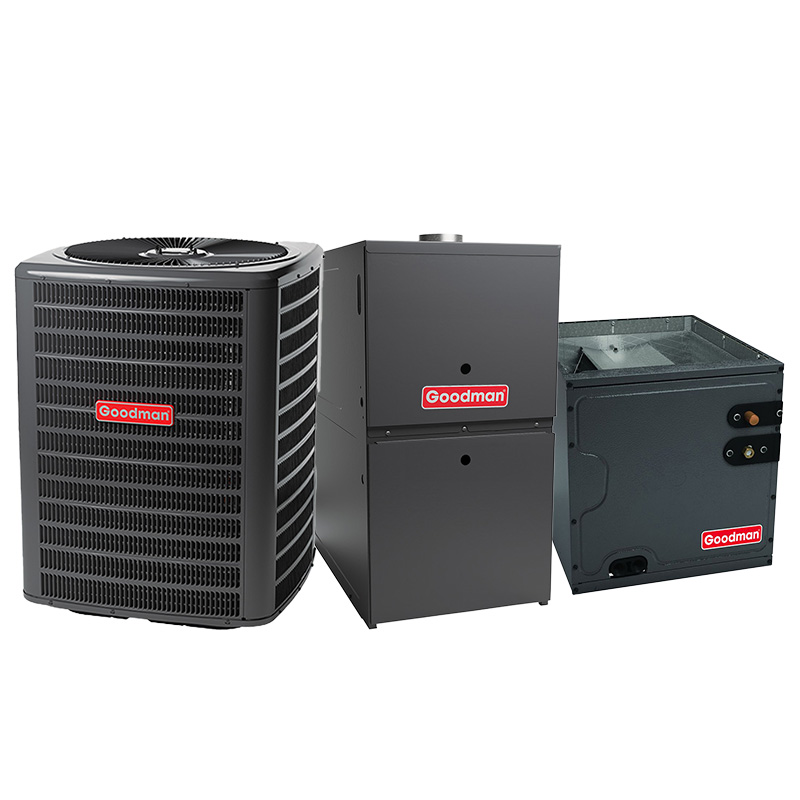
Goodman 1.5 Ton 15.2 SEER2 AC & Gas Furnace System – Two Stage Variable-Speed 60000 BTU Gas Furnace, 80% AFUE, Upflow, R32
View on AC Direct see your lowest price →Check current price on AC Direct →
Key features
- Two-stage compressor runs at low capacity most of the time, reducing short-cycling and improving humidity control
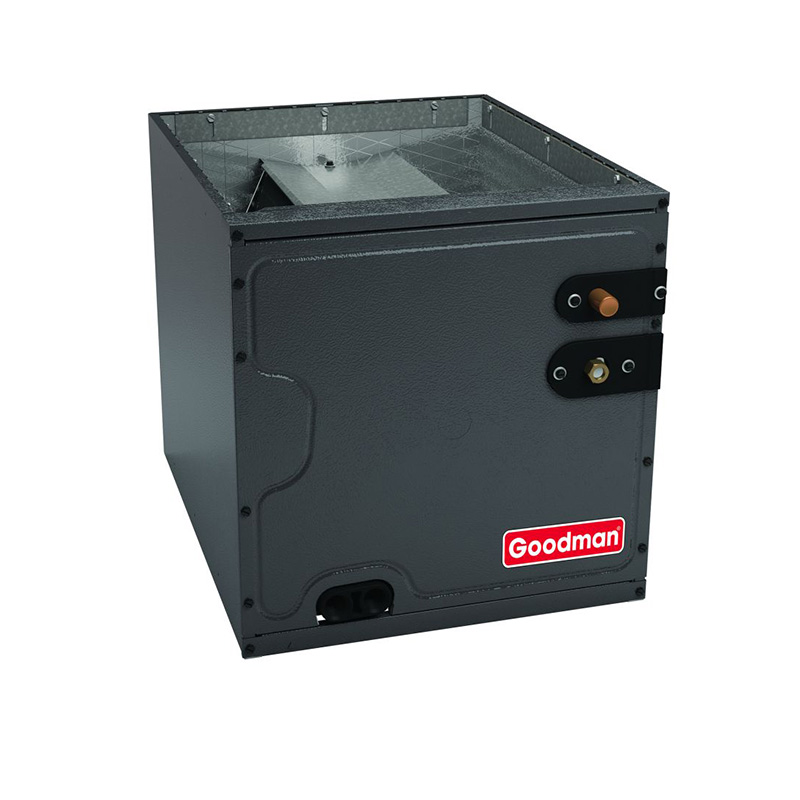
- Variable-speed air handler delivers quieter operation and more consistent airflow than single-speed blowers
- 15.2 SEER2 efficiency rating meets and modestly exceeds the current federal minimum for most northern regions
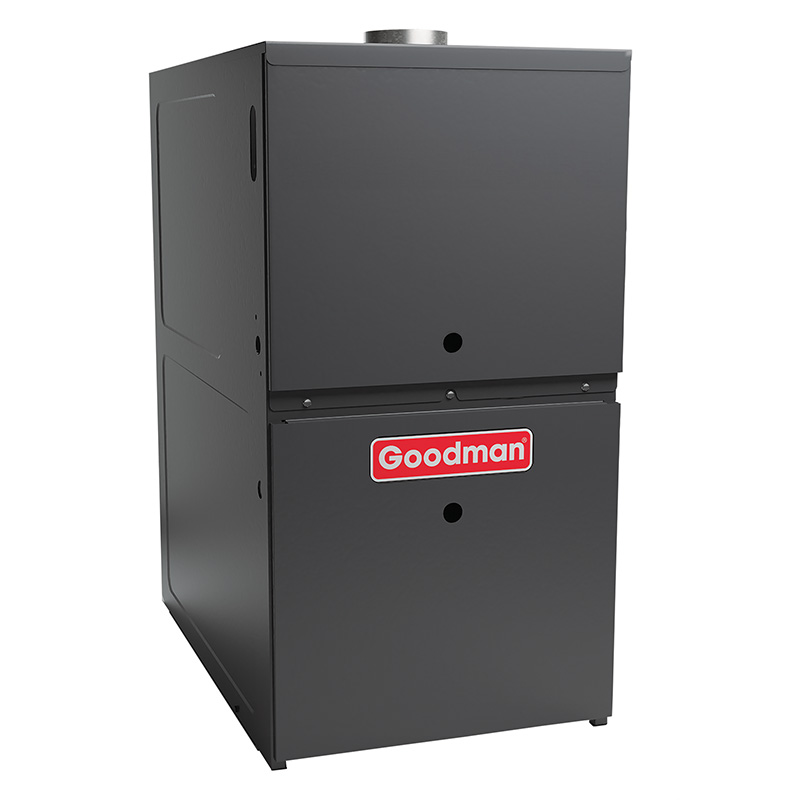
- 60,000 BTU upflow gas furnace rated at 80% AFUE, compatible with standard forced-air duct layouts
- R-32 refrigerant, a lower-global-warming-potential refrigerant replacing R-410A across the industry
- Priced approximately 15 to 25 percent below comparable Trane, Lennox, and Carrier configurations
About this system
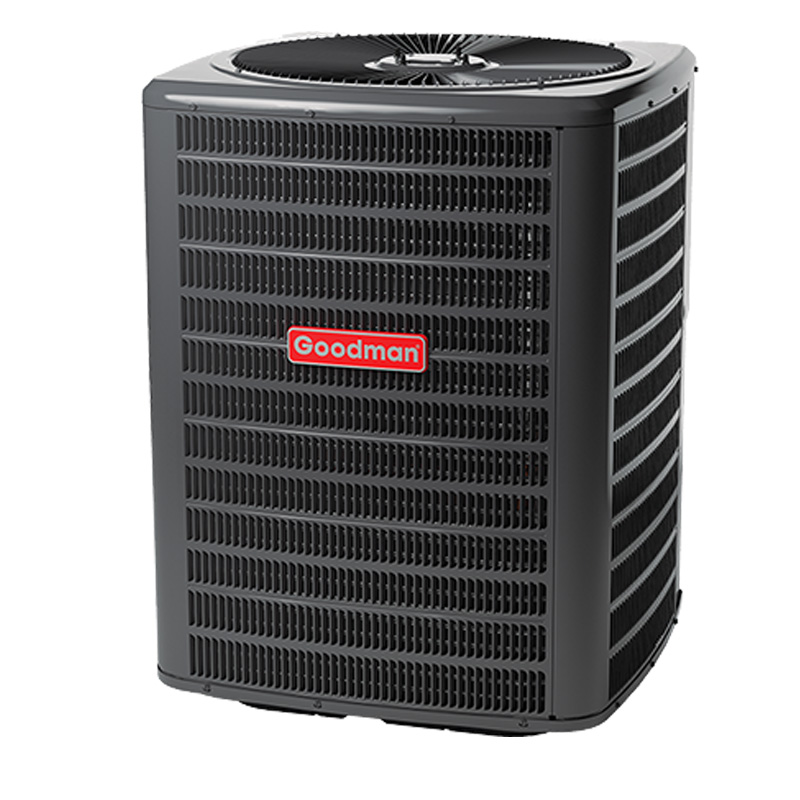
The Goodman 1.5-ton 15.2 SEER2 split system pairs a two-stage, variable-speed air conditioner with a 60,000 BTU upflow gas furnace rated at 80% AFUE. At 1.5 tons, this system is sized for smaller homes, conditioned spaces in the 450-to-750 square foot range depending on climate and insulation, or as a dedicated zone in a larger multi-system setup. The two-stage compressor runs on low capacity the majority of the time, which reduces short-cycling, lowers humidity more effectively than a single-stage unit, and softens temperature swings before stepping up to full output on the hottest days.
The 80% AFUE furnace converts eight out of every ten units of gas into usable heat, which meets federal minimum efficiency standards for most U.S. climate zones but falls short of the 90%-plus AFUE you get from condensing furnaces. For homeowners in mild-winter climates where the furnace runs relatively few hours per year, that trade-off in fuel efficiency is often acceptable, and the upflow configuration suits the most common duct arrangements in single-story homes and basements. R-32 refrigerant has a lower global warming potential than the R-410A it replaces and is becoming the industry standard, so future service should not present any unusual supply challenges as the refrigerant transition continues across the industry.
This system targets buyers who want a meaningful efficiency and comfort step above entry-level single-stage equipment without paying the premium that Trane, Carrier, or Lennox command for comparable staging and capacity. It is a practical choice for rental properties, budget-conscious homeowners, or anyone who plans to invest the savings into an extended service contract or a higher-quality installation crew.
This Goodman system delivers genuine two-stage comfort and a step up in efficiency at a price point that is hard to match among name-brand equipment. The trade-off is a reliability ceiling that sits below premium brands, with compressor longevity averaging 10 to 14 years versus 15 to 20 for top-tier competitors, and a documented pattern of capacitor failures and coil leaks that owners encounter more often after year seven. It earns its place for budget-focused buyers who pair it with a strong installer and a service plan.
Overall score is the average of the five ratings above.
What we like
- Two-stage operation improves humidity control and reduces temperature swings compared to single-stage alternatives at a similar price
- Variable-speed blower lowers sound levels and delivers more consistent airflow throughout the home
- R-32 refrigerant is forward-compatible as the industry completes its transition away from R-410A
- Upflow configuration fits the most common residential duct arrangements without modification
- Meaningfully lower purchase price than Carrier, Trane, or Lennox at comparable staging and efficiency, freeing budget for installation quality or a service contract
Trade-offs
- Compressor lifespan averages 10 to 14 years, several years shorter than what premium brands typically deliver
- Dual-run capacitors are the most frequently reported failure point and, while affordable to fix (roughly $300 to $600), they represent recurring maintenance that some owners do not anticipate
- Evaporator coil leaks appear in a meaningful share of owner reviews, a concern worth factoring into long-term cost projections
- 80% AFUE furnace will cost more to operate annually than a 90%-plus AFUE condensing unit in colder climates where the furnace runs heavily
What homeowners and pros say about Goodman
Homeowners who share feedback on Goodman equipment tend to split along a clear line: those who had a skilled installer who commissioned the system properly report years of uneventful service and point to the lower upfront cost as a genuine win. Those who encountered problems early, including refrigerant leaks in the first year that reviewers and technicians typically attribute to installation or charge issues rather than factory defects, tend to feel the savings evaporated quickly once service calls began. On Google dealer reviews, Goodman averages around 3.8 out of 5 across hundreds of location-level reviews, with affordability cited most often as the reason buyers chose it. ConsumerAffairs tells a harsher story at roughly 2.5 out of 5, though that platform attracts a complaint-heavy audience, and the pattern there centers on repair costs that climb noticeably after the seven-year mark.
HVAC technicians generally describe Goodman as parts-accessible and straightforward to work on, which matters when something does go wrong. The failure modes they cite most often for this brand are dual-run capacitor replacements, a common and relatively affordable fix in the $300-to-$600 range, evaporator coil leaks that generate more owner frustration than capacitor swaps because they are more disruptive and costlier to address, and compressors that tend to reach the end of their useful life in the 10-to-14-year range rather than the 15-to-20-year window associated with Trane, Carrier, and Lennox. For this specific two-stage, variable-speed system, pros note that the added staging and blower sophistication raise the stakes on installation quality even further: a properly sized, carefully commissioned unit performs noticeably better than the brand’s reputation might suggest, while a rushed or improperly charged install can underperform from day one.
Sources: ConsumerAffairs Goodman owner reviews, AHRI Directory of Certified Product Performance, U.S. DOE appliance and equipment efficiency standards, Goodman product specification sheets.
What it costs to run
At 15.2 SEER2, cooling this 1.5-ton system for a typical 1200-hour cooling season at the U.S. average electricity rate of $0.17/kWh works out to roughly $242 per year in cooling, about $32 less per year than a minimum-efficiency 13.4 SEER2 unit of the same size. Your real cost depends on your climate and local rate.
Method: (18,000 BTU/hr ÷ 15.2 SEER2) × 1200 hours ÷ 1000 × $0.17/kWh. Rate source: U.S. EIA average; cooling hours: moderate-climate estimate.
How it compares
| Brand | Comparable model | SEER2 | Stage | Price position |
|---|---|---|---|---|
| Goodman | GSXH5 / GMVC8 Series (this system) | 15.2 | Two-stage | Value pick |
| Carrier | Comfort 24ACC6 / 59SC5 Series | 15.2 | Single-stage | Typically 15 to 25 percent more than this Goodman system |
| Trane | XR15 / S8X1 Series | 15.0 | Single-stage | Typically 15 to 25 percent more than this Goodman system |
| Lennox | Merit 14ACX / ML180 Series | 15.0 | Single-stage | Typically 15 to 25 percent more than this Goodman system |
Competitor rows are comparable single-stage units at similar efficiency; price is relative position, not a quote.
Questions about this system
Will 1.5 tons be enough for my space, and how do I know if I need more?
A 1.5-ton system is generally appropriate for conditioned spaces in the 450-to-750 square foot range, though climate, insulation, window area, and ceiling height all affect the actual load. The only reliable way to confirm sizing is a Manual J load calculation performed by your installer before equipment is purchased. An undersized system will run continuously on hot days and never fully dehumidify; an oversized one will short-cycle and also struggle with humidity.
What is the real-world difference between two-stage and single-stage at this price tier?
On most summer days the two-stage compressor operates at its lower capacity setting, which means longer, gentler run cycles that remove more moisture from the air and keep temperatures more even between thermostat calls. Single-stage units blast on at full output and then shut off, which handles temperature reasonably well but does less for humidity. The variable-speed blower amplifies that benefit by moving air more quietly and steadily.
Goodman has a lower ConsumerAffairs rating than I expected. Should I be worried?
Goodman's ConsumerAffairs score sits at roughly 2.5 out of 5, but that channel draws a disproportionate share of frustrated owners, so it skews negative relative to the broader owner population. The recurring theme in those reviews is repair costs climbing after year seven, which aligns with the brand's documented failure modes: dual-run capacitor failures (a low-cost fix but an annoyance), evaporator coil leaks, and compressors that tend to average 10 to 14 years rather than the 15 to 20 you see from premium brands. Google dealer reviews average around 3.8 out of 5, where affordability is the most common praise. Budgeting for an extended warranty or a service plan is a reasonable way to offset this risk.
R-32 refrigerant is new to me. Will it be hard to service?
R-32 is the refrigerant the industry is broadly adopting as R-410A is phased out, so supply and technician familiarity are expanding rapidly. It has a lower global warming potential than R-410A and is handled safely with standard recovery equipment designed for it. Within a few years it will be the routine refrigerant for residential service calls, so there is no meaningful long-term serviceability concern.
Should I buy an extended warranty on this system?
Given Goodman's documented pattern of capacitor failures, evaporator coil leaks, and compressor longevity that trails premium brands, an extended warranty or a service contract is worth serious consideration, particularly if you plan to own the home for more than seven years. Weigh the cost of the contract against the roughly $300-to-$600 capacitor repair, the considerably higher cost of a coil replacement, and the potential for a compressor replacement in the 10-to-14-year window. For many owners the math favors coverage.
Specifications
| Cooling capacity | 1.5 Ton |
| Efficiency | 15.2 SEER2 |
| Furnace output | 60000 BTU |
| Furnace efficiency | 80% AFUE |
| Configuration | Upflow |
| Refrigerant | R-32 |