Goodman 1.5 Ton 14.3 SEER2 Heat Pump System w/2 Ton A/H
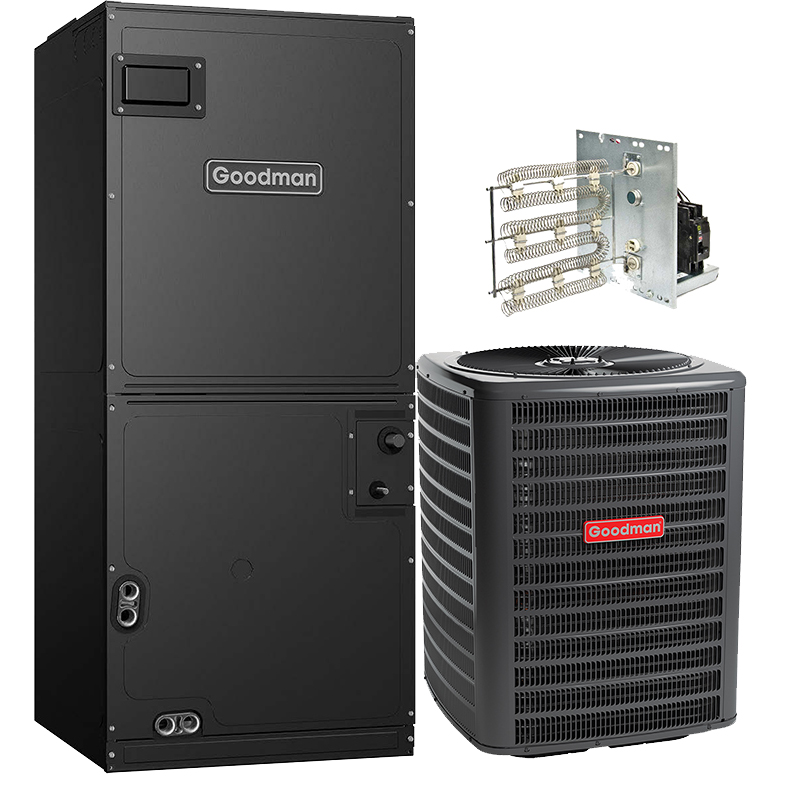
View on AC Direct see your lowest price →Check current price on AC Direct →
Key features
- 1.5-ton heat pump condenser, GSZB401810, rated at 14.3 SEER2
- Paired with a 2-ton air handler for enhanced airflow capacity
- Single-stage scroll compressor for straightforward operation
- Meets current federal minimum efficiency standards for most U.S. regions
- Designed for R-410A refrigerant (verify local refrigerant regulations before install)
- Goodman 10-year parts limited warranty with product registration
About this system
The Goodman GSZB401810 pairs a 1.5-ton heat pump condenser with a 2-ton air handler, making it a practical fit for smaller homes and conditioned spaces roughly between 600 and 900 square feet, depending on local climate, insulation quality, and window load. The slight mismatch in tonnage between the outdoor and indoor units is intentional in some configurations, allowing the air handler to move air more efficiently and support future flexibility, though proper system matching by a licensed technician is essential for this to work as intended.
At 14.3 SEER2, this system sits at the current federal minimum efficiency threshold for most U.S. regions. That means it meets the baseline but does not deliver the utility bill savings you would see from a 16 or 18 SEER2 unit. For homeowners in mild climates who run the system only part of the year, the lower upfront cost of a minimum-efficiency unit can make more financial sense than paying a premium for efficiency gains that may take a decade to recoup. For those in hot or cold climates with heavy seasonal runtimes, the calculus shifts toward a higher-efficiency model.
Goodman prices this system meaningfully below comparable equipment from Trane, Lennox, and Carrier, typically by 15 to 25 percent. That gap closes if you factor in the documented shorter average compressor lifespan and the repair costs that owners commonly report after year seven. This system rewards buyers who prioritize a lower purchase price, have a reliable installer, and are comfortable with a parts-and-labor service agreement to manage longer-term costs.
The Goodman GSZB401810 is a no-frills, entry-level heat pump system that delivers solid value for budget-conscious buyers who prioritize upfront cost over long-term efficiency or premium durability. It does the job when professionally installed and maintained, but the minimum SEER2 rating and Goodman's documented repair trends past year seven mean total cost of ownership can erode the initial savings. Buyers who plan to stay in their home long-term should weigh those downstream costs carefully.
Overall score is the average of the five ratings above.
What we like
- Priced 15 to 25 percent below comparable Trane, Lennox, and Carrier systems, reducing upfront investment
- Meets federal minimum efficiency requirements, providing adequate performance for mild-climate and part-year use
- 10-year parts limited warranty with registration offers reasonable coverage for the price tier
- Single-stage design means simpler diagnostics and lower-cost repairs for common components
- Dual-run capacitor failures, the most common documented issue, are typically a low-cost fix in the $300 to $600 range
Trade-offs
- 14.3 SEER2 is the minimum allowed, so utility savings are limited compared to mid- or high-efficiency alternatives
- Compressor lifespan averages 10 to 14 years versus 15 to 20 years for premium brands, raising long-term replacement risk
- Evaporator coil leaks appear in a meaningful share of owner reviews, a repair that can be costly if outside warranty
- A minority of owners have reported refrigerant leaks within the first year, typically traced to installation or charge quality
What homeowners and pros say about Goodman
Homeowners who share their experience with Goodman equipment tend to split along a familiar line. Those who had a skilled, attentive installer frequently report that the system ran without incident for the first several years and praise the lower purchase cost. That tracks with Google dealer review scores hovering around 3.8 out of 5, where affordability is the single most common compliment. On the other side, ConsumerAffairs shows a score of roughly 2.5 out of 5, a channel that skews toward people who encountered problems. The recurring pattern there is repair costs climbing after roughly year seven, which aligns with documented compressor lifespans that average 10 to 14 years rather than the 15 to 20 years premium brands tend to achieve.
HVAC technicians who service Goodman equipment regularly point to dual-run capacitor failures as the most predictable maintenance item on these systems. It is a low-cost repair, usually in the $300 to $600 range, but it comes up more often than on higher-tier equipment. Evaporator coil leaks are a more significant concern that appears in a real share of owner accounts, and a smaller group of owners has reported refrigerant leaks within the first year, most of which trace back to installation or initial charge problems rather than a factory defect. Professionals are consistent on one point: a well-executed install by a careful technician is the most reliable way to get the full life expectancy out of a Goodman system, including this 1.5-ton GSZB401810.
Sources: ConsumerAffairs Goodman owner reviews, AHRI Directory of Certified Product Performance, U.S. DOE appliance and equipment efficiency standards, Goodman product specification sheets.
What it costs to run
At 14.3 SEER2, cooling this 1.5-ton system for a typical 1200-hour cooling season at the U.S. average electricity rate of $0.17/kWh works out to roughly $257 per year in cooling, about $17 less per year than a minimum-efficiency 13.4 SEER2 unit of the same size. Your real cost depends on your climate and local rate.
Method: (18,000 BTU/hr ÷ 14.3 SEER2) × 1200 hours ÷ 1000 × $0.17/kWh. Rate source: U.S. EIA average; cooling hours: moderate-climate estimate.
How it compares
| Brand | Comparable model | SEER2 | Stage | Price position |
|---|---|---|---|---|
| Goodman | GSZB401810 | 14.3 | Single-stage | Value pick |
| Carrier | Performance 14 Heat Pump (25HPB6) | 14.3-15.2 | Single-stage | Typically 15 to 25 percent more than Goodman |
| Trane | XR14c Heat Pump | 14.3-15.0 | Single-stage | Typically 15 to 25 percent more than Goodman |
| Lennox | Merit ML14XP1 Heat Pump | 14.3-15.0 | Single-stage | Typically 15 to 25 percent more than Goodman |
Competitor rows are comparable single-stage units at similar efficiency; price is relative position, not a quote.
Questions about this system
Why does this system use a 2-ton air handler with a 1.5-ton condenser?
Using a larger air handler can improve airflow and static pressure performance, and it gives you flexibility if you upgrade the condenser down the road. However, this configuration must be verified as compatible by your installer. Running mismatched components without proper system design can reduce efficiency and cause comfort issues.
Is 14.3 SEER2 enough efficiency, or will I regret not buying higher?
In mild climates with limited annual runtime, the payback period on a higher-efficiency unit can stretch past 10 years, making 14.3 SEER2 a reasonable choice. In hotter or colder climates where the system runs most of the year, a 16 or 17 SEER2 unit will save you meaningfully on utility bills and likely justify the higher purchase price over time.
What are the most common repairs I should expect with a Goodman heat pump?
The most frequently reported failure is the dual-run capacitor, which typically costs $300 to $600 to replace and is a straightforward repair. Evaporator coil leaks are also documented in owner reviews and are more costly to address. A small number of owners have reported refrigerant leaks in the first year, which usually points to an installation or initial charge problem rather than a product defect.
Does the 10-year warranty cover labor as well as parts?
Goodman's 10-year limited warranty covers parts only when you register the product within 60 days of installation. Labor is not included, so you will pay out of pocket for a technician's time on any covered repair. Some dealers and third-party providers offer extended labor warranties separately, which is worth considering given Goodman's repair history after year seven.
How much does install quality actually matter with this system?
It matters considerably. HVAC technicians consistently cite installation quality as the single biggest factor in how long a Goodman unit lasts and how efficiently it runs. Proper refrigerant charge, correct line set sizing, and accurate airflow setup are not optional extras. A poor install can cause the refrigerant leak and compressor stress issues that show up in early owner complaints.
Specifications
| Cooling capacity | 1.5 Ton |
| Efficiency | 14.3 SEER2 |
| Model | GSZB401810 |