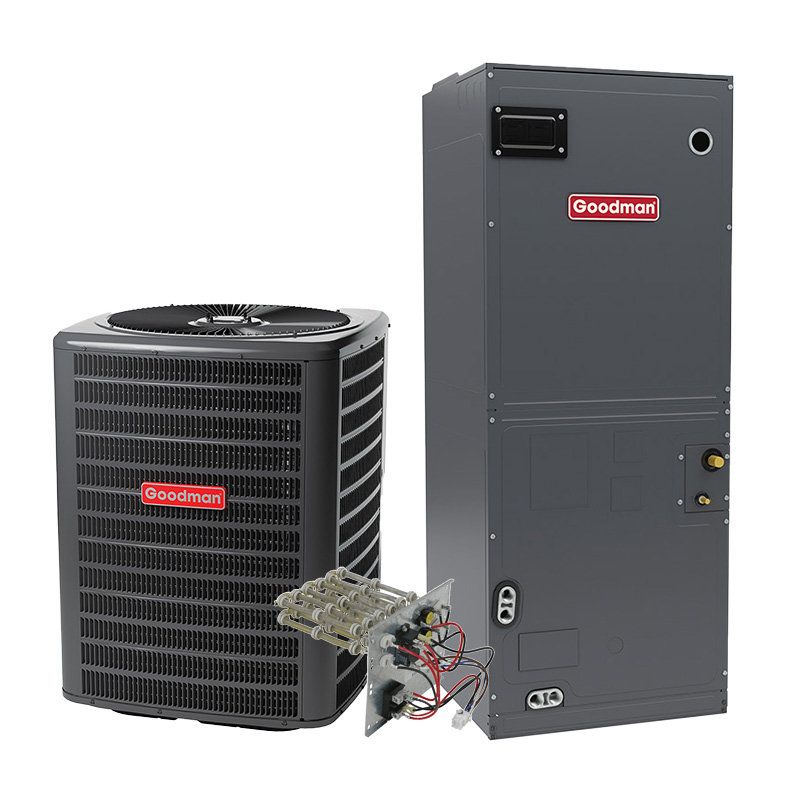
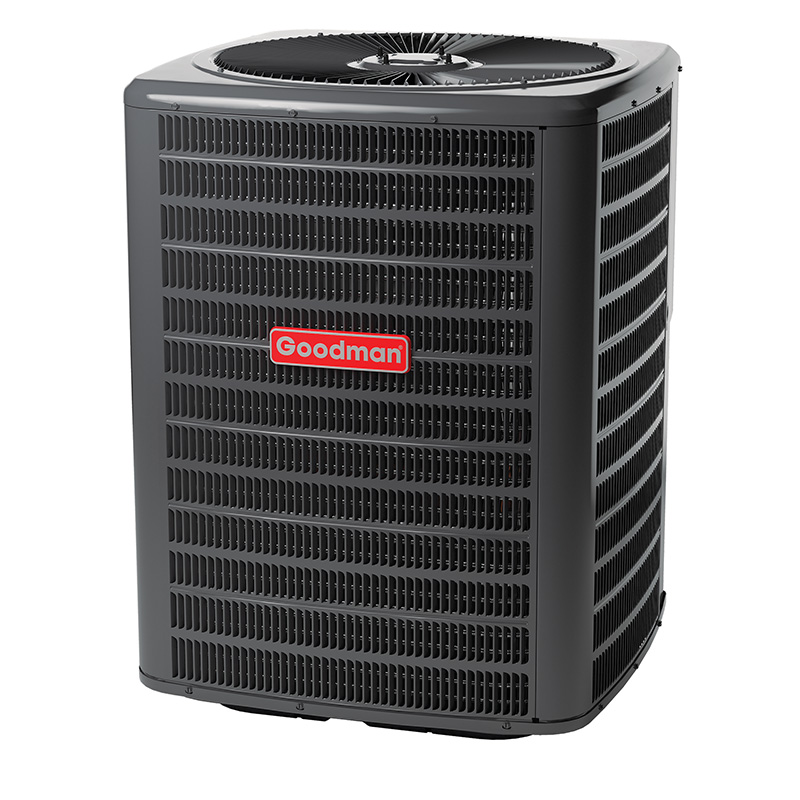
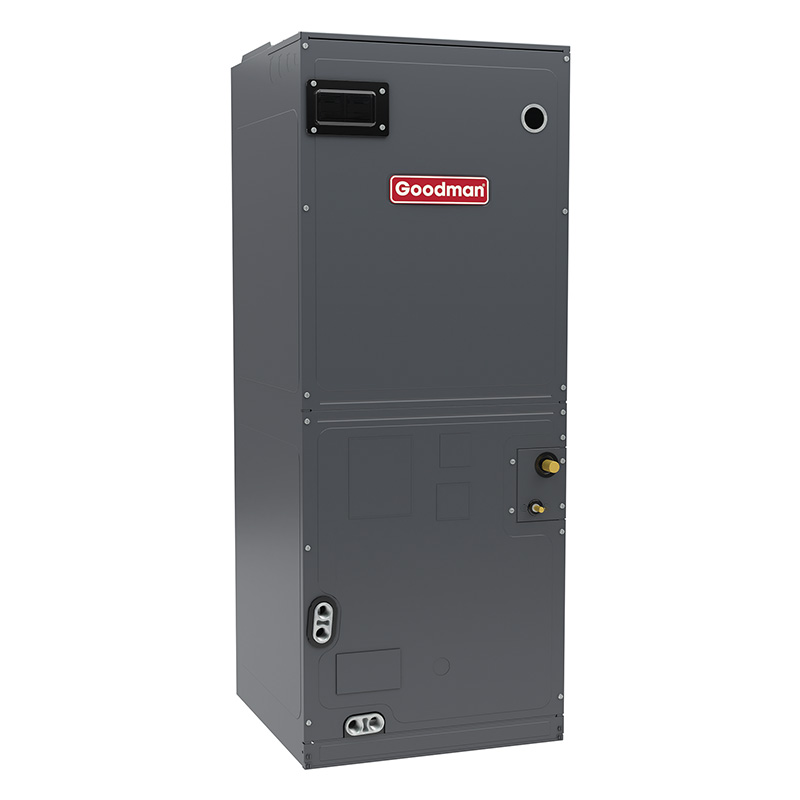
Goodman 1.5 Ton 15.2 SEER2 R32 High Efficiency Heat Pump System
View on AC Direct see your lowest price →Check current price on AC Direct →
Key features
- 15.2 SEER2 efficiency rating meets current federal high-efficiency standards
- 1.5-ton capacity suited to smaller conditioned spaces with proper load calculations
- R-32 refrigerant with lower global warming potential than outgoing R-410A
- Single-stage operation provides straightforward, reliable capacity delivery
- Goodman factory warranty covers parts with optional labor coverage through registered dealers
- Priced roughly 15 to 25 percent below comparable Carrier, Trane, and Lennox equipment
About this system
The Goodman 1.5-ton 15.2 SEER2 heat pump system is built for smaller homes and conditioned spaces typically in the 450 to 600 square foot range, though proper Manual J load calculations should always drive that decision. At 15.2 SEER2, it sits at the entry point of the current federal high-efficiency threshold, meaning it qualifies as a meaningful step up from baseline equipment without the price premium of top-tier variable-speed systems. The switch to R-32 refrigerant is a practical future-proofing move: R-32 has a lower global warming potential than the R-410A it replaces and is increasingly the industry standard as R-410A is phased down.
This system makes the most sense in mild to moderate climates where the heat pump runs as the primary source of both heating and cooling, and where heating demand rarely drops to extreme lows. It is a single-stage system, meaning it runs at full capacity or not at all, which is efficient for the size but does mean it cycles on and off more frequently than a two-stage or variable-speed unit in shoulder seasons. For a small bungalow, a detached garage conversion, a workshop, or a guest suite addition, the 1.5-ton capacity and value-oriented price point are well matched. Buyers who need precise humidity control or very quiet operation in a main living area may want to weigh the limits of single-stage operation before purchasing.
This system delivers solid efficiency at a genuinely competitive price for small-space applications, and in the hands of a skilled installer it will perform reliably for a decade or more. The trade-off is a brand track record that shows meaningful repair frequency after year 7, a compressor lifespan that lags premium brands, and real-world reliability that depends heavily on installation quality. It is a sensible buy for budget-conscious owners who plan for occasional maintenance costs, not a set-it-and-forget-it premium unit.
Overall score is the average of the five ratings above.
What we like
- Priced 15 to 25 percent below Trane, Carrier, and Lennox at similar efficiency, reducing upfront cost
- 15.2 SEER2 rating clears the current federal high-efficiency bar, keeping operating costs reasonable
- R-32 refrigerant is lower-impact and increasingly available as technician familiarity grows
- Dual-run capacitor failures, the most common documented issue, are typically a low-cost fix in the $300 to $600 range
- Right-sized 1.5-ton output for small spaces avoids the short-cycling and humidity problems of oversized equipment
Trade-offs
- Compressor lifespan averages 10 to 14 years versus 15 to 20 years for premium-brand compressors
- Evaporator coil leaks appear in a meaningful share of owner reviews, a more costly repair than capacitor replacement
- Single-stage operation means less precise humidity and comfort control compared to two-stage or variable-speed alternatives
- A minority of owners report refrigerant leaks within the first year, typically tied to install quality or initial charge errors
What homeowners and pros say about Goodman
Goodman earns a Google dealer review average of around 3.8 out of 5 across hundreds of location-level reviews, where affordability is the most frequently praised attribute. That score reflects a real segment of satisfied owners who got a competent installation and are running reliable equipment years later. The ConsumerAffairs picture is less flattering, with a score of about 2.5 out of 5, though that channel skews heavily toward frustrated owners who seek out a place to vent. The recurring theme there is repair costs rising after roughly year 7, which lines up with the documented pattern of dual-run capacitor failures and, in a meaningful share of cases, evaporator coil leaks that are more disruptive to the budget.
HVAC professionals who work on Goodman equipment regularly tend to have a pragmatic view: the parts are widely available, the designs are familiar, and a well-installed unit will serve a budget-minded homeowner reasonably well. What they flag consistently is that compressor lifespan on Goodman systems averages 10 to 14 years, a real gap compared to the 15 to 20 years seen from premium brands like Trane and Lennox. For this specific 1.5-ton R-32 system, the early-adoption note worth keeping in mind is that a minority of owners across the broader Goodman line report refrigerant leaks within the first year, and technicians attribute most of those to installation or initial charge issues rather than the equipment itself. That puts the burden squarely on finding a skilled, R-32-certified contractor rather than assuming the system will be trouble-free out of the box.
Sources: ConsumerAffairs Goodman owner reviews, AHRI Directory of Certified Product Performance, U.S. DOE appliance and equipment efficiency standards, Goodman product specification sheets.
What it costs to run
At 15.2 SEER2, cooling this 1.5-ton system for a typical 1200-hour cooling season at the U.S. average electricity rate of $0.17/kWh works out to roughly $242 per year in cooling, about $32 less per year than a minimum-efficiency 13.4 SEER2 unit of the same size. Your real cost depends on your climate and local rate.
Method: (18,000 BTU/hr ÷ 15.2 SEER2) × 1200 hours ÷ 1000 × $0.17/kWh. Rate source: U.S. EIA average; cooling hours: moderate-climate estimate.
How it compares
| Brand | Comparable model | SEER2 | Stage | Price position |
|---|---|---|---|---|
| Goodman | 1.5 Ton 15.2 SEER2 R-32 Heat Pump System | 15.2 | Single-stage | Value pick |
| Carrier | Performance Series (24ACC6) | 15.2 | Single-stage | Typically 15 to 25 percent more than Goodman |
| Trane | XR15 Series | 15.0-16.0 | Single-stage | Typically 15 to 25 percent more than Goodman |
| Lennox | Merit ML15XP1 Series | 15.1 | Single-stage | Typically 15 to 25 percent more than Goodman |
Competitor rows are comparable single-stage units at similar efficiency; price is relative position, not a quote.
Questions about this system
Is 1.5 tons enough for my space, and how do I know for sure?
A Manual J load calculation performed by a licensed HVAC contractor is the only reliable way to confirm sizing for your specific home. As a rough starting point, 1.5 tons is often appropriate for 450 to 600 square feet in a moderately insulated home, but ceiling height, window area, local climate, and insulation levels all shift that number significantly. Oversizing causes short-cycling and poor humidity control, so resist the temptation to go bigger just to be safe.
What should I know about R-32 refrigerant before buying?
R-32 is mildly flammable (classified A2L), which means technicians working on it need to follow specific handling procedures and some older service equipment may require updating. In practice, most current HVAC technicians are trained for it, and the lower global warming potential is a genuine environmental advantage over R-410A. Make sure your installer confirms they are R-32 certified before proceeding.
What are the most likely repair costs I should budget for over 10 years?
The most commonly reported failure on Goodman heat pumps is the dual-run capacitor, which typically runs $300 to $600 to diagnose and replace and is considered a routine repair. Evaporator coil leaks are a more serious documented issue and can run considerably higher depending on labor rates and coil availability. Budgeting for one capacitor replacement and a service contract that covers diagnostics is a reasonable approach for a value-brand system.
How important is installer quality for a Goodman system specifically?
It is arguably the single most important factor in how this system performs and how long it lasts. HVAC technicians consistently note that Goodman's real-world longevity depends more on proper refrigerant charge, correct airflow setup, and quality line-set work than on almost any other variable. A minority of owners who report first-year refrigerant leaks are typically experiencing install or charge issues rather than manufacturing defects, which underscores why choosing a certified, experienced contractor matters as much as the equipment itself.
Does this system qualify for the federal energy efficiency tax credit?
As of current IRS guidance, heat pumps meeting or exceeding 15.2 SEER2 and qualifying HSPF2 thresholds may be eligible for the 25C tax credit of up to $2,000 for the equipment and installation. You should verify the specific model's AHRI-certified ratings against the current IRS requirements and consult a tax professional, as eligibility rules can change and depend on your individual tax situation.
Specifications
| Cooling capacity | 1.5 Ton |
| Efficiency | 15.2 SEER2 |
| Refrigerant | R-32 |