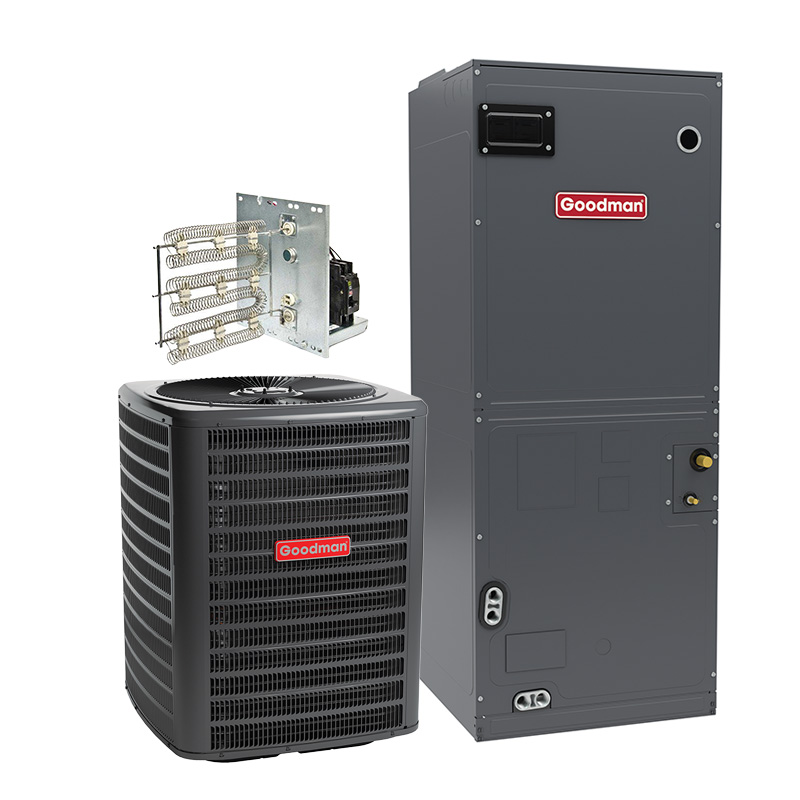
Goodman 1.5 Ton 15 SEER2 R32 Air Conditioner Split System With 2 Ton Air Handler And Electric Heat
View on AC Direct see your lowest price →Check current price on AC Direct →
Key features
- 1.5-ton cooling capacity suits spaces roughly 600 to 900 square feet
- 15 SEER2 efficiency meets current federal minimums for most U.S. regions
- R-32 refrigerant with lower global warming potential than R-410A
- 2-ton air handler with electric heat strips for all-electric heating
- Single-stage scroll compressor operation
- Split-system configuration requiring professional installation and line-set connection
About this system
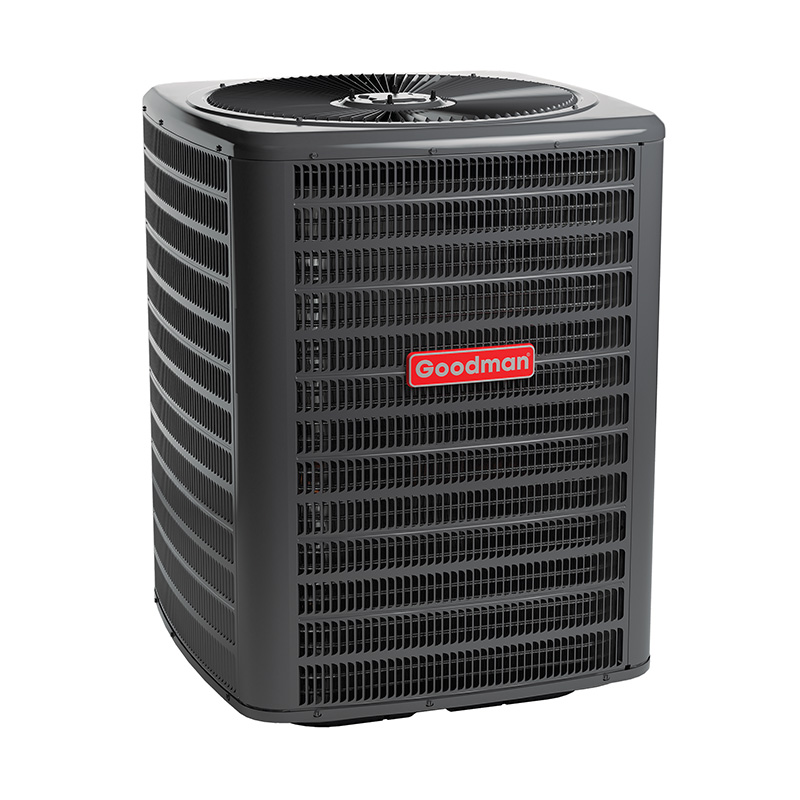
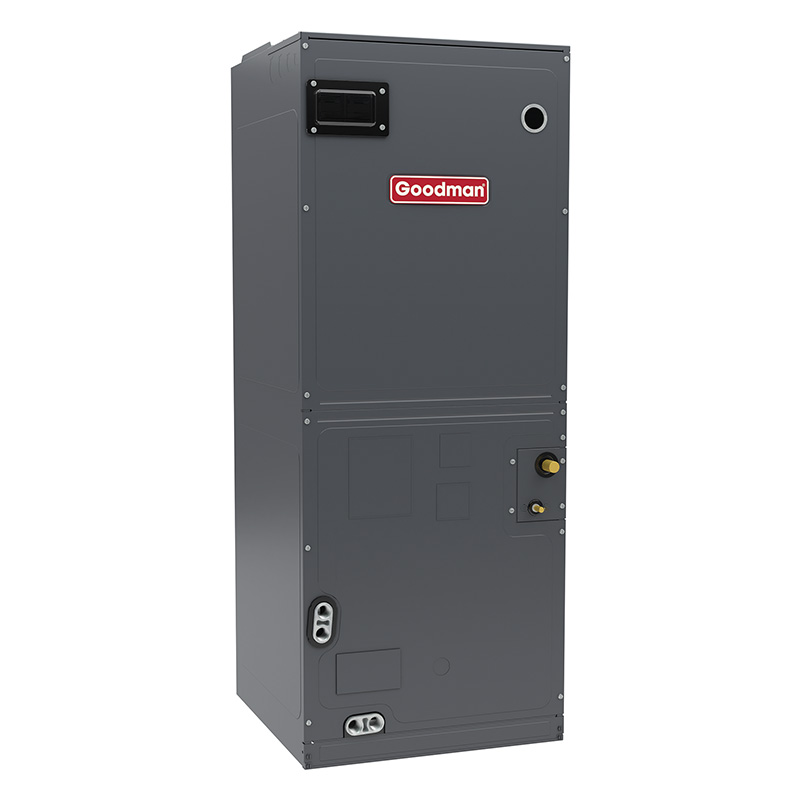
The Goodman 1.5-ton 15 SEER2 split system pairs a compact cooling-only outdoor condenser with a 2-ton air handler that includes electric heat strips, making it a practical all-in-one solution for smaller homes, additions, sunrooms, or climate zones where gas service is unavailable or impractical. The 1.5-ton cooling capacity covers roughly 600 to 900 square feet of well-insulated living space, though local humidity loads and ceiling heights can shift that range considerably. The oversized 2-ton air handler provides a bit of extra airflow headroom and compatibility flexibility, which can simplify duct connections in certain retrofit scenarios.
At 15 SEER2, this system sits at the entry-level threshold of current federal minimum efficiency standards for most U.S. regions. It will outperform older 13 or 14 SEER equipment still common in older homes, but it stops well short of the 17 to 20 SEER2 territory where variable-speed compressors and inverter technology live. For homeowners in mild-to-moderate cooling climates who run their system seasonally rather than year-round, the efficiency gap is manageable. Those in the deep South or Southwest facing long, brutal cooling seasons may find the operating cost difference versus a higher-SEER2 system adds up meaningfully over time. The switch to R-32 refrigerant is a genuine environmental step forward, as R-32 carries a global warming potential roughly two-thirds lower than the outgoing R-410A.
This Goodman system offers a genuinely affordable entry point for small-space cooling with all-electric heat, and the R-32 refrigerant transition is a real plus. At 15 SEER2 it will not impress efficiency hawks, and Goodman's documented reliability record means budgeting for potential repairs after year seven is a realistic expectation rather than worst-case thinking. It earns its place for cost-conscious buyers in mild climates who prioritize upfront price and are comfortable with that trade-off.
Overall score is the average of the five ratings above.
What we like
- Priced 15 to 25 percent below comparable Carrier, Trane, and Lennox equipment at similar efficiency
- R-32 refrigerant reduces environmental impact versus R-410A systems
- 2-ton air handler provides airflow flexibility and eases certain retrofit installations
- Electric heat strips eliminate the need for a separate gas furnace or heat pump
- Capacitor failures, the most common reported issue, are relatively low-cost repairs in the $300 to $600 range
Trade-offs
- 15 SEER2 is the minimum-efficiency tier; operating costs will be higher than 17-plus SEER2 alternatives in hot climates
- Compressor lifespan averages 10 to 14 years versus 15 to 20 years for premium-brand counterparts
- Evaporator coil leaks appear in a meaningful share of owner reports, a potential mid-life expense
- ConsumerAffairs rating sits around 2.5 out of 5, driven largely by repair-cost complaints after year seven
What homeowners and pros say about Goodman
Homeowners who leave reviews about Goodman equipment on Google dealer pages tend to land around 3.8 out of 5, and the most repeated reason for a positive rating is straightforward: the price was noticeably lower than competing brands at the same efficiency level. That 15 to 25 percent cost advantage is real and documented, and for buyers replacing aging equipment on a fixed budget it carries genuine weight. On the other side, ConsumerAffairs scores for Goodman sit around 2.5 out of 5, a gap that reflects how complaint-heavy that particular platform skews, but also points to a real pattern: repair costs that climb after roughly year seven are a recurring theme in those reviews, not an outlier concern.
HVAC technicians who install and service these systems regularly make a consistent observation: a Goodman unit installed carefully by an experienced technician performs closer to its rated specification than one rushed through a low-bid installation. The documented weak points are specific and worth knowing before you buy. Dual-run capacitors are the most frequently reported failure, usually a manageable $300 to $600 fix. Evaporator coil leaks appear in a meaningful slice of longer-term owner reports and represent a more serious expense. Compressor longevity averages 10 to 14 years on Goodman equipment, versus the 15 to 20 years typical of premium brands, a gap that matters more in high-use climates. A small but notable share of first-year refrigerant leak reports also exists, almost always attributed to installation rather than the unit itself, which reinforces why choosing a qualified installer matters as much as the equipment you select.
Sources: ConsumerAffairs Goodman owner reviews, AHRI Directory of Certified Product Performance, U.S. DOE appliance and equipment efficiency standards, Goodman product specification sheets.
What it costs to run
At 15 SEER2, cooling this 1.5-ton system for a typical 1200-hour cooling season at the U.S. average electricity rate of $0.17/kWh works out to roughly $245 per year in cooling, about $29 less per year than a minimum-efficiency 13.4 SEER2 unit of the same size. Your real cost depends on your climate and local rate.
Method: (18,000 BTU/hr ÷ 15 SEER2) × 1200 hours ÷ 1000 × $0.17/kWh. Rate source: U.S. EIA average; cooling hours: moderate-climate estimate.
How it compares
| Brand | Comparable model | SEER2 | Stage | Price position |
|---|---|---|---|---|
| Goodman | 1.5-Ton 15 SEER2 R-32 with 2-Ton Air Handler and Electric Heat | 15 | Single-stage | Value pick |
| Carrier | Comfort Series 24ACC6 | 15-16 | Single-stage | Moderately higher than Goodman |
| Trane | XR15 | 15 | Single-stage | Moderately to significantly higher than Goodman |
| Lennox | Merit ML15XC1 | 15 | Single-stage | Moderately higher than Goodman |
Competitor rows are comparable single-stage units at similar efficiency; price is relative position, not a quote.
Questions about this system
Why is the air handler rated 2 tons when the condenser is only 1.5 tons?
The air handler capacity refers to its airflow and coil size rating, not its cooling output. Running a slightly larger air handler with a smaller condenser is common in certain retrofit or zoning situations and can ease duct connections, but the system will only deliver 1.5 tons of actual cooling because that is what the outdoor unit produces.
Does this system work as a heat pump, or does heat only come from the electric strips?
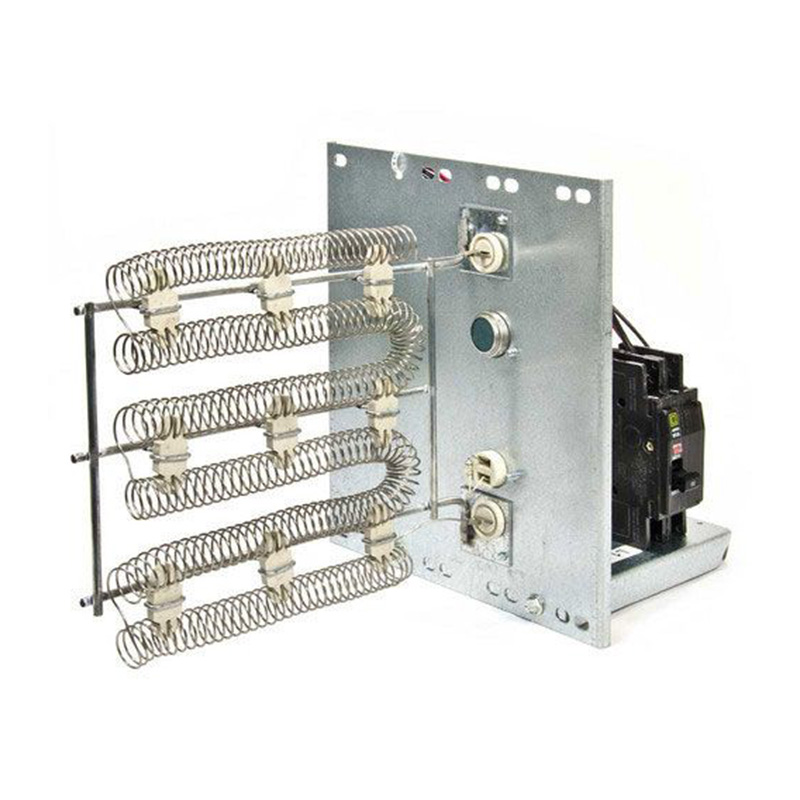
This is a straight-cool air conditioner, not a heat pump. All heating comes from the electric resistance strips in the air handler. Electric strip heat is less efficient than a heat pump, so heating operating costs will be higher, especially in climates with long cold seasons.
What is the most likely repair I should budget for down the road?
Dual-run capacitor failure is the most commonly reported issue with Goodman equipment and typically costs $300 to $600 to fix. Evaporator coil leaks also appear in a meaningful share of owner reports and tend to show up later in the system's life, representing a more significant expense.
Is R-32 refrigerant harder or more expensive to service than R-410A?
R-32 requires technicians to use slightly different handling procedures due to its mild flammability classification, but it is not significantly more difficult or expensive to service. Most HVAC technicians are already being trained on R-32 as it becomes the industry standard, and the refrigerant itself is generally less expensive than R-410A was.
How much does install quality actually affect how this system performs?
Significantly. Goodman units are consistently cited by HVAC technicians as being particularly sensitive to installation quality, including proper refrigerant charge, correct line-set sizing, and adequate airflow setup. A minority of owners report refrigerant leaks within the first year, which is nearly always traced back to installation rather than a factory defect. Choosing a licensed, experienced installer is arguably as important as the equipment choice itself.
Specifications
| Cooling capacity | 1.5 Ton |
| Efficiency | 15 SEER2 |
| Refrigerant | R-32 |