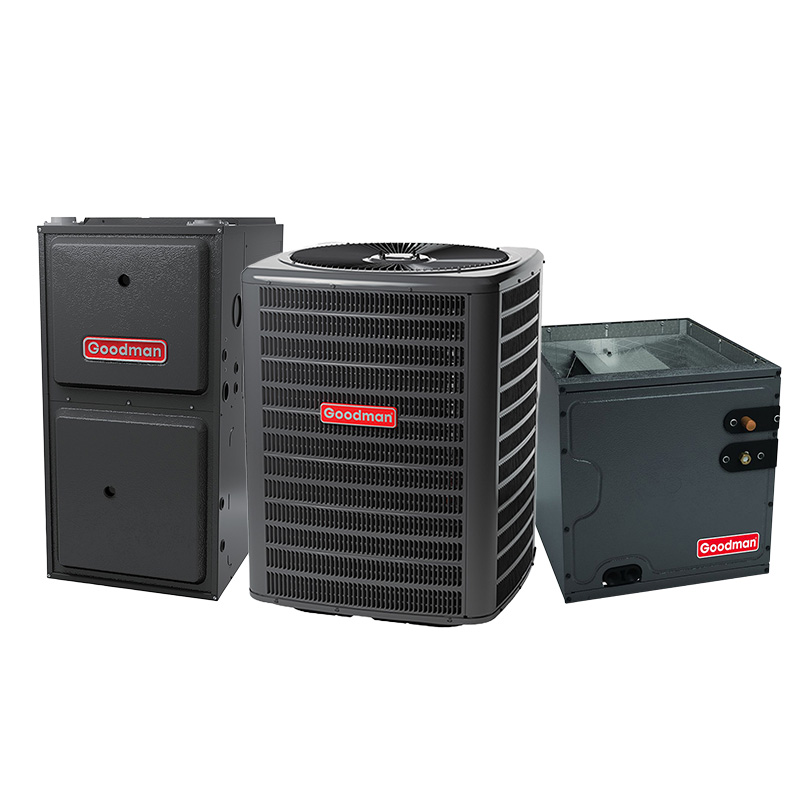
Goodman 1.5 Ton 16 SEER2 AC & Gas Furnace System – Modulating Variable-Speed, 60000 BTU Gas Furnace, 97% AFUE, Upflow, R32
View on AC Direct see your lowest price →Check current price on AC Direct →
Key features
- 1.5-ton variable-speed condenser rated at 16 SEER2 for above-code cooling efficiency
- 60,000 BTU modulating gas furnace at 97% AFUE, among the highest efficiency tier available
- R-32 refrigerant: lower global-warming potential and lower operating pressure than R-410A
- Variable-speed ECM blower motor for quieter operation and tighter humidity control
- Upflow configuration designed for basement or closet installs with supply air directed upward
- Matched system engineered and rated as a unit, which matters for warranty and ARI certification
About this system
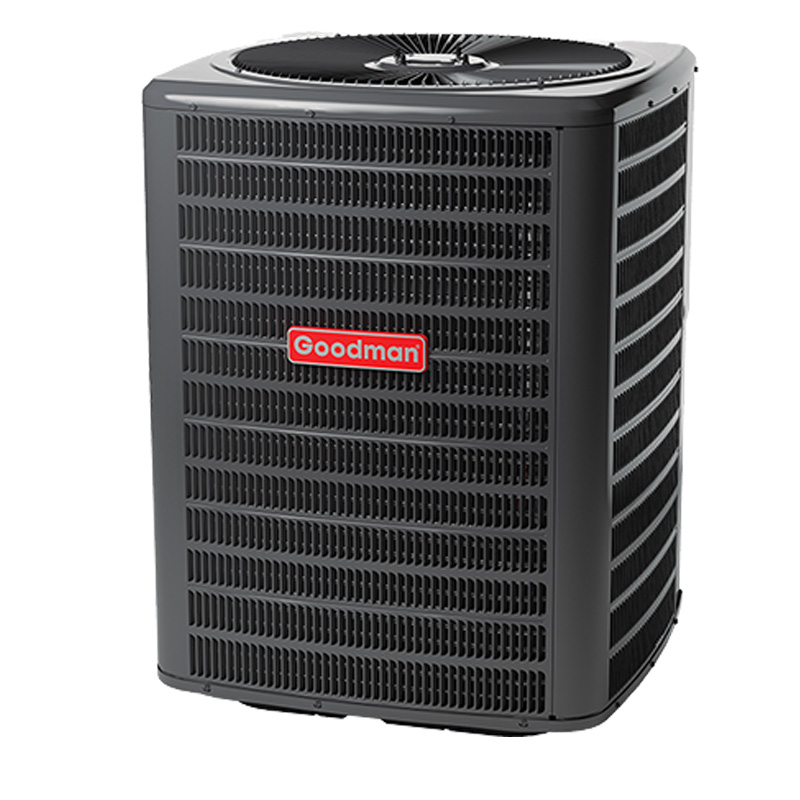
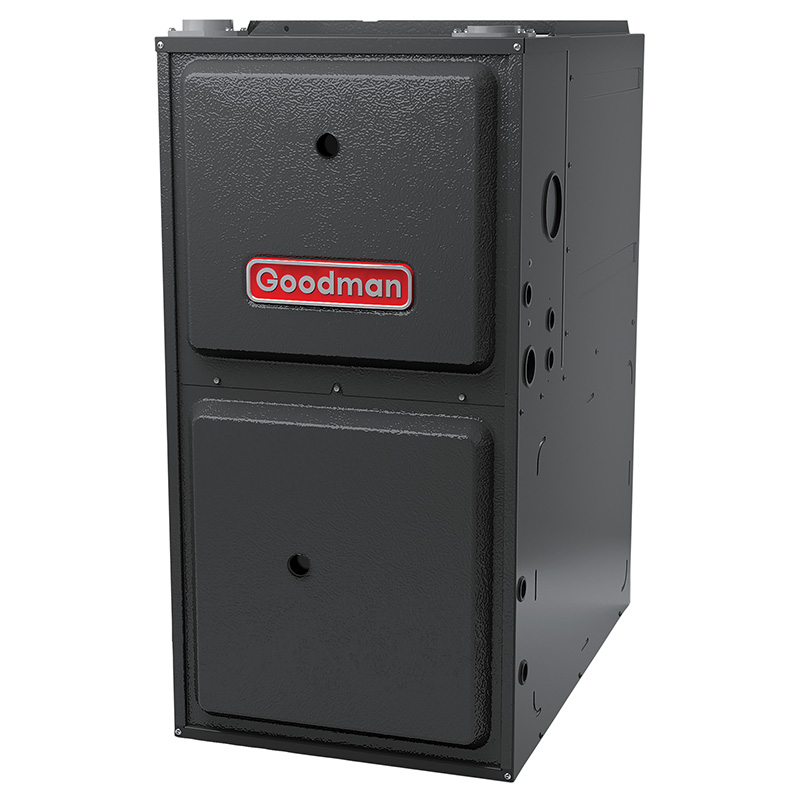
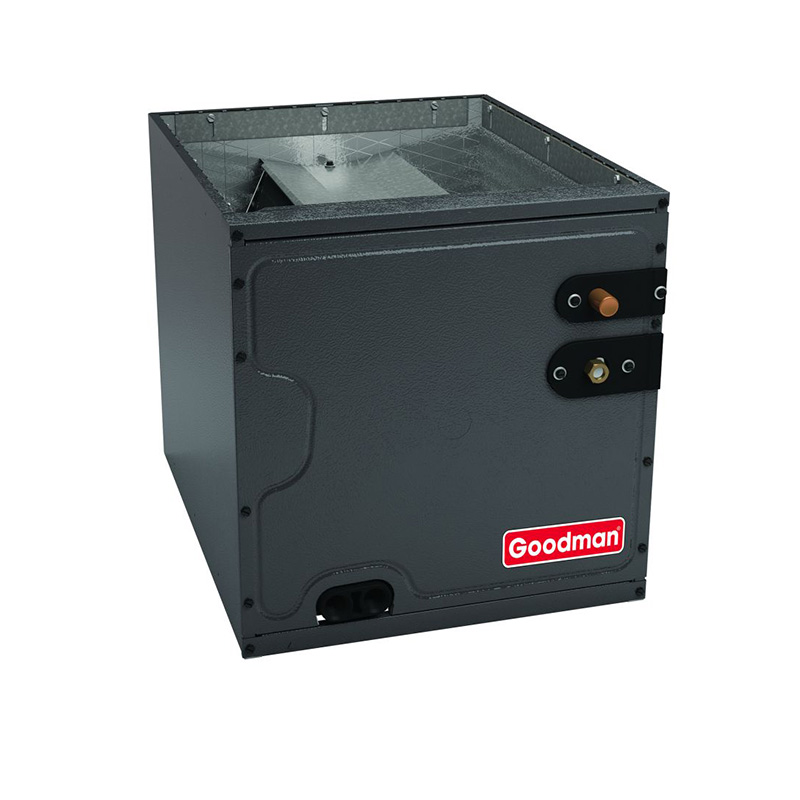
The Goodman GLXS5BA1810D pairs a 1.5-ton, 16 SEER2 variable-speed air conditioner with a 60,000 BTU, 97% AFUE modulating gas furnace in an upflow configuration. That combination puts it at the upper end of what most building codes and utility rebate programs consider high-efficiency, without crossing into the premium-tier pricing of Trane or Lennox. The R-32 refrigerant charge runs at lower pressure than older R-410A systems and carries a lower global-warming potential, which matters if your utility or municipality is already restricting R-410A service.
A 1.5-ton capacity is sized for smaller conditioned spaces, typically 600 to 900 square feet in a well-insulated home or 500 to 700 square feet in an older, leakier envelope. The modulating furnace and variable-speed blower work together to hold indoor temperatures within a fraction of a degree rather than cycling hard on and off, which reduces humidity swings, cuts cold-start drafts, and trims gas consumption over a heating season. For a homeowner replacing a single-stage 80% furnace and an aging R-22 condensing unit, the efficiency jump here is substantial. That said, the benefits of modulating equipment are only realized when the system is correctly charged, commissioned, and matched to properly sized ductwork, a point that comes up repeatedly in field feedback on Goodman equipment.
This Goodman system delivers genuinely high-tier efficiency specs at a price point that undercuts comparable Carrier, Trane, and Lennox equipment by a meaningful margin, making it a reasonable choice for budget-conscious buyers who prioritize low operating costs. The trade-off is a brand track record that shows more repair activity past year seven, shorter average compressor lifespan than premium competitors, and reliability that depends heavily on the installer you choose. If the install is done well and you budget for a capacitor replacement somewhere in years five through ten, this system can perform as advertised.
Overall score is the average of the five ratings above.
What we like
- 97% AFUE furnace is at the top of the efficiency scale and can generate real utility savings in cold climates
- 16 SEER2 cooling efficiency qualifies for many utility rebate programs, offsetting some upfront cost
- Modulating and variable-speed operation provides noticeably better comfort and humidity control than single-stage systems
- R-32 refrigerant is forward-looking as R-410A faces phase-down regulations
- Priced roughly 15 to 25 percent below comparable Trane, Lennox, and Carrier systems, leaving room in the budget for a quality installer
Trade-offs
- ConsumerAffairs feedback averages around 2.5 out of 5, with repair costs after year seven being the most cited grievance
- Compressor lifespan averages 10 to 14 years versus 15 to 20 years documented for premium-brand compressors
- Evaporator coil leaks appear in a meaningful share of owner reports, which can mean expensive refrigerant loss and downtime
- A minority of owners report refrigerant leaks in the first year, most traced to install or charge issues, underscoring how much outcome depends on installer quality
What homeowners and pros say about Goodman
Homeowners who have installed Goodman systems most often lead with the price. On Google dealer reviews, which average around 3.8 out of 5 across hundreds of location-level reviews, affordability is the word that comes up most. Owners who had a quality installer tend to report years of uneventful operation. The picture shifts on ConsumerAffairs, where the brand averages closer to 2.5 out of 5, and the complaints cluster around the same period: roughly year seven onward, when repair bills start accumulating. The two failure modes that show up most consistently in owner accounts are dual-run capacitor failures, a relatively cheap fix in the 300 to 600 dollar range but an unwelcome one in peak summer heat, and evaporator coil leaks, which are more disruptive and costly. A smaller share of owners report refrigerant leaks within the first twelve months, and technicians generally attribute those to install or charge errors rather than factory defects.
HVAC professionals tend to hold a similarly split view of the brand. Installers who work in volume appreciate Goodman’s parts availability and the predictability of its failure modes. The capacitor issue, in particular, is so well documented that many technicians proactively replace it during annual maintenance visits on older Goodman units. The more consistent criticism from the trade is around compressor longevity: field experience and brand track records suggest Goodman compressors average 10 to 14 years, compared to 15 to 20 years for Trane, Carrier, and Lennox compressors in similar conditions. For this specific system, a modulating variable-speed unit with R-32, the installer’s familiarity with variable-speed commissioning and A2L refrigerant handling becomes even more important than it would be for a straightforward single-stage replacement. The gap between a great outcome and a frustrating one with this brand runs directly through the quality of the person who puts it in.
Sources: ConsumerAffairs Goodman owner reviews, AHRI Directory of Certified Product Performance, U.S. DOE appliance and equipment efficiency standards, Goodman product specification sheets.
What it costs to run
At 16 SEER2, cooling this 1.5-ton system for a typical 1200-hour cooling season at the U.S. average electricity rate of $0.17/kWh works out to roughly $230 per year in cooling, about $44 less per year than a minimum-efficiency 13.4 SEER2 unit of the same size. Your real cost depends on your climate and local rate.
Method: (18,000 BTU/hr ÷ 16 SEER2) × 1200 hours ÷ 1000 × $0.17/kWh. Rate source: U.S. EIA average; cooling hours: moderate-climate estimate.
How it compares
| Brand | Comparable model | SEER2 | Stage | Price position |
|---|---|---|---|---|
| Goodman | GLXS5BA1810D | 16 | Variable | Value pick |
| Carrier | Comfort 16 (24ACC6) | 16 | Single-stage | Typically 15 to 25 percent more than the Goodman |
| Trane | XR16 series | 16 | Single-stage | Typically 15 to 25 percent more than the Goodman |
| Lennox | Merit ML16XC1 series | 16 | Single-stage | Typically 15 to 25 percent more than the Goodman |
Competitor rows are comparable single-stage units at similar efficiency; price is relative position, not a quote.
Questions about this system
Is 1.5 tons enough for my house, or should I size up to be safe?
Oversizing is one of the most common and harmful mistakes with variable-speed systems because a too-large unit short-cycles, never runs long enough to dehumidify properly, and wears components faster. A 1.5-ton system is appropriate for roughly 600 to 900 square feet in a reasonably insulated home, but you need a Manual J load calculation from your installer to confirm. Do not skip that step.
What does R-32 refrigerant mean for servicing and repairs down the road?
R-32 is flammable at high concentrations, so it requires a technician certified to handle A2L refrigerants and tools rated for R-32 service. Most established HVAC companies are already equipped for this as the industry transitions away from R-410A, but it is worth confirming with any service contractor before they open the system.
Goodman reviews online are pretty mixed. How worried should I be about reliability?
The concern is real but not disqualifying. Google dealer reviews land around 3.8 out of 5, and the ConsumerAffairs score sits around 2.5 out of 5, a channel that skews toward unhappy owners. The documented weak points are dual-run capacitors, which typically fail between years five and ten and cost 300 to 600 dollars to replace, and evaporator coil leaks that show up in a meaningful share of long-term owner reports. A good install and a service agreement that includes annual checks will catch the capacitor issue before it strands the system.
What kind of ductwork does this upflow configuration require?
Upflow means the furnace pulls return air in at the bottom and pushes conditioned air out the top, so it is designed for installations where supply ducts run overhead through a ceiling plenum, typically a basement or utility closet below the living space. If your existing ductwork is configured differently, you may need a horizontal or downflow unit instead, and your installer should verify this before ordering.
Does this system qualify for the federal energy efficiency tax credit?
As of current IRS guidance under the Inflation Reduction Act, central air conditioners and heat pumps meeting certain efficiency thresholds qualify for the 25C tax credit, but gas furnaces have a separate set of requirements tied to efficiency and, in some cases, fuel type. A 97% AFUE furnace generally meets the efficiency threshold, but you should confirm current eligibility with a tax professional or the ENERGY STAR database before purchasing, as program rules can change.
Specifications
| Cooling capacity | 1.5 Ton |
| Efficiency | 16 SEER2 |
| Furnace output | 60000 BTU |
| Furnace efficiency | 97% AFUE |
| Configuration | Upflow |
| Refrigerant | R-32 |
| Model | GLXS5BA1810D |