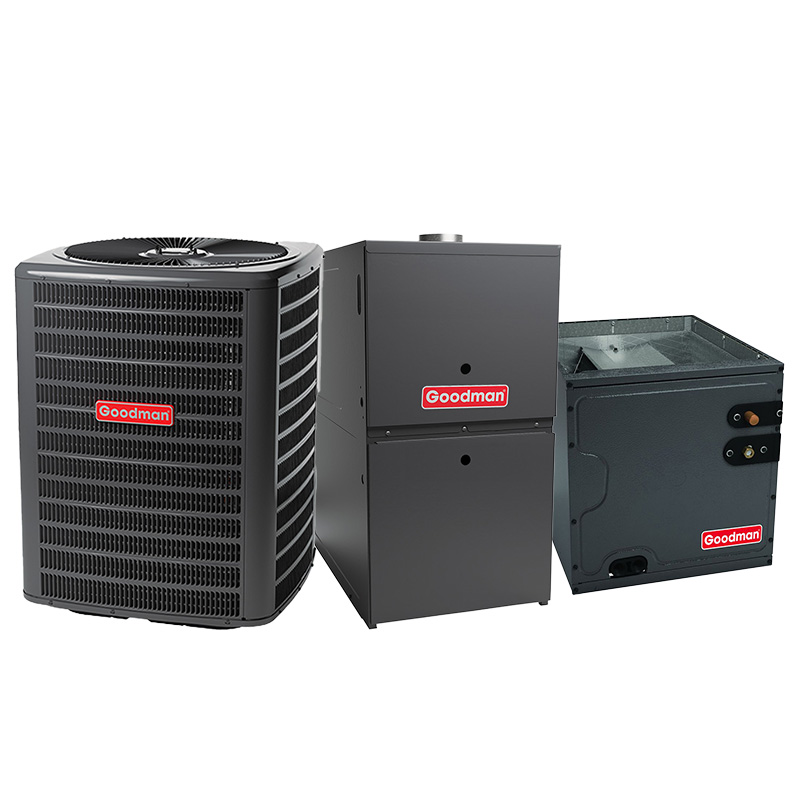
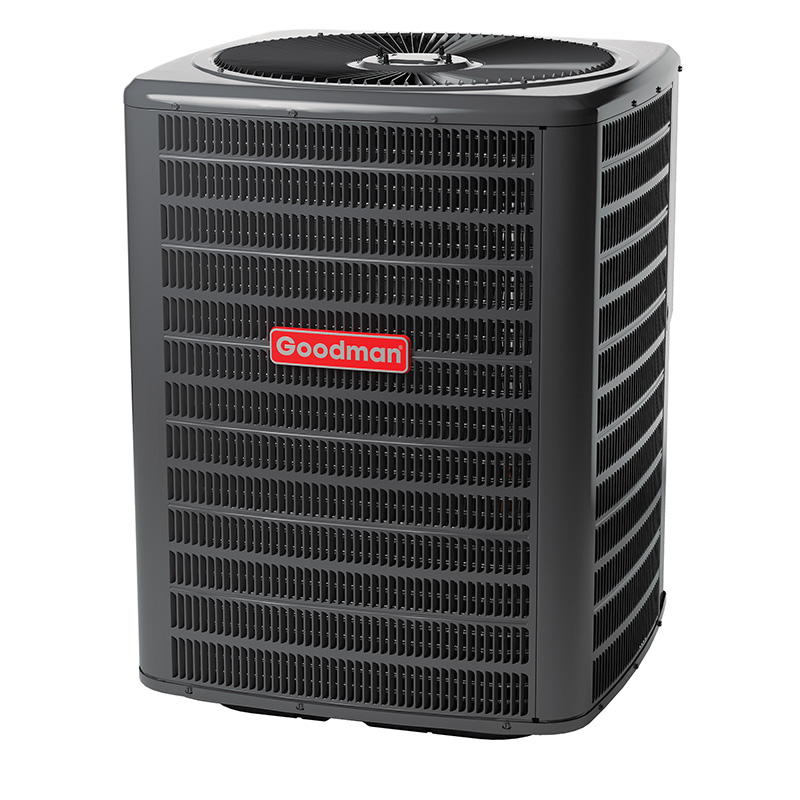
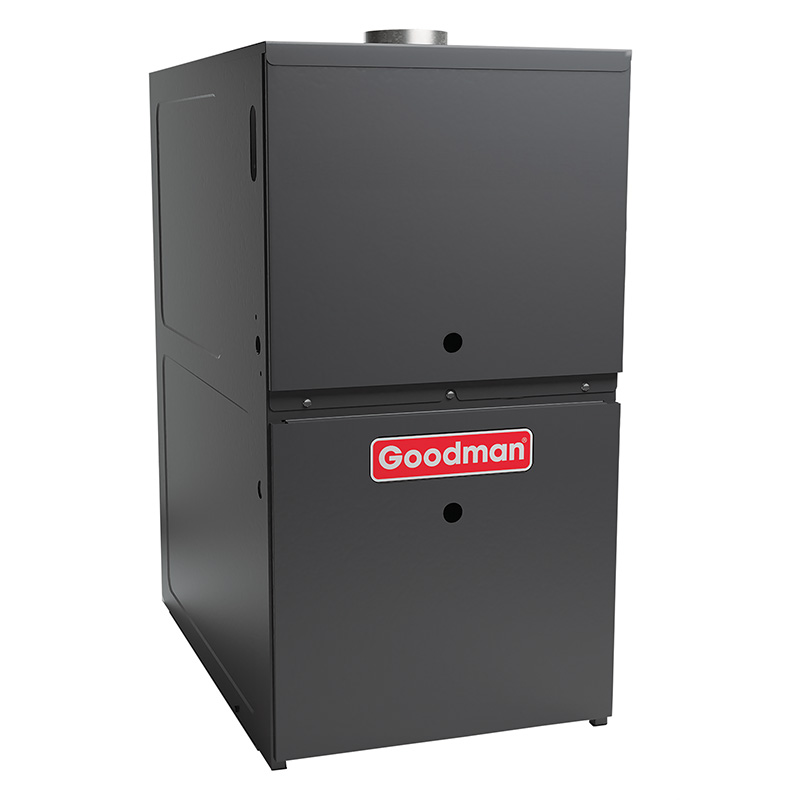
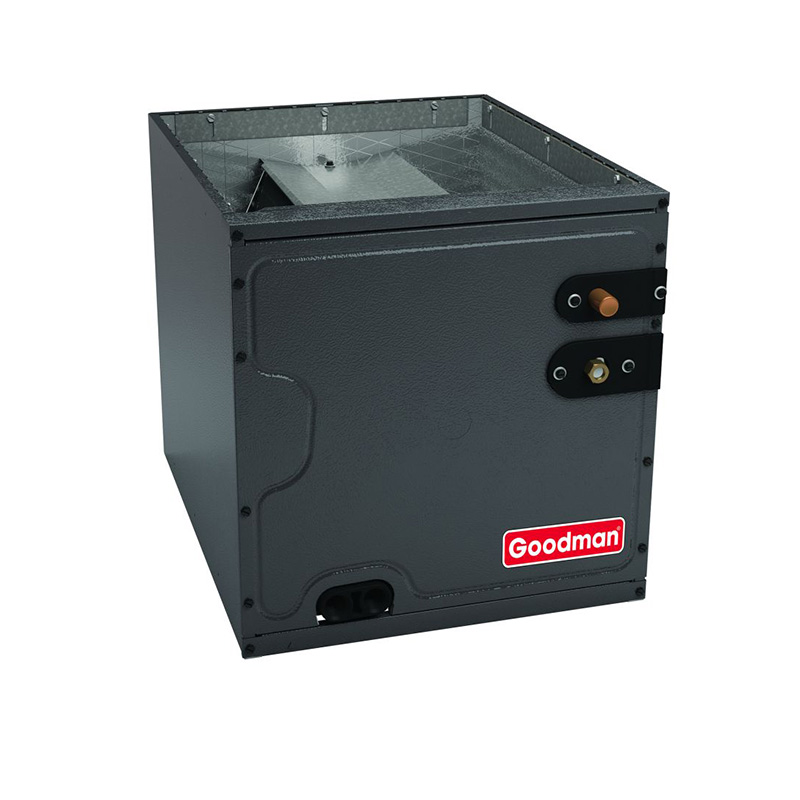
Goodman 1.5 Ton 16 SEER2 AC & Gas Furnace System – Two Stage Variable-Speed, 60000 BTU Gas Furnace, 80% AFUE, Upflow, R32
View on AC Direct see your lowest price →Check current price on AC Direct →
Key features
- Two-stage compressor for quieter part-load operation and steadier room temperatures
- Variable-speed ECM blower motor reduces energy use and improves humidity control
- 16 SEER2 efficiency rating meets 2023 federal minimums with headroom in most U.S. climate zones
- 60,000 BTU upflow gas furnace at 80% AFUE for standard-efficiency heating
- R-32 refrigerant with lower global-warming potential than R-410A
- Factory-matched system reduces compatibility guesswork when paired with a Goodman coil
About this system
The Goodman 1.5-ton, 16 SEER2 two-stage AC and gas furnace system is built for smaller homes, condos, and additions in the 600-to-900 square foot range, where a correctly sized load matters more than raw capacity. The two-stage compressor runs at a lower output most of the time, cycling less frequently and holding a steadier indoor temperature than a single-stage unit would. The variable-speed air handler further reduces hot and cold spots by moving air continuously at low speed rather than blasting on and off, which also helps wring more humidity out of the air during cooling season.
The 60,000 BTU gas furnace operates at 80% AFUE, meaning 80 cents of every dollar in gas goes toward heat. That is the standard-efficiency tier, not the high-efficiency tier, so it will not qualify for federal efficiency tax credits the way a 96% or higher unit would. Upflow configuration suits homes with the air handler in a basement or utility closet where supply air rises into the living space. The system uses R-32 refrigerant, which carries a lower global-warming potential than the R-410A it replaces and is becoming the industry standard in new residential equipment.
This package sits in Goodman’s mid-range lineup, priced noticeably below comparable Trane, Carrier, and Lennox systems while sharing many of the same underlying efficiency targets. The two-stage, variable-speed combination is a genuine comfort upgrade over budget single-stage alternatives, but getting full value out of it depends heavily on a proper installation, correct refrigerant charge, and a quality coil match.
This system delivers real comfort upgrades over entry-level single-stage equipment at a price point that is hard to match from premium brands, but Goodman's track record past the seven-year mark and its documented coil and capacitor failure rates mean buyers should factor in an extended warranty and budget for possible service calls. It is a solid fit for cost-conscious homeowners who use a reputable installer and treat the warranty coverage as a necessary part of the purchase.
Overall score is the average of the five ratings above.
What we like
- Lower upfront cost, typically 15 to 25 percent below equivalent Carrier, Trane, or Lennox systems
- Two-stage operation provides noticeably better comfort and humidity control vs single-stage alternatives
- Variable-speed blower lowers operating noise and cuts fan energy use significantly
- R-32 refrigerant is a forward-looking choice as the industry moves away from R-410A
- Factory-matched system simplifies coil selection and helps protect warranty coverage
Trade-offs
- 80% AFUE furnace does not qualify for federal high-efficiency incentives and costs more to run than a 96%+ unit
- Dual-run capacitors are the most commonly reported failure point, often appearing in years 5 through 10
- Evaporator coil leaks appear in a meaningful share of owner reviews, a known Goodman weak point
- Compressor lifespan averages 10 to 14 years versus 15 to 20 for premium-brand compressors, meaning a mid-life replacement is more likely
What homeowners and pros say about Goodman
Homeowners who track their Goodman systems on review platforms give the brand a split verdict. On Google dealer review pages, Goodman-installed systems average around 3.8 out of 5 stars, with affordability as the most repeated reason for satisfaction. On ConsumerAffairs, which draws a higher share of people who are already unhappy, the score sits at roughly 2.5 out of 5, and the complaint pattern is consistent: repair costs that start climbing after roughly year seven. For this two-stage, variable-speed system specifically, the comfort-related comments are generally positive when the install was done well, but owners who ran into problems most often point to dual-run capacitor failures as the first thing to go. Capacitor replacements typically cost between 300 and 600 dollars and are not catastrophic, but they do show up with enough frequency to be a known line item in long-term ownership costs. Evaporator coil leaks are the more serious documented issue, appearing in a meaningful share of owner accounts and sometimes leading to refrigerant loss, system downtime, and repair bills that test the patience of budget-oriented buyers.
HVAC technicians tend to view Goodman pragmatically. The equipment gives installers a workable platform, but they consistently emphasize that install quality determines longevity more than the brand nameplate does. Compressor lifespan is a real gap between Goodman and premium brands: technicians generally expect Goodman compressors to average 10 to 14 years in the field, compared to 15 to 20 years for Trane, Carrier, or Lennox units at similar efficiency levels. For this 1.5-ton R-32 system, the refrigerant charge and coil match are particularly important to get right the first time, since a small percentage of owners report refrigerant leaks within the first year, which technicians attribute to installation or charge issues rather than a factory defect. The consistent professional advice: choose your installer at least as carefully as you choose your equipment.
Sources: ConsumerAffairs Goodman owner reviews, AHRI Directory of Certified Product Performance, U.S. DOE appliance and equipment efficiency standards, Goodman product specification sheets.
What it costs to run
At 16 SEER2, cooling this 1.5-ton system for a typical 1200-hour cooling season at the U.S. average electricity rate of $0.17/kWh works out to roughly $230 per year in cooling, about $44 less per year than a minimum-efficiency 13.4 SEER2 unit of the same size. Your real cost depends on your climate and local rate.
Method: (18,000 BTU/hr ÷ 16 SEER2) × 1200 hours ÷ 1000 × $0.17/kWh. Rate source: U.S. EIA average; cooling hours: moderate-climate estimate.
How it compares
| Brand | Comparable model | SEER2 | Stage | Price position |
|---|---|---|---|---|
| Goodman | GSXH5 / AMST / GMVC8 series (this system) | 16 | Two-stage / variable-speed | Value pick |
| Carrier | Comfort 16 (24ACC6) with FE4A coil and 58MXA furnace | 16 | Single-stage | Typically 15 to 25 percent more than this Goodman system |
| Trane | XR16 (4TTR6) with XB coil and S9X1 furnace | 16 | Single-stage | Typically 15 to 25 percent more than this Goodman system |
| Lennox | Merit 16ACX with CH33 coil and ML196 furnace | 16 | Single-stage | Typically 15 to 25 percent more than this Goodman system |
Competitor rows are comparable single-stage units at similar efficiency; price is relative position, not a quote.
Questions about this system
Is 1.5 tons the right size for my house, or should I go up to 2 tons to be safe?
Oversizing is one of the most common HVAC mistakes and causes short-cycling, poor humidity control, and accelerated wear. A proper Manual J load calculation for your specific home, insulation levels, window area, and local climate is the only reliable way to determine correct tonnage. Do not assume bigger is better.
Does the 80% AFUE furnace qualify for any federal tax credits?
No. The federal Energy Efficient Home Improvement Credit (25C) requires a gas furnace to reach 97% AFUE in most U.S. regions to qualify. This 80% AFUE unit does not meet that threshold, so you should not count on a tax credit when calculating your payback period.
What does R-32 refrigerant mean for service costs compared to older systems?
R-32 is increasingly available and is becoming the new residential standard, so parts supply and technician familiarity are growing. It requires slightly different handling procedures than R-410A, so confirm your service contractor is certified and equipped for R-32 before scheduling any refrigerant work.
Goodman reviews mention a lot of capacitor failures. How worried should I be?
Dual-run capacitor failures are the most commonly reported issue with Goodman equipment and typically run between 300 and 600 dollars to repair. They are generally a quick fix rather than a system-ending failure, but they do occur with some regularity after the first few years. Keeping up with annual tune-ups gives a technician the chance to catch a weakening capacitor before it fails in peak summer heat.
How important is it to use a Goodman-matched evaporator coil with this system?
Very important for two reasons. First, a matched coil is required to maintain the rated 16 SEER2 efficiency and may be required to keep the parts warranty intact. Second, Goodman's documented evaporator coil leak history means using an unmatched or lower-quality coil from another brand could shift warranty liability onto you and void coverage on the coil itself.
Specifications
| Cooling capacity | 1.5 Ton |
| Efficiency | 16 SEER2 |
| Furnace output | 60000 BTU |
| Furnace efficiency | 80% AFUE |
| Configuration | Upflow |
| Refrigerant | R-32 |