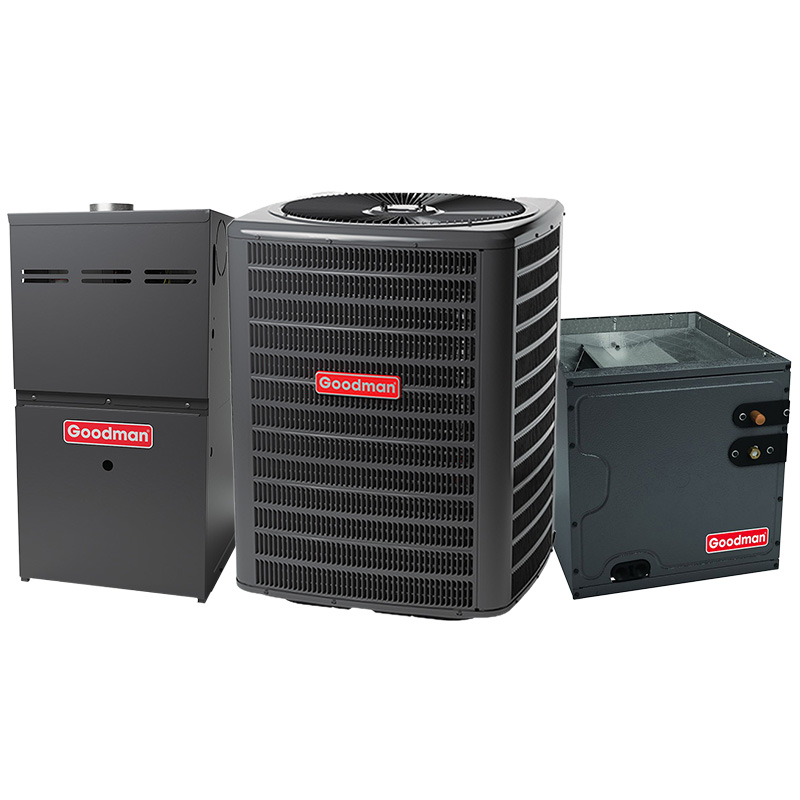
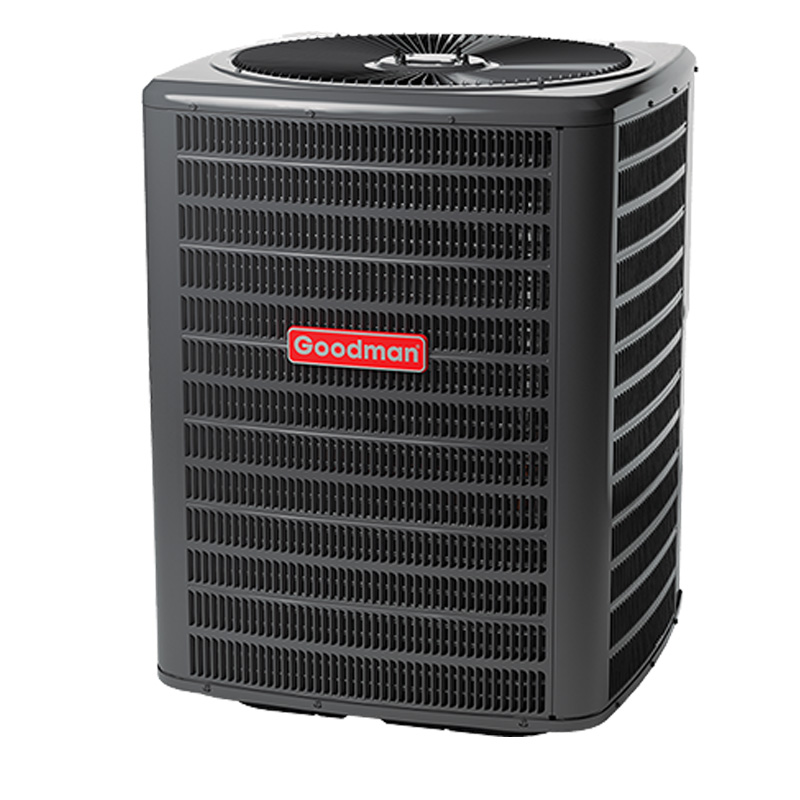
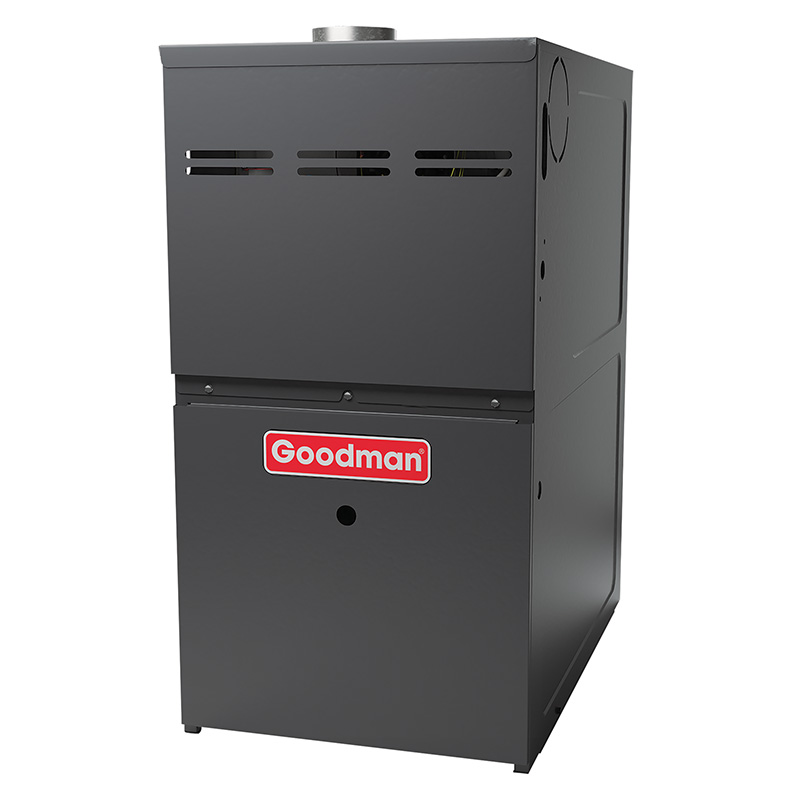
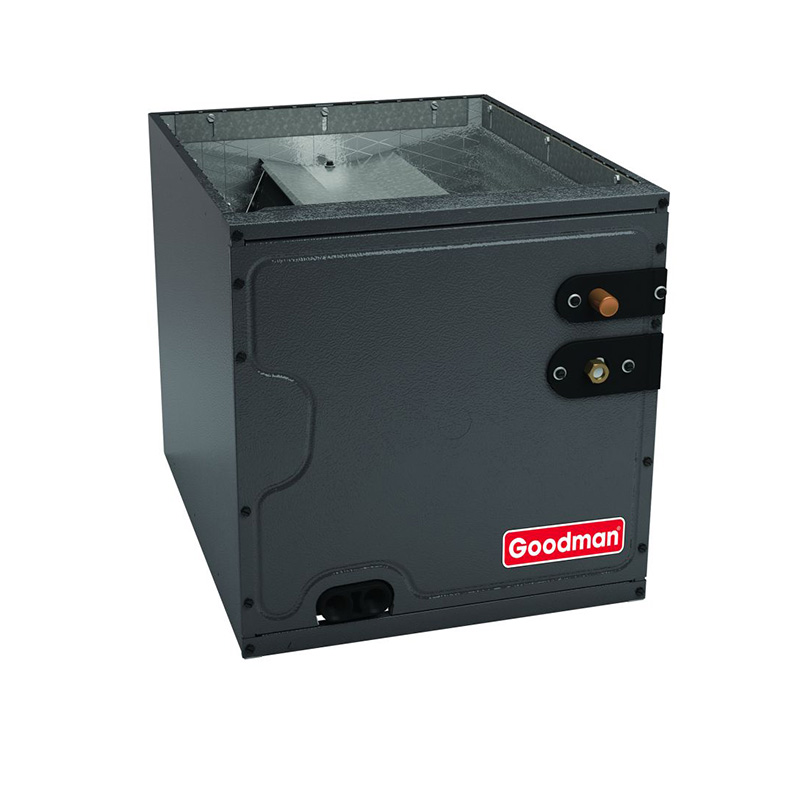
Goodman 1.5 Ton AC And 40000 BTU 80% AFUE Gas Furnace System | 14.5 SEER2 AC | Multi-Speed ECM Low NOx Furnace | Upflow | R32
View on AC Direct see your lowest price →Check current price on AC Direct →
Key features
- 14.5 SEER2 rated central air conditioner, 1.5-ton cooling capacity
- 40,000 BTU 80% AFUE gas furnace, upflow configuration
- Multi-speed ECM blower motor for quieter, more efficient airflow
- R-32 refrigerant, lower global warming potential than R-410A
- Compatible with standard single-stage thermostat wiring
- Designed for smaller spaces roughly 600 to 900 square feet depending on load calculations
About this system
The Goodman 1.5-ton, 14.5 SEER2 air conditioner paired with a 40,000 BTU 80% AFUE multi-speed ECM gas furnace is a compact, entry-level system aimed at smaller homes, condos, or additions in mild to moderate climates. At 1.5 tons, it is sized for spaces roughly 600 to 900 square feet depending on insulation, ceiling height, and local climate loads. The upflow configuration suits the most common basement or closet furnace placement, and the R-32 refrigerant is a lower-global-warming-potential choice that is becoming the new baseline as the industry phases away from R-410A.
The 14.5 SEER2 rating clears the federal minimum for most U.S. regions but sits at the entry tier rather than the mid or high-efficiency range. You will see real-world energy savings compared to an aging 10 or 12 SEER system, but you will not see the same bills as a 17 or 18 SEER2 unit. The 80% AFUE furnace is similarly entry-level: one dollar in five of fuel heat escapes up the flue, which is acceptable in mild-winter climates but meaningfully more expensive to operate than a 96% AFUE condensing furnace in a cold region. The multi-speed ECM blower motor is a genuine comfort upgrade over a standard single-speed PSC motor, improving humidity control and air distribution while using less electricity during fan-only operation.
This Goodman bundle is a straightforward entry-level system that delivers on price and covers the basic efficiency minimums for both cooling and heating. It suits budget-conscious buyers in smaller homes or mild climates who have a skilled installer and realistic expectations about long-term support costs. Buyers in cold climates or those prioritizing the lowest utility bills over the system's life should weigh the 80% AFUE limitation and the brand's documented repair history carefully.
Overall score is the average of the five ratings above.
What we like
- Purchase price is typically 15 to 25 percent below comparable Carrier, Trane, and Lennox systems
- Multi-speed ECM motor improves comfort and humidity control over basic single-speed furnaces
- R-32 refrigerant is a more environmentally responsible choice entering the mainstream market
- Upflow configuration matches the most common North American furnace installation scenario
- Parts are widely stocked by wholesale distributors, keeping repair wait times short
Trade-offs
- 80% AFUE means significant heat loss up the flue; operating costs will be noticeably higher in cold climates versus a 95%+ condensing furnace
- 14.5 SEER2 is entry-level efficiency; monthly cooling savings will be modest compared to mid or high-efficiency alternatives
- Brand reliability data shows compressors averaging 10 to 14 years versus 15 to 20 for premium brands, and dual-run capacitor failures are a commonly reported recurring repair
- A minority of owners report refrigerant leaks in the first year, which, while often traceable to installation, still results in service calls and expense
What homeowners and pros say about Goodman
Homeowners who post about Goodman equipment online tend to split along a clear line: those who had a careful installation and a local dealer who stands behind the product are often reasonably satisfied, while those who experienced cut-rate installs or limited dealer support land in the frustrated column. Goodman scores around 2.5 out of 5 on ConsumerAffairs, a channel that skews toward complaints, where the recurring pattern is owners facing rising repair bills after roughly the seventh year of operation. On Google dealer reviews the picture is more balanced, averaging around 3.8 out of 5 across multiple locations, with affordability consistently cited as the main reason buyers chose the brand.
HVAC technicians are candid about which parts they expect to replace first on this platform: dual-run capacitors come up most often, typically a low-cost fix but one that may repeat. Evaporator coil leaks also appear in a notable share of owner accounts, and technicians note that Goodman compressors tend to reach the end of their useful life around the 10 to 14 year mark, a shorter window than the 15 to 20 years more commonly seen with premium brands. For this 1.5-ton R-32 system, both groups tend to agree on the same bottom line: the equipment can perform reliably for a decade or more if the installation is done right, but the brand’s value proposition depends almost entirely on that first step going well.
Sources: ConsumerAffairs Goodman owner reviews, AHRI Directory of Certified Product Performance, U.S. DOE appliance and equipment efficiency standards, Goodman product specification sheets.
What it costs to run
At 14.5 SEER2, cooling this 1.5-ton system for a typical 1200-hour cooling season at the U.S. average electricity rate of $0.17/kWh works out to roughly $253 per year in cooling, about $21 less per year than a minimum-efficiency 13.4 SEER2 unit of the same size. Your real cost depends on your climate and local rate.
Method: (18,000 BTU/hr ÷ 14.5 SEER2) × 1200 hours ÷ 1000 × $0.17/kWh. Rate source: U.S. EIA average; cooling hours: moderate-climate estimate.
How it compares
| Brand | Comparable model | SEER2 | Stage | Price position |
|---|---|---|---|---|
| Goodman | GSXH5 / GMVC8 series bundle | 14.5 | Single-stage | Value pick |
| Carrier | Comfort 14 series (24ACC4) | 14.5 | Single-stage | Typically 15 to 25 percent more than this Goodman bundle |
| Trane | XR14 series | 14.5 | Single-stage | Typically 15 to 25 percent more than this Goodman bundle |
| Lennox | Merit ML14 series | 14.5 | Single-stage | Typically 15 to 25 percent more than this Goodman bundle |
Competitor rows are comparable single-stage units at similar efficiency; price is relative position, not a quote.
Questions about this system
Is 1.5 tons enough for my house, or will this system struggle to keep up?
Proper sizing depends on a Manual J load calculation, not square footage rules of thumb alone. In general, 1.5 tons suits well-insulated spaces of roughly 600 to 900 square feet in moderate climates, but homes with high ceilings, large window areas, or poor insulation may need more capacity. Have your installer perform a load calculation before purchasing.
Will the 80% AFUE furnace cost me significantly more to run than a high-efficiency model?
Yes, noticeably so in colder climates. An 80% AFUE furnace loses 20 cents of every heating dollar up the flue, while a 96% AFUE model loses only 4 cents. The gap in annual fuel costs can be hundreds of dollars in a cold northern climate, though in the mild South the payback on the price difference for a condensing furnace takes much longer.
What repairs should I budget for over the life of this Goodman system?
The most frequently reported failure is the dual-run capacitor, a common and relatively inexpensive fix typically in the 300 to 600 dollar range when you include a service call. Evaporator coil leaks and compressor issues appear in a meaningful share of owner reviews, and Goodman compressors average 10 to 14 years versus 15 to 20 for premium brands. Setting aside a service budget after year 7 is prudent.
My contractor mentioned a first-year refrigerant leak risk with Goodman. Is that a real concern?
A minority of Goodman owners do report refrigerant leaks within the first year. These are usually traced to installation errors or improper charging rather than a factory defect, which underscores why choosing a careful, experienced installer matters as much as the equipment brand itself.
Does this system work with a standard thermostat, or do I need a special one for the multi-speed ECM furnace?
This system is compatible with standard single-stage thermostats and conventional low-voltage wiring, so you do not need to upgrade your thermostat to use it. The ECM motor adjusts airflow based on demand signals it receives from the furnace control board, not from a dedicated thermostat connection.
Specifications
| Cooling capacity | 1.5 Ton |
| Efficiency | 14.5 SEER2 |
| Furnace output | 40000 BTU |
| Furnace efficiency | 80% AFUE |
| Configuration | Upflow |
| Refrigerant | R-32 |