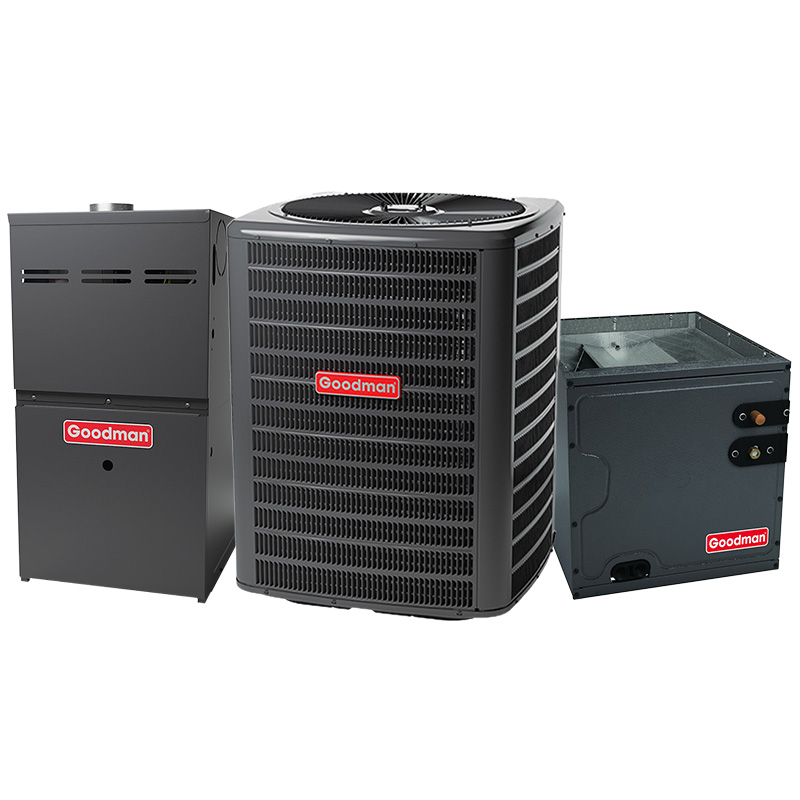
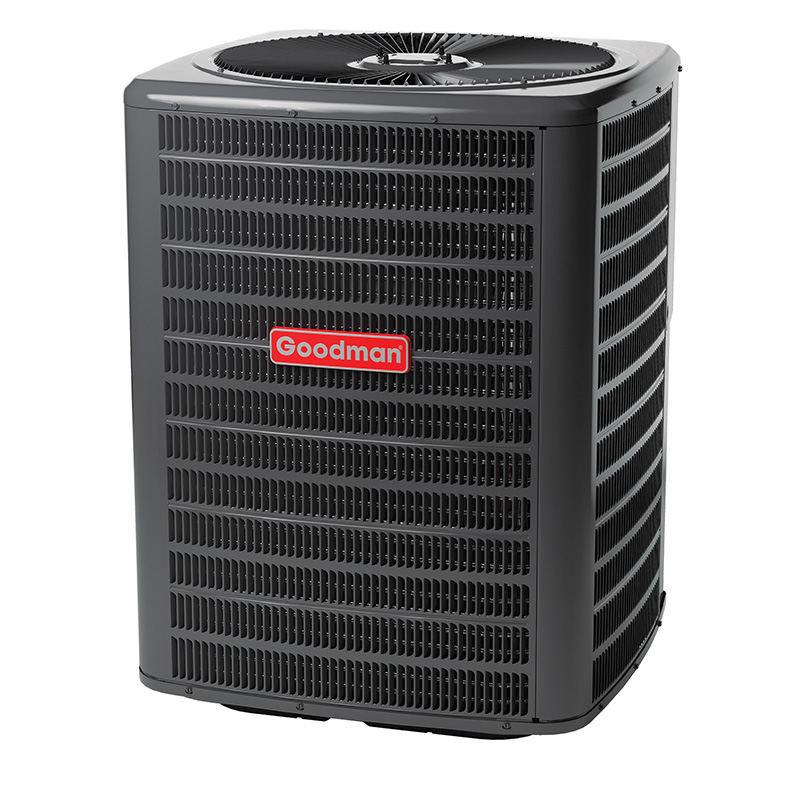
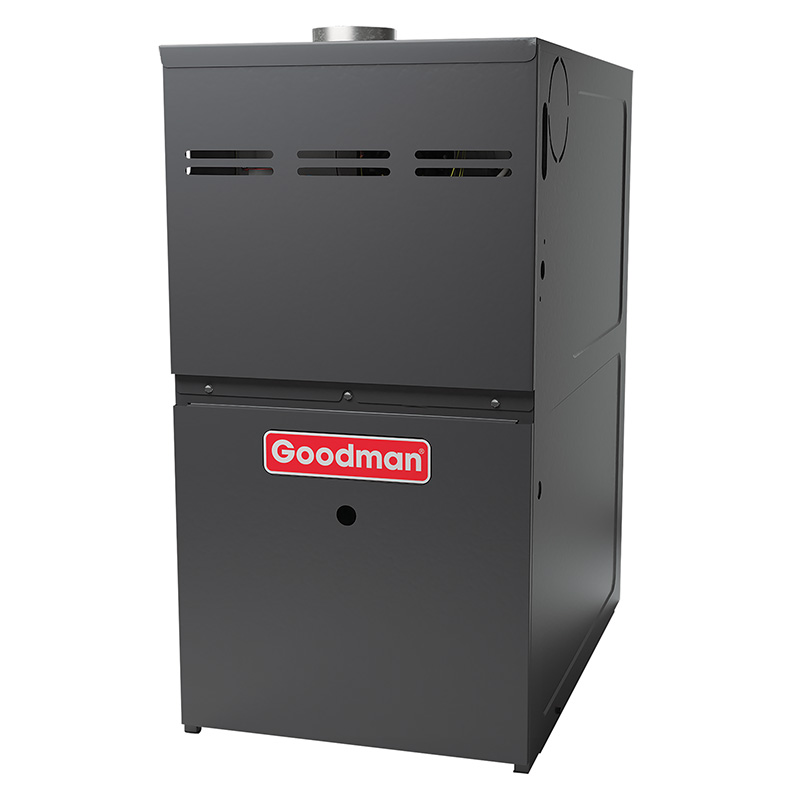
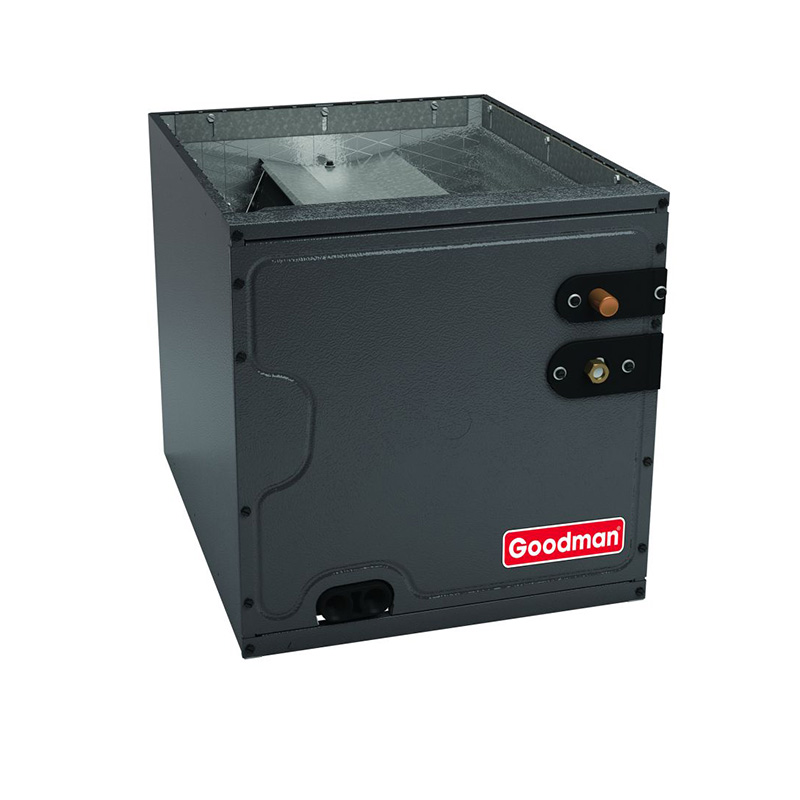
Goodman 1.5 Ton AC And 40000 BTU 80% AFUE Gas Furnace System | 15.2 SEER2 AC | Multi-Speed ECM Low NOx Furnace | Upflow | R32
View on AC Direct see your lowest price →Check current price on AC Direct →
Key features
- 1.5-ton cooling capacity with 15.2 SEER2 efficiency rating
- 40,000 BTU 80% AFUE gas furnace for upflow duct configurations
- Multi-speed ECM blower motor reduces electricity use and improves humidity control
- R-32 refrigerant with lower global warming potential than R-410A
- Upflow cabinet orientation suits basement and utility-closet installs
- Goodman factory warranty covers parts and compressor on registration
About this system
The Goodman 1.5-ton, 15.2 SEER2 air conditioner paired with a 40,000 BTU 80% AFUE multi-speed ECM gas furnace is built for smaller homes, condos, and tightly insulated spaces typically in the 600 to 900 square foot range, depending on climate zone and insulation quality. The upflow configuration means the furnace sits at floor level and pushes conditioned air upward through the duct system, which suits the majority of basement and utility-closet installations in northern and mid-Atlantic markets. R-32 refrigerant replaces older R-410A, carrying a lower global warming potential and slightly better thermodynamic efficiency, though it does require technicians certified to handle it.
A 15.2 SEER2 rating clears the federal minimum for most U.S. regions and sits in the entry-to-mid tier of current efficiency standards. It will cost less to operate than an older 13 or 14 SEER unit, but it will not deliver the utility-bill savings of a 17-plus SEER2 variable-speed system. The 80% AFUE furnace converts 80 cents of every dollar of gas into usable heat, which is code-legal in most of the country but meaningfully less efficient than the 95%-plus AFUE condensing furnaces common in colder climates. The multi-speed ECM blower motor does reduce electricity consumption compared with a standard PSC motor and helps with humidity control and quieter low-demand operation. Together, this system is a practical, budget-conscious choice for moderate climates or supplemental heating zones, not a top-of-the-line specification for extreme cold or energy-reduction goals.
This Goodman system offers a genuine cost advantage over premium brands at a similar efficiency tier, making it a reasonable fit for budget-conscious buyers in moderate climates who plan to keep up with routine maintenance. The 80% AFUE furnace and 15.2 SEER2 AC will meet code requirements nearly everywhere but leave efficiency and cold-climate performance on the table compared with higher-spec alternatives. Long-term satisfaction depends heavily on installation quality and a willingness to address wear items like capacitors and coils before they cascade into larger repairs.
Overall score is the average of the five ratings above.
What we like
- Priced roughly 15 to 25 percent below comparable Trane, Lennox, and Carrier equipment
- 15.2 SEER2 clears federal minimums and improves on older low-SEER systems
- ECM blower motor lowers fan electricity costs compared with standard PSC motors
- R-32 refrigerant is more environmentally favorable than outgoing R-410A
- Upflow configuration matches the most common residential furnace installation layout
Trade-offs
- 80% AFUE is the low end of current furnace efficiency and unsuitable as a primary heater in very cold climates
- Dual-run capacitor failures are a well-documented weak point, typically needed after several years of service
- Compressor lifespan averages 10 to 14 years, shorter than the 15 to 20 years often seen with premium-brand compressors
- A minority of owners have reported refrigerant leaks in the first year, usually tied to installation or initial charge issues
What homeowners and pros say about Goodman
Homeowners who chose Goodman equipment for price reasons tend to report satisfaction early in ownership, and that pattern shows up in Google dealer reviews that average around 3.8 out of 5 stars, where affordability is the most frequently cited reason for recommending a contractor who installed this brand. The picture shifts over time. On ConsumerAffairs, where the audience skews toward people who had a problem worth reporting, Goodman scores around 2.5 out of 5, and the recurring theme in those complaints is repair costs that start climbing after roughly the seventh year of service. The two failure modes that appear most often in owner accounts are dual-run capacitor replacements and evaporator coil leaks, the former being an inexpensive fix and the latter a more disruptive and costly repair. A smaller share of owners have reported refrigerant leaks in the first year, which technicians generally attribute to installation or initial charge issues rather than a manufacturing defect in the unit itself.
HVAC professionals who install Goodman regularly tend to hold a nuanced view: they acknowledge the compressor lifespan, which averages 10 to 14 years on Goodman equipment versus 15 to 20 years commonly seen on premium brands, and they are candid that installation quality is the single biggest factor in how long any Goodman system holds up. A well-commissioned Goodman system in a moderate climate, maintained annually and handled by a knowledgeable technician, can deliver solid years of service. The same unit installed carelessly or left without maintenance becomes the source of the complaints that drag down the brand’s consumer ratings. For this specific 1.5-ton, 15.2 SEER2 system, the R-32 refrigerant adds a minor layer of technician-qualification consideration, but the overall feedback profile matches the broader Goodman pattern: reliable value when the install is done right, more vulnerable than premium alternatives when it is not.
Sources: ConsumerAffairs Goodman owner reviews, AHRI Directory of Certified Product Performance, U.S. DOE appliance and equipment efficiency standards, Goodman product specification sheets.
What it costs to run
At 15.2 SEER2, cooling this 1.5-ton system for a typical 1200-hour cooling season at the U.S. average electricity rate of $0.17/kWh works out to roughly $242 per year in cooling, about $32 less per year than a minimum-efficiency 13.4 SEER2 unit of the same size. Your real cost depends on your climate and local rate.
Method: (18,000 BTU/hr ÷ 15.2 SEER2) × 1200 hours ÷ 1000 × $0.17/kWh. Rate source: U.S. EIA average; cooling hours: moderate-climate estimate.
How it compares
| Brand | Comparable model | SEER2 | Stage | Price position |
|---|---|---|---|---|
| Goodman | GSZTO / GMVC8 80% series (this system) | 15.2 | Single-stage | Value pick |
| Carrier | Comfort 14 / Performance 80 furnace series | 15.2 | Single-stage | Typically 15 to 25 percent more than this Goodman system |
| Trane | XR15 / S9V2 80% furnace series | 15.2 | Single-stage | Typically 15 to 25 percent more than this Goodman system |
| Lennox | Merit ML15 / ML180 80% furnace series | 15.2 | Single-stage | Typically 15 to 25 percent more than this Goodman system |
Competitor rows are comparable single-stage units at similar efficiency; price is relative position, not a quote.
Questions about this system
Is 80% AFUE good enough for cold winters, or should I upgrade to a 95% furnace?
In climates where winter temperatures regularly drop below 20 degrees Fahrenheit, a 95%-plus AFUE condensing furnace will significantly reduce your annual gas bill and is often the better long-term investment. The 80% AFUE unit in this system is code-legal in most regions but vents roughly 20% of combustion energy outdoors, which adds up quickly in a long heating season. If you are in a mild-winter climate or using gas as a backup to a heat pump, 80% AFUE is a practical choice.
What does 15.2 SEER2 mean for my monthly electric bill compared with my old system?
SEER2 is a revised testing standard that produces slightly lower numbers than the older SEER scale, so 15.2 SEER2 is roughly equivalent to a 16 SEER system under the old rating. If you are replacing a 10 to 13 SEER unit from the 2000s, you can expect a noticeable reduction in cooling electricity use. Upgrading from a 14 SEER to this 15.2 SEER2 system will produce a more modest improvement.
My technician mentioned R-32 refrigerant requires special handling. Is that a concern for future service?
R-32 is mildly flammable and classified A2L, which means it requires technicians who are trained and certified to handle it. Most larger HVAC service companies are already equipped, but in rural areas you may want to confirm a local tech has the right certification before buying. This is a manageable consideration, not a dealbreaker, as R-32 is becoming the industry standard.
What is the Goodman warranty on this system, and what do I need to do to activate it?
Goodman typically offers a 10-year parts warranty and a limited lifetime compressor warranty on registered residential equipment, but you must register the product within a specified window after installation to receive the full coverage. Without registration, the warranty period is generally shorter. Always confirm the current warranty terms at the time of purchase, as Goodman periodically updates its coverage details.
How often do the capacitors on Goodman AC units actually fail, and what does it cost to fix?
Dual-run capacitor failure is the most commonly reported repair issue on Goodman cooling equipment, with many owners seeing the first failure somewhere in the middle years of ownership. It is one of the least expensive HVAC repairs, typically running 300 to 600 dollars including a service call, and a good technician can replace it quickly. Keeping a standing annual maintenance contract makes it easier to catch a weakening capacitor before it leaves you without cooling on a hot day.
Specifications
| Cooling capacity | 1.5 Ton |
| Efficiency | 15.2 SEER2 |
| Furnace output | 40000 BTU |
| Furnace efficiency | 80% AFUE |
| Configuration | Upflow |
| Refrigerant | R-32 |