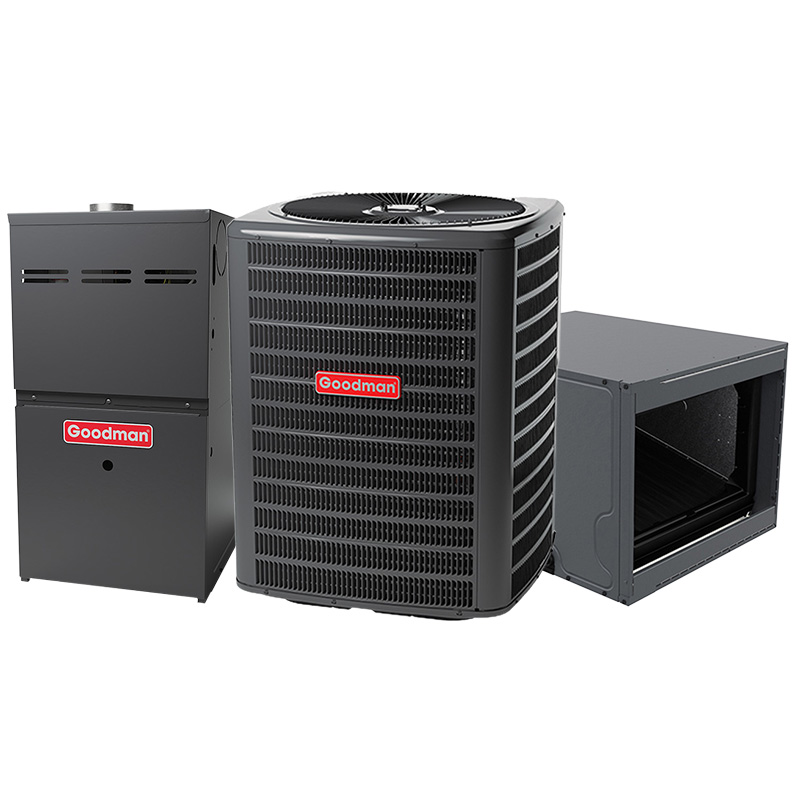
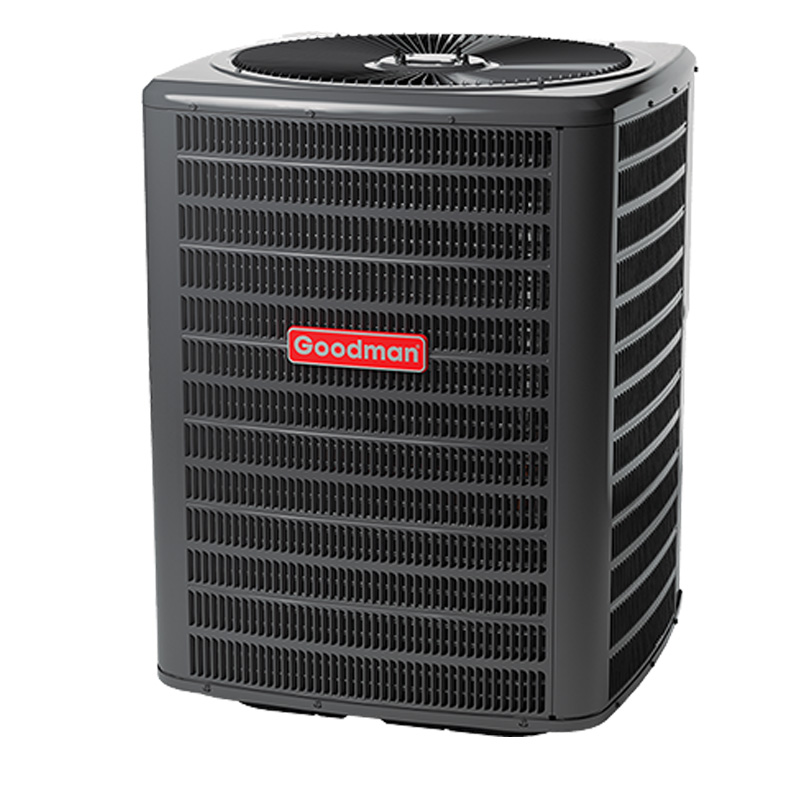
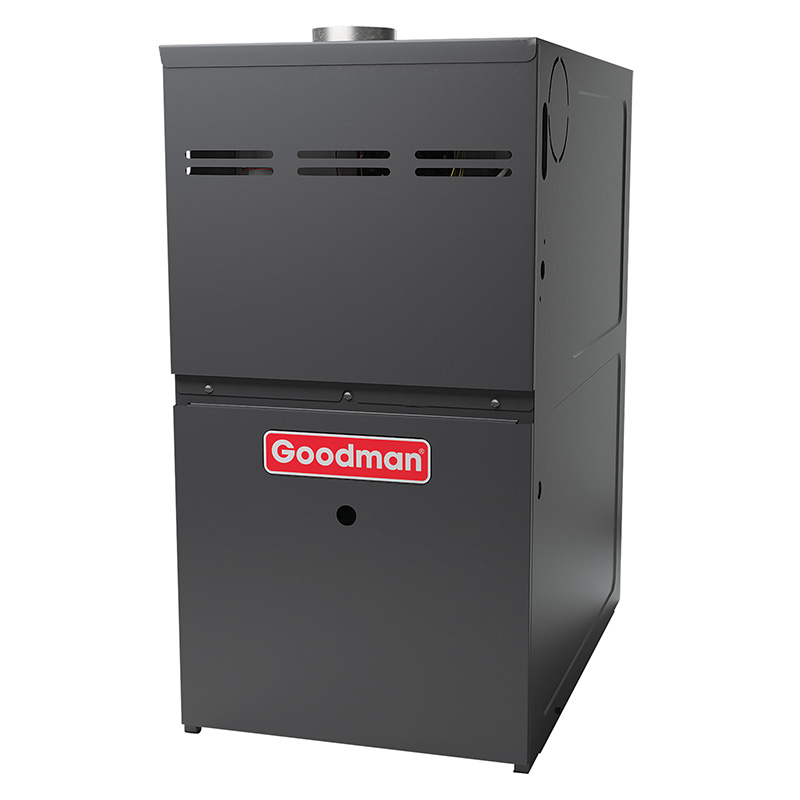
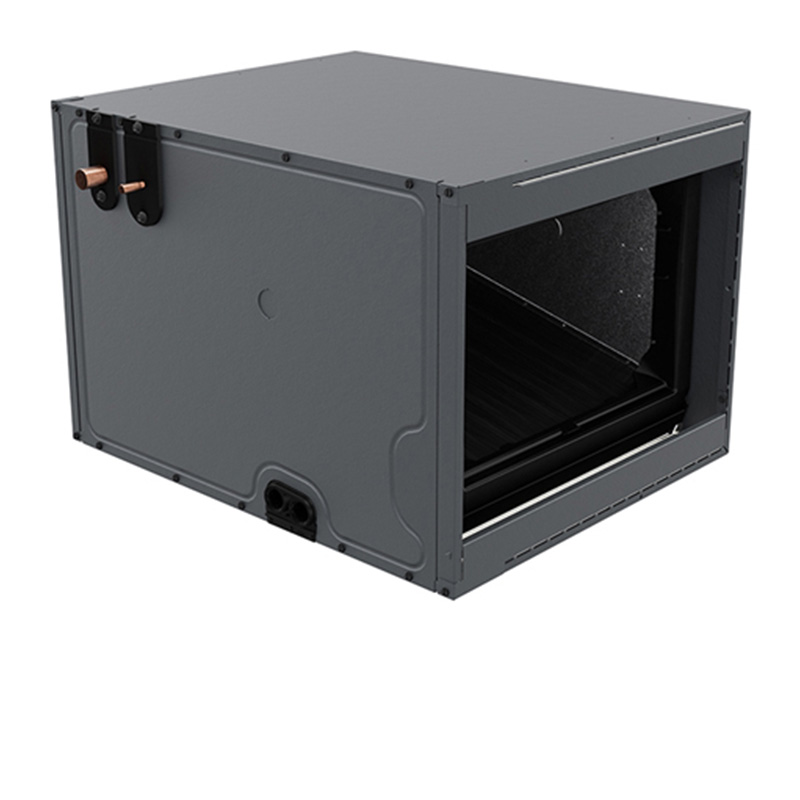
Goodman 1.5 Ton AC And 40000 BTU 80% AFUE Gas Furnace System | 14.5 SEER2 AC | Multi-Speed ECM Low NOx Furnace | Horizontal | R32
View on AC Direct see your lowest price →Check current price on AC Direct →
Key features
- 14.5 SEER2 cooling efficiency, meeting 2023 federal minimums with a modest buffer
- 40,000 BTU 80% AFUE gas furnace suited to mild-to-moderate heating climates
- Multi-speed ECM blower motor for quieter, more even airflow than single-speed units
- Horizontal configuration for attic, crawlspace, or platform installations
- R-32 refrigerant with lower global warming potential than R-410A
- Factory-matched system tested and rated together for consistent efficiency performance
About this system
The Goodman 1.5-ton, 14.5 SEER2 AC paired with a 40,000 BTU 80% AFUE multi-speed ECM gas furnace is a horizontal-configuration system aimed at smaller homes, conditioned crawlspaces, attics, and tight mechanical closets where a traditional upflow or downflow layout simply will not fit. At 1.5 tons, it is sized for spaces roughly in the 600 to 900 square foot range depending on climate, insulation, and window load, so a proper Manual J load calculation before purchase is essential. The R-32 refrigerant charge is a forward-looking choice: R-32 has a lower global warming potential than R-410A, and as the industry phases out older refrigerants, parts and service availability for R-32 systems should remain strong through this equipment’s expected service life.
The 80% AFUE rating means the furnace converts eight of every ten units of gas energy into usable heat, which is the federal minimum efficiency tier and is well-suited to mild-winter or transitional climates where a high-efficiency 96% AFUE unit would take decades to pay back its cost premium. The multi-speed ECM blower motor is a genuine comfort upgrade over a single-speed PSC motor: it ramps airflow up and down to maintain steadier temperatures, runs more quietly at partial loads, and uses meaningfully less electricity over the heating season. The 14.5 SEER2 efficiency lands just above the 2023 federal minimums for most U.S. regions, which keeps operating costs competitive without the price jump of a 16 or 18 SEER2 system.
This Goodman bundle delivers reliable baseline cooling and heating at a price point that is hard to argue with for smaller homes and add-on spaces. The ECM motor and R-32 refrigerant are genuine value-adds, but the 80% AFUE furnace and entry-level SEER2 rating mean operating costs will be higher than mid- or high-efficiency alternatives over time. Buyers willing to invest in a quality installation and budget for a capacitor replacement around year seven or eight will generally get solid years of service.
Overall score is the average of the five ratings above.
What we like
- Priced 15 to 25 percent below comparable Trane, Lennox, and Carrier systems
- Multi-speed ECM blower improves comfort and lowers fan electricity use versus single-speed motors
- R-32 refrigerant is forward-compatible as the industry moves away from R-410A
- Factory-matched AC and furnace combination simplifies warranty and performance documentation
- Horizontal layout opens up installation options where vertical systems cannot fit
Trade-offs
- 80% AFUE is the lowest efficiency tier; higher heating bills compared to 90%+ AFUE alternatives in cold climates
- Dual-run capacitors are a documented recurring failure point, typically requiring service around year seven or beyond
- Compressor lifespan averages 10 to 14 years, shorter than the 15 to 20 years seen in premium-brand compressors
- Evaporator coil leaks and first-year refrigerant leaks appear in a meaningful share of owner reports, making install quality critical
What homeowners and pros say about Goodman
Homeowners who post about Goodman equipment online tend to split into two camps: those who had a clean install and report years of uneventful service, and those who ran into problems and find the brand’s ConsumerAffairs score of around 2.5 out of 5 entirely believable. The complaint thread on that channel is dominated by one theme: repair costs that start climbing after roughly year seven, with dual-run capacitor failures and evaporator coil leaks appearing more frequently than owners expected. Google dealer reviews land closer to 3.8 out of 5, where affordability is the single most common reason people say they are satisfied. That gap between the two scores mostly reflects who bothers to write a review: the ConsumerAffairs crowd is disproportionately people who are frustrated, while the dealer review crowd skews toward buyers who got a fair price and are content.
HVAC technicians tend to have a pragmatic view of Goodman: the hardware is acceptable at the price point, but they are quick to point out that install quality drives outcomes more than the nameplate does. A sloppy charge, undersized line set, or improperly sloped horizontal drain pan will cause problems on any brand, but a budget brand like Goodman leaves less margin for error. Techs also note the compressor lifespan reality: Goodman compressors averaging 10 to 14 years versus the 15 to 20 years more commonly seen in Trane or Carrier units is a real long-run cost consideration, not just brand loyalty talking. For a smaller system in a mild climate where the equipment works fewer hours per year, that gap may matter less than in a hot or cold region where the system runs hard for months at a time.
Sources: ConsumerAffairs Goodman owner reviews, AHRI Directory of Certified Product Performance, U.S. DOE appliance and equipment efficiency standards, Goodman product specification sheets.
What it costs to run
At 14.5 SEER2, cooling this 1.5-ton system for a typical 1200-hour cooling season at the U.S. average electricity rate of $0.17/kWh works out to roughly $253 per year in cooling, about $21 less per year than a minimum-efficiency 13.4 SEER2 unit of the same size. Your real cost depends on your climate and local rate.
Method: (18,000 BTU/hr ÷ 14.5 SEER2) × 1200 hours ÷ 1000 × $0.17/kWh. Rate source: U.S. EIA average; cooling hours: moderate-climate estimate.
How it compares
| Brand | Comparable model | SEER2 | Stage | Price position |
|---|---|---|---|---|
| Goodman | GSXH5 / GMVC8 80% ECM Horizontal Bundle | 14.5 | Single-stage | Value pick |
| Carrier | Comfort 14 (24ACC4) with 58MCA 80% furnace | 14.3 | Single-stage | 15 to 25 percent higher than this Goodman system |
| Trane | XR14c with S8X1 80% furnace | 14.3 | Single-stage | 20 to 30 percent higher than this Goodman system |
| Lennox | Merit 14ACX with ML180 80% furnace | 14.3 | Single-stage | 20 to 30 percent higher than this Goodman system |
Competitor rows are comparable single-stage units at similar efficiency; price is relative position, not a quote.
Questions about this system
Is 1.5 tons actually enough cooling for my space, and how do I know?
A 1.5-ton unit is typically appropriate for 600 to 900 square feet, but climate, ceiling height, insulation, and window area all affect the real answer. The only reliable way to confirm sizing is a Manual J load calculation performed by a licensed HVAC contractor before the system is ordered. Oversizing causes short-cycling and humidity problems; undersizing means the unit runs constantly and never quite catches up on the hottest days.
What does 80% AFUE mean for my gas bills compared to a 96% AFUE furnace?
An 80% AFUE furnace loses roughly 20 cents of every gas dollar up the flue, while a 96% AFUE unit loses about 4 cents. In a mild-winter climate where the furnace runs a few hundred hours a season, the savings from upgrading often take 10 or more years to recover in lower bills. In a cold climate with long heating seasons, the payback period shrinks and the upgrade is worth a closer look.
My installation is horizontal in an attic. Are there specific concerns I should raise with my installer?
Horizontal installations require proper sloping of the unit for condensate drainage, secure vibration-dampening supports to reduce noise transmission through the structure, and correct refrigerant line routing to avoid oil trapping in the compressor. Ask your installer specifically about condensate pan overflow protection and whether the attic location meets manufacturer clearance requirements, since a poor horizontal install is one of the most common sources of early service calls on any brand.
What should I budget for repairs beyond the warranty period?
Dual-run capacitors are the most commonly reported failure on Goodman AC equipment and typically cost 300 to 600 dollars to diagnose and replace, usually showing up around year seven or later. Setting aside a small annual service reserve and having a technician inspect the capacitor and refrigerant charge during annual tune-ups can catch these issues before they cause a compressor failure, which is far more expensive.
Can any HVAC technician service an R-32 system, or do I need a specialist?
R-32 requires technicians to use equipment and procedures rated for mildly flammable refrigerants, as R-32 has a slight flammability classification that R-410A does not. Most established HVAC companies are already equipped and trained for R-32 work as the industry has been transitioning, but it is worth confirming your service provider has R-32 capability before scheduling work, particularly for emergency off-hours calls.
Specifications
| Cooling capacity | 1.5 Ton |
| Efficiency | 14.5 SEER2 |
| Furnace output | 40000 BTU |
| Furnace efficiency | 80% AFUE |
| Configuration | Horizontal |
| Refrigerant | R-32 |