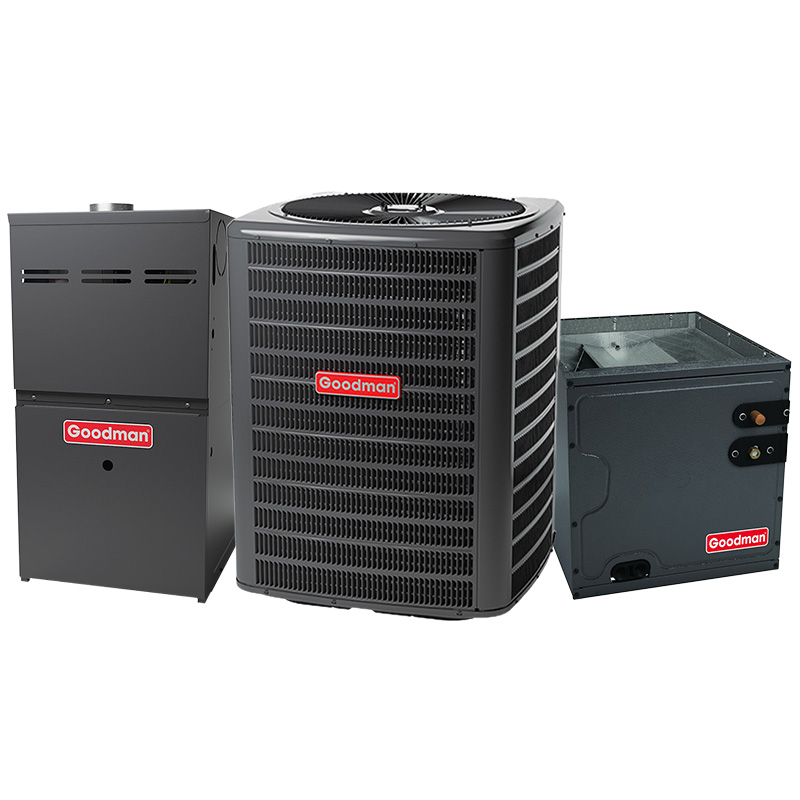
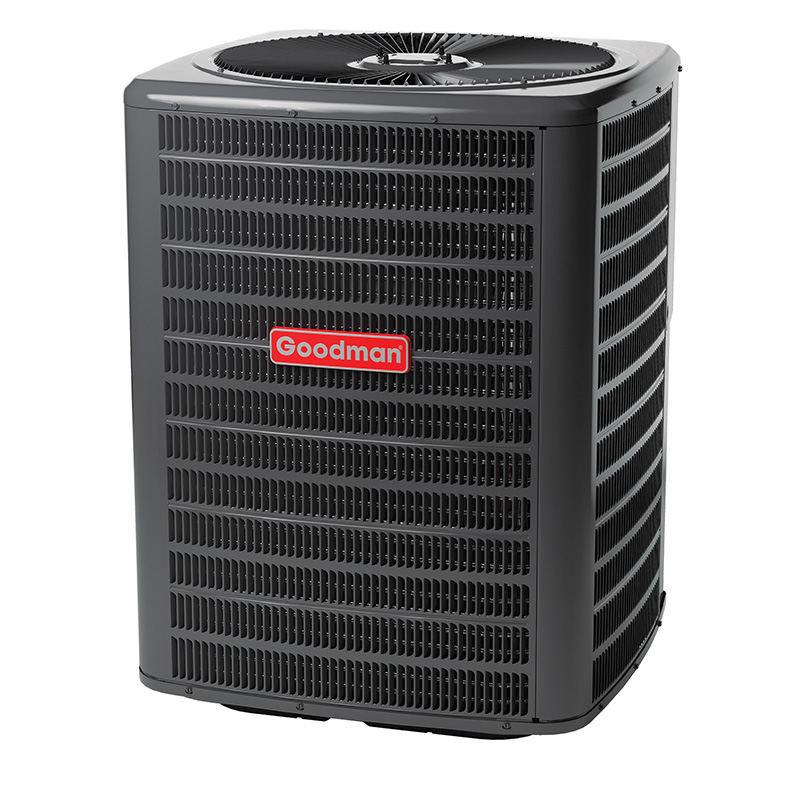
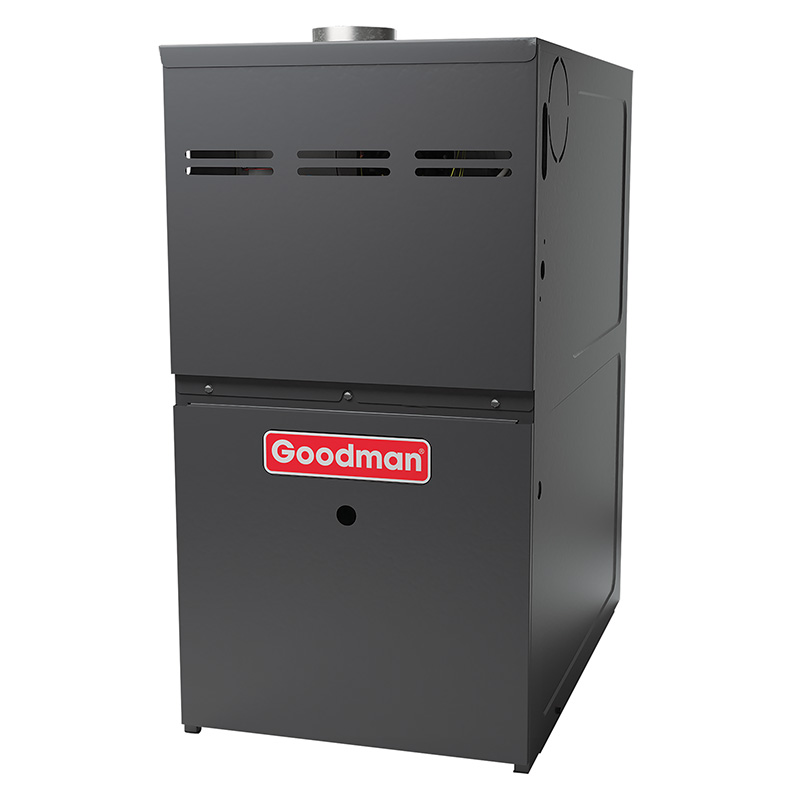
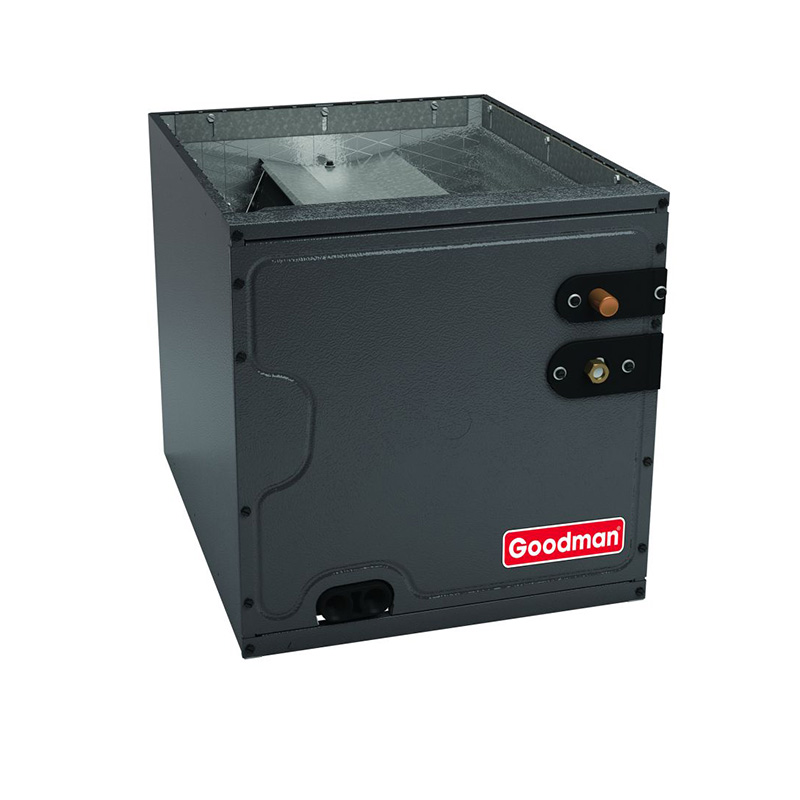
Goodman 1.5 Ton AC And 60000 BTU 80% AFUE Gas Furnace System | 16 SEER2 AC | Multi-Speed ECM Low NOx Furnace | Upflow | R32
View on AC Direct see your lowest price →Check current price on AC Direct →
Key features
- 16 SEER2 cooling efficiency meets current federal minimums for most U.S. climate zones
- 60,000 BTU 80% AFUE upflow gas furnace with multi-speed ECM blower motor
- R-32 refrigerant with lower global warming potential than R-410A
- Low NOx certified for compliance in strict air quality states including California
- ECM motor provides quieter operation and more consistent airflow than single-speed PSC motors
- Upflow configuration suits basement and closet installs with overhead ductwork
About this system
The Goodman 1.5-ton, 16 SEER2 air conditioner paired with a 60,000 BTU 80% AFUE multi-speed ECM gas furnace is sized for smaller homes, condos, or zone-controlled spaces, typically in the 600 to 900 square foot range depending on climate and insulation. The 16 SEER2 rating lands at the current federal minimum efficiency tier for many regions, which means it meets code without the price premium of higher-efficiency equipment. The furnace’s 80% AFUE means one-fifth of the fuel energy exits through the flue, a real and measurable trade-off compared to 96% or 98% condensing units, but the upfront cost is noticeably lower and installation is simpler since no secondary drain or condensate management is required.
The multi-speed ECM blower motor is a meaningful upgrade over a standard single-speed PSC motor. It ramps airflow up gradually, runs quieter at lower speeds, and moves air more consistently through the duct system, which improves comfort and can reduce electricity consumption at the air handler. The upflow configuration suits the most common residential installation scenario: furnace in a basement, utility closet, or mechanical room with ductwork running upward. R-32 refrigerant has a lower global warming potential than R-410A and is becoming the standard as R-410A is phased out, which means future service technicians will be equipped to handle it. The Low NOx designation satisfies stricter air quality regulations in states like California.
This Goodman system delivers functional, code-compliant cooling and heating at a price point that is genuinely hard to match from name-brand competitors. The 80% AFUE furnace and entry-level SEER2 rating keep operating costs higher than mid-efficiency alternatives, and Goodman's track record shows real long-term ownership costs that buyers should factor in before deciding. For budget-conscious buyers who want a properly installed system and understand the trade-offs, it can be a sensible choice; for those prioritizing durability over a 15-plus-year horizon, spending more upfront on a premium brand is worth considering.
Overall score is the average of the five ratings above.
What we like
- Priced 15 to 25 percent below comparable Trane, Carrier, and Lennox systems
- Multi-speed ECM blower improves comfort and reduces air handler electricity use
- R-32 refrigerant is future-ready as R-410A is phased out of service
- Upflow configuration is widely understood by HVAC technicians, reducing install complexity
- Low NOx rating satisfies California and other strict regional air quality requirements
Trade-offs
- 80% AFUE means roughly 20% of fuel is lost to exhaust, raising long-term heating costs versus 96%+ condensing furnaces
- Dual-run capacitor failures and evaporator coil leaks are documented recurring issues in owner reviews
- Compressor lifespan averages 10 to 14 years, shorter than the 15 to 20 years reported for premium brands
- ConsumerAffairs feedback averages around 2.5 out of 5, with repair cost complaints rising notably after year 7
What homeowners and pros say about Goodman
Homeowners who have lived with Goodman equipment reflect the split picture that its scores suggest. On Google, dealer locations average around 3.8 out of 5 across hundreds of reviews, and the most consistent thread of praise is straightforward: the price is lower than comparable name-brand systems and the unit does what it promises when it is installed correctly. On ConsumerAffairs, where the rating drops to roughly 2.5 out of 5, the story shifts. That channel skews toward people who had a problem and wanted to be heard, and the pattern is specific: owners who got several years of trouble-free operation tend to go quiet online, while those who hit repair bills around year 7 or 8 show up to say the savings at purchase evaporated faster than they expected.
HVAC technicians who service Goodman equipment regularly point to a few patterns worth knowing before you buy this system. Dual-run capacitors are the most common call they make on Goodman outdoor units and are generally a quick, lower-cost repair. Evaporator coil leaks appear in a meaningful share of owner complaints and are a more involved fix. On compressor longevity, field experience lines up with what owners report: Goodman compressors tend to run 10 to 14 years on average, compared to 15 to 20 years for premium brands. A small number of owners have also reported refrigerant leaks within the first year, which technicians almost universally attribute to installation quality or improper charging rather than a factory defect. That last point captures the broader reality of this brand: a clean, careful install by an experienced technician is not optional, it is the single biggest variable in whether this system performs well for a decade or becomes a recurring expense before its time.
Sources: ConsumerAffairs Goodman owner reviews, AHRI Directory of Certified Product Performance, U.S. DOE appliance and equipment efficiency standards, Goodman product specification sheets.
What it costs to run
At 16 SEER2, cooling this 1.5-ton system for a typical 1200-hour cooling season at the U.S. average electricity rate of $0.17/kWh works out to roughly $230 per year in cooling, about $44 less per year than a minimum-efficiency 13.4 SEER2 unit of the same size. Your real cost depends on your climate and local rate.
Method: (18,000 BTU/hr ÷ 16 SEER2) × 1200 hours ÷ 1000 × $0.17/kWh. Rate source: U.S. EIA average; cooling hours: moderate-climate estimate.
How it compares
| Brand | Comparable model | SEER2 | Stage | Price position |
|---|---|---|---|---|
| Goodman | GSXH5 / GMVC8 (this system) | 16 | Single-stage / Multi-speed | Value pick |
| Carrier | Comfort 24ACC6 / 58SC series | 16 | Single-stage | Typically 15 to 25 percent more than this Goodman system |
| Trane | XR15 / S8X1 series | 15.2 to 16 | Single-stage | Typically 15 to 25 percent more than this Goodman system |
| Lennox | Merit ML14XC1 / ML180 series | 15.2 to 16 | Single-stage | Typically 15 to 25 percent more than this Goodman system |
Competitor rows are comparable single-stage units at similar efficiency; price is relative position, not a quote.
Questions about this system
Is 1.5 tons enough for my house, or will this system short-cycle?
Proper sizing depends on a Manual J load calculation, not just square footage. For a well-insulated home in a moderate climate, 1.5 tons often covers 600 to 900 square feet, but a house with high ceilings, poor insulation, or large west-facing windows may need more capacity. Ask your installer to run the calculation before ordering.
Can a standard HVAC technician service R-32 equipment, or is special certification required?
R-32 requires EPA Section 608 certification, which most licensed HVAC technicians already hold. However, R-32 is mildly flammable (A2L classification), so technicians need specific training and tools for safe handling. Availability is improving rapidly, but confirm your local service providers are equipped before purchasing.
What does the 80% AFUE rating actually mean for my gas bill compared to a 96% furnace?
An 80% AFUE furnace loses about 20 cents of every dollar of gas burned through the flue. A 96% unit loses roughly 4 cents. On a $1,000 annual gas bill for heating, that difference is approximately $160 per year, which adds up meaningfully over a decade of ownership.
How long do Goodman capacitors typically last, and what does it cost to replace one?
Dual-run capacitors are the most commonly reported failure point in Goodman equipment, often showing up after several years of use. Replacement is usually straightforward for a technician and typically falls in the $300 to $600 range including labor, making it one of the lower-cost service calls you might face.
Does the upflow configuration mean this cannot be installed in an attic or crawlspace?
Correct. Upflow units are designed to pull return air in from the bottom and discharge conditioned air upward into overhead ductwork. Attic or horizontal installations require a horizontal or downflow-configured unit. If your mechanical space is a closet or basement with ducts running up through the ceiling, upflow is the right choice.
Specifications
| Cooling capacity | 1.5 Ton |
| Efficiency | 16 SEER2 |
| Furnace output | 60000 BTU |
| Furnace efficiency | 80% AFUE |
| Configuration | Upflow |
| Refrigerant | R-32 |