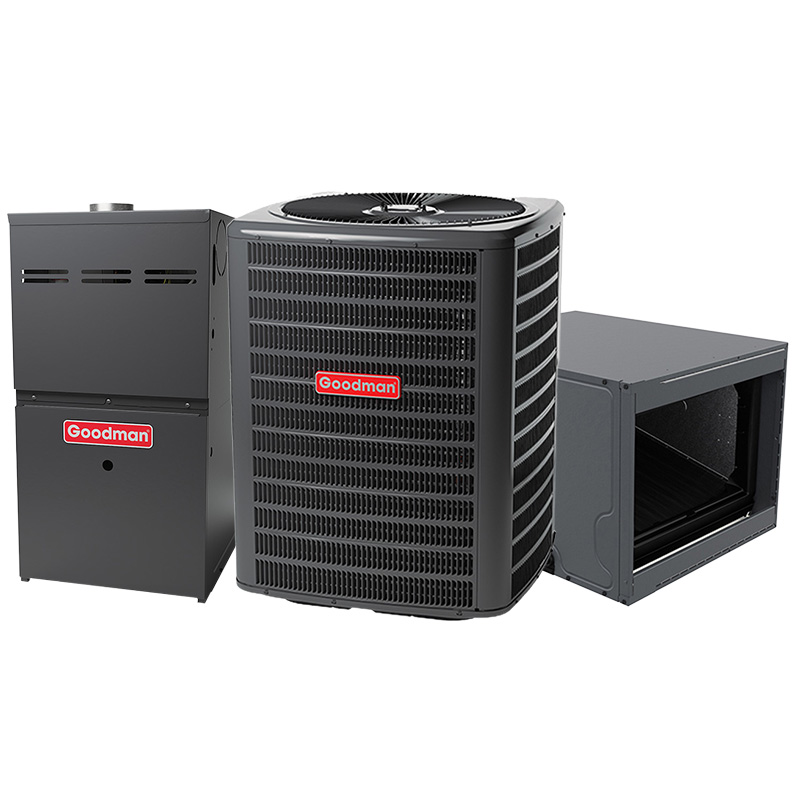
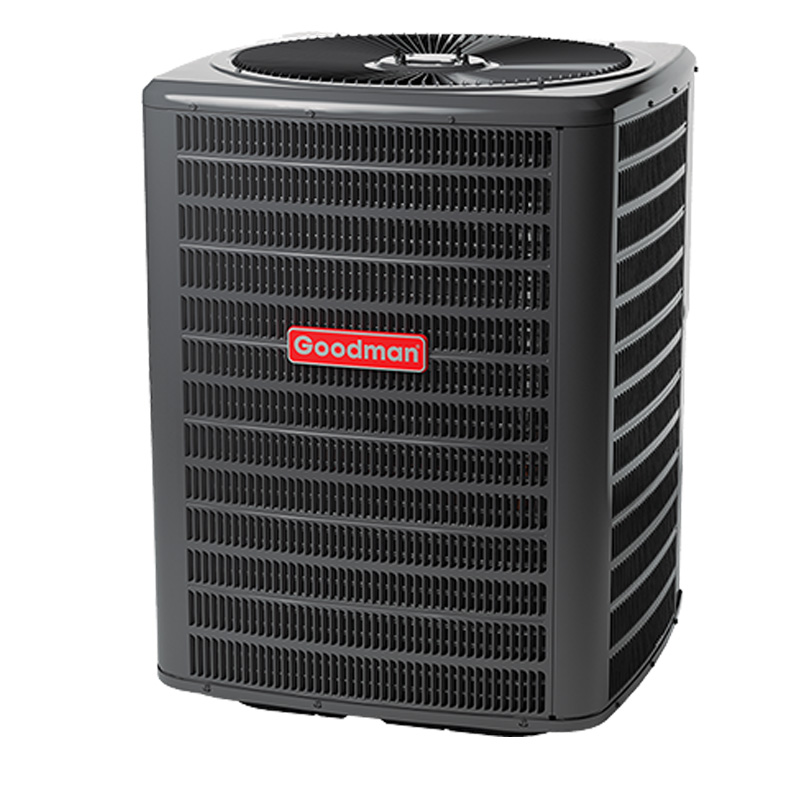
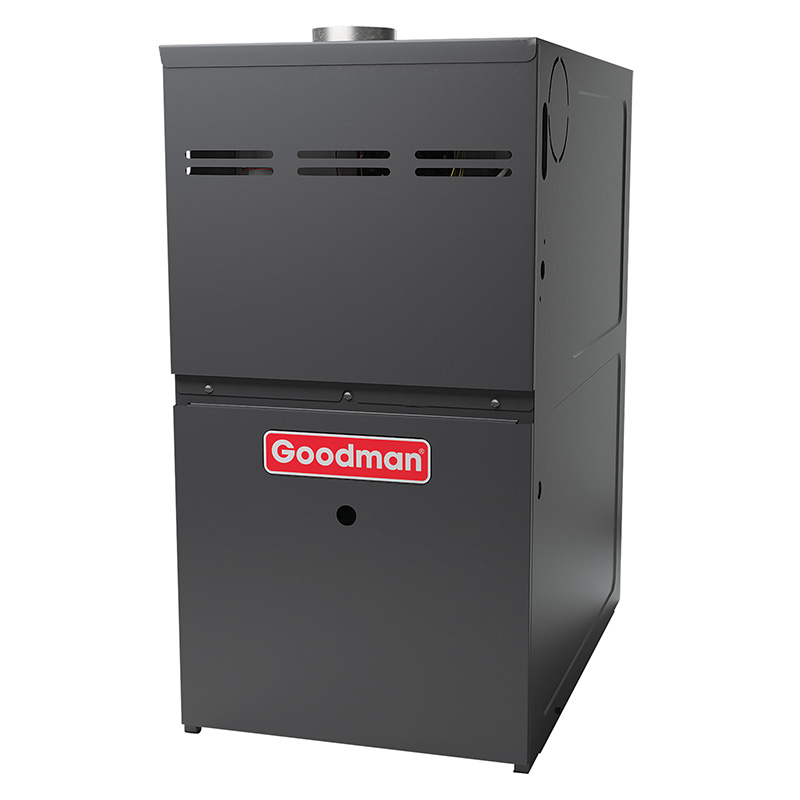
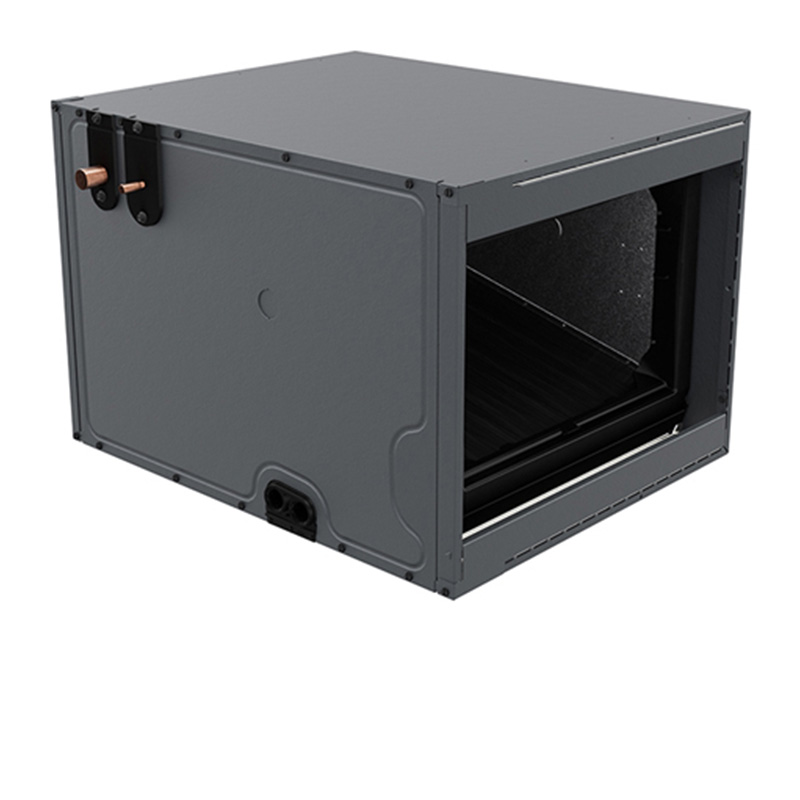
Goodman 1.5 Ton AC And 60000 BTU 80% AFUE Gas Furnace System | 15.2 SEER2 AC | Multi-Speed ECM Low NOx Furnace | Horizontal | R32
View on AC Direct see your lowest price →Check current price on AC Direct →
Key features
- 15.2 SEER2 cooling efficiency meets current federal minimums for most regions
- 60,000 BTU 80% AFUE gas furnace with multi-speed ECM blower motor
- Horizontal configuration designed for attic, crawlspace, or manufactured-home installs
- R-32 refrigerant with lower global warming potential than R-410A
- 1.5-ton capacity sized for smaller spaces or supplemental conditioning zones
- Low NOx combustion design reduces nitrogen oxide emissions at the burner
About this system
The Goodman 1.5-ton, 15.2 SEER2 AC and 60,000 BTU 80% AFUE gas furnace system is packaged for smaller homes, conditioned spaces under roughly 600 to 900 square feet, or supplemental zones where a full 2-ton system would short-cycle. The horizontal configuration makes it a practical fit for attic installs, crawlspace applications, and manufactured homes where vertical clearance is limited. R-32 refrigerant is a step forward environmentally, carrying a lower global warming potential than the R-410A it replaces, and it requires a certified technician for handling.
The 15.2 SEER2 rating clears the federal minimum for most U.S. climate regions but sits at the lower end of the mid-efficiency tier rather than the top of it. Buyers who prioritize a lower upfront cost over long-term energy savings will find the efficiency trade-off acceptable; those in climates with 1,500-plus cooling hours per year may want to weigh a higher-SEER2 option against the price difference. The furnace side is straightforward single-stage combustion at 80% AFUE, meaning 20 cents of every gas dollar goes up the flue. The multi-speed ECM blower motor is the meaningful upgrade here, reducing blower electricity consumption and improving comfort compared with a standard PSC motor.
This system delivers a functional, code-compliant heating and cooling solution at a price point well below comparable Carrier, Trane, and Lennox equipment. The horizontal form factor and R-32 refrigerant add practical and environmental value, but the 80% AFUE furnace and entry-level SEER2 rating mean operating costs will be higher than mid- or high-efficiency alternatives over a 10-plus-year lifespan. Goodman's documented reliability picture is mixed, and install quality will have more impact on how long this system performs than the equipment itself.
Overall score is the average of the five ratings above.
What we like
- Typically priced 15 to 25 percent below Trane, Carrier, and Lennox at similar capacity and efficiency
- Multi-speed ECM blower reduces electricity use and improves air distribution compared with PSC motors
- R-32 refrigerant has a lower environmental impact and is the direction the industry is moving
- Horizontal orientation opens installation options in attics and manufactured homes where vertical units will not fit
- Low NOx burner design meets stricter air-quality rules in California and other regulated markets
Trade-offs
- 80% AFUE means a fifth of fuel energy is wasted; 96% AFUE furnaces are available for a modest upcharge
- Dual-run capacitor failures are the most common documented repair, typically appearing after year 5 to 7
- Evaporator coil leaks appear in a meaningful share of owner reports and can be costly to address
- Compressor lifespan averages 10 to 14 years versus 15 to 20 years seen in premium brands, affecting long-term cost of ownership
What homeowners and pros say about Goodman
Homeowners who have purchased Goodman equipment tend to split into two camps that largely reflect how the installation went. On Google dealer review pages, which aggregate at roughly 3.8 out of 5 across hundreds of reviews per location, the most consistent praise is straightforward: the system cost less than competing bids, it cools and heats reliably in the early years, and the equipment itself is considered adequate for the price. Complaints are comparatively sparse in the first five years. On ConsumerAffairs, which scores Goodman at about 2.5 out of 5 and skews toward owners who are motivated enough by frustration to post publicly, the pattern shifts. Repair costs climbing after year 7 is the recurring theme, and specific failure modes are identifiable from the volume of reports: dual-run capacitor failures are the most frequently mentioned, generally a low-cost fix in the 300 to 600 dollar range but aggravating when they repeat. Evaporator coil leaks show up in a meaningful share of those posts and carry a higher repair cost. Compressor longevity is another documented concern, with Goodman units averaging 10 to 14 years compared with the 15 to 20 years owners of premium brands tend to report.
HVAC technicians who work on Goodman equipment frequently point out that the brand’s reputation is inseparable from install quality. A properly commissioned Goodman system, with correct line-set connections, verified refrigerant charge, and tested airflow, will perform closer to the upper end of those longevity ranges. The horizontal configuration in this specific system adds a layer of complexity: attic and crawlspace installs require careful attention to condensate drainage and access for future service, and technicians note that corners cut during initial installation tend to compound over time. The R-32 refrigerant is also a reminder that not every HVAC contractor has yet updated their equipment for the new refrigerant generation, making technician selection a more important part of the buying decision than it might be with a standard split system.
Sources: ConsumerAffairs Goodman owner reviews, AHRI Directory of Certified Product Performance, U.S. DOE appliance and equipment efficiency standards, Goodman product specification sheets.
What it costs to run
At 15.2 SEER2, cooling this 1.5-ton system for a typical 1200-hour cooling season at the U.S. average electricity rate of $0.17/kWh works out to roughly $242 per year in cooling, about $32 less per year than a minimum-efficiency 13.4 SEER2 unit of the same size. Your real cost depends on your climate and local rate.
Method: (18,000 BTU/hr ÷ 15.2 SEER2) × 1200 hours ÷ 1000 × $0.17/kWh. Rate source: U.S. EIA average; cooling hours: moderate-climate estimate.
How it compares
| Brand | Comparable model | SEER2 | Stage | Price position |
|---|---|---|---|---|
| Goodman | GSZTO-GMVC (1.5T / 60K BTU, 15.2 SEER2, 80% AFUE, Horizontal, R-32) | 15.2 | Single-stage | Value pick |
| Carrier | Comfort 14 / 58MCA (1.5T / 60K BTU, ~14.3-15.2 SEER2, 80% AFUE) | 15.2 | Single-stage | Moderately higher than Goodman, typically 15 to 20 percent more |
| Trane | XR15 / S8X1 (1.5T / 60K BTU, ~15.2 SEER2, 80% AFUE) | 15.2 | Single-stage | Notably higher than Goodman, typically 20 to 25 percent more |
| Lennox | Merit 14ACX / ML180 (1.5T / 60K BTU, ~15.2 SEER2, 80% AFUE) | 15.2 | Single-stage | Higher than Goodman, typically 20 to 25 percent more |
Competitor rows are comparable single-stage units at similar efficiency; price is relative position, not a quote.
Questions about this system
Is the horizontal configuration the only way this system can be installed, or can it be flipped to vertical?
This unit is rated and configured specifically for horizontal installation. Using a unit in an orientation it was not rated for can void the warranty and create drainage and performance problems. If you need a vertical install, you should select a model designated for that configuration.
My state has R-410A equipment in stock at lower prices. Is R-32 worth the switch?
R-32 has a global warming potential roughly two-thirds lower than R-410A, and the industry is broadly transitioning away from R-410A under EPA rules. R-32 does require technicians to use certified equipment for handling, so confirm your installer is equipped for it. The performance difference at the same SEER2 rating is negligible from a comfort standpoint.
What is actually covered under Goodman's warranty, and does registration matter?
Goodman typically offers a 10-year parts limited warranty when the equipment is registered within a set window after installation, and a shorter warranty if it is not. The warranty covers parts replacement but not labor, refrigerant, or diagnostic charges, which are usually the bulk of a repair bill. Confirm registration requirements at time of purchase and keep your installation records.
How significant is the risk of a refrigerant leak in the first year, and who is responsible if it happens?
A minority of Goodman owners report refrigerant leaks within the first year, and these are most often attributed to installation issues, including improper line-set connections or an incorrect initial charge, rather than a factory defect. Using a licensed technician who pressure-tests the system before startup reduces this risk considerably. If a leak is confirmed as a manufacturing defect, it falls under the parts warranty, but proving cause can require documentation.
Is 60,000 BTU the right furnace size for a 1.5-ton AC system, and will it work in a colder climate?
Pairing a 60,000 BTU furnace with a 1.5-ton cooling system is common for smaller homes in mixed climates, but proper sizing depends on a Manual J load calculation for your specific home, not just square footage. In colder climates like the upper Midwest or mountain regions, 80% AFUE may also mean this furnace falls short of what is cost-effective over a long heating season, and a higher-efficiency option may be worth considering.
Specifications
| Cooling capacity | 1.5 Ton |
| Efficiency | 15.2 SEER2 |
| Furnace output | 60000 BTU |
| Furnace efficiency | 80% AFUE |
| Configuration | Horizontal |
| Refrigerant | R-32 |