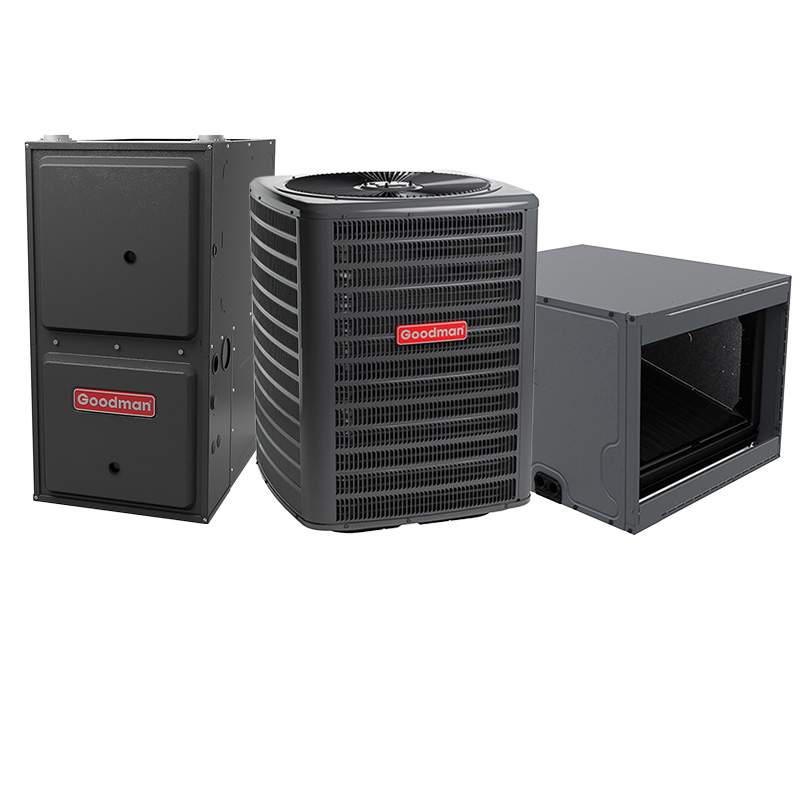
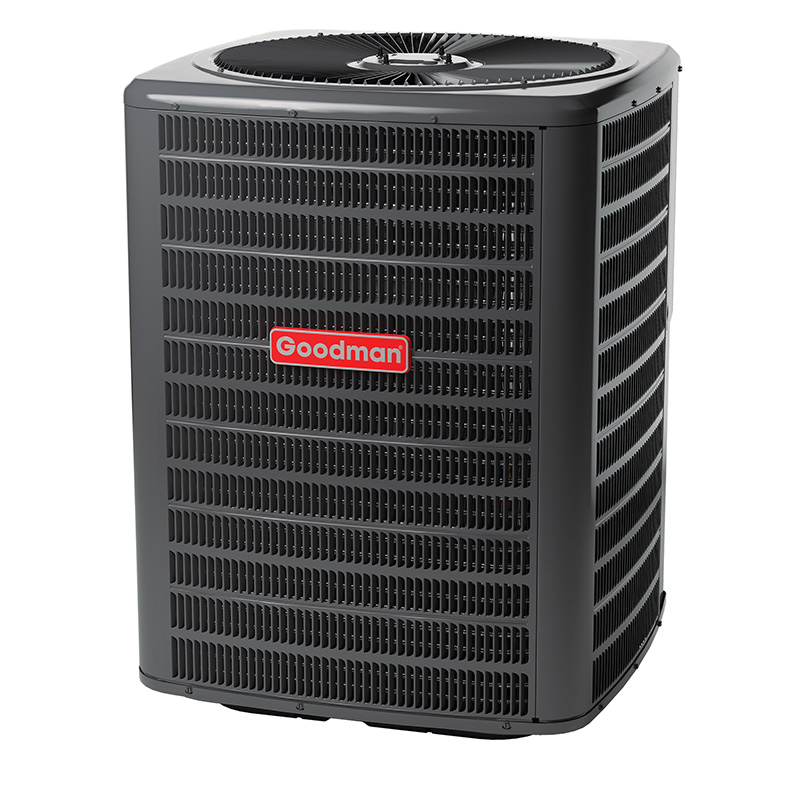
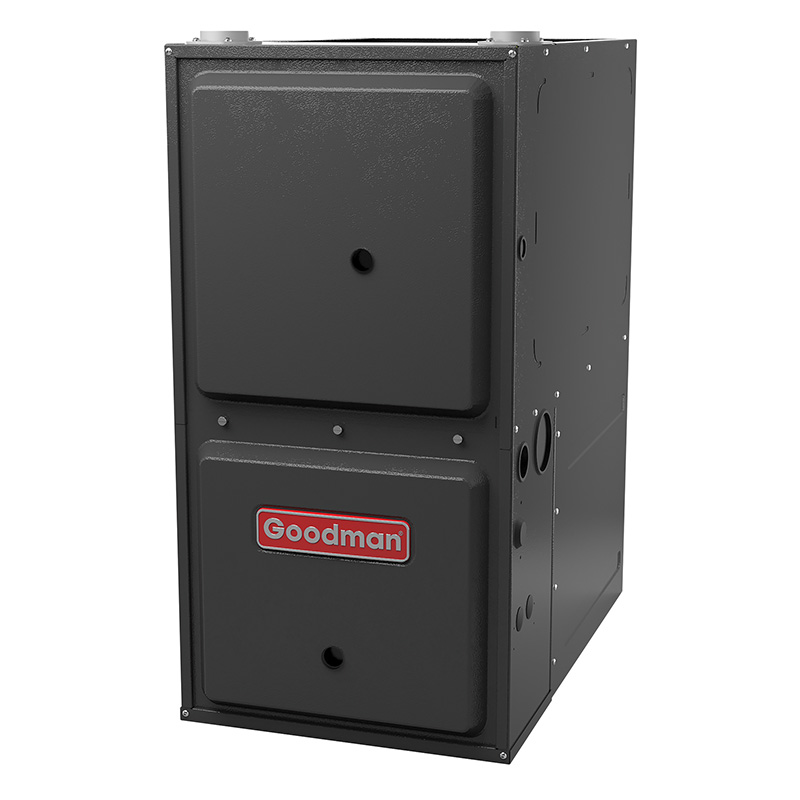
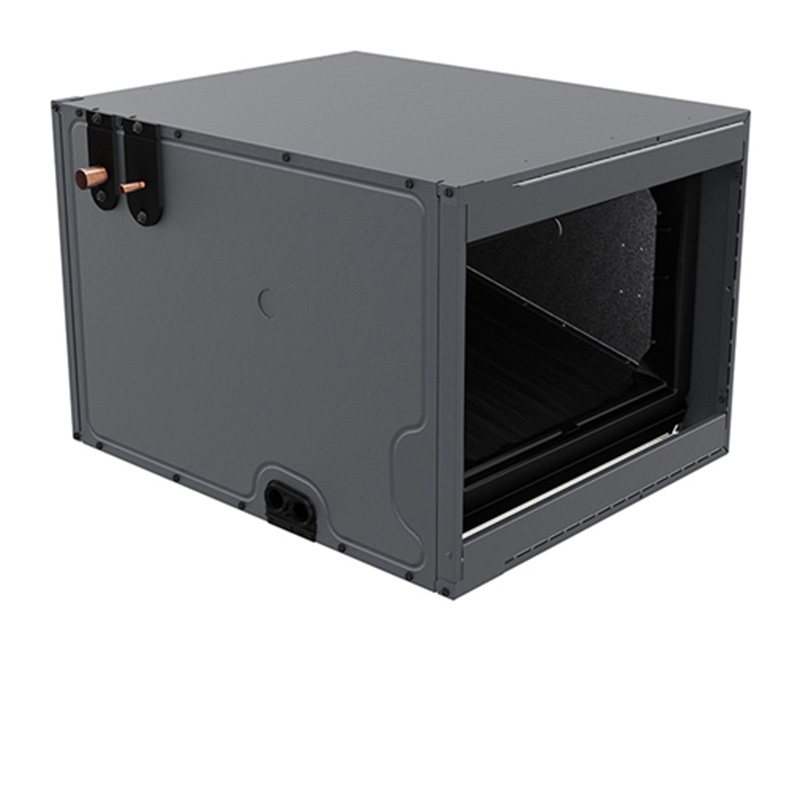
Goodman 1.5 Ton 14.5 SEER2 R32 AC System with 60,000 BTU 80% AFUE Gas Furnace – California & Colorado Ultra Low NOx, Horizontal, Multi-Speed ECM
View on AC Direct see your lowest price →Check current price on AC Direct →
Key features
- 14.5 SEER2 efficiency rating meets current federal minimums for the Southwest region
- R-32 refrigerant with lower global warming potential than R-410A
- Horizontal configuration designed for attic and crawlspace installs
- Multi-speed ECM blower motor improves humidity control and part-load efficiency
- Ultra Low NOx certified for California and Colorado air quality compliance
- 60,000 BTU 80% AFUE gas furnace for moderate-climate heating loads
About this system
The Goodman 1.5-ton, 14.5 SEER2 R-32 air conditioning and 80% AFUE gas furnace combination is sized for smaller conditioned spaces, typically homes or additions in the 500 to 800 square foot range depending on climate and insulation. The horizontal configuration makes it purpose-built for attic or crawlspace installations where vertical units simply will not fit, a common scenario in California and Colorado ranch-style homes and additions. The multi-speed ECM blower motor is a meaningful step up from single-speed PSC motors, running at lower speeds during mild conditions to improve humidity control and lower electricity consumption at the air handler level.
The R-32 refrigerant charge is a forward-looking choice. R-32 has a lower global warming potential than the R-410A it replaces and is increasingly the industry standard, meaning refrigerant availability and technician familiarity will only improve over time. The Ultra Low NOx rating satisfies strict California SCAQMD and Colorado air quality regulations, so this unit ships legally into those markets without any additional modification. At 80% AFUE, the furnace converts eight of every ten units of gas into usable heat, which is code-compliant in most moderate-climate regions but falls short of the 90%-plus efficiency you get from condensing furnaces, a real trade-off worth considering if your winters are long or gas prices are high in your area.
This system is a workable, code-legal choice for smaller California or Colorado spaces that need a horizontal-configuration unit and cannot accommodate a condensing furnace. The price advantage over premium brands is real, but buyers should plan for a higher likelihood of mid-life component repairs and understand that long-term performance depends heavily on the quality of the installation. It is not the most efficient or longest-lived option available, but for the right application and budget it gets the job done.
Overall score is the average of the five ratings above.
What we like
- Priced roughly 15 to 25 percent below comparable Carrier, Trane, and Lennox systems
- R-32 refrigerant future-proofs the system as R-410A is phased out
- Ultra Low NOx certification ships legally into California and Colorado without modification
- Multi-speed ECM motor provides better humidity control than basic single-speed blowers
- Horizontal form factor addresses attic and crawlspace installs where few alternatives exist
Trade-offs
- 80% AFUE is the low end of current furnace efficiency and will cost more to operate than a 96% AFUE condensing unit over the system's life
- Dual-run capacitor failures and evaporator coil leaks are documented recurring issues in owner reports
- Compressor lifespan averages 10 to 14 years versus 15 to 20 years for premium-brand compressors
- ConsumerAffairs scores around 2.5 out of 5, with repair cost complaints becoming common after year 7
What homeowners and pros say about Goodman
Homeowners who chose Goodman equipment most often point to the upfront price as the deciding factor, and the Google dealer review average of around 3.8 out of 5 suggests that a meaningful share of buyers come away satisfied, at least in the early years. The picture shifts on ConsumerAffairs, where the brand sits at roughly 2.5 out of 5, with the most repeated frustration being repair bills that start accumulating around year 7 or 8. The failure modes that show up most consistently in owner reports are dual-run capacitor failures, which tend to be a straightforward and relatively affordable fix in the 300 to 600 dollar range, and evaporator coil leaks, which are more disruptive and costly to address. A smaller but notable share of owners have reported refrigerant leaks within the first year, a problem technicians generally attribute to installation errors or improper charging rather than a defect in the equipment itself.
HVAC professionals who work on Goodman equipment regularly describe it as serviceable gear whose longevity is unusually dependent on how well it was installed and how consistently it is maintained. The compressor lifespan, averaging 10 to 14 years in real-world reports, is shorter than the 15 to 20 years more commonly seen with premium brands, which is a real consideration for a homeowner planning a long stay. For this specific horizontal R-32 system going into a California or Colorado application, pros note that the Ultra Low NOx furnace and R-32 charge solve compliance headaches that would otherwise require swapping components or sourcing a different unit entirely, which has real practical value in those regulated markets.
Sources: ConsumerAffairs Goodman owner reviews, AHRI Directory of Certified Product Performance, U.S. DOE appliance and equipment efficiency standards, Goodman product specification sheets.
What it costs to run
At 14.5 SEER2, cooling this 1.5-ton system for a typical 1200-hour cooling season at the U.S. average electricity rate of $0.17/kWh works out to roughly $253 per year in cooling, about $21 less per year than a minimum-efficiency 13.4 SEER2 unit of the same size. Your real cost depends on your climate and local rate.
Method: (18,000 BTU/hr ÷ 14.5 SEER2) × 1200 hours ÷ 1000 × $0.17/kWh. Rate source: U.S. EIA average; cooling hours: moderate-climate estimate.
How it compares
| Brand | Comparable model | SEER2 | Stage | Price position |
|---|---|---|---|---|
| Goodman | GLXS4BA18 / GMVC8 series (1.5T, 14.5 SEER2, R-32, Horizontal, 80% AFUE) | 14.5 | Single-stage | Value pick |
| Carrier | Comfort 14 series (24ACC4 / 58SB0 pairing) | 14.3–14.5 | Single-stage | Typically 15 to 25 percent more than this Goodman system |
| Trane | XR14c series (4TTR4 / TUX2 pairing) | 14.3–15.0 | Single-stage | Typically 15 to 25 percent more than this Goodman system |
| Lennox | Merit ML14XC1 series (ML14XC1 / ML180UH pairing) | 14.3–15.0 | Single-stage | Typically 15 to 25 percent more than this Goodman system |
Competitor rows are comparable single-stage units at similar efficiency; price is relative position, not a quote.
Questions about this system
Why does this system specify Ultra Low NOx and do I need that if I live in Colorado but not in the San Joaquin Valley?
Ultra Low NOx certification is required by California air quality districts like the SCAQMD and by Colorado's increasingly strict emissions rules for gas appliances. If your Colorado jurisdiction has adopted these standards, you need a compliant unit to pass inspection. Check with your local building department before purchasing, because requirements vary by county and city within the state.
Is 80% AFUE going to be a problem for a cold Colorado winter?
It will pass code in most Colorado locations, but you will pay a measurable efficiency penalty compared to a 95 or 96% AFUE condensing furnace over a heating season. In a climate with 5,000 or more heating degree days, the operating cost difference adds up over a decade. If your install location cannot accommodate the condensate drain and second flue pipe that a condensing furnace requires, the 80% unit may be your only practical option.
What does the multi-speed ECM blower motor actually do differently from a standard motor?
An ECM motor can run at lower speeds during mild conditions rather than always cycling to full speed. This means longer, slower air circulation cycles that remove more moisture from the air, which matters in humid California summers. It also draws less electricity at partial load. The trade-off is that ECM motors are more expensive to replace if they fail than basic PSC motors.
Goodman's ConsumerAffairs score is around 2.5 out of 5. Should that stop me from buying this?
ConsumerAffairs is a complaint-skewed channel, meaning unhappy owners are far more likely to post there than satisfied ones, so the 2.5 score overstates average experience. Google dealer reviews for Goodman installers average around 3.8 out of 5, a more balanced picture. The documented failure modes to watch for are dual-run capacitor failures (a low-cost fix typically in the 300 to 600 dollar range) and evaporator coil leaks. Choosing a reputable installer and keeping up with annual maintenance reduces but does not eliminate these risks.
What refrigerant does this system use and will it be easy to service in 10 years?
This system uses R-32, which is already the dominant refrigerant in new residential equipment in Europe and Asia and is rapidly becoming the U.S. standard as R-410A phases out under EPA rules. Availability and technician familiarity with R-32 are expected to improve over the next several years, making future service less of a concern than it might be with older refrigerant types.
Specifications
| Cooling capacity | 1.5 Ton |
| Efficiency | 14.5 SEER2 |
| Furnace output | 60,000 BTU |
| Furnace efficiency | 80% AFUE |
| Configuration | Horizontal |
| Refrigerant | R-32 |