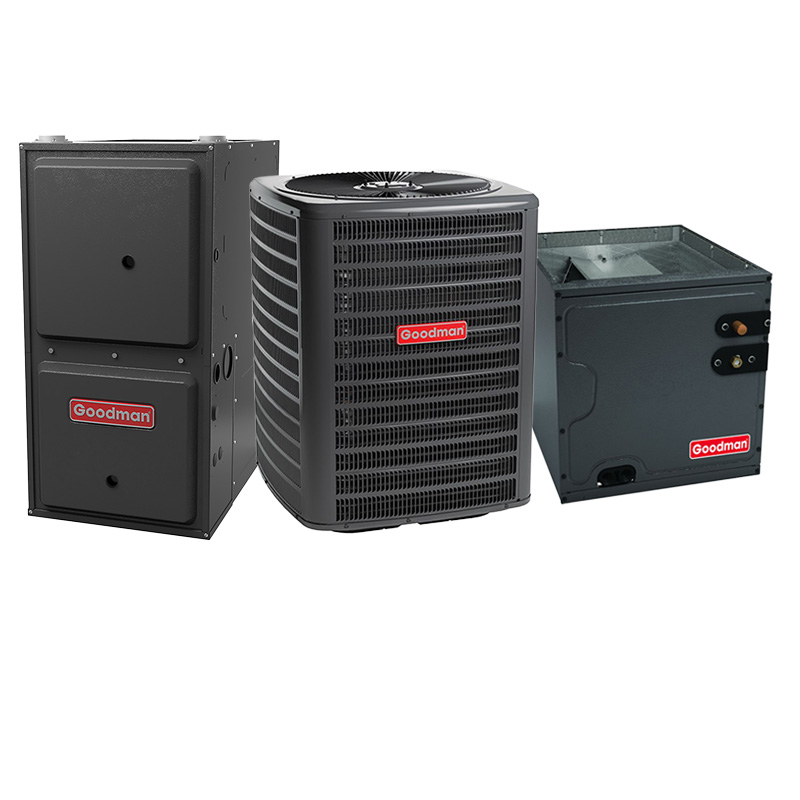
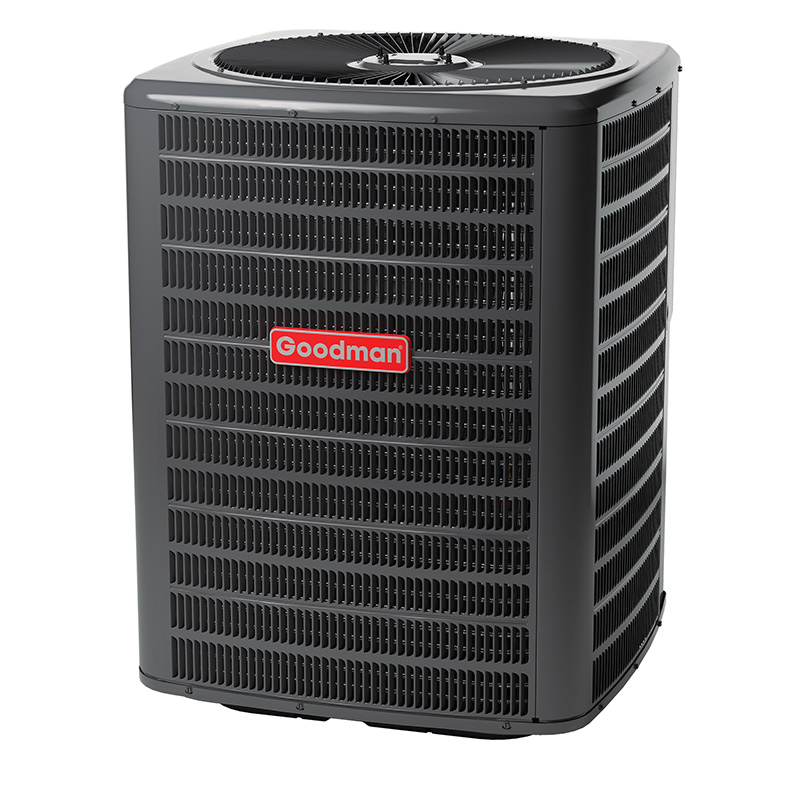
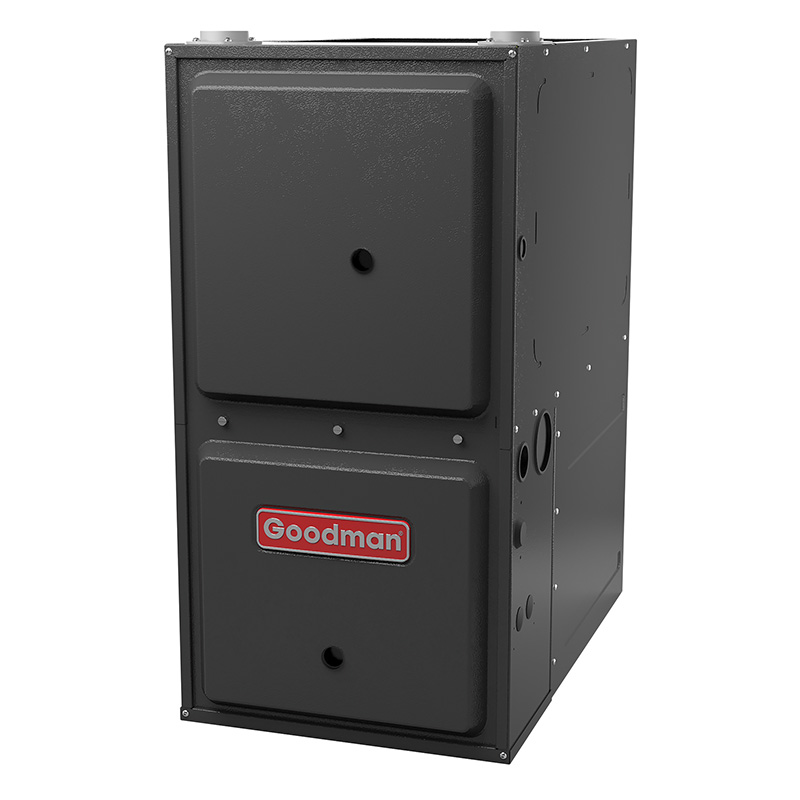
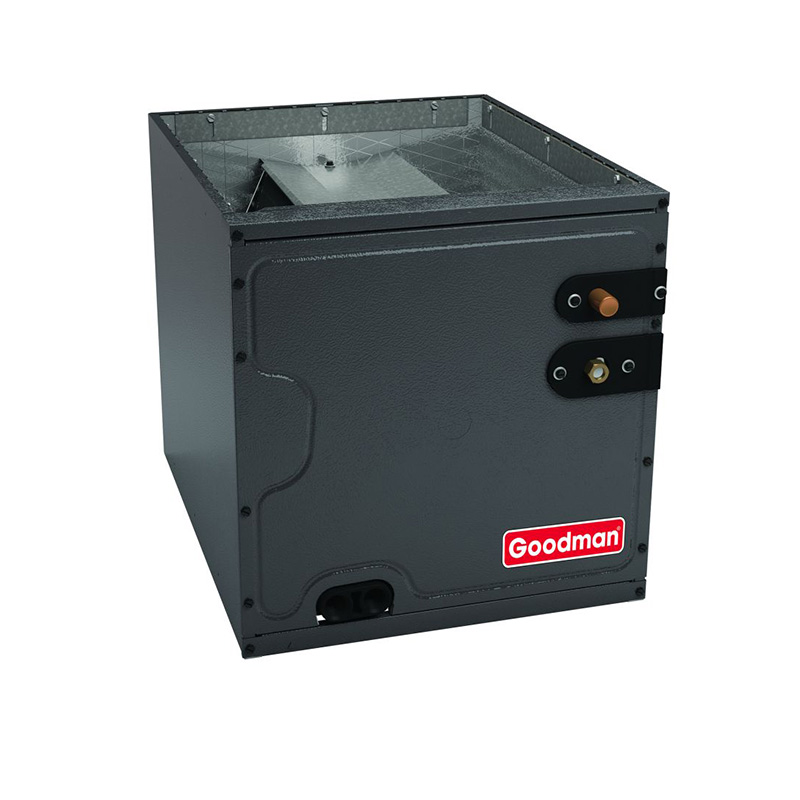
Goodman 1.5 Ton 14.5 SEER2 R32 AC System with 60,000 BTU 80% AFUE Gas Furnace – California & Colorado Ultra Low NOx, Upflow, Multi-Speed ECM
View on AC Direct see your lowest price →Check current price on AC Direct →
Key features
- 14.5 SEER2 cooling efficiency meets federal minimums with room to spare in Northern climate regions
- R-32 refrigerant: significantly lower global warming potential than R-410A
- California and Colorado Ultra Low NOx certified for legal installation in those regulated states
- 60,000 BTU 80% AFUE gas furnace in upflow configuration suits standard basement and closet installs
- Multi-speed ECM blower motor for quieter operation and improved humidity management over single-speed PSC units
- Goodman's 10-year parts warranty (registration required within 60 days of install)
About this system
The Goodman 1.5-ton 14.5 SEER2 R-32 air conditioning and 80% AFUE gas furnace system is aimed at smaller homes, condos, and zone additions in the 500-to-700 square foot range that need both cooling and heating in a single matched package. The upflow furnace configuration suits the most common basement and closet installations where supply air exits through the top. At 14.5 SEER2 the cooling side clears the federal minimum for most Northern regions by a comfortable margin, though it falls short of the higher-tier 16 SEER2-plus systems that deliver measurably lower utility bills over time. The 60,000 BTU furnace output paired with an 80% AFUE rating means roughly 80 cents of every heating dollar becomes usable heat, a reasonable but not exceptional standard that makes most sense in mild-to-moderate heating climates or where gas prices are low.
This particular build is certified for California and Colorado Ultra Low NOx requirements, so it is one of the few package configurations that can be legally installed in those states without an upgrade. The R-32 refrigerant is a meaningful step forward from legacy R-410A, carrying a global warming potential about 68 percent lower, and it operates at slightly lower pressures, which can ease service work. The multi-speed ECM blower motor improves air distribution efficiency and quiet operation versus a standard PSC motor, and it allows finer humidity control in cooling mode. Together, these are practical upgrades that add real-world value without pushing the system into premium-brand price territory.
This system is a workable, code-compliant solution for small spaces in California and Colorado that need a budget-friendly matched set, and the R-32 refrigerant and ECM blower are genuine value-adds at this price point. The 80% AFUE furnace and entry-level SEER2 rating keep upfront costs down but will cost more to operate than a higher-efficiency alternative over a decade or longer. Reliability leans heavily on installation quality and a willingness to budget for routine capacitor replacements and possible coil attention after year seven.
Overall score is the average of the five ratings above.
What we like
- Priced roughly 15 to 25 percent below comparable Carrier, Trane, and Lennox systems, lowering the barrier to a matched set
- R-32 refrigerant is environmentally preferable and increasingly the industry direction, useful for long-term service availability
- Ultra Low NOx certification removes a regulatory hurdle that makes many competing systems non-starters in California and Colorado
- Multi-speed ECM motor delivers better comfort and quieter airflow than the single-speed motors common in this price bracket
- 10-year parts warranty is competitive and matches what premium brands typically offer at registration
Trade-offs
- 80% AFUE is a baseline efficiency rating; homeowners in cold climates or with high gas costs will see noticeably higher annual heating bills compared to a 96% AFUE alternative
- Documented failure modes include dual-run capacitor failures (common after year 5-7, typically $300-$600 to fix) and evaporator coil leaks that appear in a meaningful share of owner reviews
- Compressor lifespan averages 10 to 14 years versus 15 to 20 for premium brands, meaning a higher probability of compressor replacement within the system's life
- ConsumerAffairs scores average around 2.5 out of 5, with repair costs after year 7 as the most repeated complaint, signaling higher long-term service exposure than premium competitors
What homeowners and pros say about Goodman
Homeowners who post about Goodman systems tend to split into two camps: those who got a clean install and have run trouble-free for six or seven years, and those who have faced repair bills that eroded the upfront savings. On Google dealer reviews, Goodman packages average around 3.8 out of 5, and affordability is by far the most common positive note, with many owners pointing out that a properly installed Goodman does what it promises at a price point competitors rarely match. The picture shifts on ConsumerAffairs, where Goodman’s rating sits at roughly 2.5 out of 5; that channel skews toward people motivated to complain, but the recurring theme, repair costs climbing after roughly year seven, is consistent enough that it carries real weight for anyone planning to own a home for a decade or more.
HVAC technicians tend to view Goodman with a pragmatic eye. The systems are straightforward to service, parts are widely stocked, and the dual-run capacitor, the most commonly replaced component in the field, is an inexpensive and quick fix in the $300 to $600 range. What pros flag more seriously are evaporator coil leaks, which appear often enough in owner feedback to be a documented pattern, and compressor longevity that averages 10 to 14 years rather than the 15 to 20 years a Trane or Carrier compressor might deliver. For this specific R-32 system, technicians will also note that A2L refrigerant handling requires updated certification and proper precautions, so the quality and experience of whoever installs and services the unit matters even more than it does with older refrigerant types.
Sources: ConsumerAffairs Goodman owner reviews, AHRI Directory of Certified Product Performance, U.S. DOE appliance and equipment efficiency standards, Goodman product specification sheets.
What it costs to run
At 14.5 SEER2, cooling this 1.5-ton system for a typical 1200-hour cooling season at the U.S. average electricity rate of $0.17/kWh works out to roughly $253 per year in cooling, about $21 less per year than a minimum-efficiency 13.4 SEER2 unit of the same size. Your real cost depends on your climate and local rate.
Method: (18,000 BTU/hr ÷ 14.5 SEER2) × 1200 hours ÷ 1000 × $0.17/kWh. Rate source: U.S. EIA average; cooling hours: moderate-climate estimate.
How it compares
| Brand | Comparable model | SEER2 | Stage | Price position |
|---|---|---|---|---|
| Goodman | GSXH5/GMVC8 or equivalent 1.5T 14.5 SEER2 R-32 matched system | 14.5 | Single-stage / Multi-speed ECM | Value pick |
| Carrier | Comfort 24ACC6 / 58TP | 14.3 to 15.2 | Single-stage | Typically 15 to 25 percent more than this Goodman system |
| Trane | XR14c / S8X1 | 14.3 to 15.1 | Single-stage | Typically 15 to 25 percent more than this Goodman system |
| Lennox | Merit 14ACX / ML180 | 14.3 to 15.0 | Single-stage | Typically 15 to 25 percent more than this Goodman system |
Competitor rows are comparable single-stage units at similar efficiency; price is relative position, not a quote.
Questions about this system
Is this system actually legal to install in California without any modifications?
Yes. This specific configuration carries the Ultra Low NOx certification required by California's air quality districts, so no additional burner modification or separate NOx kit is needed. Always verify your local district's current requirements with your installer before purchase, as rules can vary by county.
Will my existing R-410A line set work with the R-32 system?
In many cases a clean, properly sized copper line set can be reused with R-32, but your technician must flush the lines thoroughly to remove any R-410A residue and the original POE oil before charging. R-32 is mildly flammable (A2L classification), so the installer also needs to follow updated safety handling procedures; not all technicians are currently certified for A2L refrigerants, so confirm this before scheduling.
How important is it to register the warranty, and what does the 10-year coverage actually include?
Registration within 60 days of installation is required to activate the 10-year parts warranty; without it coverage drops to 5 years. The warranty covers parts only, not labor or refrigerant, so a compressor replacement in year 9 would still carry a significant labor cost out of pocket. Keep your registration confirmation and install date documentation in a safe place.
The 1.5-ton size seems small. How do I know if it is the right capacity for my space?
A proper Manual J load calculation by your HVAC contractor is the only reliable way to confirm sizing. As a rough reference, 1.5 tons is commonly appropriate for 500 to 750 square feet in average construction, but ceiling height, insulation quality, window area, and local climate all shift that number meaningfully. Oversizing is a real risk with DIY estimates and leads to short cycling, poor humidity removal, and accelerated wear.
What should I budget for maintenance and likely repairs over the first 10 years?
Plan for annual tune-ups ($80 to $150 each) plus a higher-than-average probability of a dual-run capacitor replacement somewhere between year 5 and year 9, typically $300 to $600 including labor. Evaporator coil leaks are documented in a meaningful share of Goodman owners, and a coil replacement can run $1,000 to $2,000 depending on your market. Setting aside $150 to $200 per year in a maintenance reserve is a reasonable approach.
Specifications
| Cooling capacity | 1.5 Ton |
| Efficiency | 14.5 SEER2 |
| Furnace output | 60,000 BTU |
| Furnace efficiency | 80% AFUE |
| Configuration | Upflow |
| Refrigerant | R-32 |