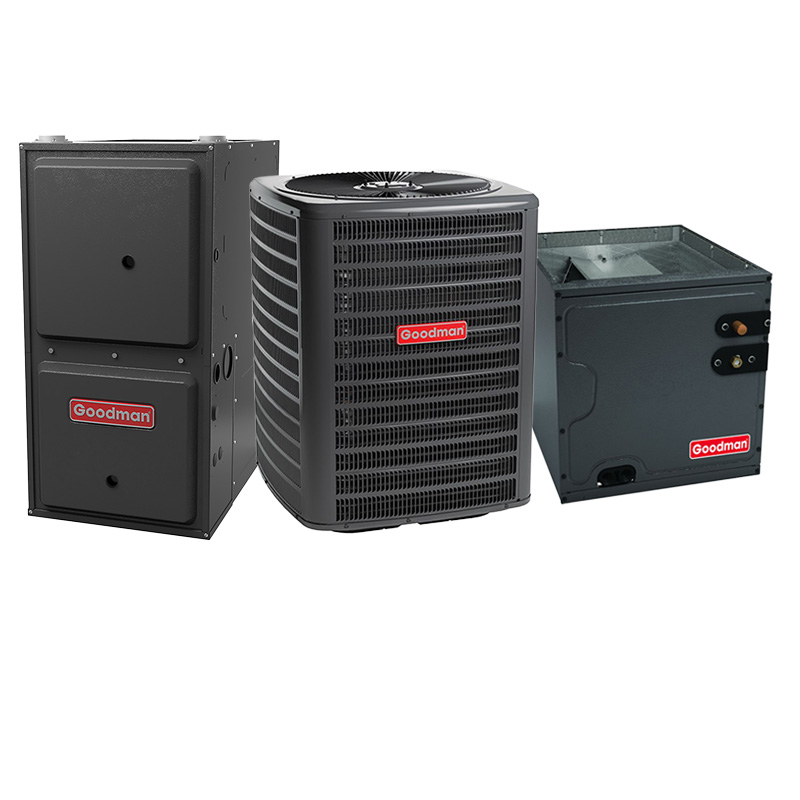
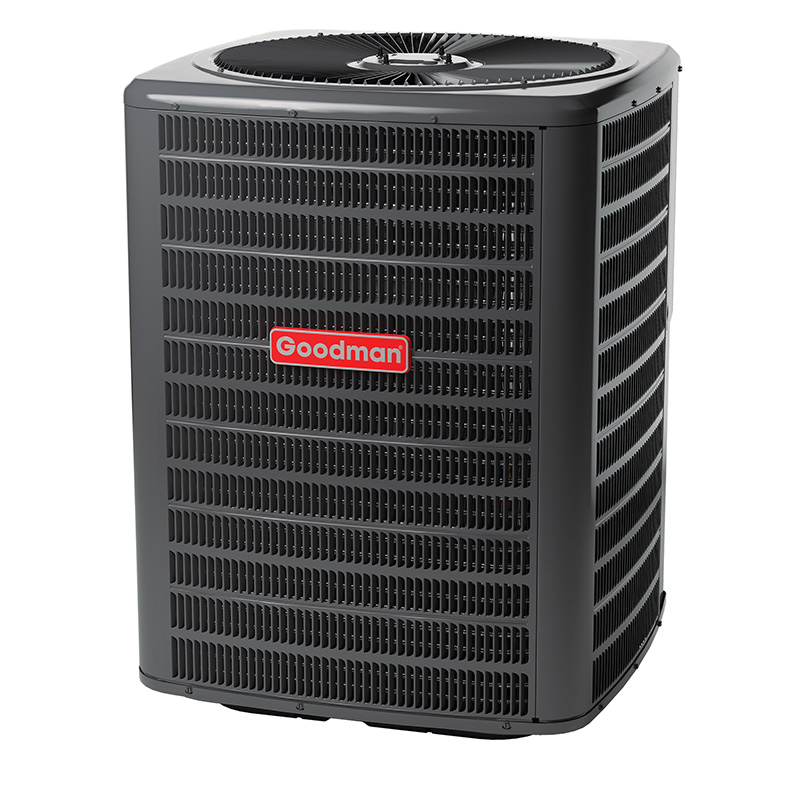
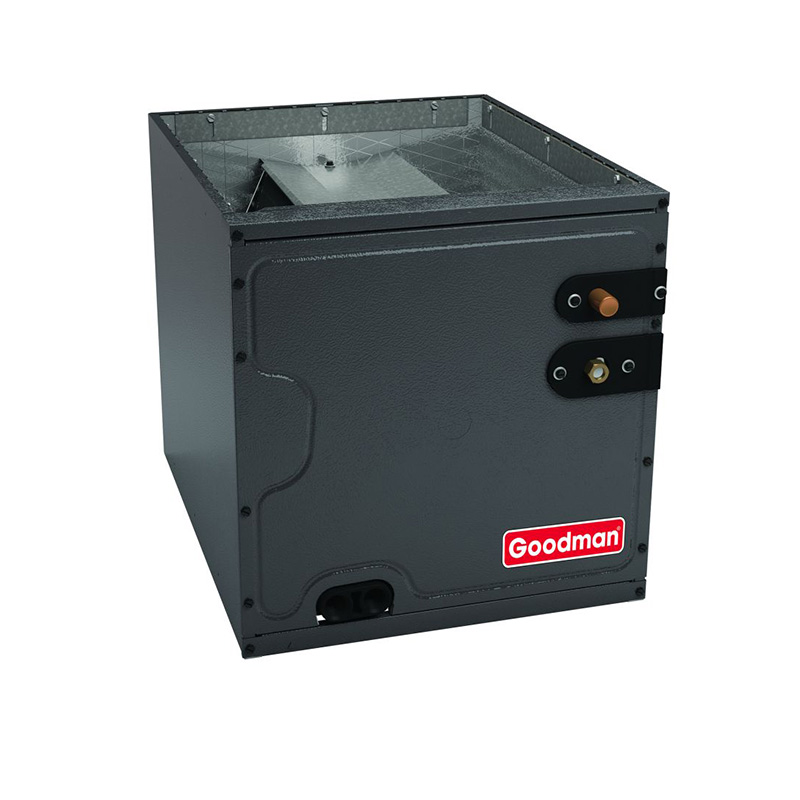
Goodman 1.5 Ton 15.2 SEER2 R32 AC System with 40,000 BTU 80% AFUE Gas Furnace – California & Colorado Ultra Low NOx, Upflow, Multi-Speed ECM
View on AC Direct see your lowest price →Check current price on AC Direct →
Key features
- 15.2 SEER2 efficiency rating meets current federal minimums for most U.S. regions
- R-32 refrigerant formulation satisfies California and Colorado ultra-low-NOx and low-GWP regulations
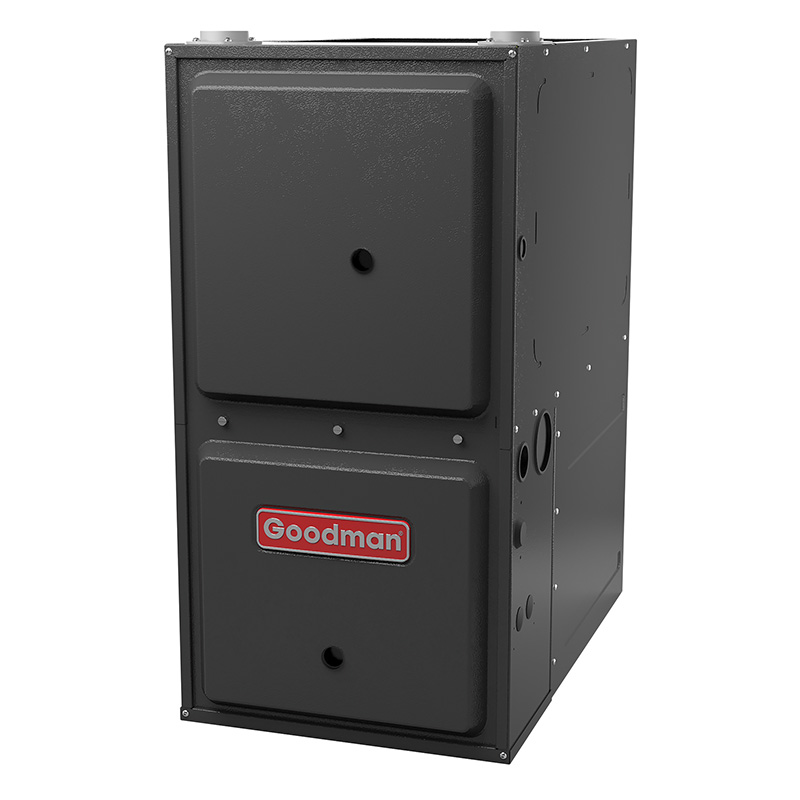
- 40,000 BTU 80% AFUE gas furnace in upflow configuration for standard basement or utility closet installs
- Multi-speed ECM blower motor improves airflow control, humidity management, and part-load noise compared to single-speed motors
- 1.5-ton capacity targets smaller conditioned spaces, typically 600 to 900 square feet depending on load
- Goodman factory warranty covers parts; compressor and heat exchanger carry extended coverage terms
About this system
The Goodman 1.5-ton, 15.2 SEER2 R-32 air conditioning system paired with a 40,000 BTU 80% AFUE gas furnace is sized for smaller homes and conditioned spaces, typically in the 600 to 900 square foot range depending on local climate and insulation. The 15.2 SEER2 rating clears the federal minimum for most regions and sits in the entry-level tier of current-generation efficiency, meaning operating costs will be reasonable but not as low as a mid- or high-efficiency system. The upflow furnace configuration suits the most common residential installation layout, where the unit sits in a basement or utility closet and pushes conditioned air upward into the duct system.
This system is built around R-32 refrigerant, which has a lower global warming potential than the R-410A it replaces and is required for California and Colorado compliance under those states’ low-GWP rules. The 80% AFUE furnace rating means 80 cents of every heating dollar becomes usable heat, which is the baseline efficiency tier and carries no federal tax credit. The multi-speed ECM blower motor is a meaningful upgrade over single-speed PSC motors at this price point: it ramps airflow more gradually, improves humidity control, and runs quietly at lower fan speeds during mild conditions. For a buyer in a moderate climate who wants a code-compliant, low-upfront-cost system and is comfortable with the trade-offs of a value brand, this package covers the basics without unnecessary complexity.
This Goodman system delivers a functional, code-compliant HVAC solution at a price point that is noticeably below comparable Carrier, Trane, and Lennox equipment. The multi-speed ECM motor and R-32 refrigerant are genuine value-adds at this tier, but 80% AFUE and 15.2 SEER2 are entry-level numbers, and Goodman's documented repair history after year seven means ongoing maintenance costs should factor into the total ownership calculation. It earns its place as a budget-conscious starting point, not as a long-term premium investment.
Overall score is the average of the five ratings above.
What we like
- Purchase price runs 15 to 25 percent below comparable Carrier, Trane, and Lennox systems
- Multi-speed ECM blower motor is a meaningful comfort upgrade over single-speed alternatives at this price
- R-32 refrigerant ensures compliance with California and Colorado low-GWP regulations without an aftermarket conversion
- Upflow configuration is the most widely supported layout, making qualified installer availability straightforward
- Dual-run capacitor failures, the most common documented repair, are typically a low-cost fix in the $300 to $600 range
Trade-offs
- 80% AFUE furnace efficiency is the baseline tier and does not qualify for federal energy efficiency tax credits
- Compressor lifespan averages 10 to 14 years versus 15 to 20 years for premium-brand compressors
- Evaporator coil leaks appear in a meaningful share of owner reviews and can be costly to address
- ConsumerAffairs scores average around 2.5 out of 5, with repair costs after year seven as the most recurring complaint
What homeowners and pros say about Goodman
Homeowners who share feedback about Goodman equipment tend to split along a clear fault line: those who had a clean installation from a skilled contractor often report years of trouble-free operation and point to the lower purchase price as a straightforward win. On ConsumerAffairs, where the audience skews toward people with problems to report, Goodman averages around 2.5 out of 5 stars, and the recurring theme in those complaints is repair costs that begin climbing after roughly year seven. Google dealer reviews, which capture a broader cross-section of customers, average closer to 3.8 out of 5, with affordability consistently the most cited reason for satisfaction. Neither score suggests Goodman punches above its weight class; both confirm it delivers reasonable value at a lower price point.
HVAC technicians are candid about where Goodman systems fall short over time. Dual-run capacitor failures are the most commonly flagged repair, and most pros note those are a quick, low-cost fix. More consequential are evaporator coil leaks, which show up in a meaningful share of owner feedback and require more involved service. On the compressor side, technicians generally expect Goodman units to average 10 to 14 years before compressor failure, compared to 15 to 20 years on Trane, Carrier, and Lennox equipment. The same technicians are consistent on one other point specific to this brand: install quality matters more on a Goodman than it does on a premium unit, because the tighter manufacturing tolerances of premium brands leave less room for an imperfect setup to cause early problems. A small number of owners also report refrigerant leaks within the first year, which professionals attribute to installation or initial charge issues rather than factory defects in the equipment itself.
Sources: ConsumerAffairs Goodman owner reviews, AHRI Directory of Certified Product Performance, U.S. DOE appliance and equipment efficiency standards, Goodman product specification sheets.
What it costs to run
At 15.2 SEER2, cooling this 1.5-ton system for a typical 1200-hour cooling season at the U.S. average electricity rate of $0.17/kWh works out to roughly $242 per year in cooling, about $32 less per year than a minimum-efficiency 13.4 SEER2 unit of the same size. Your real cost depends on your climate and local rate.
Method: (18,000 BTU/hr ÷ 15.2 SEER2) × 1200 hours ÷ 1000 × $0.17/kWh. Rate source: U.S. EIA average; cooling hours: moderate-climate estimate.
How it compares
| Brand | Comparable model | SEER2 | Stage | Price position |
|---|---|---|---|---|
| Goodman | GSX-15.2 / GMVC8 series (this system) | 15.2 | Single-stage | Value pick |
| Carrier | Comfort 14 / 15 series (24ACC6) | 15.2 | Single-stage | Typically 15 to 25 percent more than this Goodman |
| Trane | XR15 series | 15.2 | Single-stage | Typically 15 to 25 percent more than this Goodman |
| Lennox | Merit ML15 series | 15.2 | Single-stage | Typically 15 to 25 percent more than this Goodman |
Competitor rows are comparable single-stage units at similar efficiency; price is relative position, not a quote.
Questions about this system
Is 1.5 tons enough for my home, and how do I know if this system is the right size?
A 1.5-ton system is generally appropriate for conditioned spaces in the 600 to 900 square foot range, but the right size depends on your local climate, insulation levels, window area, and ceiling height. A proper Manual J load calculation performed by a licensed HVAC contractor is the only reliable way to confirm sizing; oversizing or undersizing both reduce comfort and increase wear.
Does this system qualify for federal energy efficiency tax credits?
The 80% AFUE furnace does not meet the 97% AFUE threshold required for the federal Residential Clean Energy or Energy Efficient Home Improvement credits on gas furnaces. The 15.2 SEER2 cooling side alone also falls short of the credit-qualifying tier for split systems in most climate zones. Check with your tax advisor for your specific situation, but this system is not marketed as a tax-credit-eligible package.
What does R-32 refrigerant mean for me as a homeowner, and is it harder to service?
R-32 is required in California and Colorado because it has a lower global warming potential than the R-410A it replaces. For day-to-day ownership it behaves similarly to R-410A, though not all service technicians currently carry R-32, so confirming your installer and any future service provider is equipped for it before purchase is a reasonable step.
What are the most common repairs I should expect, and when do they typically happen?
The most frequently reported failure on Goodman equipment is the dual-run capacitor, which is a relatively inexpensive repair typically running $300 to $600 including labor. Evaporator coil leaks appear in a meaningful share of owner reviews and are more costly. Compressors on Goodman units tend to average 10 to 14 years, so budgeting for a potential compressor replacement or system replacement in that window is prudent.
How important is installer quality for a Goodman system, and should I get multiple bids?
Installer quality is the single factor that HVAC technicians most consistently cite as determining how long a Goodman system lasts and how efficiently it runs. A small share of owners also report refrigerant leaks in the first year, which is usually traced to installation or charge issues rather than equipment defects. Getting at least two to three bids from licensed contractors who will perform a proper load calculation and provide a written commissioning checklist is strongly recommended.
Specifications
| Cooling capacity | 1.5 Ton |
| Efficiency | 15.2 SEER2 |
| Furnace output | 40,000 BTU |
| Furnace efficiency | 80% AFUE |
| Configuration | Upflow |
| Refrigerant | R-32 |