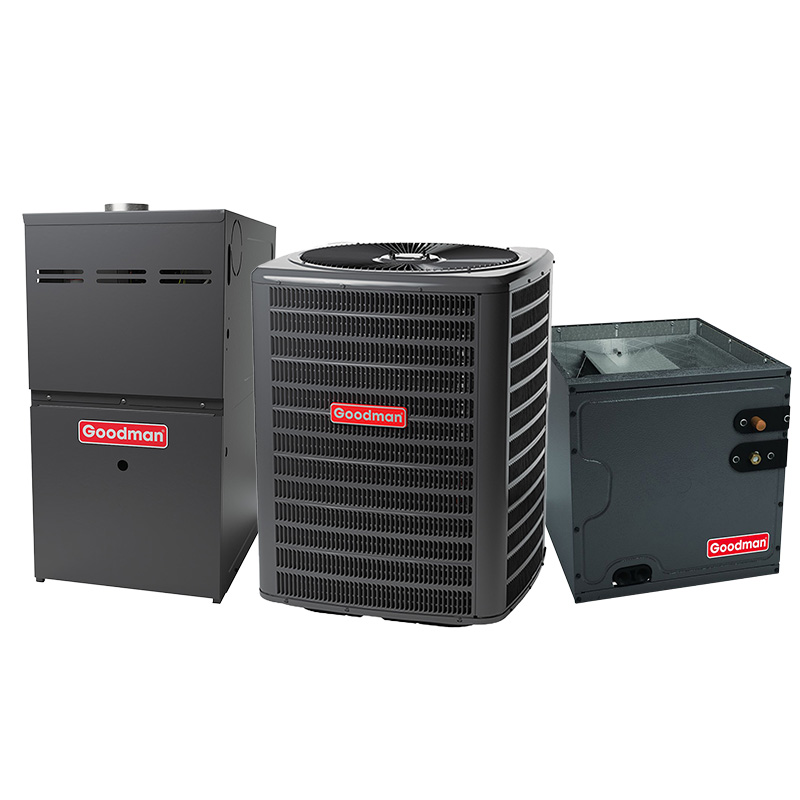
Goodman 1.5 Ton Dual Fuel Hybrid Heat Pump System – 40000 BTU California Low NOx Gas Furnace, 80% AFUE, 14.5 SEER2, Upflow, R32
View on AC Direct see your lowest price →Check current price on AC Direct →
Key features
- 14.5 SEER2 heat pump efficiency rating meets current federal minimum standards
- 80% AFUE gas furnace provides dependable backup heat on coldest nights
- California Low NOx certified furnace meets strict regional air quality requirements
- Dual fuel operation automatically switches between heat pump and gas heat by outdoor temperature
- R-32 refrigerant offers a lower global-warming potential than older R-410A systems
- Upflow configuration designed for installations with overhead duct systems
About this system
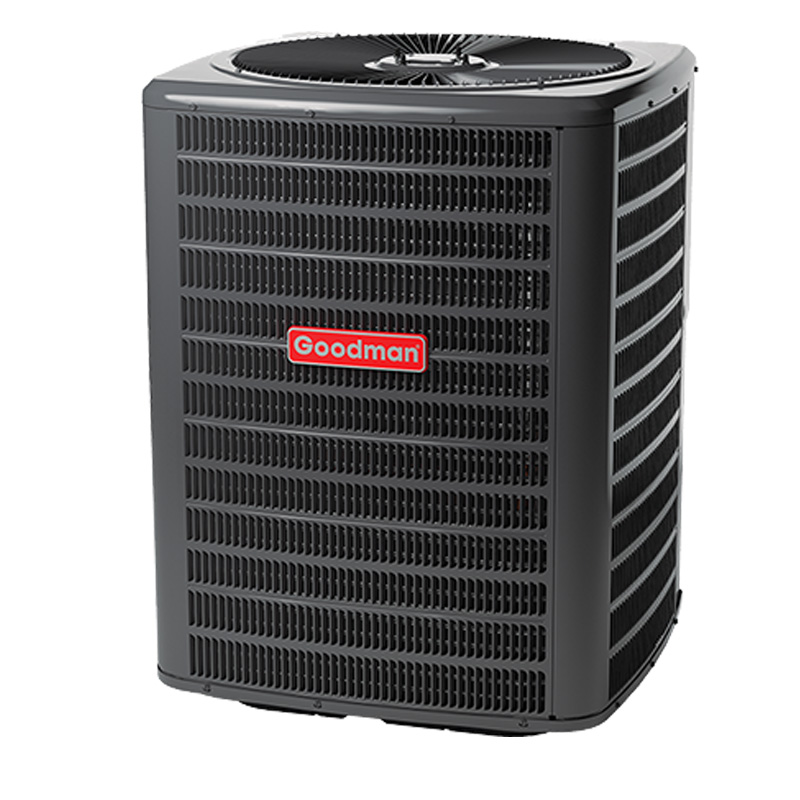
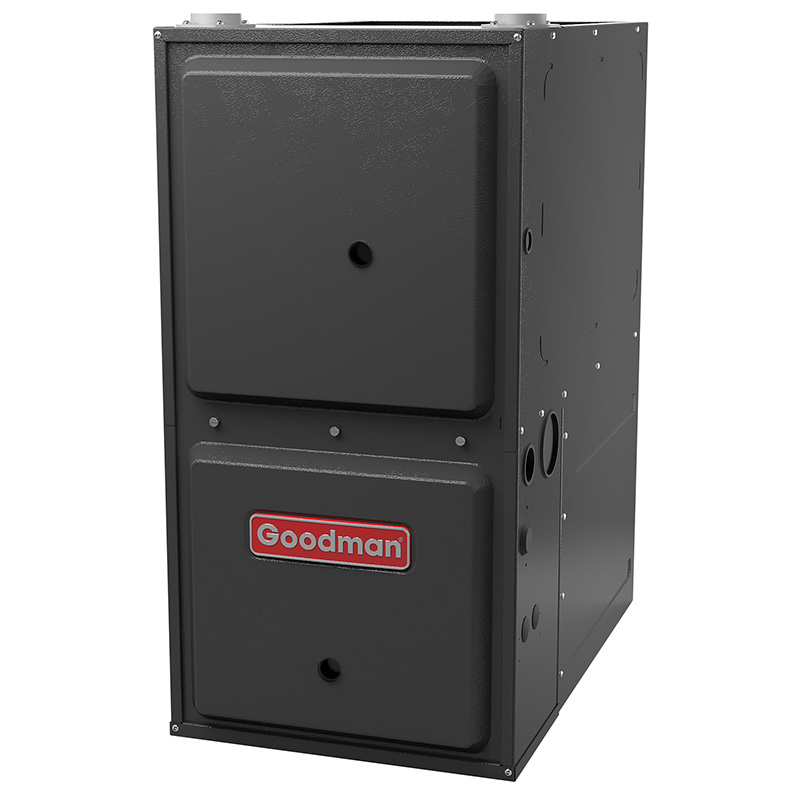
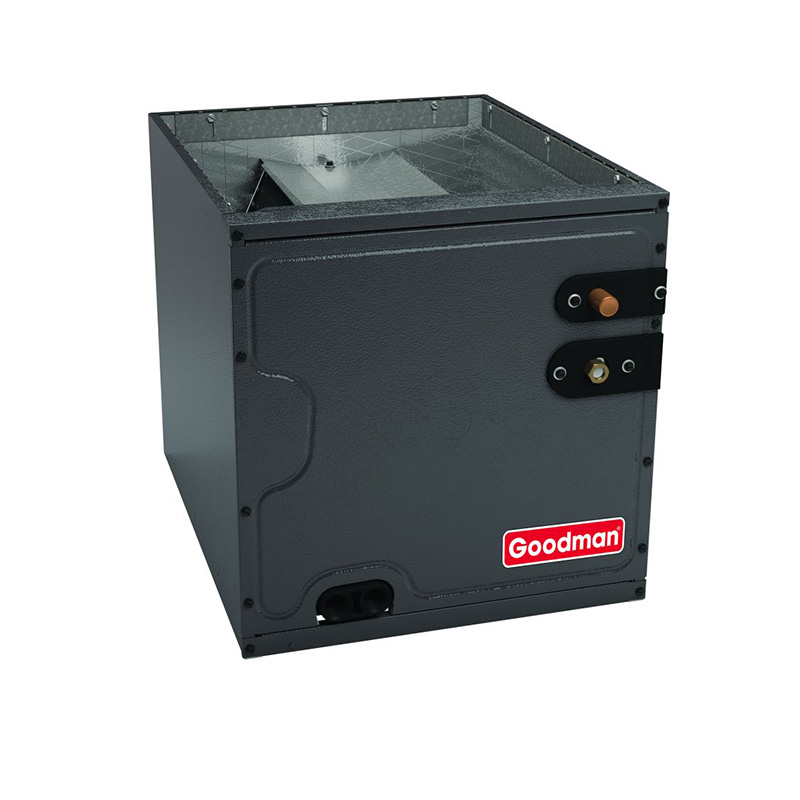
The Goodman 1.5-ton dual fuel hybrid heat pump system pairs a 14.5 SEER2 outdoor heat pump with a 40,000 BTU upflow gas furnace rated at 80% AFUE. Dual fuel operation means the system automatically switches between electric heat pump and gas heat based on outdoor temperature, giving you lower operating costs when conditions favor each fuel source. The 1.5-ton capacity suits smaller homes and conditioned spaces typically in the 600 to 900 square foot range, depending on local climate, insulation, and ceiling height. R-32 refrigerant is used here, a lower global-warming-potential refrigerant increasingly common in newer equipment.
This configuration is specifically built to California Low NOx standards, meaning the furnace meets stricter nitrogen oxide emission limits required in many California air districts. The upflow orientation sends conditioned air upward into the ductwork, making it a fit for systems where the furnace sits in a basement, utility closet, or ground-level mechanical room with overhead ducts. Buyers choosing this system are typically cost-focused homeowners in mild-to-moderate climates who want the efficiency benefits of a heat pump with a gas backup for the coldest nights, without paying premium-brand prices.
This system delivers an affordable entry point into dual fuel hybrid comfort with compliant California Low NOx credentials, and it works reliably when installed correctly by an experienced technician. The 80% AFUE furnace and 14.5 SEER2 rating land at the lower end of efficiency tiers, and Goodman's documented track record of compressor and coil issues after the first decade means long-term ownership costs deserve honest consideration. Buyers who prioritize upfront savings and work with a skilled installer will get solid value; those seeking premium longevity should weigh the tradeoffs carefully.
Overall score is the average of the five ratings above.
What we like
- Priced 15 to 25 percent below comparable Carrier, Trane, and Lennox dual fuel systems
- Dual fuel design reduces operating costs by using the more efficient heat source for current conditions
- California Low NOx certification opens the door for installs in restricted air districts
- R-32 refrigerant is a more environmentally responsible choice than the R-410A it replaces
- Upflow furnace fits a wide range of existing residential duct layouts without major modification
Trade-offs
- 80% AFUE is at the lower end of modern furnace efficiency; 96%+ AFUE options exist at higher price points
- 14.5 SEER2 is entry-level efficiency; variable-speed or two-stage systems offer noticeably lower operating costs
- Compressor lifespan averaging 10 to 14 years trails premium brands by several years, raising long-run replacement risk
- Dual capacitor failures, evaporator coil leaks, and occasional first-year refrigerant leaks are documented failure modes that can generate repair costs even early in ownership
What homeowners and pros say about Goodman
Homeowners discussing Goodman equipment frequently circle back to price as the deciding factor, and that pattern holds in aggregate dealer reviews that sit around 3.8 out of 5 on Google, where affordability is the most praised attribute. The ConsumerAffairs picture is harder to ignore at roughly 2.5 out of 5, though that channel disproportionately captures frustrated owners rather than satisfied ones. The complaints that surface there most often involve repair costs climbing after approximately year seven, which aligns with the documented compressor lifespan averaging 10 to 14 years compared to 15 to 20 years typical of premium brands. For a 1.5-ton dual fuel setup like this one, those compressor longevity figures matter more than they might on a simpler system, because a dual fuel install carries more components and a more complex service relationship with the equipment over time.
HVAC professionals tend to give Goodman a measured endorsement rather than an enthusiastic one. Many will install it without hesitation for budget-focused customers, but most will also be candid that install quality carries more weight with Goodman than with Carrier or Trane, because the units leave less margin for error. The specific failure modes documented in owner feedback, including dual-run capacitor failures that usually run 300 to 600 dollars to repair, evaporator coil leaks that can be costlier, and a minority of first-year refrigerant leaks tied to install or charge problems, are not unique to Goodman but appear at a rate that experienced techs recognize. For this California Low NOx dual fuel system in particular, contractors working in restricted air districts report that Goodman competes seriously on price for permit-ready installations, and that when the setup is done right the system runs without drama for the first several years.
Sources: ConsumerAffairs Goodman owner reviews, AHRI Directory of Certified Product Performance, U.S. DOE appliance and equipment efficiency standards, Goodman product specification sheets.
What it costs to run
At 14.5 SEER2, cooling this 1.5-ton system for a typical 1200-hour cooling season at the U.S. average electricity rate of $0.17/kWh works out to roughly $253 per year in cooling, about $21 less per year than a minimum-efficiency 13.4 SEER2 unit of the same size. Your real cost depends on your climate and local rate.
Method: (18,000 BTU/hr ÷ 14.5 SEER2) × 1200 hours ÷ 1000 × $0.17/kWh. Rate source: U.S. EIA average; cooling hours: moderate-climate estimate.
How it compares
| Brand | Comparable model | SEER2 | Stage | Price position |
|---|---|---|---|---|
| Goodman | Dual Fuel Hybrid Heat Pump System with 80% AFUE Upflow Furnace | 14.5 | Single-stage | Value pick |
| Carrier | Performance Series Dual Fuel (25HCB / 58TP80 pairing) | 15.0 | Single-stage | Typically 15 to 25 percent more than Goodman |
| Trane | XR15 Dual Fuel with S8X1 80% AFUE Furnace | 15.0 | Single-stage | Typically 15 to 25 percent more than Goodman |
| Lennox | Merit Series ML14XP1 Dual Fuel with 80% AFUE Merit Furnace | 15.0 | Single-stage | Typically 15 to 25 percent more than Goodman |
Competitor rows are comparable single-stage units at similar efficiency; price is relative position, not a quote.
Questions about this system
At what outdoor temperature does the system switch from heat pump to the gas furnace?
The switchover point, often called the balance point, is typically set by your installer based on your local climate and utility rates, but a common setting is between 35 and 40 degrees Fahrenheit. Below that point the gas furnace takes over because running the heat pump becomes less efficient. Your thermostat controls this and the threshold can be adjusted after install.
Is 1.5 tons enough for my home, and how do I know?
A Manual J load calculation performed by your HVAC contractor is the only reliable way to confirm the right size for your specific home. As a rough guide, 1.5 tons often suits spaces in the 600 to 900 square foot range in moderate climates, but insulation levels, ceiling height, window area, and local weather all affect the answer significantly. Oversizing or undersizing both cause performance and efficiency problems.
Why does this furnace say California Low NOx, and does that matter outside California?
California Low NOx certification means the furnace meets California Air Resources Board standards for nitrogen oxide emissions, required in many California air quality management districts before a permit will be issued. Outside California the certification is generally not required but does no harm, so this unit can be installed in other states without issue.
What are the most common repairs I should budget for over the life of this system?
Based on documented owner feedback, dual-run capacitor failure is the most frequently reported issue and typically costs between 300 and 600 dollars to fix. Evaporator coil leaks appear in a meaningful share of reviews and can be more expensive to address. Compressors on Goodman systems have averaged 10 to 14 years in real-world use, so a compressor replacement or full outdoor unit swap is a realistic budget item as the system ages past the first decade.
How important is the installer's experience with this specific system, and does it affect the warranty?
Technicians consistently identify install quality as the single biggest factor in how long a Goodman system performs, and a small but documented share of owners report refrigerant leaks within the first year that trace back to install or charge issues. Goodman requires registration by a licensed contractor to activate the full parts warranty, and improper installation can void coverage, so choosing a contractor with documented Goodman or dual fuel experience is genuinely important here.
Specifications
| Cooling capacity | 1.5 Ton |
| Efficiency | 14.5 SEER2 |
| Furnace output | 40000 BTU |
| Furnace efficiency | 80% AFUE |
| Configuration | Upflow |
| Refrigerant | R-32 |