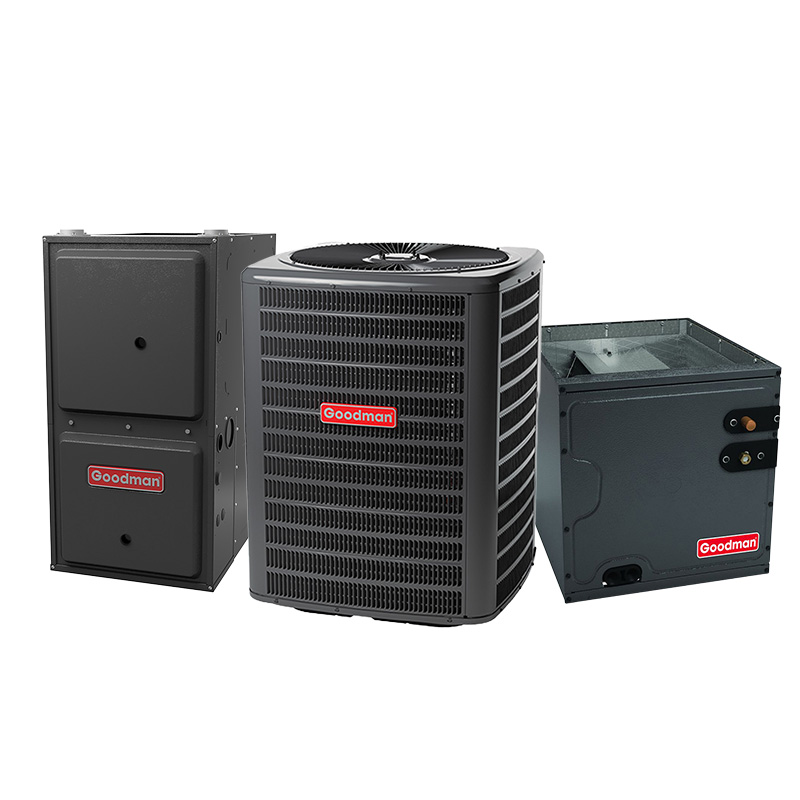
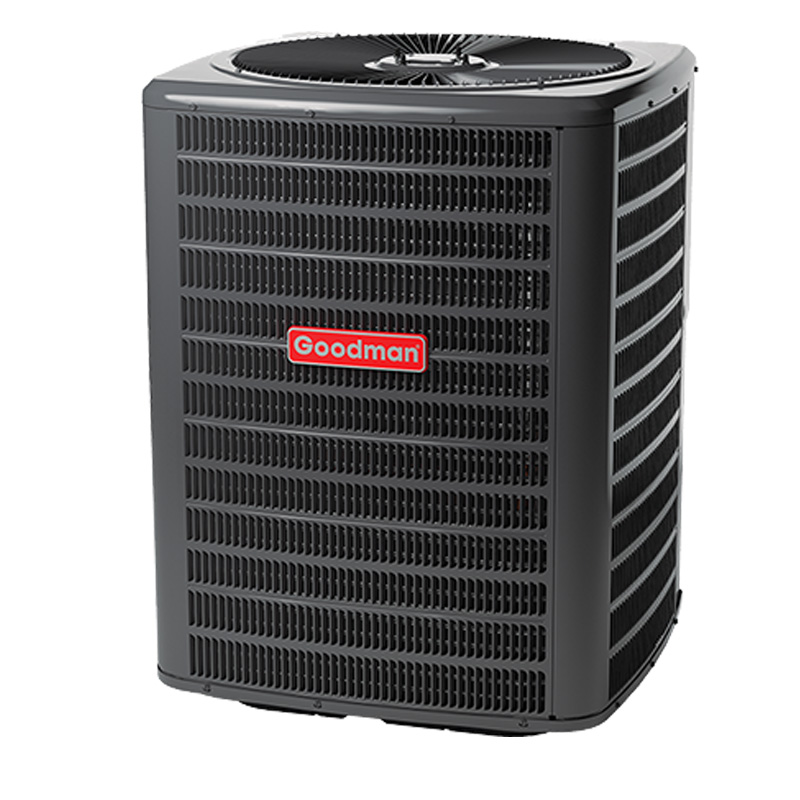
Goodman 1.5 Ton Dual Fuel Hybrid Heat Pump System – 40000 BTU California Ultra-Low NOx Gas Furnace, 80% AFUE, 14.5 SEER2, Upflow, R32
View on AC Direct see your lowest price →Check current price on AC Direct →
Key features
- 14.5 SEER2 heat pump efficiency, meeting current federal minimum standards for most U.S. regions
- 80% AFUE gas furnace provides a gas-heat backup when outdoor temps make the heat pump less cost-effective
- Dual fuel hybrid logic automatically switches between electric and gas heat based on a set balance-point temperature
- R-32 refrigerant with lower global warming potential than R-410A, now standard on newer Goodman equipment
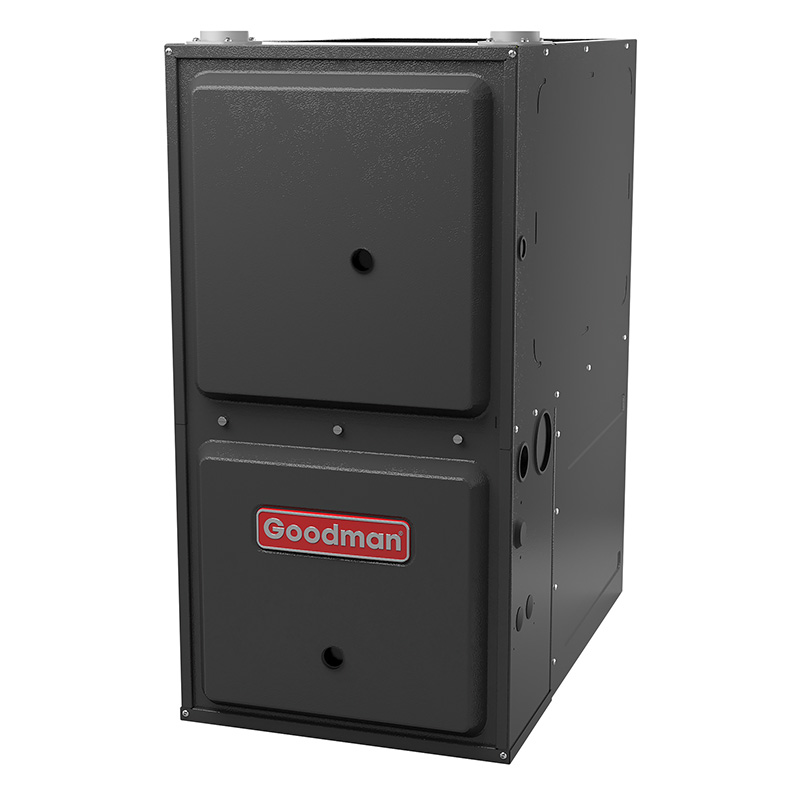
- Upflow furnace configuration designed for basement or floor-level installations with overhead duct systems
- 1.5-ton capacity suited to smaller conditioned spaces, typically 600 to 900 square feet depending on local climate and insulation
About this system
The Goodman 1.5-ton dual fuel hybrid system pairs a 14.5 SEER2 heat pump with a 40,000 BTU upflow gas furnace rated at 80% AFUE, giving smaller homes and conditioned spaces in mild-to-moderate climates a cost-conscious path to year-round comfort. The hybrid setup is the key appeal here: the heat pump handles heating and cooling during moderate weather when electricity is cheaper to run, then hands off to the gas furnace when outdoor temperatures drop low enough that combustion heat becomes more efficient. That switchover logic can trim annual energy bills compared to a standalone gas system, though the real savings depend on your local electricity and natural gas rates.
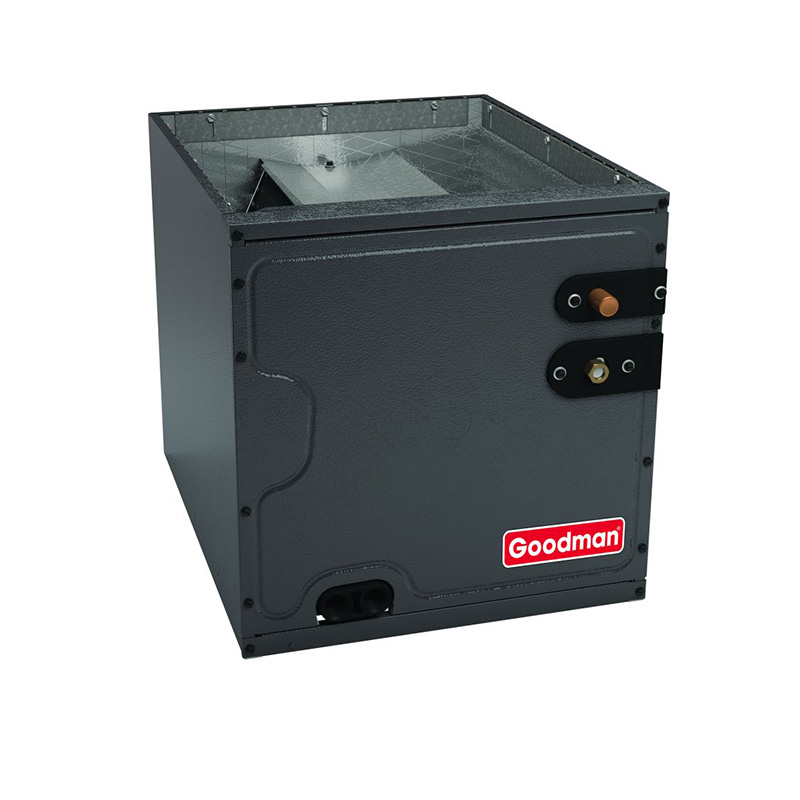
At 1.5 tons, this system is sized for spaces roughly in the 600 to 900 square foot range, though a proper Manual J load calculation should drive any final sizing decision. The R-32 refrigerant is a practical advantage: it has a lower global warming potential than the R-410A it replaces and is increasingly available from distributors as the industry transitions. The upflow configuration means the furnace is designed to push conditioned air upward into overhead ductwork, which suits basement or closet installations where supply ducts run through the floor above. Buyers should plan for a matched Goodman air handler or coil cabinet to complete the indoor side of the refrigerant circuit.
This Goodman dual fuel system offers a genuine hybrid heating strategy at a price point that undercuts comparable Carrier, Trane, and Lennox packages by a meaningful margin. The trade-off is a brand track record that shows higher-than-average repair frequency after year seven and compressor longevity that trails premium competitors. It is a reasonable buy for budget-conscious homeowners who understand they may face maintenance costs sooner and want to offset that with upfront savings.
Overall score is the average of the five ratings above.
What we like
- Upfront cost runs roughly 15 to 25 percent below comparable Carrier, Trane, and Lennox dual fuel systems
- Hybrid operation can reduce annual heating costs by using the heat pump during mild weather and the furnace only when temperatures drop
- R-32 refrigerant is environmentally preferable to R-410A and increasingly well-stocked by distributors
- Upflow furnace suits common basement and utility-closet installations without modification
- Dual fuel configuration adds a gas-heat safety net, so a heat pump issue in winter does not leave the home without heat
Trade-offs
- 80% AFUE is a baseline efficiency rating; a 96% or 97% AFUE furnace would recover more heat from the same fuel at a modest price premium
- Dual-run capacitor failures are the most commonly documented repair on Goodman equipment, typically appearing after the system ages
- Compressor lifespan averages 10 to 14 years in owner reports, notably shorter than the 15 to 20 years seen more consistently with premium brands
- A minority of owners have reported refrigerant leaks within the first year, which points to the importance of using an experienced installer for a dual fuel system with two refrigerant circuits to commission
What homeowners and pros say about Goodman
Among homeowners who have shared feedback on review platforms, Goodman earns a roughly 2.5 out of 5 on ConsumerAffairs, a channel that skews toward people who experienced problems, where the recurring frustration is repair bills that start climbing after about year seven. On Google dealer reviews the picture is more balanced, with scores around 3.8 out of 5 across a few hundred reviews per dealership; there, affordability comes up most often as the reason buyers chose the brand. For a dual fuel system specifically, the upfront price gap versus Carrier or Trane can be several hundred dollars on a small 1.5-ton package, which matters to budget-driven buyers.
HVAC technicians who service Goodman equipment frequently point to dual-run capacitor failures as the most predictable maintenance item, typically a low-cost repair but one that repeats on aging units. Evaporator coil leaks appear in a meaningful share of owner reviews and can become costly if the coil needs replacement outside the warranty window. Compressors on Goodman systems tend to average 10 to 14 years in the field, which is a real gap compared to the 15 to 20 years technicians report more consistently for premium brands. A small but documented group of owners have also reported refrigerant leaks within the first year, almost always traced back to installation or initial charge issues rather than a factory defect, which underscores how much ride the outcome of a Goodman system puts on the quality of the installing contractor.
Sources: ConsumerAffairs Goodman owner reviews, AHRI Directory of Certified Product Performance, U.S. DOE appliance and equipment efficiency standards, Goodman product specification sheets.
What it costs to run
At 14.5 SEER2, cooling this 1.5-ton system for a typical 1200-hour cooling season at the U.S. average electricity rate of $0.17/kWh works out to roughly $253 per year in cooling, about $21 less per year than a minimum-efficiency 13.4 SEER2 unit of the same size. Your real cost depends on your climate and local rate.
Method: (18,000 BTU/hr ÷ 14.5 SEER2) × 1200 hours ÷ 1000 × $0.17/kWh. Rate source: U.S. EIA average; cooling hours: moderate-climate estimate.
How it compares
| Brand | Comparable model | SEER2 | Stage | Price position |
|---|---|---|---|---|
| Goodman | Dual Fuel Hybrid System (this unit) | 14.5 | Single-stage | Value pick |
| Carrier | Performance Series Dual Fuel (25HCB3 / 59SC5) | 15.0 | Single-stage | Typically 15 to 25 percent more than this Goodman system |
| Trane | XR14c Dual Fuel (4TXR4 / S8X1) | 14.5 | Single-stage | Typically 15 to 25 percent more than this Goodman system |
| Lennox | Merit Series Dual Fuel (14ACX / ML180) | 14.5 | Single-stage | Typically 15 to 25 percent more than this Goodman system |
Competitor rows are comparable single-stage units at similar efficiency; price is relative position, not a quote.
Questions about this system
At what outdoor temperature does the system switch from the heat pump to the gas furnace?
The switchover temperature, called the balance point, is set during installation and is typically configured between 35 and 40 degrees Fahrenheit, though it can be adjusted based on your local climate and utility rates. Your installer should calculate the optimal balance point so the system uses whichever fuel source is cheapest to run at a given outdoor temperature.
Does this system qualify for the federal energy efficiency tax credit?
Heat pumps must meet certain efficiency thresholds under the Inflation Reduction Act credits. A 14.5 SEER2 unit can qualify for the heat pump credit if it also meets the required EER2 rating, but the 80% AFUE furnace does not meet the 97% AFUE threshold required for the gas furnace credit on its own. Verify the specific model's AHRI certificate and consult a tax professional before claiming any credit.
Can I use this furnace with my existing air handler or coil, or do I need a matched Goodman coil?
For the heat pump refrigerant circuit to work correctly and to maintain the manufacturer warranty, you should use a matched Goodman or Amana indoor coil that is rated for R-32 refrigerant. Using a mismatched or legacy coil can affect efficiency ratings, refrigerant charge, and warranty coverage.
How serious is the capacitor failure issue I keep reading about with Goodman equipment?
Dual-run capacitor failure is the most frequently reported repair on Goodman systems and tends to show up as the unit ages, particularly after year five to seven. The repair itself is typically straightforward and relatively inexpensive, usually in the 300 to 600 dollar range including a service call, but it does mean planning for occasional maintenance costs rather than expecting a trouble-free run to year fifteen.
Is R-32 harder or more expensive to service than R-410A?
R-32 is flammable (classified A2L) and requires technicians who are trained and equipped for mildly flammable refrigerants, which most newer HVAC certifications now cover. Availability has been improving steadily as the industry transitions away from R-410A, but in some rural markets you may want to confirm local service providers are stocked and certified for R-32 before purchase.
Specifications
| Cooling capacity | 1.5 Ton |
| Efficiency | 14.5 SEER2 |
| Furnace output | 40000 BTU |
| Furnace efficiency | 80% AFUE |
| Configuration | Upflow |
| Refrigerant | R-32 |