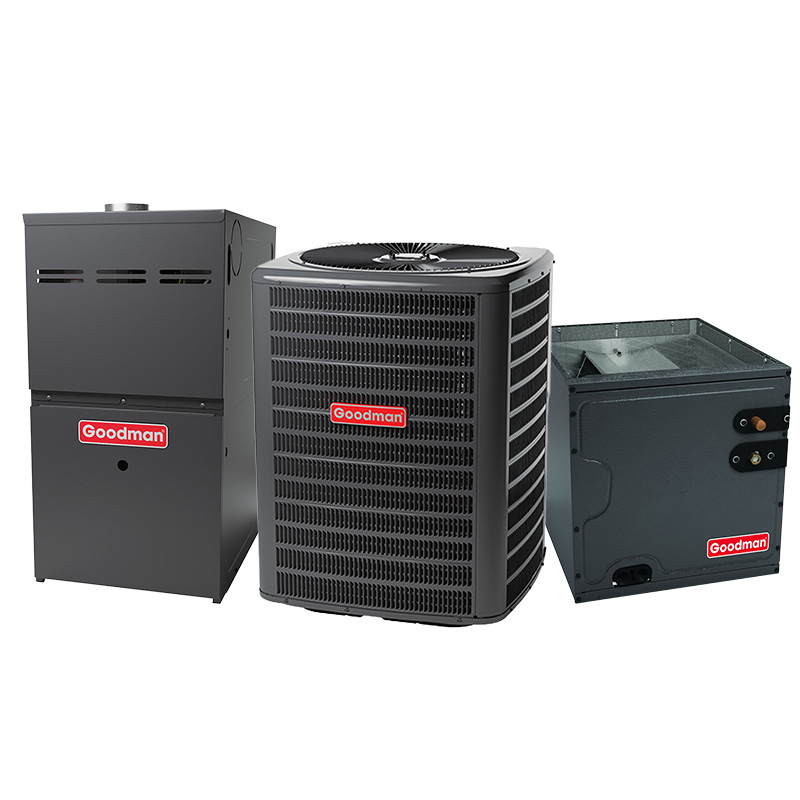
Goodman 1.5 Ton Dual Fuel Hybrid Heat Pump System – 40000 BTU Gas Furnace, 80% AFUE, 14.5 SEER2, Upflow, R32
View on AC Direct see your lowest price →Check current price on AC Direct →
Key features
- Dual fuel hybrid design: heat pump handles routine heating, gas furnace takes over in extreme cold
- 14.5 SEER2 cooling efficiency, meeting current federal minimum standards
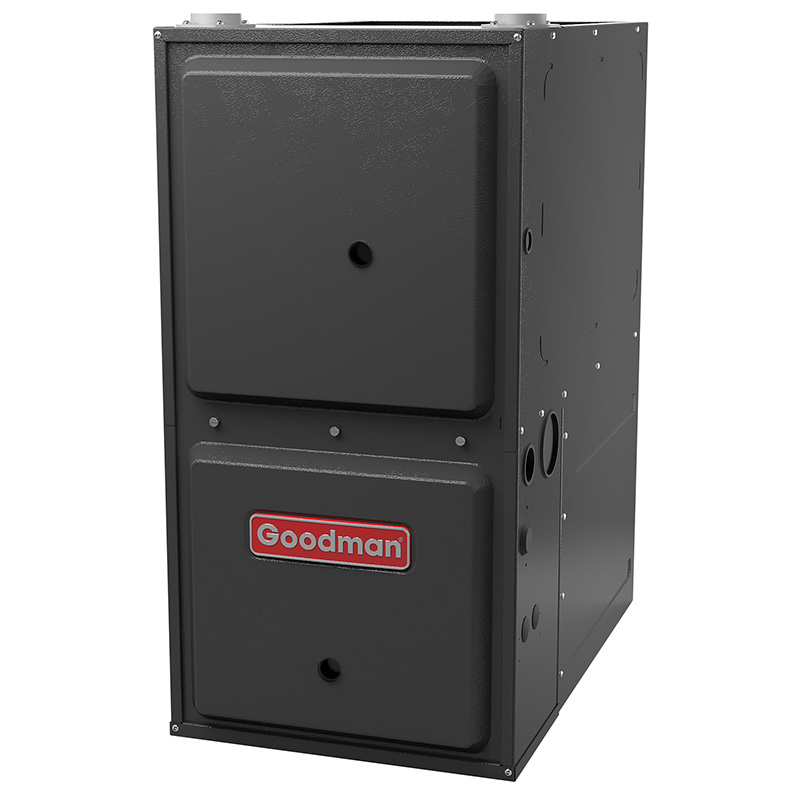
- 40,000 BTU upflow gas furnace rated at 80% AFUE
- R-32 refrigerant with lower global warming potential than R-410A
- 1.5-ton capacity suited to smaller, well-insulated spaces
- Priced approximately 15 to 25 percent below comparable Carrier, Trane, and Lennox systems
About this system
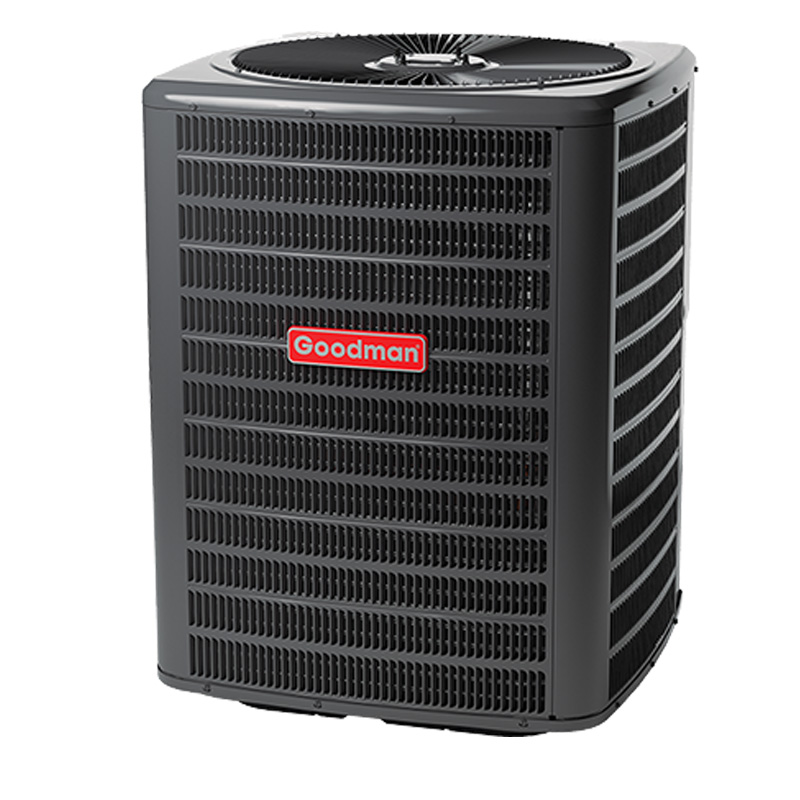
The Goodman 1.5-ton dual fuel hybrid heat pump system pairs a 14.5 SEER2 outdoor heat pump with a 40,000 BTU upflow gas furnace rated at 80% AFUE. The hybrid setup is the key selling point: the system runs on the heat pump for routine heating, then automatically switches to the gas furnace when outdoor temperatures drop low enough to make gas the more economical or effective heat source. For homes in climates with mild winters but occasional cold snaps, that switchover logic can meaningfully reduce utility bills compared to running gas alone all season.
At 1.5 tons, this system is sized for smaller homes, typically in the 600 to 900 square foot range depending on insulation, ceiling height, and climate zone. The upflow configuration means the furnace draws air in from the bottom and discharges heated or cooled air upward, which suits a basement or ground-floor closet installation with ductwork running up through the ceiling. The system uses R-32 refrigerant, a newer lower-global-warming-potential option replacing R-410A, which is worth confirming your installing technician has the correct certification and equipment to handle. Sizing this system correctly for your space is non-negotiable: at 1.5 tons, there is very little room for error in Manual J load calculations, and an oversized or undersized system will underperform regardless of the brand on the nameplate.
This system delivers a functional dual fuel hybrid setup at a price point that undercuts the major premium brands by a meaningful margin, making it a reasonable choice for budget-conscious buyers who can secure a skilled installer. The 80% AFUE furnace and 14.5 SEER2 rating are baseline-tier efficiency numbers, not standout figures, so the value proposition rests almost entirely on upfront cost savings rather than long-term energy performance. Buyers should weigh those savings against Goodman's documented history of mid-lifecycle repair needs and shorter average compressor lifespan.
Overall score is the average of the five ratings above.
What we like
- Lower upfront cost versus comparable Carrier, Trane, and Lennox systems
- Dual fuel logic can reduce heating costs in climates with occasional hard freezes
- R-32 refrigerant is a forward-looking choice as R-410A supply tightens
- Upflow configuration is straightforward for technicians familiar with standard residential installs
- Widely distributed brand means parts and service technicians are generally accessible
Trade-offs
- 80% AFUE furnace wastes 20 cents of every fuel dollar, well below 95-plus% condensing units available at higher price points
- 14.5 SEER2 is the regulatory floor, not a standout efficiency rating, limiting long-term energy savings
- Documented compressor lifespan of 10 to 14 years is shorter than the 15 to 20 years seen from premium brands
- Dual fuel systems are more complex to install and commission than straight gas or straight heat pump setups, making installer skill especially critical
What homeowners and pros say about Goodman
Homeowners who have lived with Goodman equipment tend to split along a familiar line. Those who had a careful installation and stayed current on maintenance often report years of trouble-free operation and point to the lower purchase price as a genuine win. Those who hit problems describe frustration with repair costs that accumulate after roughly year seven, a pattern reflected in Goodman’s ConsumerAffairs score of about 2.5 out of 5, a channel where complaints are overrepresented but the recurring grievance about rising mid-lifecycle costs is consistent enough to take seriously. Google dealer reviews paint a more moderate picture, averaging around 3.8 out of 5, where affordability is the praise that comes up most often.
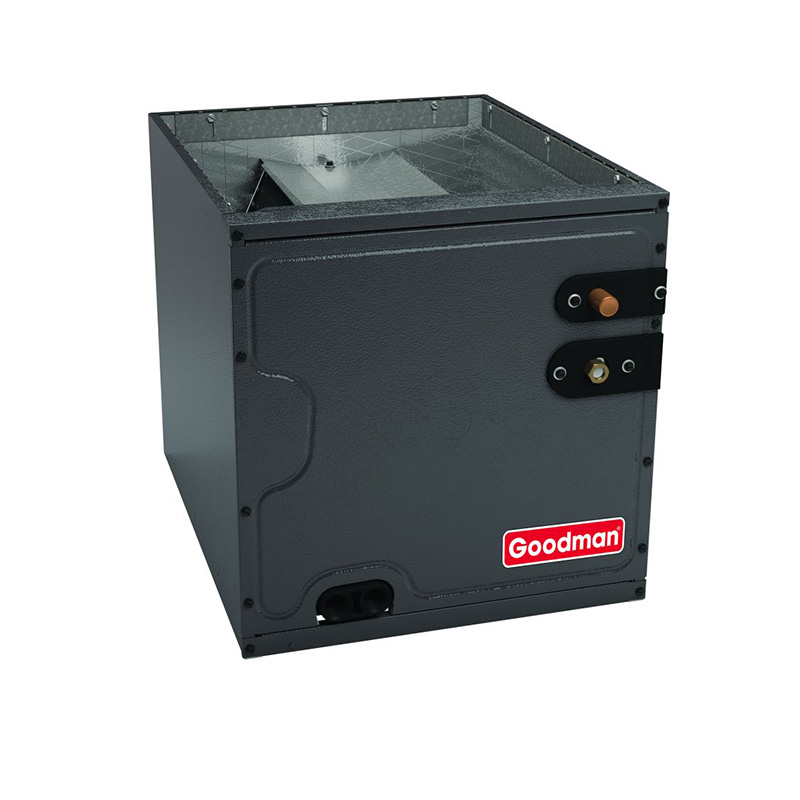
HVAC technicians who work on Goodman equipment regularly point to two consistent weak spots: the dual-run capacitor, which fails often enough that many techs carry a replacement on the truck as a matter of habit, and evaporator coil leaks, which show up in a notable share of owner accounts. Compressor longevity is another honest concern, with Goodman units averaging 10 to 14 years versus the 15 to 20 years documented on premium brands. For a dual fuel hybrid system specifically, those technicians also emphasize that commissioning the fuel-switching logic correctly at installation is not optional work. A unit that switches at the wrong balance point will either lean too hard on expensive gas or run the heat pump inefficiently in cold it was not designed to handle alone. In short, the savings are real at the point of purchase, but the system’s long-term performance leans heavily on who installs it and how well it is set up from day one.
Sources: ConsumerAffairs Goodman owner reviews, AHRI Directory of Certified Product Performance, U.S. DOE appliance and equipment efficiency standards, Goodman product specification sheets.
What it costs to run
At 14.5 SEER2, cooling this 1.5-ton system for a typical 1200-hour cooling season at the U.S. average electricity rate of $0.17/kWh works out to roughly $253 per year in cooling, about $21 less per year than a minimum-efficiency 13.4 SEER2 unit of the same size. Your real cost depends on your climate and local rate.
Method: (18,000 BTU/hr ÷ 14.5 SEER2) × 1200 hours ÷ 1000 × $0.17/kWh. Rate source: U.S. EIA average; cooling hours: moderate-climate estimate.
How it compares
| Brand | Comparable model | SEER2 | Stage | Price position |
|---|---|---|---|---|
| Goodman | GSZH5/GMVC8 Dual Fuel Hybrid System | 14.5 | Single-stage | Value pick |
| Carrier | Performance 14 Hybrid Heat (25HCE4 / 59SC5) | 14.5 | Single-stage | Typically 15 to 25 percent more than Goodman |
| Trane | XR14c Dual Fuel / S9X1 Furnace | 14.5 | Single-stage | Typically 15 to 25 percent more than Goodman |
| Lennox | Merit 14HPX Hybrid / ML180 Furnace | 14.5 | Single-stage | Typically 15 to 25 percent more than Goodman |
Competitor rows are comparable single-stage units at similar efficiency; price is relative position, not a quote.
Questions about this system
At what outdoor temperature does the system switch from the heat pump to the gas furnace?
The switchover point, often called the balance point, is typically set during installation by your technician based on your local climate and the system's configuration. On most Goodman dual fuel setups it can be programmed on the thermostat, commonly somewhere between 35 and 40 degrees Fahrenheit, but your installer should calculate the right setting for your specific home and utility rates rather than using a default.
Does my technician need special certification to work with R-32 refrigerant?
Yes. R-32 is an A2L refrigerant, meaning it is mildly flammable, and technicians need specific training and equipment to handle it safely. Confirm before booking any service call that the company is familiar with A2L refrigerants, as not all shops have updated their tools and procedures yet.
Is 1.5 tons the right size for my home?
Only a proper Manual J load calculation can answer that reliably. As a rough guide, 1.5 tons suits well-insulated spaces in the 600 to 900 square foot range in most climates, but ceiling height, window area, insulation quality, and local weather all affect the answer. Do not let any installer size this system by square footage alone.
What are the most common repairs I should budget for over the life of this system?
The dual-run capacitor is the most frequently reported failure on Goodman equipment, typically a 300 to 600 dollar repair and usually a quick fix. Evaporator coil leaks appear in a meaningful share of owner reviews and can be more costly. Compressors on Goodman units have averaged 10 to 14 years in documented owner experience, so budgeting for a potential replacement in that window is prudent.
What warranty does this system carry, and is there anything I need to do to activate it?
Goodman typically offers a 10-year parts limited warranty when the equipment is registered with Goodman within a set window after installation, often 60 days. Failing to register usually drops coverage to 5 years, so registration is worth completing promptly. The warranty covers parts but not labor, which can be a significant out-of-pocket cost if a compressor or coil fails after the install warranty from your contractor expires.
Specifications
| Cooling capacity | 1.5 Ton |
| Efficiency | 14.5 SEER2 |
| Furnace output | 40000 BTU |
| Furnace efficiency | 80% AFUE |
| Configuration | Upflow |
| Refrigerant | R-32 |