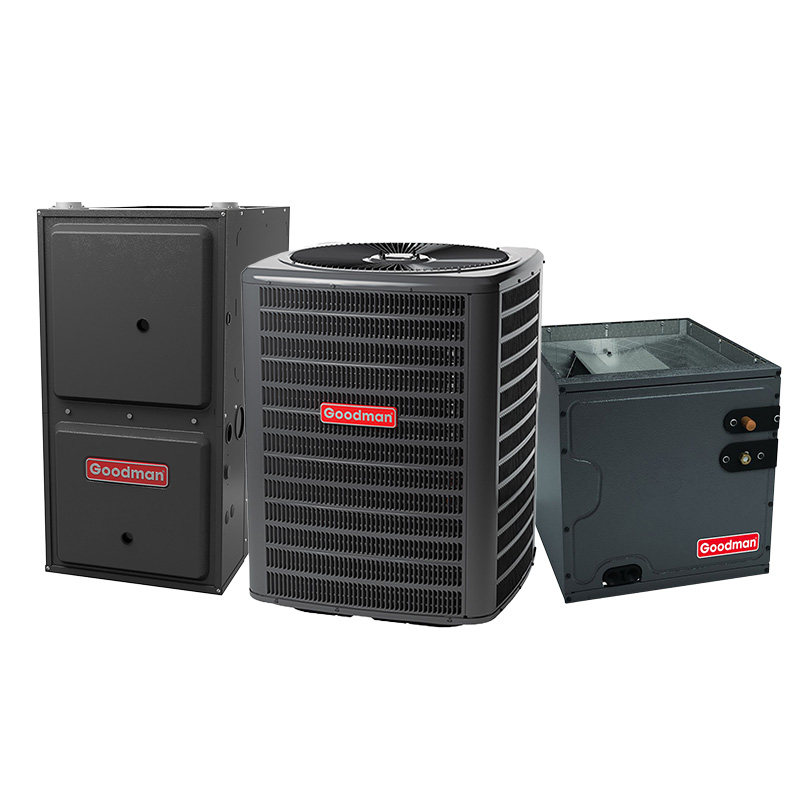
Goodman 1.5 Ton Dual Fuel Hybrid Heat Pump System – 40000 BTU Gas Furnace, 96% AFUE, 15.2 SEER2, Downflow, R32
View on AC Direct see your lowest price →Check current price on AC Direct →
Key features
- 1.5-ton heat pump rated at 15.2 SEER2 for above-minimum cooling efficiency
- Paired 40,000 BTU gas furnace at 96% AFUE for high-efficiency heating on the coldest days
- Dual fuel hybrid logic switches automatically between heat pump and gas heat based on conditions
- Downflow furnace orientation suits attic or raised-closet installations with under-floor duct systems
- R-32 refrigerant with lower global-warming potential than R-410A and growing service availability
- Priced 15 to 25 percent below comparable Carrier, Trane, and Lennox dual fuel configurations
About this system
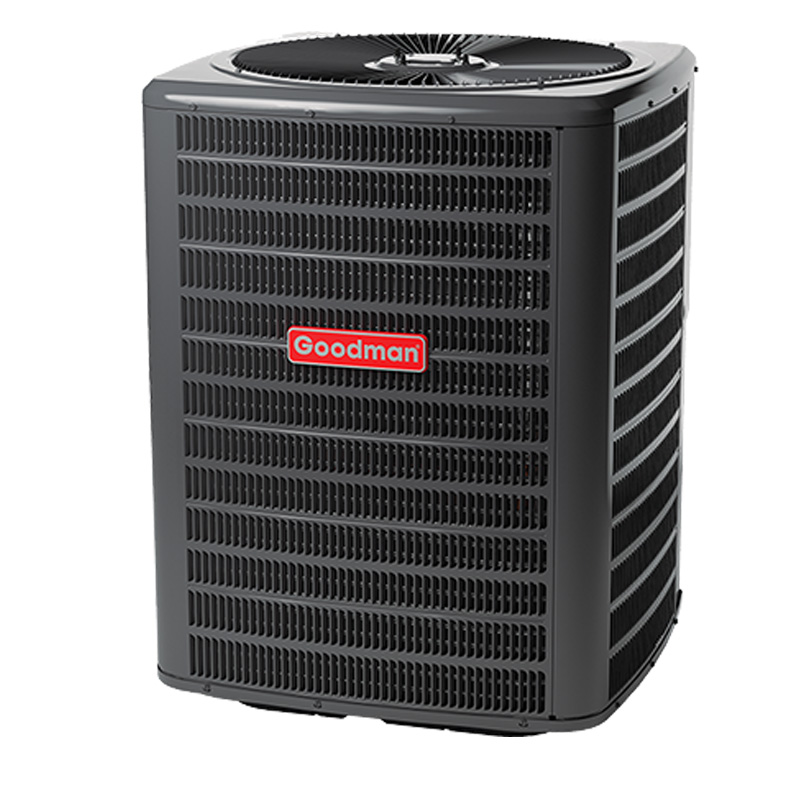
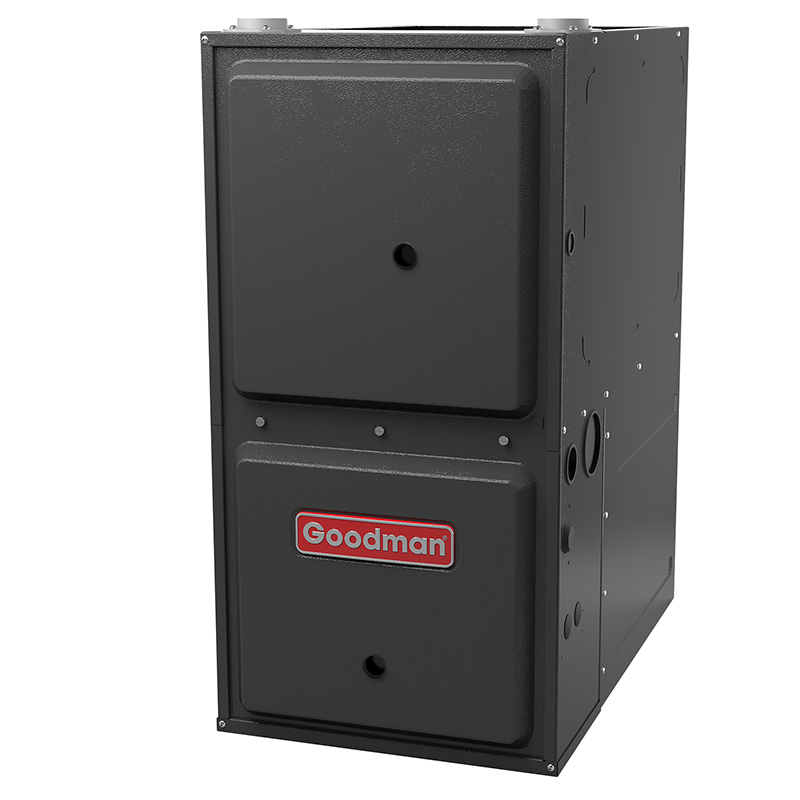
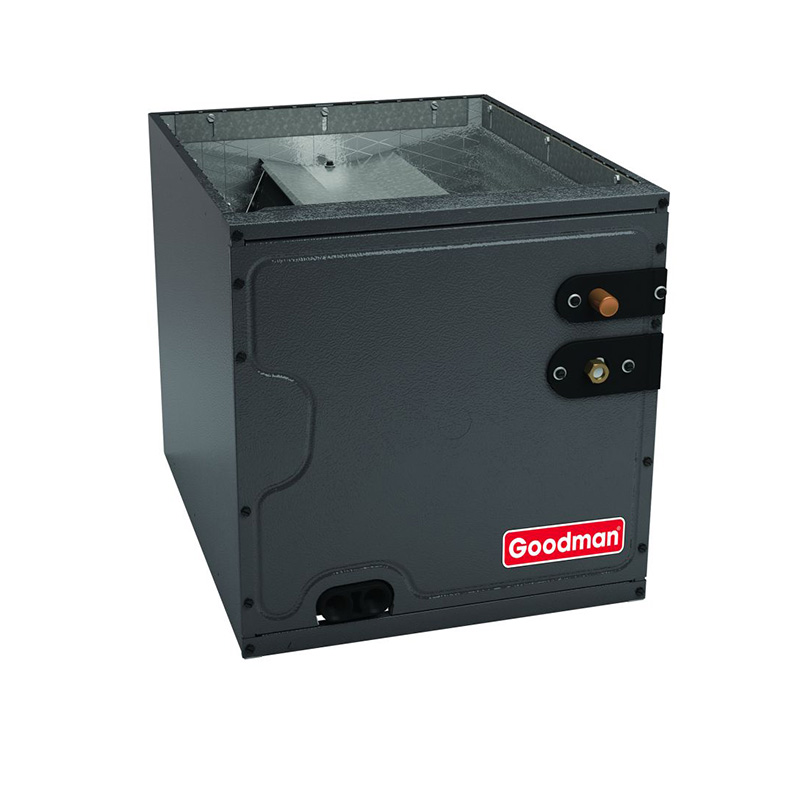
The Goodman 1.5-ton dual fuel hybrid heat pump system pairs a 15.2 SEER2 outdoor heat pump with a 40,000 BTU, 96% AFUE downflow gas furnace, giving smaller homes and conditioned spaces two heating sources that switch automatically based on outdoor temperature and operating cost. The heat pump handles the bulk of heating and cooling duties in mild weather, while the gas furnace takes over during the coldest stretches when resistance or heat-pump heating becomes inefficient or undersized. That switchover logic is what makes a dual fuel setup attractive in climates that see genuine winters but not extreme cold for extended periods.
The 1.5-ton capacity is sized for smaller spaces, typically 600 to 900 square feet in a well-insulated home or slightly larger in a very tight building envelope. A proper Manual J load calculation is essential here because undersizing and oversizing both create real comfort and longevity problems. The downflow configuration means the furnace discharges conditioned air downward, making it the right fit for attic or closet installations where ductwork runs under the floor. R-32 refrigerant carries a lower global-warming potential than R-410A and is becoming the industry standard, so servicing this system in five or ten years should be straightforward as the trade transitions.
Goodman positions this system as a budget-accessible entry into dual fuel technology, and the specs back up a reasonable efficiency story: 96% AFUE sits in the high-efficiency tier for gas furnaces, and 15.2 SEER2 clears the federal minimum by a comfortable margin without reaching premium-tier pricing. The trade-off is that Goodman’s real-world performance is tightly coupled to installation quality, and the brand’s ownership record shows more mid-life service calls than premium competitors. For buyers who want dual fuel capability without the price of a Carrier, Trane, or Lennox system, and who are prepared to use a qualified installer, this system occupies a legitimate, if not top-shelf, position in the market.
This system delivers a genuinely capable dual fuel setup at an accessible price point, and the 96% AFUE furnace and 15.2 SEER2 rating are honest efficiency numbers, not marketing minimums. The core trade-off is Goodman's documented mid-life service record: capacitor failures, evaporator coil leaks, and compressor longevity that trails premium brands mean the lower upfront cost can narrow over a 12 to 15 year ownership horizon. Buyers who invest in a skilled installer and budget for routine maintenance will get the most out of what the specs promise.
Overall score is the average of the five ratings above.
What we like
- 96% AFUE furnace is a top-tier efficiency rating that meaningfully cuts gas consumption versus 80% units
- 15.2 SEER2 rating provides above-code cooling efficiency without the premium-tier price jump
- Dual fuel architecture reduces utility costs by using the lower-cost energy source at each outdoor temperature
- R-32 refrigerant is forward-compatible as the industry moves away from R-410A
- Priced 15 to 25 percent below equivalent Carrier, Trane, and Lennox configurations, lowering the barrier to dual fuel technology
Trade-offs
- Dual-run capacitors are the most commonly reported failure point, typically surfacing within 5 to 8 years and adding 300 to 600 dollars per service event
- Evaporator coil leaks appear in a meaningful share of owner reports and can be a costly repair outside of warranty
- Compressor lifespan averages 10 to 14 years versus 15 to 20 years for premium-brand compressors, a real long-term cost consideration
- A minority of owners report refrigerant leaks within the first year, usually tied to installation or initial charge quality rather than a factory defect
What homeowners and pros say about Goodman
Owners who research Goodman before buying will find a divided picture. On ConsumerAffairs, Goodman scores around 2.5 out of 5, though that platform skews heavily toward people motivated to write by a bad experience. The recurring theme in those reviews is not immediate failure but rising repair costs after roughly year 7, with the dual-run capacitor named most often as the first component to go. At 300 to 600 dollars per repair it is a manageable cost, but it reinforces the pattern. Evaporator coil leaks and refrigerant loss also appear with enough frequency in owner accounts to be worth noting, and compressor lifespan that averages 10 to 14 years sits below the 15 to 20 years that premium-brand owners typically report. A minority of first-year refrigerant leak reports trace back to installation or initial charge quality rather than the equipment itself, which underscores how much this brand’s outcomes depend on who installs it.
Google dealer reviews tell a more balanced story, with Goodman systems averaging around 3.8 out of 5 across hundreds of reviews per location. Affordability is the most consistent praise, and many positive accounts come from buyers who went in with clear expectations, used a reputable installer, and found the system performed exactly as specified. HVAC technicians who work on Goodman regularly tend to describe it as serviceable equipment that rewards attentive maintenance and punishes neglect faster than premium competitors. For a 1.5-ton dual fuel hybrid in the downflow configuration, those same dynamics apply: the 96% AFUE and 15.2 SEER2 ratings are legitimate, the price advantage over Carrier, Trane, and Lennox is real, and the long-term ownership calculus depends heavily on installation quality and how consistently the system is maintained.
Sources: ConsumerAffairs Goodman owner reviews, AHRI Directory of Certified Product Performance, U.S. DOE appliance and equipment efficiency standards, Goodman product specification sheets.
What it costs to run
At 15.2 SEER2, cooling this 1.5-ton system for a typical 1200-hour cooling season at the U.S. average electricity rate of $0.17/kWh works out to roughly $242 per year in cooling, about $32 less per year than a minimum-efficiency 13.4 SEER2 unit of the same size. Your real cost depends on your climate and local rate.
Method: (18,000 BTU/hr ÷ 15.2 SEER2) × 1200 hours ÷ 1000 × $0.17/kWh. Rate source: U.S. EIA average; cooling hours: moderate-climate estimate.
How it compares
| Brand | Comparable model | SEER2 | Stage | Price position |
|---|---|---|---|---|
| Goodman | Dual Fuel Hybrid Heat Pump System (1.5T / 40K BTU 96% AFUE Downflow) | 15.2 | Single-stage | Value pick |
| Carrier | Performance Series Dual Fuel (25HCB / 58TP pairing) | 15.2 | Single-stage | Typically 15 to 25 percent more than Goodman |
| Trane | XR15 Dual Fuel System (XR15 heat pump / S9X1 furnace pairing) | 15.0 | Single-stage | Typically 15 to 25 percent more than Goodman |
| Lennox | Merit Series Dual Fuel (14HPX / ML96DF pairing) | 15.1 | Single-stage | Typically 15 to 25 percent more than Goodman |
Competitor rows are comparable single-stage units at similar efficiency; price is relative position, not a quote.
Questions about this system
What outdoor temperature does the system switch from heat pump to gas furnace, and can I adjust that switchover point?
The switchover temperature, often called the balance point, is typically set during installation using the thermostat or control board and can usually be adjusted by your technician. Most installers set it somewhere between 30 and 40 degrees Fahrenheit, but the optimal point depends on your local gas and electricity rates as well as the heat pump's heating capacity at low temperatures. Ask your installer to confirm and document the setting they use.
Is 1.5 tons actually enough for my space, and how do I verify that before buying?
A 1.5-ton system is generally appropriate for 600 to 900 square feet in a well-insulated home, but square footage alone is not a reliable sizing method. You need a Manual J load calculation that accounts for your insulation levels, window area, ceiling height, local climate, and infiltration rate. Installing this system in an oversized or undersized application will cause short cycling, comfort problems, and accelerated wear, so insist on a load calculation before purchase.
The downflow configuration is listed on this furnace. What does that mean for where it can be installed?
A downflow furnace draws return air from the top and discharges heated or cooled air downward into ductwork that runs below the unit. This makes it the correct choice for installations in an attic, a raised utility closet, or any space where the supply ducts are located under the floor. It is not interchangeable with an upflow or horizontal unit, so confirm your duct layout matches the downflow orientation before ordering.
R-32 is newer to residential HVAC in the United States. Will I have trouble finding a technician to service it?
R-32 adoption is accelerating in the U.S. market as manufacturers phase out R-410A following EPA regulations, so availability is growing. Most established HVAC contractors in larger markets already stock R-32 or can order it without significant delay. In rural areas or smaller markets you may want to confirm your preferred service company is already working with R-32 before committing to this system.
Given Goodman's reliability record, what maintenance steps should I prioritize to protect this system?
The dual-run capacitor is Goodman's most commonly reported failure item, so having it tested at every annual tune-up costs almost nothing and can catch a weakening capacitor before it strands you in summer heat. Keep the outdoor coil clean, replace filters on schedule, and have a technician verify refrigerant charge and inspect the evaporator coil for early signs of leakage during each service visit. Enrolling in an annual maintenance contract with a qualified dealer is especially worthwhile on a dual fuel system because there are two heat sources, and both need attention.
Specifications
| Cooling capacity | 1.5 Ton |
| Efficiency | 15.2 SEER2 |
| Furnace output | 40000 BTU |
| Furnace efficiency | 96% AFUE |
| Configuration | Downflow |
| Refrigerant | R-32 |