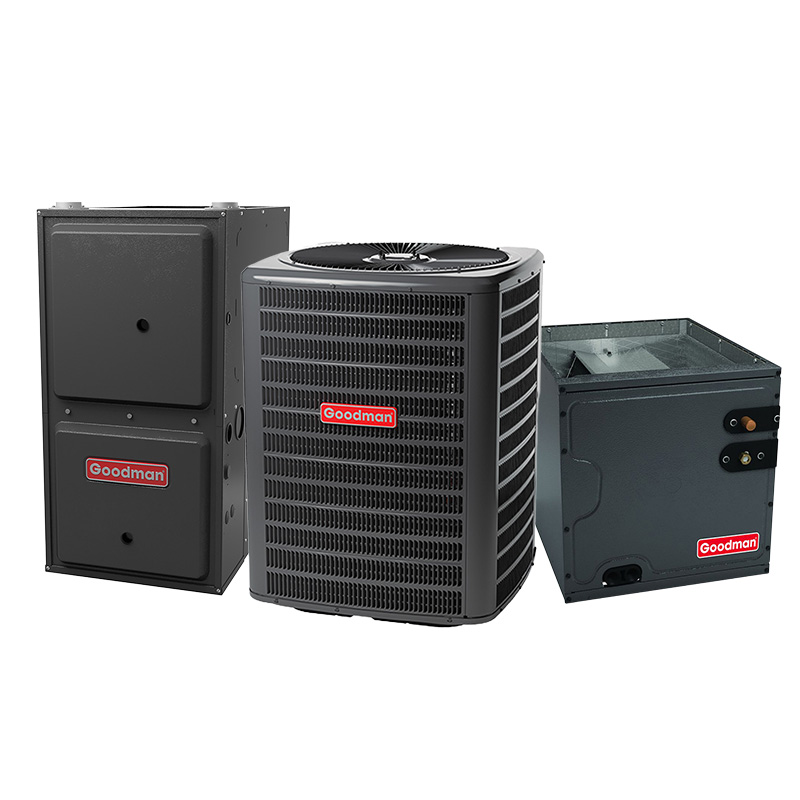
Goodman 1.5 Ton Dual Fuel Hybrid Heat Pump System – 40000 BTU Gas Furnace, Two Stage, 96% AFUE, Downflow, 15 SEER2, R32
View on AC Direct see your lowest price →Check current price on AC Direct →
Key features
- 15 SEER2 heat pump paired with 96% AFUE two-stage gas furnace for dual fuel operation
- 1.5-ton cooling capacity with 40,000 BTU gas heating output
- Two-stage gas furnace modulates between low and high fire for improved comfort and efficiency
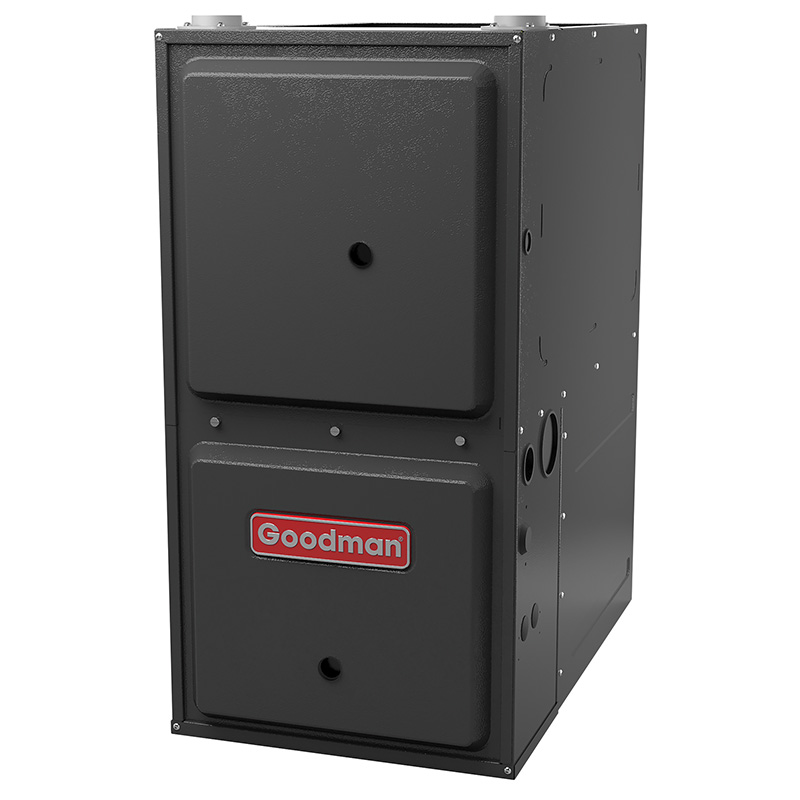
- Downflow-only configuration designed for above-floor installations over crawl spaces or platforms
- R-32 refrigerant with lower global-warming potential than legacy R-410A systems
- Hybrid control logic automatically switches between electric heat pump and gas heat based on outdoor conditions
About this system
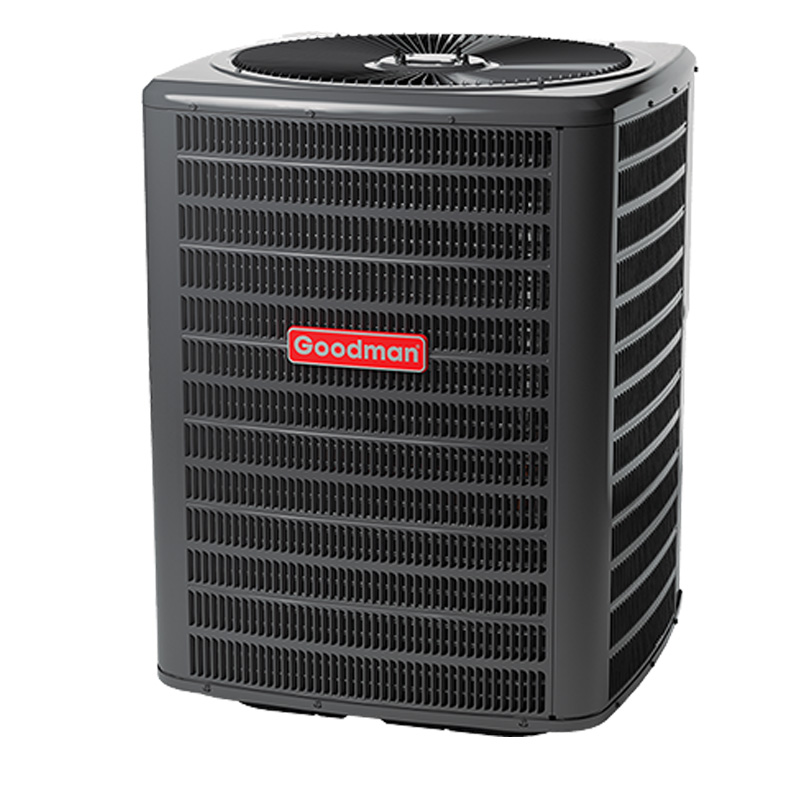
The Goodman 1.5 Ton Dual Fuel Hybrid Heat Pump System pairs a 15 SEER2 heat pump with a 40,000 BTU, 96% AFUE two-stage gas furnace in a downflow configuration. That combination means the system leans on the heat pump for everyday heating and cooling, then switches over to the high-efficiency gas furnace when outdoor temperatures drop low enough that the heat pump loses its efficiency advantage. The result is year-round comfort with lower operating costs than a straight gas-only setup in most climates, and the two-stage furnace adds a layer of comfort by running at a lower capacity during mild weather before ramping up when demand rises.
At 1.5 tons, this system is sized for smaller homes, additions, or zones in the 500 to 800 square foot range depending on local climate, insulation, and ceiling height. The downflow configuration is a specific requirement: supply air discharges downward from the furnace, making this unit the right fit for installations on main floors above crawl spaces or in platform applications, but not a drop-in replacement for an upflow or horizontal unit. R-32 refrigerant is a newer, lower global-warming-potential option compared to R-410A, though it does require technicians to be trained and equipped specifically for it, which is worth confirming before scheduling service in a rural area.
This system delivers solid efficiency and genuine utility bill savings for homeowners in climates with both cold winters and warm summers, especially where natural gas is available and electricity rates are moderate to high. Goodman's value pricing makes the upfront cost approachable, but buyers should budget realistically for potential component repairs after year seven and prioritize finding an experienced installer, since install quality is the single biggest variable in how this system performs long-term. It is a sensible choice for cost-conscious buyers who go in with clear expectations rather than premium-brand assumptions.
Overall score is the average of the five ratings above.
What we like
- Dual fuel hybrid operation optimizes running costs across seasons by selecting the cheaper energy source automatically
- 96% AFUE furnace recovers nearly all combustion energy, reducing gas waste during cold snaps
- Two-stage gas operation reduces temperature swings and short cycling compared to single-stage alternatives
- 15 SEER2 rating meets or exceeds current federal minimum standards, keeping cooling costs reasonable
- Priced roughly 15 to 25 percent below comparable Trane, Lennox, and Carrier systems, lowering the barrier to a dual fuel setup
Trade-offs
- Dual-run capacitors are the most commonly reported failure point and typically need replacement in the 300 to 600 dollar range, sometimes before year ten
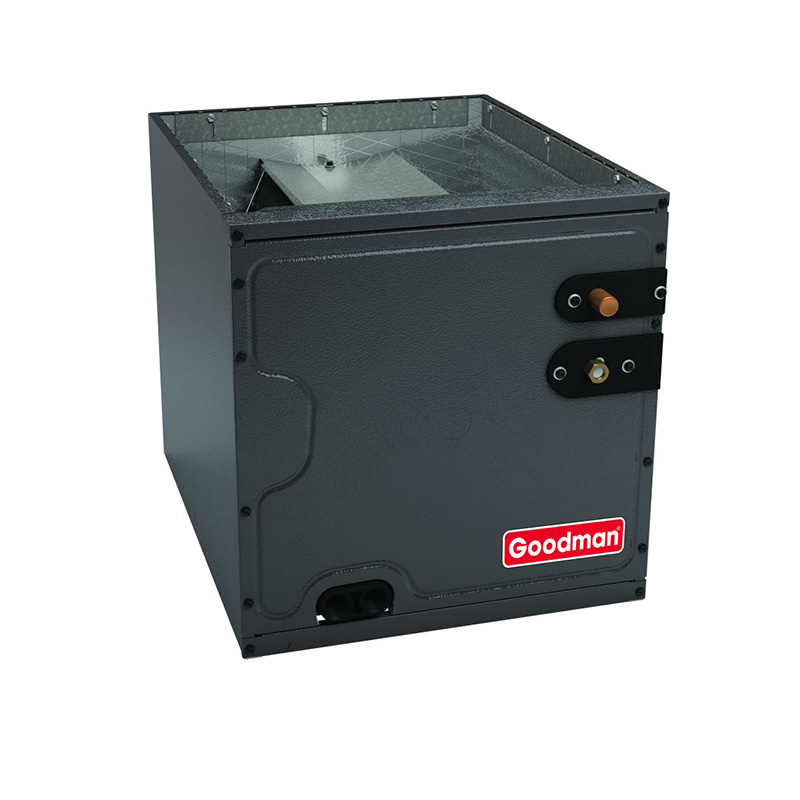
- Evaporator coil leaks appear in a meaningful share of owner feedback, a cost that can be significant if it occurs outside the parts warranty window
- Compressor lifespan averages 10 to 14 years versus 15 to 20 years for premium brands, meaning a mid-life replacement is more likely
- Downflow-only configuration limits where this unit can be installed and complicates future replacement if your home layout changes
What homeowners and pros say about Goodman
Homeowners and HVAC contractors tend to land in the same place when talking about Goodman: the price is genuinely hard to argue with, and many installations run smoothly for years, but the brand’s reputation has a ceiling. On ConsumerAffairs, Goodman sits at roughly 2.5 out of 5, a score shaped partly by the fact that dissatisfied owners are far more likely to leave reviews on that platform than satisfied ones. The recurring theme in those complaints is repair costs climbing after roughly year seven, particularly around components like dual-run capacitors, which are the most commonly documented failure point and usually a 300 to 600 dollar fix. Evaporator coil leaks also show up consistently enough in owner feedback to be worth noting, and compressor lifespan averaging 10 to 14 years trails the 15 to 20 years more commonly associated with premium brands.
Google dealer reviews tell a more balanced story, with Goodman averaging around 3.8 out of 5 across locations where affordability is the most cited positive. Contractors who work with the brand regularly emphasize that install quality is the dominant factor in long-term performance: a well-charged, properly matched, and correctly commissioned Goodman system outperforms a carelessly installed premium unit most of the time. For a dual fuel hybrid system in particular, proper setup of the balance point controls and refrigerant charge is critical, and the use of R-32 refrigerant adds the requirement of finding a technician specifically trained for it. The practical takeaway is that Goodman rewards buyers who invest in the right installer and treat component maintenance as a normal ownership cost, rather than expecting the unit to be largely maintenance-free through its entire service life.
Sources: ConsumerAffairs Goodman owner reviews, AHRI Directory of Certified Product Performance, U.S. DOE appliance and equipment efficiency standards, Goodman product specification sheets.
What it costs to run
At 15 SEER2, cooling this 1.5-ton system for a typical 1200-hour cooling season at the U.S. average electricity rate of $0.17/kWh works out to roughly $245 per year in cooling, about $29 less per year than a minimum-efficiency 13.4 SEER2 unit of the same size. Your real cost depends on your climate and local rate.
Method: (18,000 BTU/hr ÷ 15 SEER2) × 1200 hours ÷ 1000 × $0.17/kWh. Rate source: U.S. EIA average; cooling hours: moderate-climate estimate.
How it compares
| Brand | Comparable model | SEER2 | Stage | Price position |
|---|---|---|---|---|
| Goodman | GSZTO18 / GCVC960403BN (Dual Fuel Hybrid, 1.5T, Downflow) | 15 | Two-stage | Value pick |
| Carrier | Performance 15 Heat Pump (25PHC) with 96% AFUE Gas Furnace (59TN6) | 15-15.5 | Single-stage | Typically 15 to 25 percent more than Goodman |
| Trane | XR15 Heat Pump (4TWR5) with S9V2 96% AFUE Gas Furnace | 15 | Single-stage | Typically 15 to 25 percent more than Goodman |
| Lennox | Merit ML15XP1 Heat Pump with ML96DF 96% AFUE Gas Furnace | 15 | Single-stage | Typically 15 to 25 percent more than Goodman |
Competitor rows are comparable single-stage units at similar efficiency; price is relative position, not a quote.
Questions about this system
How does the system decide when to run the heat pump versus the gas furnace?
The hybrid control board monitors outdoor temperature and compares the efficiency of each heat source at that condition. Below a set balance point, typically in the low to mid 30s Fahrenheit, the system switches to the gas furnace because the heat pump's efficiency advantage disappears. That balance point can often be adjusted by your installer based on your local utility rates.
Do I need a special technician to service the R-32 refrigerant in this system?
Yes. R-32 requires technicians who are trained and equipped for it, as it has different handling requirements than the more common R-410A. Before purchasing, confirm that HVAC service companies in your area work with R-32, particularly if you live in a rural region where technician availability is limited.
What does the downflow configuration actually mean, and how do I know if it fits my installation?
Downflow means the furnace discharges conditioned air downward through the bottom of the cabinet and into ductwork below. It is the correct choice when the furnace sits on a main floor above a crawl space or a raised platform, and the return air enters from the top. It is not interchangeable with upflow or horizontal setups, so confirm your existing duct layout before ordering.
What are the most common repairs owners report on Goodman systems, and roughly what do they cost?
Dual-run capacitor failure is the most frequently reported issue and is typically a straightforward repair in the 300 to 600 dollar range. Evaporator coil leaks are also documented in a meaningful share of owner reviews and can be more expensive depending on parts and labor. A minority of owners have reported refrigerant leaks within the first year, which is generally tied to installation or initial charge quality rather than a manufacturing defect.
Is 1.5 tons enough for my home, or should I size up?
A 1.5-ton system is generally appropriate for spaces in the 500 to 800 square foot range, but the right answer depends on your local climate, insulation levels, window area, and ceiling height. Oversizing causes short cycling, which reduces comfort and component life, while undersizing leaves the system running continuously on peak days. Have a qualified contractor perform a Manual J load calculation before committing to a tonnage.
Specifications
| Cooling capacity | 1.5 Ton |
| Efficiency | 15 SEER2 |
| Furnace output | 40000 BTU |
| Furnace efficiency | 96% AFUE |
| Configuration | Downflow |
| Refrigerant | R-32 |