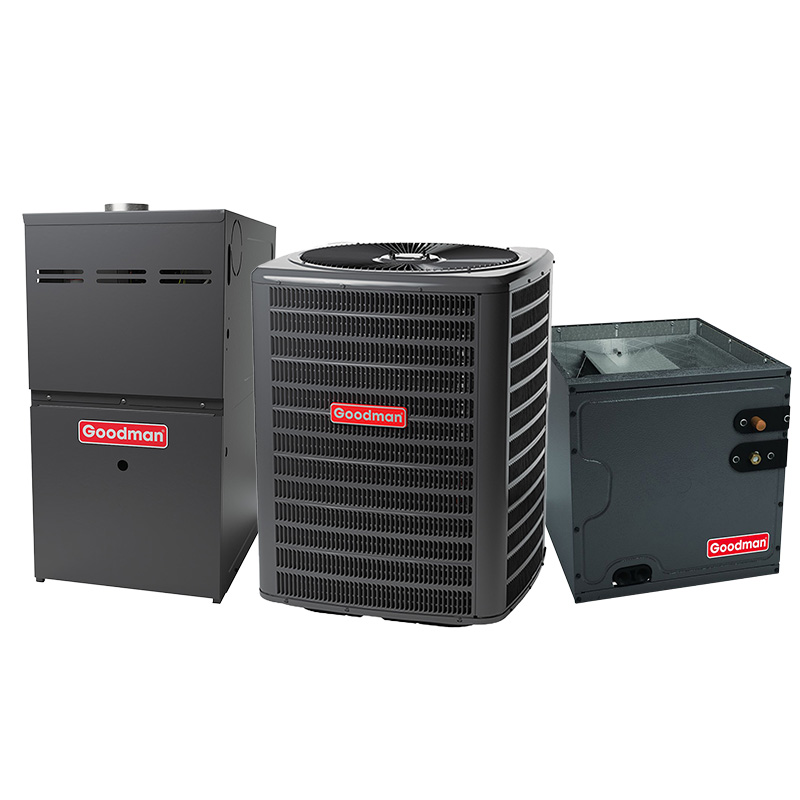
Goodman 1.5 Ton Dual Fuel Hybrid Heat Pump System – 60000 BTU California Low NOx Gas Furnace, 80% AFUE, 15.2 SEER2, Upflow, R32
View on AC Direct see your lowest price →Check current price on AC Direct →
Key features
- Dual fuel hybrid operation: heat pump runs during mild weather, gas furnace activates in deep cold
- 15.2 SEER2 cooling efficiency meets federal minimum thresholds for the northern region
- 80% AFUE gas furnace rated for California Low NOx emissions compliance
- R-32 refrigerant with lower global warming potential than legacy R-410A
- Upflow configuration matches standard basement and closet forced-air duct layouts
- 1.5-ton capacity sized for smaller conditioned spaces, typically 600 to 900 square feet
About this system
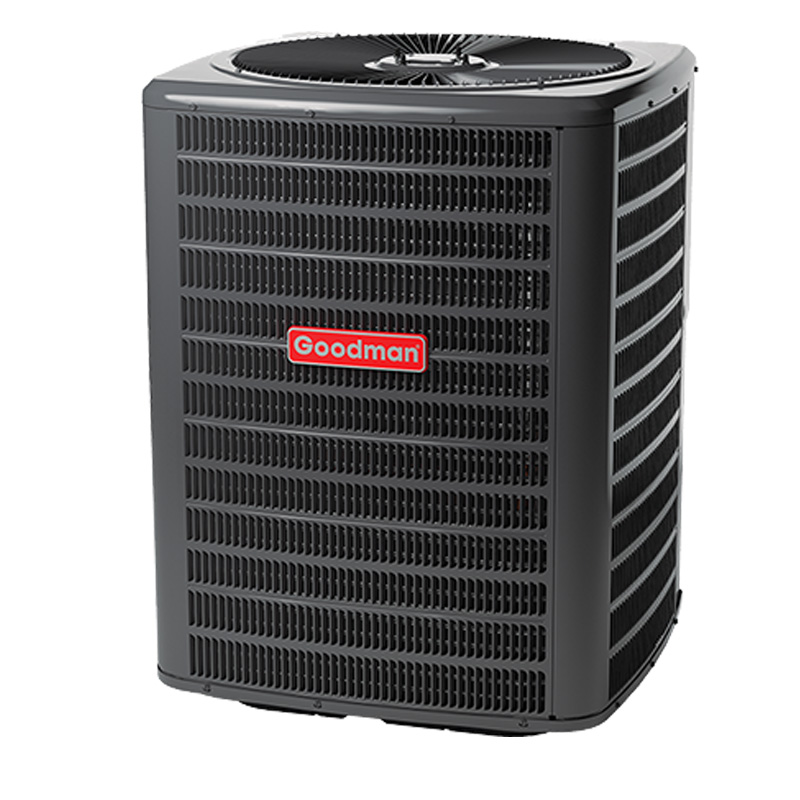
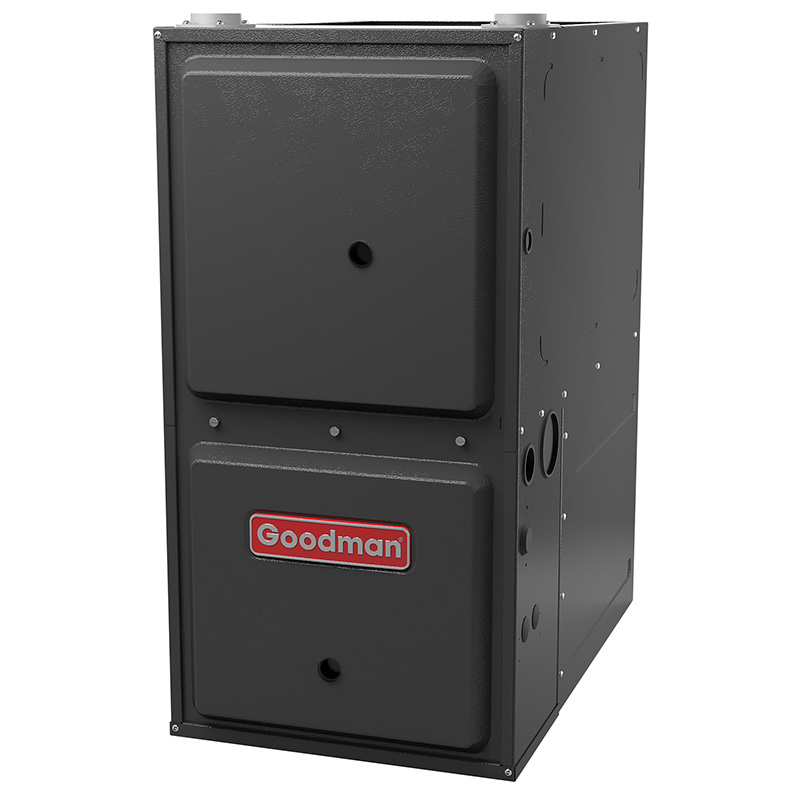
The Goodman 1.5-ton dual fuel hybrid system pairs a 15.2 SEER2 heat pump with a 60,000 BTU upflow gas furnace rated at 80% AFUE, using R-32 refrigerant. The dual fuel setup is the core appeal: the heat pump handles heating and cooling during mild weather when it runs more efficiently than gas, and the furnace takes over automatically once outdoor temperatures drop below the balance point where the heat pump loses its efficiency edge. For a 1.5-ton unit, this system is sized for smaller homes, typically in the 600 to 900 square foot range depending on climate, insulation, and ceiling height.
The California Low NOx designation matters if you are buying in California or another state that has adopted strict nitrogen oxide emissions rules. This furnace meets those standards out of the box, which saves the headache of sourcing a compliant unit separately. R-32 is a lower-global-warming-potential refrigerant compared to the R-410A it replaces, and it is increasingly standard in new residential equipment. The 80% AFUE rating means 80 cents of every dollar in gas goes to usable heat, which is the baseline efficiency tier for modern furnaces. It is not a high-efficiency condensing furnace, so it vents conventionally rather than through PVC pipe, which simplifies some retrofit installs.
This system suits homeowners in climates that see genuine cold winters but want to reduce gas consumption during the long shoulder seasons of fall and spring. It is a particularly practical option where natural gas prices are volatile or where a utility rebate program rewards heat pump adoption. The upflow configuration means the furnace sits at the bottom and pushes conditioned air upward, which matches the most common forced-air duct layout in single-story and basement-equipped homes.
This Goodman dual fuel system delivers a practical hybrid heating and cooling solution at a price point that is meaningfully lower than comparable Carrier, Trane, or Lennox packages. The 15.2 SEER2 and 80% AFUE ratings are code-compliant but not top-tier, and the brand's documented track record with capacitor failures, coil leaks, and compressor longevity means you should budget for maintenance and seriously consider the extended warranty. It earns its place for cost-conscious buyers who want dual fuel flexibility without paying a premium-brand premium.
Overall score is the average of the five ratings above.
What we like
- Priced 15 to 25 percent below comparable Trane, Lennox, and Carrier dual fuel systems
- Dual fuel logic reduces gas consumption during mild weather and extends heat pump runtime
- California Low NOx certification satisfies strict state and regional emissions requirements without modification
- R-32 refrigerant is more environmentally responsible and increasingly supported by service technicians
- Conventional flue venting on the 80% AFUE furnace simplifies installation in homes without existing PVC runs
Trade-offs
- Dual-run capacitors are the most commonly reported failure point and will likely need replacement within the first decade
- Compressor lifespan averages 10 to 14 years, noticeably shorter than the 15 to 20 years typical of premium brands
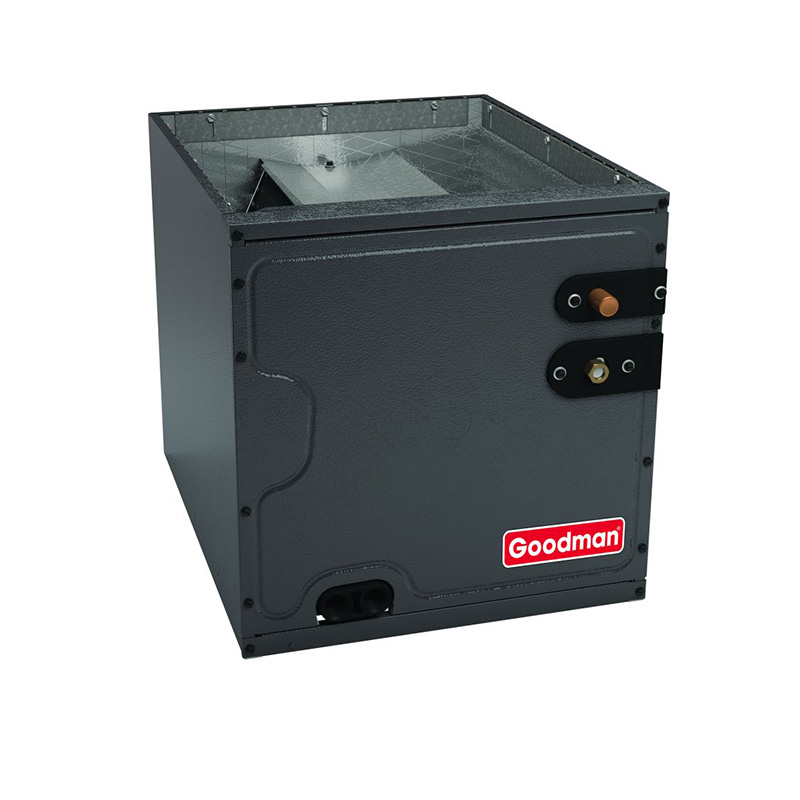
- A meaningful share of owner reviews report evaporator coil leaks, which are a more costly and disruptive repair
- 80% AFUE is the baseline efficiency tier; homeowners in cold climates will pay more in gas costs compared to a 96% AFUE condensing furnace
What homeowners and pros say about Goodman
Goodman sits at roughly 2.5 out of 5 on ConsumerAffairs, a channel that draws disproportionately from owners with grievances, and the recurring complaint after year seven is repair costs that begin to stack up. On Google dealer reviews the picture is more balanced, with scores around 3.8 out of 5 across hundreds of reviews per location, where affordability is consistently the most praised attribute. For this dual fuel system specifically, the capacitor failure history is the most commonly discussed maintenance item: it is a real issue but also a relatively affordable fix when it happens. The more serious concern flagged by owners is evaporator coil leaks, which require a refrigerant recovery, coil replacement, and recharge, a job that can run well into four figures depending on the contractor and the refrigerant involved.
HVAC technicians who work on Goodman equipment regularly tend to echo a consistent point: the brand performs closer to its potential when the installation is done carefully. Refrigerant charge accuracy, proper airflow setup, and correct balance point configuration on a dual fuel system are not optional details, they are the difference between a unit that runs well for twelve years and one that is back in the shop by year four. Compressor longevity on Goodman averages 10 to 14 years against 15 to 20 for premium brands, so buyers taking the long view should factor that into the total cost of ownership calculation and seriously consider purchasing the extended parts warranty at the time of installation rather than after the first repair bill arrives.
Sources: ConsumerAffairs Goodman owner reviews, AHRI Directory of Certified Product Performance, U.S. DOE appliance and equipment efficiency standards, Goodman product specification sheets.
What it costs to run
At 15.2 SEER2, cooling this 1.5-ton system for a typical 1200-hour cooling season at the U.S. average electricity rate of $0.17/kWh works out to roughly $242 per year in cooling, about $32 less per year than a minimum-efficiency 13.4 SEER2 unit of the same size. Your real cost depends on your climate and local rate.
Method: (18,000 BTU/hr ÷ 15.2 SEER2) × 1200 hours ÷ 1000 × $0.17/kWh. Rate source: U.S. EIA average; cooling hours: moderate-climate estimate.
How it compares
| Brand | Comparable model | SEER2 | Stage | Price position |
|---|---|---|---|---|
| Goodman | Dual Fuel Hybrid Heat Pump System, 1.5 Ton, 80% AFUE, R-32 | 15.2 | Single-stage | Value pick |
| Carrier | Performance Series Dual Fuel (25HCE3 heat pump paired with 58STA furnace) | 15.0-16.0 | Single-stage | Typically 15 to 25 percent more than Goodman |
| Trane | XR15 Dual Fuel System (XR15 heat pump paired with S8X1 furnace) | 15.0-16.0 | Single-stage | Typically 15 to 25 percent more than Goodman |
| Lennox | Merit Series Dual Fuel (14HPX heat pump paired with ML180 furnace) | 15.1-15.5 | Single-stage | Typically 15 to 25 percent more than Goodman |
Competitor rows are comparable single-stage units at similar efficiency; price is relative position, not a quote.
Questions about this system
How does the system decide when to switch from the heat pump to the gas furnace?
The switchover is controlled by a balance point setting, typically programmed into the thermostat or control board during installation. When outdoor temperatures fall below that set point, usually somewhere between 30 and 40 degrees Fahrenheit depending on your climate and energy costs, the gas furnace takes over because it becomes more cost-effective than running the heat pump. Your installer should calculate and set this balance point based on your local utility rates.
Does this furnace qualify for California Low NOx requirements?
Yes. The unit carries the California Low NOx designation, which means it meets the South Coast AQMD and similar regional air quality standards for nitrogen oxide emissions. If you are buying in California or another state that has adopted equivalent rules, this unit installs without requiring additional emissions equipment or exemptions.
What are the most likely repairs I should budget for over the first ten years?
Dual-run capacitors are the most commonly reported failure on Goodman systems and typically run 300 to 600 dollars to replace, including labor. Evaporator coil leaks appear in a meaningful share of owner reviews and are a more significant expense. A small number of owners have also reported refrigerant leaks in the first year, which is usually traced to the installation rather than a manufacturing defect, so choosing an experienced installer matters.
Is R-32 refrigerant harder to service than R-410A?
R-32 is classified as mildly flammable, which means technicians need to follow specific handling procedures, but it is not exotic and most trained HVAC technicians are already equipped and certified to work with it as it becomes the new standard in residential equipment. It is not interchangeable with R-410A, so confirm your service provider is familiar with R-32 before scheduling work.
Why is the upflow configuration important, and can it be converted?
Upflow means the furnace draws return air from the bottom and discharges heated or cooled air upward into the supply ductwork, which matches the most common forced-air layout in homes with basements or closet installations at floor level. Converting furnace airflow configurations is generally not recommended and can void the warranty; if your ductwork requires a downflow or horizontal configuration, you would need a different model.
Specifications
| Cooling capacity | 1.5 Ton |
| Efficiency | 15.2 SEER2 |
| Furnace output | 60000 BTU |
| Furnace efficiency | 80% AFUE |
| Configuration | Upflow |
| Refrigerant | R-32 |