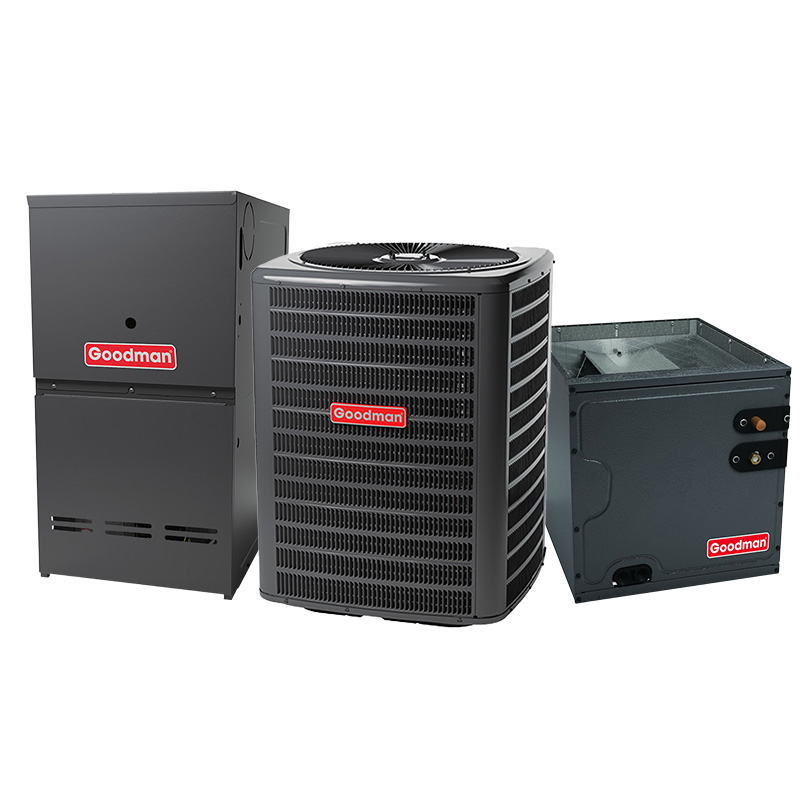
Goodman 1.5 Ton Dual Fuel Hybrid Heat Pump System – 60000 BTU California Low NOx Two Stage Gas Furnace, 80% AFUE, Downflow, 15 SEER2, R32
View on AC Direct see your lowest price →Check current price on AC Direct →
Key features
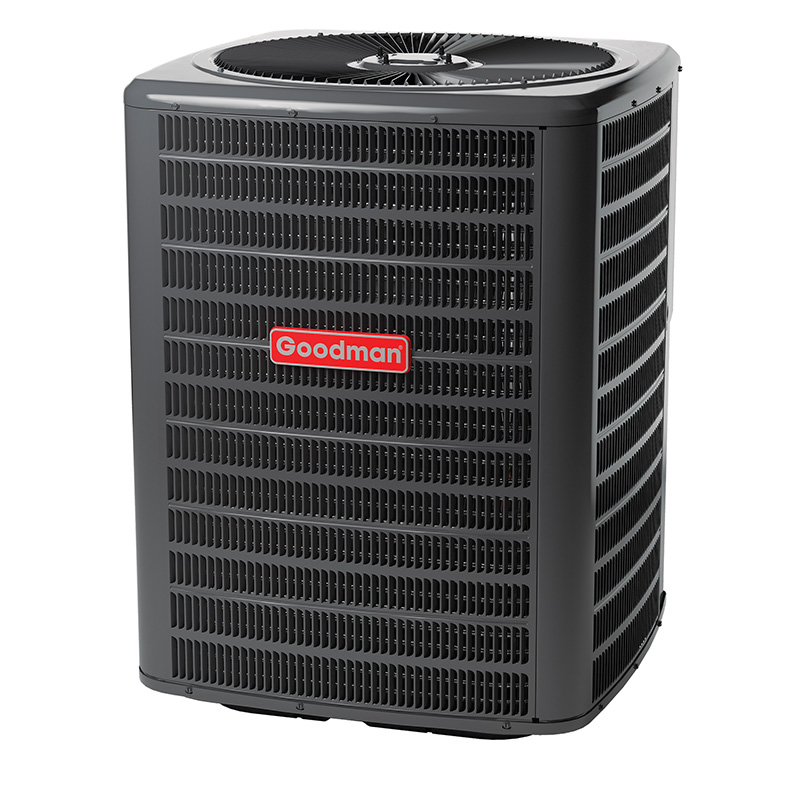
- 1.5-ton heat pump rated at 15 SEER2 for energy-efficient cooling and mild-weather heating
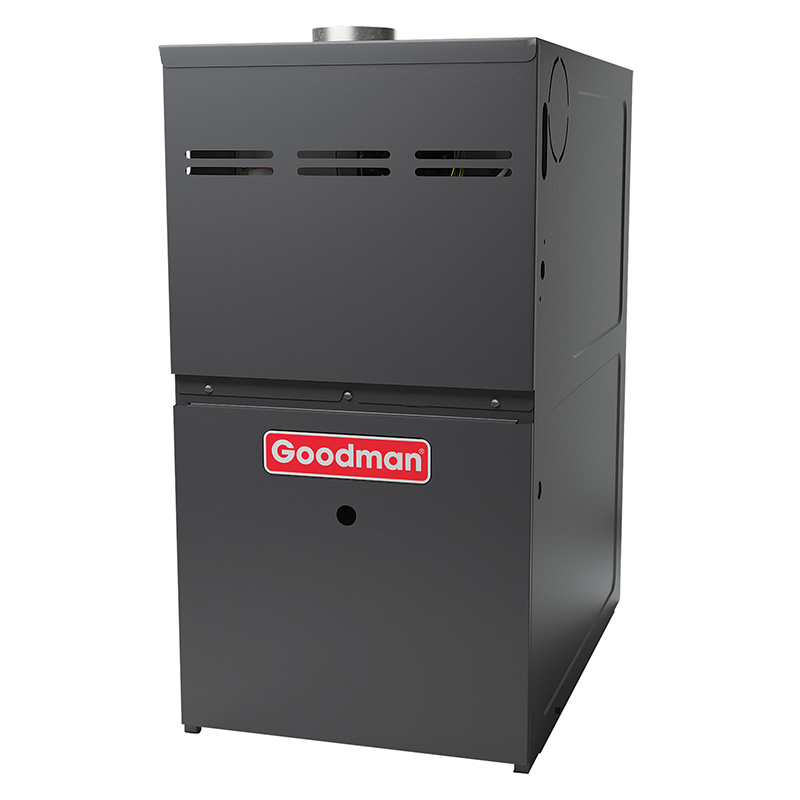
- 60,000 BTU two-stage gas furnace with 80% AFUE in a downflow cabinet
- Dual fuel hybrid control automatically selects heat pump or gas heat based on outdoor conditions
- R-32 refrigerant with lower global warming potential than legacy R-410A systems
- California Low NOx certified, meeting the state's stringent air quality emission standards
- Two-stage furnace operation reduces short-cycling and improves temperature consistency on moderate days
About this system
The Goodman 1.5-ton dual fuel hybrid heat pump system pairs a 15 SEER2 heat pump with a 60,000 BTU, 80% AFUE two-stage gas furnace in a downflow configuration, making it a practical choice for smaller homes and well-insulated spaces in California’s mixed climates. The dual fuel setup lets the system lean on the heat pump for efficiency during mild weather and automatically switch to gas heat when outdoor temperatures drop low enough that the furnace is more cost-effective, which is exactly the kind of flexibility that makes hybrid systems worth considering in regions where both gas prices and electricity rates fluctuate.
The R-32 refrigerant is a meaningful modern upgrade over older R-410A systems, offering a lower global warming potential and slightly better thermodynamic efficiency. The California Low NOx rating satisfies the state’s strict air quality requirements, so this unit is legal for installation throughout California without additional modifications. The downflow configuration directs conditioned air downward, which suits homes with crawlspace ductwork or basement installations where supply ducts run under the floor. Two-stage operation on the furnace side means the system can run at a lower capacity on moderate days, improving comfort and reducing short-cycling compared to single-stage equipment.
At 80% AFUE, the furnace converts eight out of ten BTUs of fuel into usable heat, which is the baseline for modern gas furnaces rather than the top tier. Homeowners who heat primarily with the heat pump side during mild California winters may find the AFUE limitation barely noticeable in practice, but those who run gas heat frequently during cold snaps will want to weigh the efficiency gap against a 90%-plus AFUE alternative before committing.
This Goodman hybrid system delivers a workable combination of heat pump efficiency and gas backup heating at a price point that undercuts comparable Carrier, Trane, and Lennox setups by a meaningful margin. The 15 SEER2 rating and R-32 refrigerant are genuinely solid specifications at this price, but the 80% AFUE furnace is entry-level efficiency and Goodman's documented history of capacitor failures and evaporator coil leaks means ongoing maintenance costs should factor into the total ownership calculation.
Overall score is the average of the five ratings above.
What we like
- Priced 15 to 25 percent below equivalent Carrier, Trane, and Lennox hybrid systems, reducing upfront cost
- R-32 refrigerant is a forward-looking choice with lower environmental impact and good efficiency characteristics
- Two-stage furnace operation improves comfort consistency compared to single-stage alternatives
- California Low NOx certification means no additional regulatory hurdles for CA installations
- Dual fuel logic reduces operating costs by using the more economical energy source for the conditions
Trade-offs
- 80% AFUE is the minimum tier for modern furnaces, leaving meaningful efficiency gains on the table compared to 96% AFUE alternatives
- Dual-run capacitor failures are the most commonly reported Goodman repair, typically surfacing between years 5 and 10 and costing $300 to $600 per incident
- Compressor lifespan averages 10 to 14 years versus 15 to 20 years for premium brands, which matters more in a 1.5-ton system that may cycle frequently in a smaller home
- A minority of owners report refrigerant leaks within the first year, most often traced to installation quality rather than manufacturing defects
What homeowners and pros say about Goodman
Homeowners who have lived with Goodman equipment for several years tend to split into two camps. Those who had a careful installation by an experienced contractor and kept up with annual maintenance often report the system running without major incident through the first several years, pointing to the lower purchase price as the reason they chose Goodman and feeling that choice was validated. The other group, well represented in Goodman’s roughly 2.5 out of 5 score on ConsumerAffairs, ran into repair costs after roughly year seven that felt disproportionate given what they originally spent. That ConsumerAffairs channel skews toward unhappy owners, but the recurring themes of capacitor failures and evaporator coil leaks in those reviews line up with what HVAC technicians report anecdotally when they describe the brand’s documented weak points.
Among HVAC professionals, the common refrain about Goodman is that it is not a bad product when it is installed correctly, and that the brand’s reputation suffers most when contractors cut corners on commissioning or refrigerant charge. For this particular dual fuel hybrid system, the added complexity of coordinating a heat pump and a gas furnace means install quality matters even more than it does on a straight cooling-only system. Google dealer reviews for Goodman installers average around 3.8 out of 5 across hundreds of reviews per location, where affordability is the most consistent praise and service responsiveness is the most consistent concern. For a 1.5-ton California Low NOx system running R-32, the hardware specifications are reasonable for the price tier, but the compressor longevity gap versus premium brands (10 to 14 years versus 15 to 20 for Trane or Carrier) is a real consideration for buyers who plan to stay in their home for the long term.
Sources: ConsumerAffairs Goodman owner reviews, AHRI Directory of Certified Product Performance, U.S. DOE appliance and equipment efficiency standards, Goodman product specification sheets.
What it costs to run
At 15 SEER2, cooling this 1.5-ton system for a typical 1200-hour cooling season at the U.S. average electricity rate of $0.17/kWh works out to roughly $245 per year in cooling, about $29 less per year than a minimum-efficiency 13.4 SEER2 unit of the same size. Your real cost depends on your climate and local rate.
Method: (18,000 BTU/hr ÷ 15 SEER2) × 1200 hours ÷ 1000 × $0.17/kWh. Rate source: U.S. EIA average; cooling hours: moderate-climate estimate.
How it compares
| Brand | Comparable model | SEER2 | Stage | Price position |
|---|---|---|---|---|
| Goodman | Dual Fuel Hybrid System (this unit) — 15 SEER2 / 80% AFUE / Two-stage | 15 | Two-stage furnace | Value pick |
| Carrier | Performance 15 Series Hybrid Heat (25HCB6 / 59SP5) | 15 | Single-stage | Typically 15 to 25 percent more than this Goodman system |
| Trane | XR15 Heat Pump with S8X1 Gas Furnace hybrid pairing | 15 | Single-stage | Typically 15 to 25 percent more than this Goodman system |
| Lennox | Merit 14HPX Heat Pump with ML180 Gas Furnace hybrid pairing | 14-15 | Single-stage | Typically 15 to 25 percent more than this Goodman system |
Competitor rows are comparable single-stage units at similar efficiency; price is relative position, not a quote.
Questions about this system
How does the dual fuel control decide when to use the heat pump versus the gas furnace?
The system uses a balance point temperature, typically set during installation, below which running the gas furnace costs less than running the heat pump against cold outdoor air. Above that threshold the heat pump handles heating; below it the furnace takes over. Your installer should set this balance point based on your local utility rates for gas and electricity to maximize savings.
Is a 1.5-ton unit large enough for a California home, and how do I know if it fits my space?
A 1.5-ton system is generally appropriate for homes roughly 600 to 900 square feet depending on insulation, ceiling height, window area, and climate zone. Only a Manual J load calculation performed by a licensed HVAC contractor can confirm the right size for your specific home; an undersized or oversized system will underperform regardless of brand or specifications.
What does the California Low NOx certification actually require, and does this unit meet it out of the box?
California's South Coast and Bay Area air quality districts set nitrogen oxide emission limits for residential furnaces that are stricter than federal standards. This furnace carries the Low NOx designation from the factory, meaning it meets those requirements without field modifications and can be legally permitted and installed throughout California.
What are the most likely repair costs I should budget for over the first ten years?
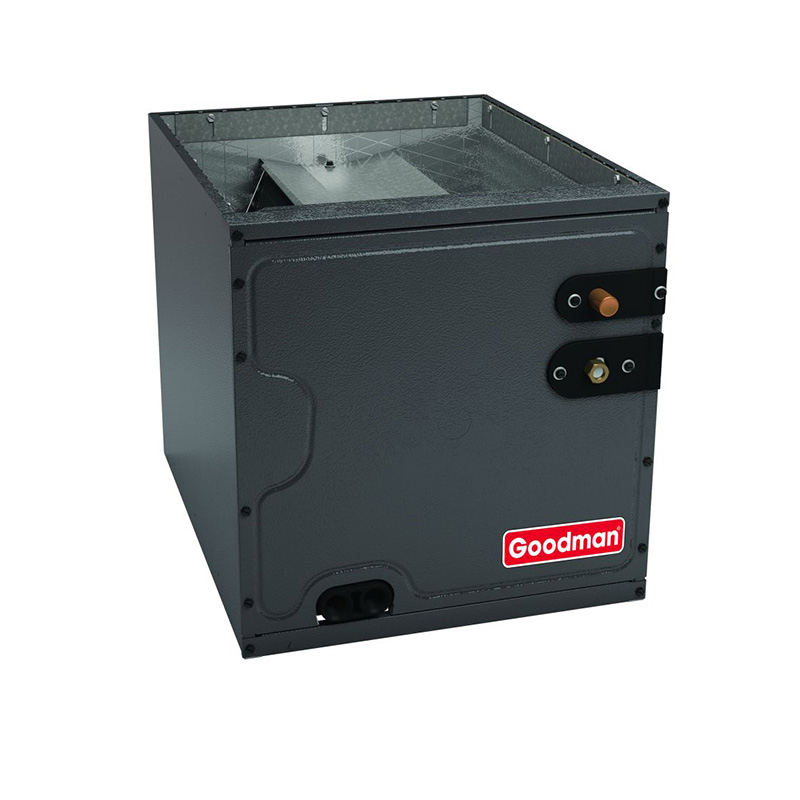
Dual-run capacitor replacement is the most frequently reported Goodman service call, usually a straightforward repair in the $300 to $600 range. Evaporator coil leaks appear in a meaningful share of owner reviews and can run higher depending on refrigerant recovery and coil replacement costs. Setting aside a maintenance fund rather than relying solely on the warranty is a practical approach given Goodman's documented repair patterns.
Does the downflow configuration limit where this system can be installed?
Downflow furnaces discharge conditioned air from the bottom of the cabinet, which is designed for installations above a crawlspace or basement where supply ducts run under the floor. They are not interchangeable with upflow or horizontal configurations, so confirm that your existing ductwork and mechanical space are compatible before ordering to avoid costly field modifications.
Specifications
| Cooling capacity | 1.5 Ton |
| Efficiency | 15 SEER2 |
| Furnace output | 60000 BTU |
| Furnace efficiency | 80% AFUE |
| Configuration | Downflow |
| Refrigerant | R-32 |