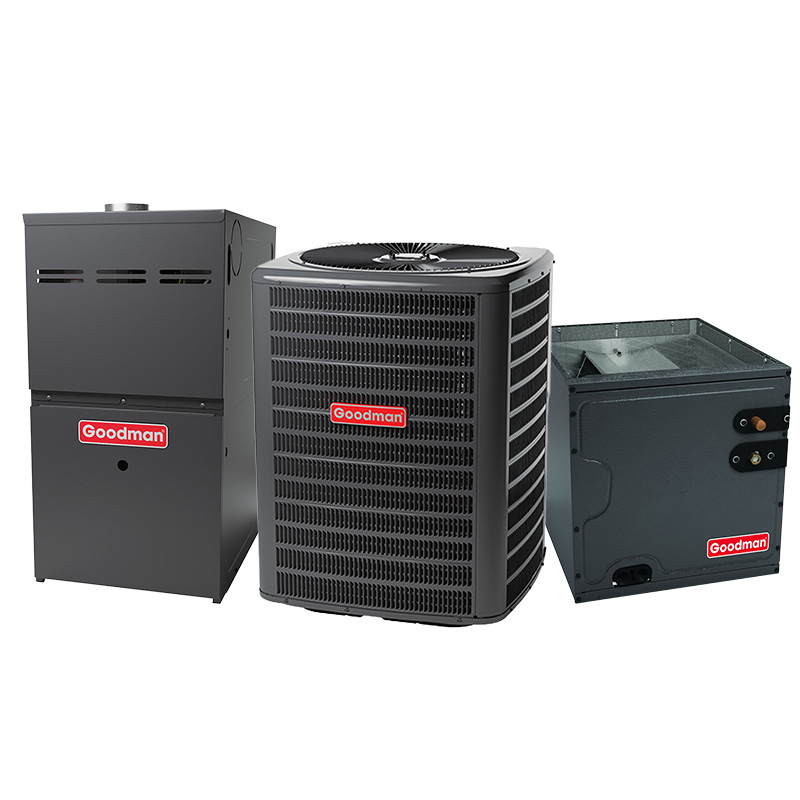
Goodman 1.5 Ton Dual Fuel Hybrid Heat Pump System – 60000 BTU Gas Furnace, 80% AFUE, 15.2 SEER2, Upflow, R32
View on AC Direct see your lowest price →Check current price on AC Direct →
Key features
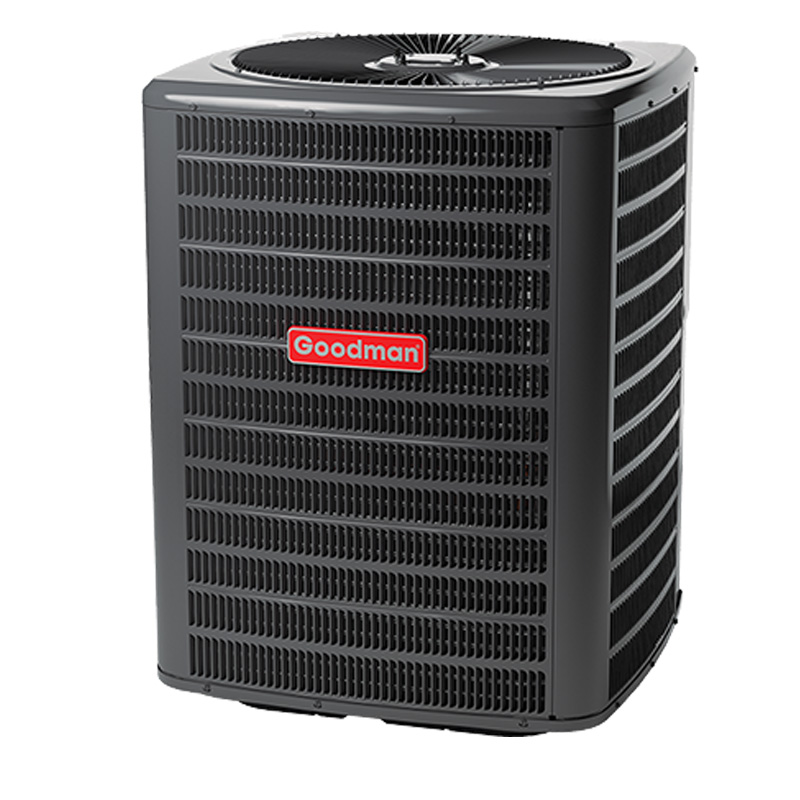
- 15.2 SEER2 single-stage heat pump with R-32 refrigerant
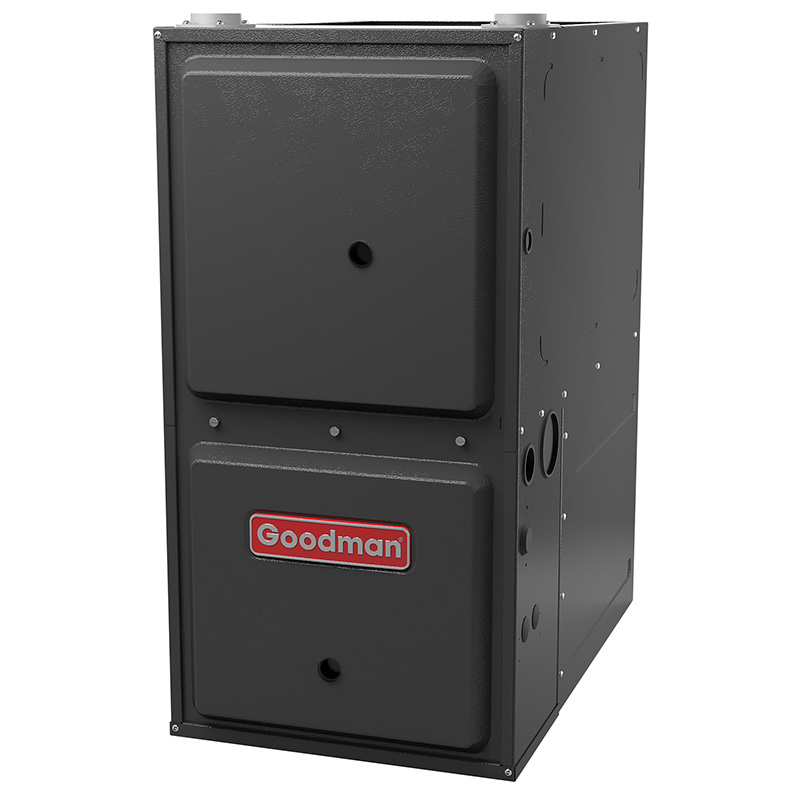
- 60,000 BTU upflow gas furnace at 80% AFUE for backup heat
- Dual fuel logic automatically selects heat pump or gas based on outdoor temperature
- 1.5-ton capacity suited to smaller conditioned spaces with confirmed load calculations
- R-32 refrigerant offers lower global-warming potential versus legacy R-410A
- Priced roughly 15 to 25 percent below comparable Carrier, Trane, and Lennox dual fuel systems
About this system
The Goodman 1.5-ton dual fuel hybrid heat pump system pairs a 15.2 SEER2 heat pump with a 60,000 BTU, 80% AFUE upflow gas furnace, giving smaller homes and tight cooling loads the ability to run on electricity when outdoor temperatures favor heat pump operation and switch to gas when the cold gets serious. That hybrid logic is the main appeal here: you get the efficiency advantage of a heat pump for the bulk of the heating season without giving up the raw warming power of a furnace on the coldest nights. The 1.5-ton capacity is sized for roughly 600 to 900 square feet of well-insulated living space, depending on climate, ceiling height, and local Manual J results, so confirm your load calculation before ordering.
On the efficiency side, 15.2 SEER2 clears the federal minimums for most U.S. climate regions and sits in the entry-level tier of modern heat pump systems. It is honest mid-range performance, not a premium efficiency story. The 80% AFUE furnace means one dollar in five spent on gas goes up the flue as waste heat, which is code-minimum in most markets and noticeably behind the 96% AFUE units Goodman also sells. R-32 refrigerant has a lower global-warming potential than R-410A and is increasingly the industry standard, so parts availability should be solid going forward. The upflow configuration suits a basement or closet installation where supply air rises into overhead ductwork, the most common residential setup in northern and mid-continental climates where a dual fuel system makes the most sense.
This system is a practical, budget-conscious entry into dual fuel heating for smaller homes, delivering genuine hybrid flexibility at a price point that undercuts major premium brands by a meaningful margin. The efficiency specs are functional rather than impressive, and long-term ownership costs depend heavily on installation quality and the luck of the component draw given Goodman's documented capacitor and coil failure history. Buyers who want low upfront cost and can live with mid-tier efficiency will find a reasonable fit; those prioritizing 20-year reliability should look at premium alternatives.
Overall score is the average of the five ratings above.
What we like
- Upfront cost is 15 to 25 percent below comparable Carrier, Trane, and Lennox dual fuel systems
- Dual fuel operation reduces gas consumption during mild weather by running the heat pump instead
- R-32 refrigerant is lower-impact and aligns with where the industry is heading
- Upflow configuration matches the most common residential duct layout in heating-dominated climates
- Dual run capacitor failures, the most common documented issue, are typically a low-cost repair in the 300 to 600 dollar range
Trade-offs
- 80% AFUE is code-minimum efficiency; the gas furnace wastes 20 cents of every fuel dollar compared to 4 cents on a 96% AFUE unit
- Compressor lifespan averages 10 to 14 years versus 15 to 20 years reported for premium-brand compressors
- Evaporator coil leaks appear in a meaningful share of owner reviews and can be an expensive mid-life repair
- A minority of owners report refrigerant leaks within the first year, most traced to installation or initial charge quality rather than the equipment itself
What homeowners and pros say about Goodman
Owners and technicians who comment on Goodman equipment tend to split along predictable lines. On Google dealer reviews, where the brand averages around 3.8 out of 5, the most consistent praise is straightforward: the price is lower than the competition and the equipment works when it is installed correctly. HVAC technicians frequently echo that last part, noting that Goodman’s reliability reputation is inseparable from installation quality. A system set up with correct refrigerant charge, proper airflow, and good electrical connections tends to perform without drama in the early years. The same technicians point to dual run capacitor failure as the most commonly reported service call on Goodman equipment, a repair that typically lands in the 300 to 600 dollar range and is not particularly alarming on its own, but can become a pattern on older units.
The longer-term picture is less flattering. ConsumerAffairs scores Goodman at roughly 2.5 out of 5, and while that platform skews toward people who are frustrated enough to write a review, the recurring complaint is consistent: repair costs start climbing after about year seven, with evaporator coil leaks and compressor issues cited most often. Goodman compressors are documented to average 10 to 14 years of service life, noticeably shorter than the 15 to 20 years owners report from Carrier, Trane, and Lennox compressors. For a dual fuel system that sees limited compressor run hours in a heating-dominant climate, that gap may matter less than it would on a straight cooling-only unit, but it is a real trade-off to weigh against the upfront savings.
Sources: ConsumerAffairs Goodman owner reviews, AHRI Directory of Certified Product Performance, U.S. DOE appliance and equipment efficiency standards, Goodman product specification sheets.
What it costs to run
At 15.2 SEER2, cooling this 1.5-ton system for a typical 1200-hour cooling season at the U.S. average electricity rate of $0.17/kWh works out to roughly $242 per year in cooling, about $32 less per year than a minimum-efficiency 13.4 SEER2 unit of the same size. Your real cost depends on your climate and local rate.
Method: (18,000 BTU/hr ÷ 15.2 SEER2) × 1200 hours ÷ 1000 × $0.17/kWh. Rate source: U.S. EIA average; cooling hours: moderate-climate estimate.
How it compares
| Brand | Comparable model | SEER2 | Stage | Price position |
|---|---|---|---|---|
| Goodman | 1.5-Ton Dual Fuel Hybrid System (this unit) | 15.2 | Single-stage | Value pick |
| Carrier | Performance Series Dual Fuel (25HCE3 / 58TP furnace pairing) | 15.2 | Single-stage | Typically 15 to 25 percent more than this Goodman system |
| Trane | XR15 Dual Fuel System (XR15 heat pump / S8X1 furnace pairing) | 15.0 | Single-stage | Typically 15 to 25 percent more than this Goodman system |
| Lennox | Merit Series Dual Fuel (14HPX / ML180 furnace pairing) | 15.1 | Single-stage | Typically 15 to 25 percent more than this Goodman system |
Competitor rows are comparable single-stage units at similar efficiency; price is relative position, not a quote.
Questions about this system
Will a 1.5-ton system actually be enough for my house?
Capacity depends on a Manual J load calculation specific to your home's insulation, window area, ceiling height, and local climate, not a rule of thumb. A 1.5-ton system is commonly sized for 600 to 900 square feet of well-insulated space in a moderate climate, but an undersized system in a larger or leaky home will short-cycle or fail to meet setpoint on peak days. Have your installer run the numbers before ordering.
At what outdoor temperature does the system switch from heat pump to the gas furnace?
The balance point, the temperature below which the gas furnace takes over, is typically set during commissioning and is often between 30 and 40 degrees Fahrenheit depending on your climate and the installer's judgment. Getting this setting right is important for both comfort and fuel savings, so confirm it with your installer during startup.
How serious is the documented evaporator coil leak issue with Goodman equipment?
Evaporator coil leaks appear in a notable share of Goodman owner reviews and tend to surface in the mid-life of the system rather than immediately. A coil replacement is one of the more expensive service calls you can face outside of a compressor swap, so it is worth confirming your warranty coverage and discussing a service agreement with your dealer before installation.
Is 80% AFUE going to cost me noticeably more to run than a higher-efficiency furnace?
Yes, in theory, though the dual fuel setup means the gas furnace only runs on the coldest days when the heat pump cannot keep up, which limits how much the lower AFUE actually costs you over a season. In a mild to moderate climate the gas furnace may run only a handful of hours per year, making the efficiency gap less significant than it would be in a straight gas-only system.
Does this system come with a parts and labor warranty, or just parts?
Goodman's standard registered warranty covers parts for 10 years when the equipment is registered within the required window after installation, but labor is not included. Labor costs for a warranty repair come out of your pocket unless you purchase a separate extended service contract, which is worth pricing out given Goodman's documented capacitor and coil failure rates.
Specifications
| Cooling capacity | 1.5 Ton |
| Efficiency | 15.2 SEER2 |
| Furnace output | 60000 BTU |
| Furnace efficiency | 80% AFUE |
| Configuration | Upflow |
| Refrigerant | R-32 |