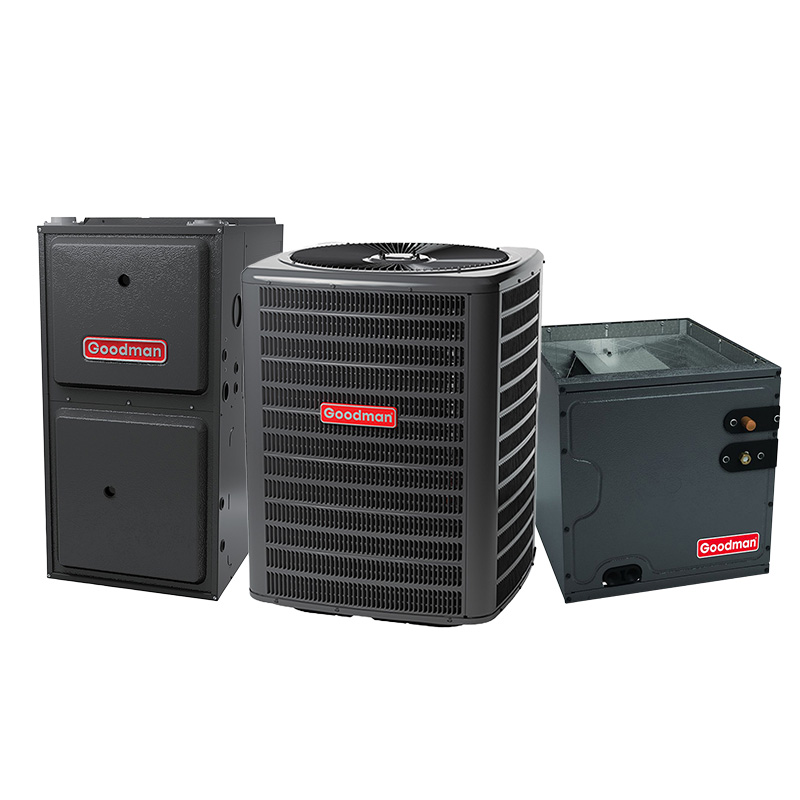
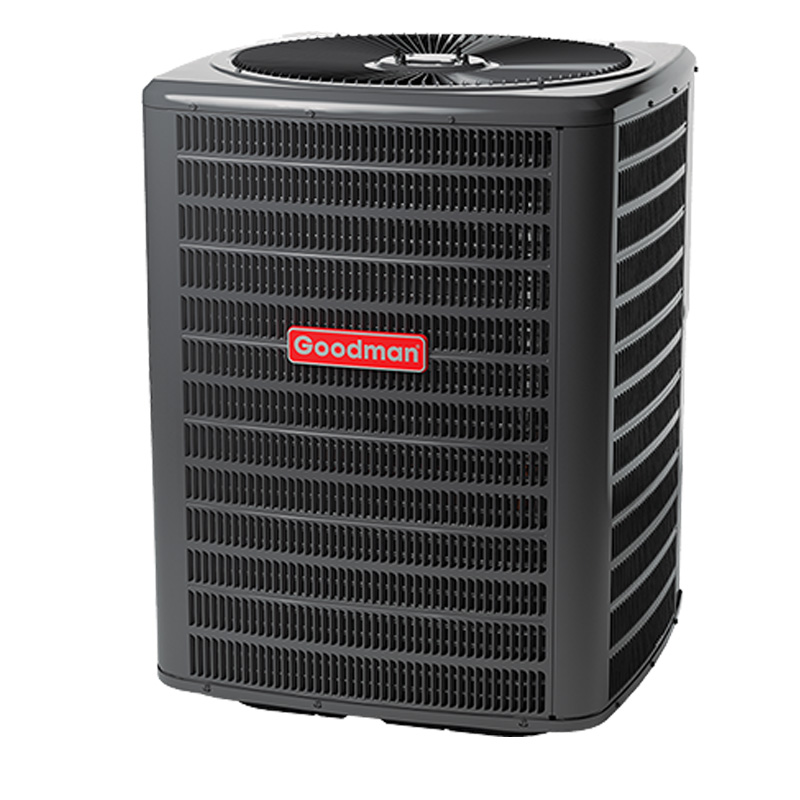
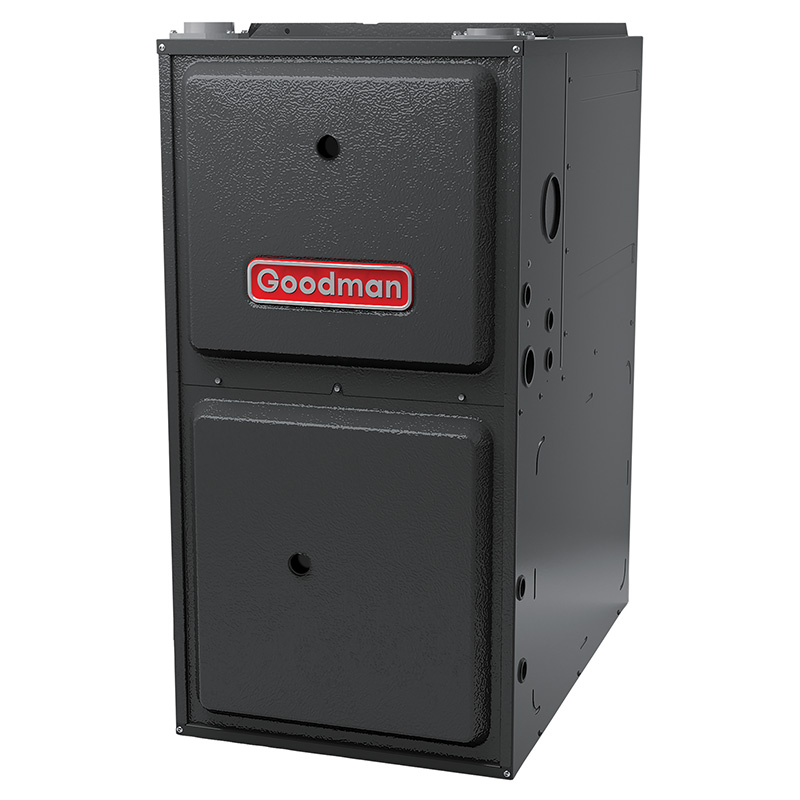
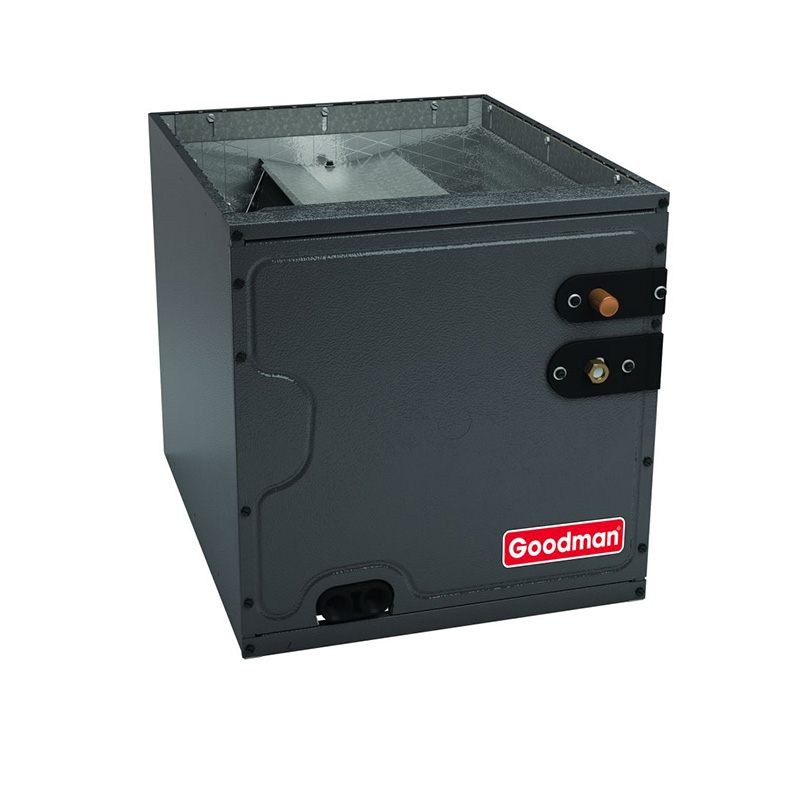
Goodman 1.5 Ton Dual Fuel Hybrid Heat Pump System – 60000 BTU Gas Furnace, 96% AFUE, 15.2 SEER2, Upflow, R32
View on AC Direct see your lowest price →Check current price on AC Direct →
Key features
- 15.2 SEER2 heat pump efficiency meets current federal minimums with a small margin above the floor
- 96% AFUE gas furnace extracts 96 cents of heat from every dollar of natural gas burned
- Dual fuel hybrid logic switches between electric heat pump and gas heat based on outdoor conditions
- R-32 refrigerant with lower global warming potential than outgoing R-410A
- Upflow configuration designed for basement or utility-closet installations with overhead duct systems
- 60,000 BTU furnace output sized for smaller homes or supplemental dual-fuel setups
About this system
The Goodman 1.5 Ton Dual Fuel Hybrid Heat Pump System pairs a 15.2 SEER2 heat pump with a 60,000 BTU, 96% AFUE upflow gas furnace, giving you two heat sources that the system switches between depending on outdoor temperature and energy costs. In mild weather the heat pump carries the load efficiently; when temperatures drop and electricity becomes the more expensive option, the furnace takes over. That split strategy is genuinely useful in climate zones 3 through 5, where winters are cold enough that a heat pump alone loses ground but not so brutal that you need a full-time gas system. The R-32 refrigerant charge reflects a modern formulation with a lower global warming potential than the R-410A it replaces, and it is what most new residential equipment is moving toward.
At 1.5 tons this system is sized for smaller homes, typically 600 to 900 square feet in moderate climates or up to roughly 1,200 square feet in milder regions, assuming decent insulation and sealing. The upflow configuration means the air handler or furnace sits on a lower level and pushes conditioned air upward through overhead ductwork, which is the standard arrangement for most basements and utility closets. Because this is a single-stage system, it runs at full capacity or not at all, so it will cycle on and off more frequently than a variable-speed or two-stage unit in shoulder seasons. That is worth understanding before you buy, especially if humidity control or noise is a priority for you.
This Goodman dual fuel system delivers a genuinely efficient hybrid setup at a price point that undercuts Carrier, Trane, and Lennox by a meaningful margin, making it a reasonable starting point for budget-conscious buyers in cold-winter climates. The trade-off is a documented history of component failures after year seven and compressor longevity that trails premium brands, so the long-term cost picture depends heavily on how well it is installed and maintained. If you can secure a skilled installer and budget for a service plan, it earns its place; if you are cutting corners on installation to save money, the savings can evaporate quickly.
Overall score is the average of the five ratings above.
What we like
- Priced 15 to 25 percent below comparable Carrier, Trane, and Lennox systems for the same efficiency tier
- 96% AFUE furnace is among the highest efficiency ratings available, reducing gas bills meaningfully versus 80% AFUE units
- Dual fuel logic actively minimizes operating costs by choosing the cheaper energy source in real time
- R-32 refrigerant is the industry-standard forward-looking choice with better environmental profile
- 15.2 SEER2 clears the federal minimum with room to spare, qualifying for some utility rebate programs
Trade-offs
- Dual-run capacitor failures are the most commonly reported issue, typically appearing after the first few years and costing $300 to $600 per incident
- Evaporator coil leaks appear in a meaningful share of owner reviews and can be expensive to address outside the warranty period
- Compressor lifespan averages 10 to 14 years versus 15 to 20 years for premium-brand compressors, affecting total cost of ownership
- Single-stage operation means the system runs at full blast every cycle, limiting humidity control and creating more noticeable temperature swings compared to variable-speed alternatives
What homeowners and pros say about Goodman
Homeowners who have lived with Goodman equipment long enough to form a real opinion tend to split sharply. On Google dealer reviews the brand averages around 3.8 out of 5 across hundreds of reviews per location, and the most common praise is straightforward: the system works, the price was fair, and the installer got it running without drama. That is a reasonable result for value-tier equipment. The picture on ConsumerAffairs is rougher, sitting at about 2.5 out of 5, though that channel draws a disproportionate share of frustrated owners rather than satisfied ones. The recurring theme there is repair costs that start climbing around year seven, which lines up with the documented failure modes: dual-run capacitors are the most frequently reported breakdown, generally a $300 to $600 fix but an annoying one if it happens twice in three years, and evaporator coil leaks appear often enough in owner accounts to be a real pattern rather than isolated bad luck.
HVAC technicians who work on Goodman systems regularly tend to view them pragmatically. The equipment is straightforward to service, parts are widely available, and for a homeowner on a budget it is a defensible choice if the installation is done correctly. The compressor longevity question is where pros get cautious: Goodman compressors average roughly 10 to 14 years in the field versus 15 to 20 years for premium-brand compressors, and on a dual fuel system where the compressor cycles on and off based on outdoor temperature and fuel cost signals, cumulative run cycles matter. A minority of first-year owners have reported refrigerant leaks, and technicians almost uniformly attribute those to charge or fitting issues at installation rather than factory defects, which reinforces why installer selection is the single biggest variable in how this system performs over its lifetime.
Sources: ConsumerAffairs Goodman owner reviews, AHRI Directory of Certified Product Performance, U.S. DOE appliance and equipment efficiency standards, Goodman product specification sheets.
What it costs to run
At 15.2 SEER2, cooling this 1.5-ton system for a typical 1200-hour cooling season at the U.S. average electricity rate of $0.17/kWh works out to roughly $242 per year in cooling, about $32 less per year than a minimum-efficiency 13.4 SEER2 unit of the same size. Your real cost depends on your climate and local rate.
Method: (18,000 BTU/hr ÷ 15.2 SEER2) × 1200 hours ÷ 1000 × $0.17/kWh. Rate source: U.S. EIA average; cooling hours: moderate-climate estimate.
How it compares
| Brand | Comparable model | SEER2 | Stage | Price position |
|---|---|---|---|---|
| Goodman | 1.5 Ton Dual Fuel Hybrid Heat Pump with 96% AFUE Upflow Furnace | 15.2 | Single-stage | Value pick |
| Carrier | Performance Series Dual Fuel (25HCB / 59TP6) | 15.2 | Single-stage | Typically 15 to 25 percent more than Goodman |
| Trane | XR15 Dual Fuel with S8X1 Furnace | 15.0 to 15.5 | Single-stage | Typically 15 to 25 percent more than Goodman |
| Lennox | Merit Series ML14XP1 Dual Fuel with ML196E Furnace | 15.2 | Single-stage | Typically 15 to 25 percent more than Goodman |
Competitor rows are comparable single-stage units at similar efficiency; price is relative position, not a quote.
Questions about this system
What outdoor temperature should I set the switchover point between heat pump and gas furnace?
Most HVAC technicians set the balance point between 35 and 40 degrees Fahrenheit for this efficiency tier, meaning the heat pump runs above that temperature and the furnace takes over below it. Your installer should calculate the exact point based on your local utility rates for gas versus electricity, because the goal is to use whichever source costs less at the margin, not simply whichever produces more heat.
Is 1.5 tons enough for my house?
A proper Manual J load calculation is the only reliable answer, but as a rough guide 1.5 tons typically covers 600 to 900 square feet in colder climates or up to about 1,200 square feet in milder ones, assuming average insulation. Oversizing causes short-cycling, poor humidity removal, and accelerated wear, so resist the urge to go bigger just to feel safer.
How does R-32 affect servicing and refrigerant costs compared to R-410A?
R-32 is mildly flammable, which means technicians need specific certification and tools to handle it safely, so not every local HVAC shop will be equipped on day one. Refrigerant costs for R-32 are currently comparable to R-410A, but availability is growing as the industry transitions, and over time it is expected to be widely stocked. Confirm your service provider is R-32 certified before committing.
What does the Goodman warranty cover on this system and for how long?
Goodman typically offers a 10-year parts warranty when you register the equipment within a set window after installation, covering major components including the compressor, heat exchanger, and coil. Labor is not covered under the manufacturer warranty, which is a real cost exposure given that Goodman's documented failure modes, particularly capacitors and coil leaks, often surface after the first few years. Ask your installer about an extended labor or service agreement.
Why does install quality matter so much more with Goodman than with premium brands?
Goodman's own performance data and the feedback pattern from Google dealer reviews and ConsumerAffairs both point to the same finding: the equipment is sensitive to refrigerant charge accuracy, duct sizing, and electrical connections. Premium brands build in tighter factory tolerances and more diagnostic safeguards that can partially compensate for minor install imperfections. With Goodman, a refrigerant charge that is even slightly off, which is a documented first-year complaint, leads to efficiency loss and premature compressor wear, so choosing a thorough installer matters more than it would with a Trane or Carrier system.
Specifications
| Cooling capacity | 1.5 Ton |
| Efficiency | 15.2 SEER2 |
| Furnace output | 60000 BTU |
| Furnace efficiency | 96% AFUE |
| Configuration | Upflow |
| Refrigerant | R-32 |