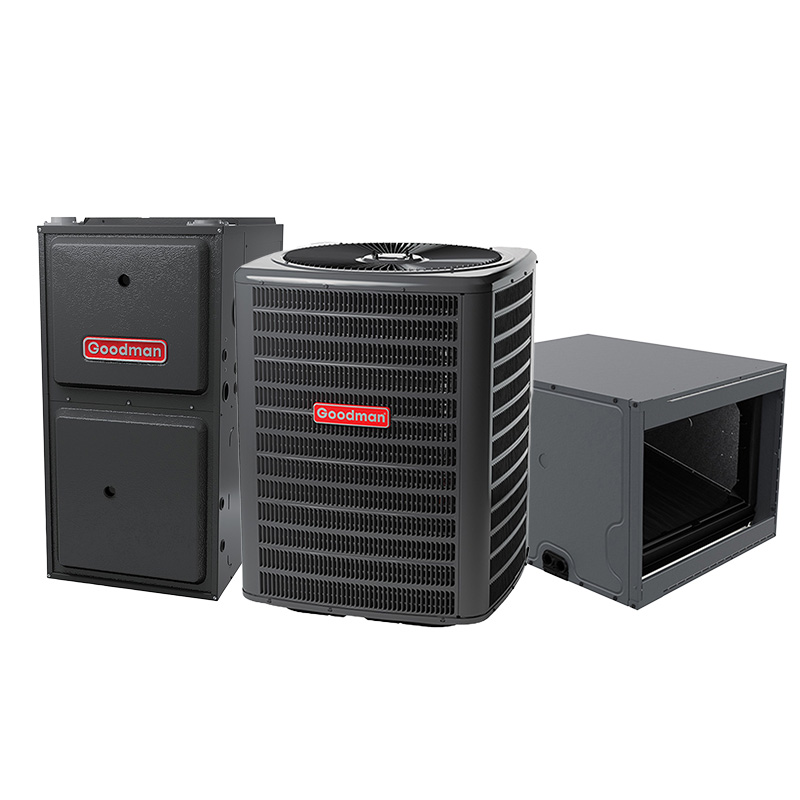
Goodman 1.5 Ton Dual Fuel Hybrid Heat Pump System – 80000 BTU Gas Furnace, 96% AFUE, 15.2 SEER2, Horizontal, R32
View on AC Direct see your lowest price →Check current price on AC Direct →
Key features
- 15.2 SEER2 rated heat pump with dual fuel gas furnace backup for climate-adaptive operation
- 96% AFUE high-efficiency gas furnace reduces heating fuel waste to roughly 4 cents per dollar
- Horizontal cabinet orientation designed for attic, crawl-space, and side-discharge installations
- R-32 refrigerant with lower global warming potential than legacy R-410A systems
- 1.5-ton (18,000 BTU) cooling capacity suited to smaller conditioned spaces
- Automatic switchover between electric heat pump and gas heat based on outdoor temperature
About this system
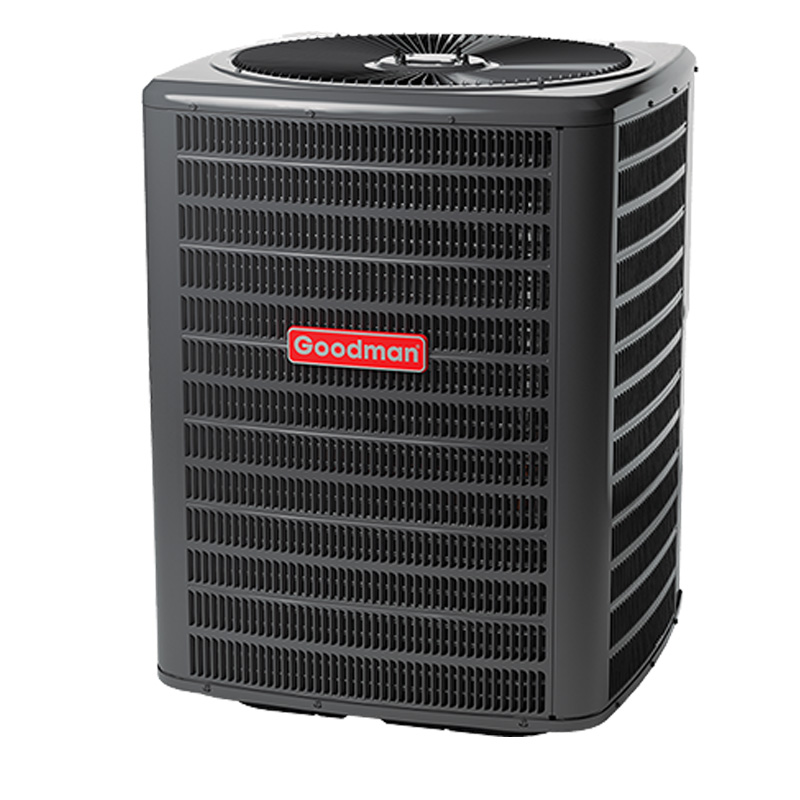
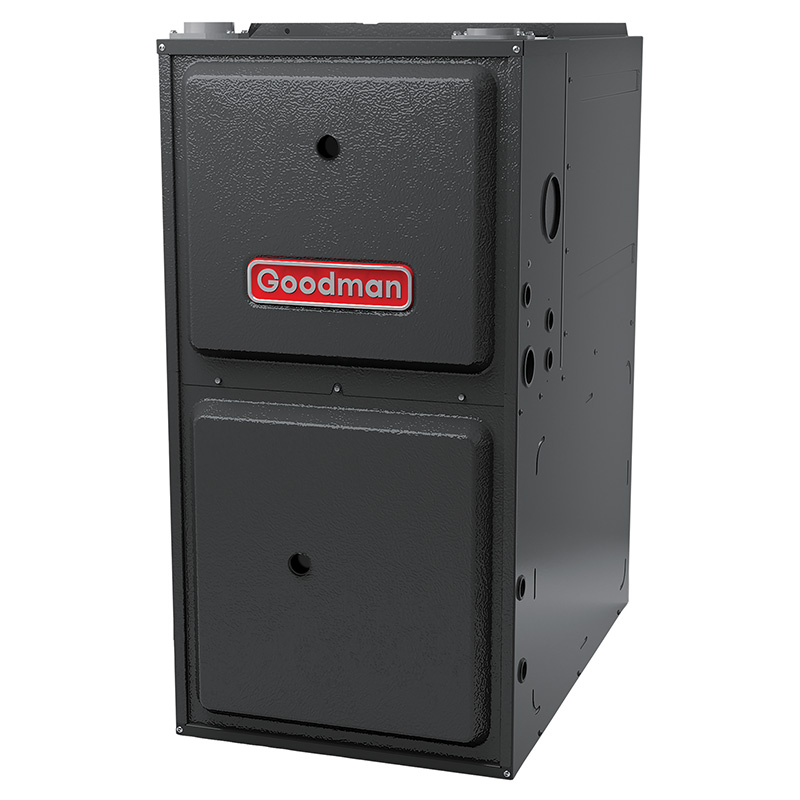
The Goodman 1.5-ton dual fuel hybrid heat pump system pairs a 15.2 SEER2 outdoor unit with an 80,000 BTU, 96% AFUE gas furnace in a horizontal configuration, making it a compact but capable choice for homes where crawl-space or attic installations are the only practical option. The dual fuel setup means the system runs as a heat pump during mild weather, then automatically switches to the gas furnace when outdoor temperatures drop below the balance point, typically between 30 and 40 degrees Fahrenheit. That handoff strategy can meaningfully reduce heating fuel costs in climates with cold but not extreme winters.
The 15.2 SEER2 rating clears the federal minimum for most U.S. regions but sits in the entry tier of modern efficiency rather than at the top. The 96% AFUE furnace is a genuine standout, capturing 96 cents of every dollar of gas burned, which is solidly high-efficiency territory. R-32 refrigerant carries a lower global warming potential than the R-410A it replaces and operates at slightly different pressures, so your installing technician must be rated to handle it. At 1.5 tons this system is sized for smaller homes, typically 600 to 900 square feet depending on insulation, climate zone, and ceiling height, and a Manual J load calculation before purchase is strongly advised to confirm the fit.
This system offers a genuinely efficient furnace and a cost-effective entry into dual fuel operation, priced noticeably below comparable Carrier, Trane, and Lennox packages. The trade-off is a brand track record that shows real reliability gaps after year seven and a compressor lifespan that tends to fall short of premium competitors. Buyers who prioritize upfront affordability and can budget for eventual repairs will find reasonable value here; those who want minimal long-term maintenance risk should look at a step up in brand tier.
Overall score is the average of the five ratings above.
What we like
- 96% AFUE furnace is legitimately high-efficiency and among the better specs at this price point
- Dual fuel design keeps operating costs lower in mixed climates by using the heat pump during moderate cold
- R-32 refrigerant is a forward-looking choice with better environmental credentials than R-410A
- Horizontal configuration opens installation options in homes where vertical units cannot fit
- Priced 15 to 25 percent below comparable Trane, Carrier, and Lennox dual fuel systems
Trade-offs
- Dual-run capacitor failures are the most commonly reported repair issue, typically adding 300 to 600 dollars after the warranty window
- Evaporator coil leaks appear in a meaningful share of owner reviews and can be costly to address
- Compressor longevity averages 10 to 14 years versus 15 to 20 years for premium-brand compressors
- A minority of owners report refrigerant leaks within the first year, usually traceable to install or initial charge quality
What homeowners and pros say about Goodman
Homeowners who post about Goodman equipment online tend to split into two camps. Those who had a smooth installation and routine early maintenance often cite solid cooling performance and satisfaction with the lower purchase price, consistent with Goodman’s Google dealer review average of around 3.8 out of 5. The other camp, more heavily represented on complaint-oriented channels like ConsumerAffairs where Goodman sits near 2.5 out of 5, describes repair bills that start stacking up after roughly year seven. The recurring issues named in those accounts are not random: dual-run capacitor failures are the most frequently mentioned, typically a manageable 300 to 600 dollar repair but frustrating when it arrives outside the warranty period. Evaporator coil leaks appear often enough to be a real pattern rather than isolated bad luck, and a smaller group of owners report refrigerant leaks within the first twelve months, which most technicians attribute to installation or initial charge problems rather than a defect in the equipment itself.
HVAC professionals who install Goodman regularly tend to describe it as equipment that performs predictably when the installation is done right, and that caveat carries significant weight with a dual fuel hybrid system. A horizontal R-32 setup involves correct refrigerant handling certification, a properly set balance point, carefully routed condensate drainage, and a verified charge, all of which require an experienced technician. Pros also note the compressor lifespan reality: Goodman compressors tend to reach the end of their service life somewhere in the 10-to-14-year window, compared to 15 to 20 years on premium-brand equipment, which factors into the true cost of ownership when comparing this system against higher-priced alternatives from Carrier, Trane, or Lennox.
Sources: ConsumerAffairs Goodman owner reviews, AHRI Directory of Certified Product Performance, U.S. DOE appliance and equipment efficiency standards, Goodman product specification sheets.
What it costs to run
At 15.2 SEER2, cooling this 1.5-ton system for a typical 1200-hour cooling season at the U.S. average electricity rate of $0.17/kWh works out to roughly $242 per year in cooling, about $32 less per year than a minimum-efficiency 13.4 SEER2 unit of the same size. Your real cost depends on your climate and local rate.
Method: (18,000 BTU/hr ÷ 15.2 SEER2) × 1200 hours ÷ 1000 × $0.17/kWh. Rate source: U.S. EIA average; cooling hours: moderate-climate estimate.
How it compares
| Brand | Comparable model | SEER2 | Stage | Price position |
|---|---|---|---|---|
| Goodman | Dual Fuel Hybrid Heat Pump System, 96% AFUE, Horizontal | 15.2 | Single-stage | Value pick |
| Carrier | Performance Series Dual Fuel (25HCE3 / 58TP) | 15.2 | Single-stage | Typically 15 to 25 percent more than this Goodman |
| Trane | XR15 Dual Fuel System (XR15 / S9X2) | 15.0–15.5 | Single-stage | Typically 15 to 25 percent more than this Goodman |
| Lennox | Merit Series Dual Fuel (14HPX / ML96) | 15.0–15.2 | Single-stage | Typically 15 to 25 percent more than this Goodman |
Competitor rows are comparable single-stage units at similar efficiency; price is relative position, not a quote.
Questions about this system
How does the dual fuel switchover actually work, and can I set the balance point myself?
The system's control board monitors outdoor temperature and switches from heat pump operation to gas furnace heating when temps fall below a preset balance point, commonly in the 30 to 40 degree Fahrenheit range. Many thermostats compatible with dual fuel systems let a technician or knowledgeable homeowner adjust that balance point to match local utility rates and climate. Getting the balance point right is worth discussing with your installer during commissioning.
Is 1.5 tons enough for my home, or will the system short-cycle?
A 1.5-ton unit is generally appropriate for roughly 600 to 900 square feet, but the right answer depends on your insulation, window area, ceiling height, and climate zone. Short-cycling caused by oversizing is just as problematic as undersizing, so a Manual J load calculation from your HVAC contractor before you buy is the only reliable way to confirm sizing.
What does R-32 refrigerant mean for maintenance and servicing costs?
R-32 operates at different pressures than the R-410A most technicians are accustomed to, and your service technician must hold the appropriate certification to handle it. Parts and refrigerant availability are growing as the industry transitions, but in some rural markets you may find fewer technicians stocked for R-32 work today than for older refrigerants.
What are the most likely repairs I should budget for over the system's life?
Based on documented Goodman failure patterns, dual-run capacitors are the most common service call, usually a straightforward fix in the 300 to 600 dollar range. Evaporator coil leaks are a second notable concern, and compressor replacement becomes a realistic consideration after the 10-to-14-year mark, which is earlier than the 15-to-20-year range typical of premium brands.
Why is the horizontal configuration important, and does it affect performance?
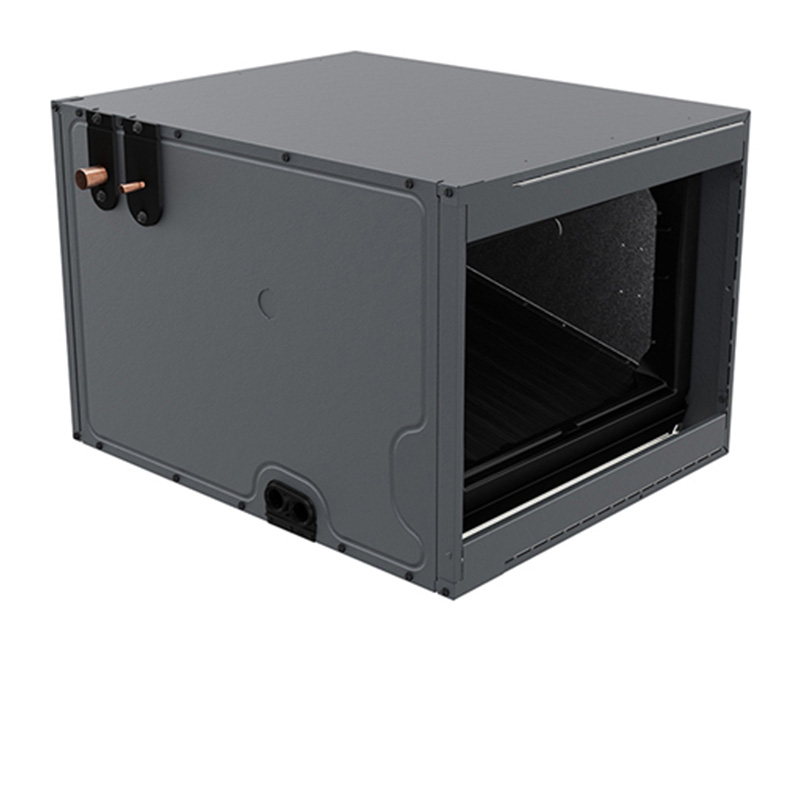
Horizontal orientation means the air handler is designed to lie on its side, which is necessary for attic and crawl-space installations where there is no room for a vertical cabinet. Performance is not inherently compromised by orientation, but proper condensate drainage is critical in horizontal installs and must be set up correctly by the installer to avoid water damage and mold issues.
Specifications
| Cooling capacity | 1.5 Ton |
| Efficiency | 15.2 SEER2 |
| Furnace output | 80000 BTU |
| Furnace efficiency | 96% AFUE |
| Configuration | Horizontal |
| Refrigerant | R-32 |