Goodman 1.5 Ton Up To 16 SEER2 R32 High-Efficiency Heat Pump Condenser (GLZS5BA1810)
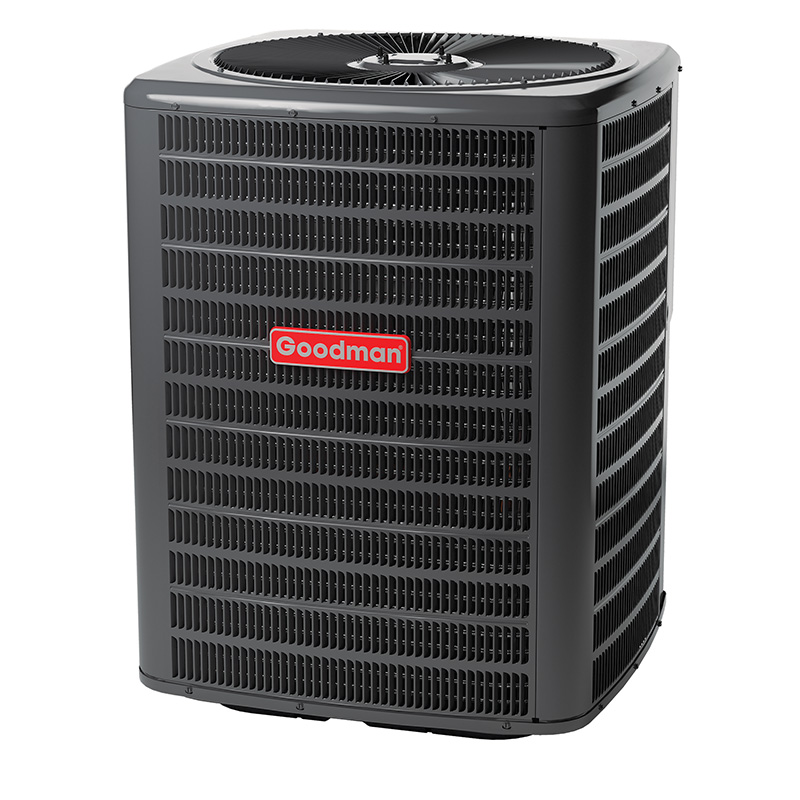
View on AC Direct see your lowest price →Check current price on AC Direct →
Key features
- 1.5-ton capacity suited to smaller homes and single-zone applications
- Up to 16 SEER2 efficiency rating using R-32 refrigerant
- R-32 refrigerant has roughly 68% lower global warming potential than R-410A
- Single-stage compressor operation with standard on/off cycling
- Requires compatible indoor air handler or coil for full system matching
- 10-year parts warranty available with online registration within 60 days of install
About this system
The Goodman GLZS5BA1810 is a 1.5-ton heat pump condenser rated up to 16 SEER2, placing it at the lower end of high-efficiency territory without crossing into premium-tier pricing. At this tonnage, it is sized for smaller homes, conditioned apartments, additions, or single-zone applications where cooling and heating loads are modest. The R-32 refrigerant charge is a meaningful spec detail: R-32 has a lower global warming potential than the older R-410A it replaces, and it also operates at slightly higher efficiency, which is part of how Goodman achieves the 16 SEER2 rating on a value-oriented platform.
This is a condenser-only unit, so buyers will need a compatible air handler or furnace with an appropriate coil on the indoor side. Proper matching and a quality installation are not optional extras with this equipment; technicians consistently point to install quality as the largest single variable in how long a Goodman system actually performs. The 16 SEER2 rating is attainable, but it requires correct refrigerant charge, adequate airflow, and a well-matched indoor coil. For homeowners who want to stretch efficiency without paying Carrier or Trane prices, this unit offers a practical middle ground, provided the installer is experienced with R-32 systems, which require slightly different handling than R-410A.
The GLZS5BA1810 delivers a reasonable efficiency bump over baseline equipment at a price point that undercuts major brands by a noticeable margin, making it a practical choice for budget-conscious buyers in smaller spaces. The trade-off is a compressor and component track record that falls short of premium competitors, and long-term costs depend heavily on how well the system is installed and maintained. It is not the most worry-free option on the market, but it is an honest value pick for the right buyer.
Overall score is the average of the five ratings above.
What we like
- Priced 15 to 25 percent below comparable Carrier, Trane, and Lennox units
- 16 SEER2 rating qualifies as high efficiency for a value-tier brand
- R-32 refrigerant is more environmentally responsible than R-410A and supports efficiency
- 10-year parts warranty (with registration) is competitive at this price point
- Dual-run capacitor failures, the most common repair, are typically a low-cost fix in the $300 to $600 range
Trade-offs
- Compressor lifespan averages 10 to 14 years versus 15 to 20 years for premium brands
- Evaporator coil leaks appear in a meaningful share of long-term owner reports
- A minority of owners report refrigerant leaks within the first year, usually tied to install or initial charge issues
- Single-stage operation means less precise comfort and humidity control compared to variable-speed alternatives at similar prices from other brands
What homeowners and pros say about Goodman
Homeowners who choose Goodman equipment most often point to the upfront price as the deciding factor, and that sentiment shows up clearly in Google dealer reviews, where the brand averages around 3.8 out of 5 across hundreds of location-level ratings. Affordability is the most repeated positive, and many owners report years of uneventful service, particularly when a careful installer set the system up correctly. On ConsumerAffairs, the picture is rougher: the brand sits at roughly 2.5 out of 5, though that channel attracts a disproportionate share of frustrated owners rather than satisfied ones. The recurring theme there is repair costs climbing after roughly year seven, which lines up with the documented compressor lifespan of 10 to 14 years on Goodman equipment versus the 15 to 20 years seen on premium brands.
HVAC technicians who service Goodman equipment regularly note that dual-run capacitor failures are the most common call they get on these systems, and the repair is usually straightforward and relatively inexpensive at $300 to $600. They are more cautious about evaporator coil leaks, which appear in a meaningful share of long-term owner reports and are a more involved fix. A smaller subset of owners reports refrigerant leaks in the first year, which technicians generally attribute to installation or initial charge issues rather than a factory defect. For an R-32 unit like the GLZS5BA1810, pros emphasize that hiring a contractor already familiar with R-32 handling is especially important, since a poor charge on this refrigerant can affect both efficiency and longevity right out of the gate.
Sources: ConsumerAffairs Goodman owner reviews, AHRI Directory of Certified Product Performance, U.S. DOE appliance and equipment efficiency standards, Goodman product specification sheets.
What it costs to run
At 16 SEER2, cooling this 1.5-ton system for a typical 1200-hour cooling season at the U.S. average electricity rate of $0.17/kWh works out to roughly $230 per year in cooling, about $44 less per year than a minimum-efficiency 13.4 SEER2 unit of the same size. Your real cost depends on your climate and local rate.
Method: (18,000 BTU/hr ÷ 16 SEER2) × 1200 hours ÷ 1000 × $0.17/kWh. Rate source: U.S. EIA average; cooling hours: moderate-climate estimate.
How it compares
| Brand | Comparable model | SEER2 | Stage | Price position |
|---|---|---|---|---|
| Goodman | GLZS5BA1810 | 16 | Single-stage | Value pick |
| Carrier | Performance 16 (25HPB6) | 16 | Single-stage | Typically 15 to 25% more than this Goodman |
| Trane | XR16 (4TWR6) | 16 | Single-stage | Typically 15 to 25% more than this Goodman |
| Lennox | Merit ML16XP1 | 16 | Single-stage | Typically 20 to 30% more than this Goodman |
Competitor rows are comparable single-stage units at similar efficiency; price is relative position, not a quote.
Questions about this system
Do I need a special technician for R-32 refrigerant, and is it harder to find someone who works with it?
R-32 requires an EPA 608-certified technician, the same standard certification needed for R-410A, but technicians do need specific training and compatible tools since R-32 is mildly flammable. Most established HVAC contractors in larger markets are already equipped for it, but it is worth confirming before booking an installer, particularly in rural areas.
What indoor unit does the GLZS5BA1810 need to match with?
This is a condenser-only unit and requires a compatible air handler or furnace with an appropriately sized coil rated for R-32 and matched to 1.5-ton capacity. Goodman offers compatible air handlers within its own lineup, and your installer should verify the AHRI-matched combination to ensure the rated efficiency is actually achieved.
How do I get the 10-year parts warranty, and what does it actually cover?
You must register the unit online within 60 days of installation to activate the 10-year parts warranty; without registration it defaults to a shorter coverage period. The warranty covers parts but not labor, so out-of-pocket repair costs after year one can still be significant depending on your service rates.
What is the most likely repair I will face, and roughly what will it cost?
Dual-run capacitors are the most commonly reported failure on Goodman heat pumps, and they typically run $300 to $600 to diagnose and replace including labor. Evaporator coil leaks and, less commonly, refrigerant leaks in the first year are also documented issues, and those repairs are more expensive and more disruptive.
How does 16 SEER2 compare to the minimum standard, and is it worth it over a lower-rated Goodman?
Current federal minimums for heat pumps in most regions sit at 14.3 SEER2 or 15.2 SEER2 depending on climate zone, so 16 SEER2 offers a modest efficiency gain. For a 1.5-ton unit running in a smaller space, the annual energy savings over a minimum-efficiency system will be real but not dramatic, so the payback period depends on local electricity rates and how many hours per year the system runs.
Specifications
| Cooling capacity | 1.5 Ton |
| Efficiency | 16 SEER2 |
| Refrigerant | R-32 |
| Model | GLZS5BA1810 |