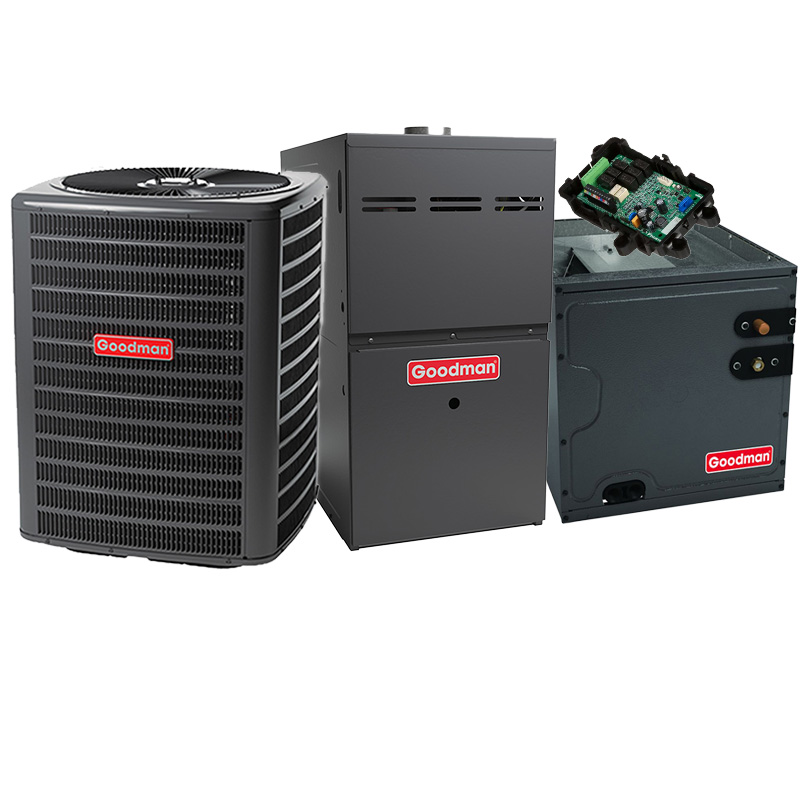
Goodman 2.5 Ton 13.4 SEER2 80000 BTU 96% AFUE Two-Stage Gas Furnace With R32 Air Condenser and Coil System – Upflow
View on AC Direct see your lowest price →Check current price on AC Direct →
Key features
- 96% AFUE two-stage gas furnace reduces fuel waste and temperature swings
- 13.4 SEER2 cooling efficiency meets current federal minimums for most regions
- R-32 refrigerant with lower global warming potential than outgoing R-410A
- 2.5-ton capacity suited to roughly 1,200 to 1,800 sq ft in moderate climates
- Upflow configuration for basement or closet installs with overhead ductwork
- Goodman price point typically 15 to 25 percent below Trane, Lennox, and Carrier equivalents
About this system
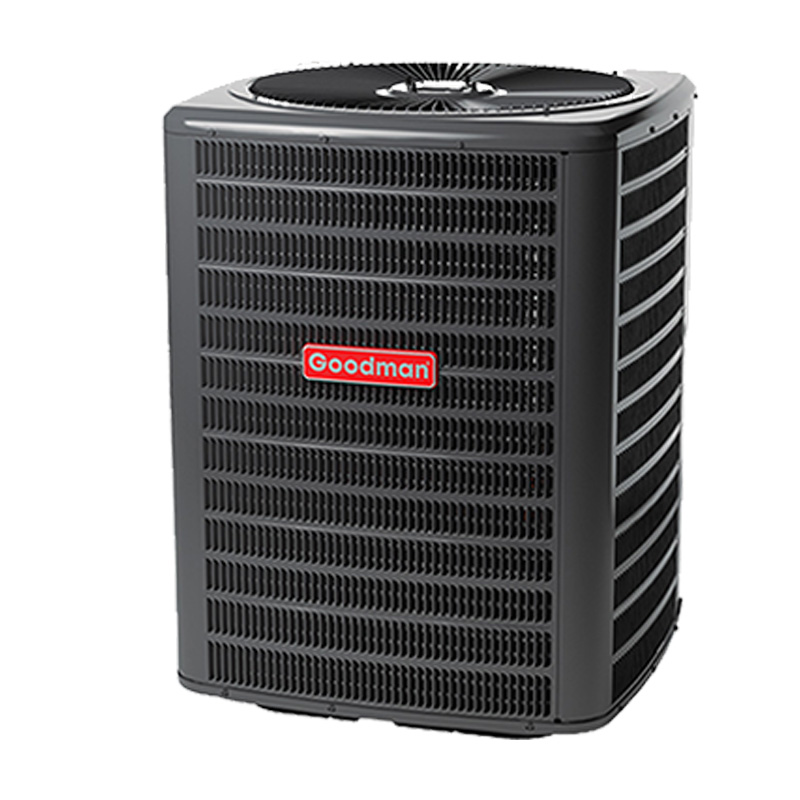
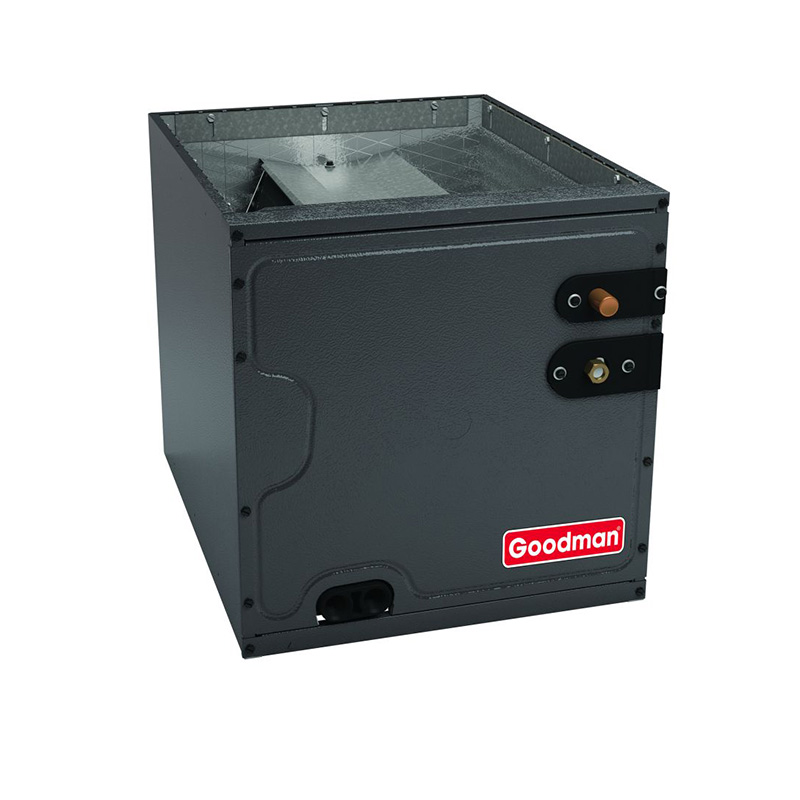
This Goodman system pairs a 2.5-ton R-32 air condenser and matching coil with an 80,000 BTU, 96% AFUE two-stage gas furnace in an upflow configuration, making it a reasonable fit for homes between roughly 1,200 and 1,800 square feet in mixed climates. The 13.4 SEER2 rating clears the current federal minimum for most of the country but sits at the entry tier of efficiency, so cooling costs will be higher than systems in the 16+ SEER2 range. The 96% AFUE furnace is a genuine strong point: nearly all fuel energy converts to heat, which matters in colder regions where the furnace runs hard for five or six months a year.
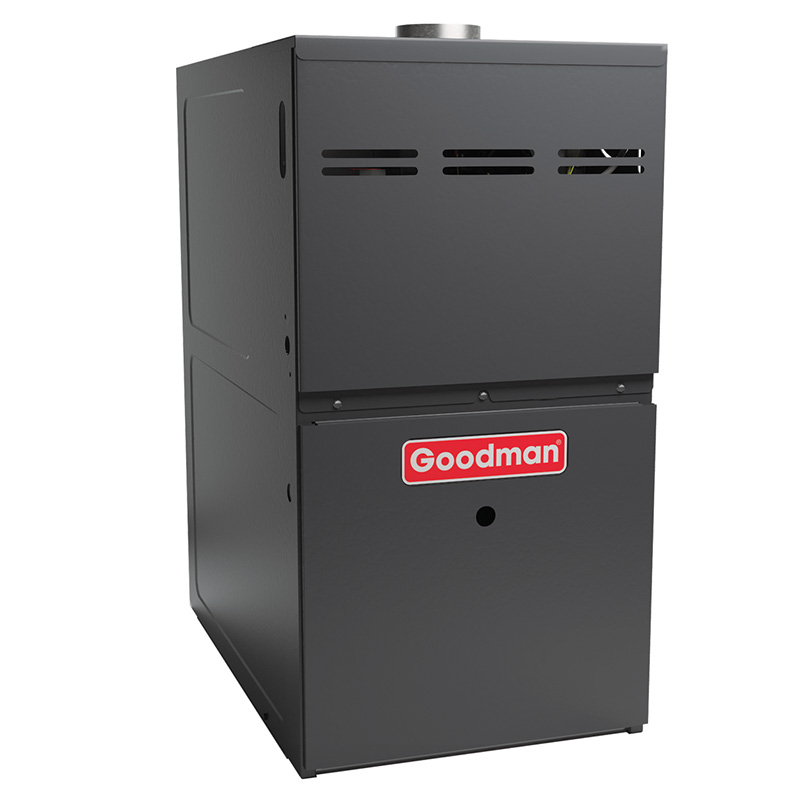
The two-stage furnace is worth noting. Most of the time it runs on low fire, which holds temperatures steadier, reduces short-cycling, and runs more quietly than a single-stage unit. It only escalates to full output on the coldest days. The shift to R-32 refrigerant is forward-looking: R-32 has a lower global warming potential than the R-410A it replaces and is becoming the industry standard, so refrigerant availability and technician familiarity should only improve over time. The upflow cabinet sends conditioned air upward into overhead ductwork, which suits most basement or closet installs but is not compatible with crawl-space or horizontal applications without an alternate coil orientation.
This system delivers a genuinely high-efficiency furnace and a forward-looking refrigerant at a price that undercuts premium brands by a meaningful margin. The trade-off is a compressor and coil track record that lags behind top-tier competitors, and long-term costs depend heavily on who installs and services it. For budget-conscious buyers who vet their installer carefully, it is a reasonable buy; for buyers prioritizing the lowest lifetime cost of ownership, the gap narrows once repair history is factored in.
Overall score is the average of the five ratings above.
What we like
- 96% AFUE furnace is a top-tier efficiency rating that genuinely cuts heating bills
- Two-stage furnace operation improves comfort and reduces short-cycling noise
- R-32 refrigerant is future-ready and increasingly well-supported by technicians
- Purchase price runs 15 to 25 percent below comparable Carrier, Trane, and Lennox systems
- Upflow cabinet is a straightforward fit for the most common residential install scenarios
Trade-offs
- 13.4 SEER2 is entry-level cooling efficiency; higher SEER2 options exist at modest additional cost
- Compressor lifespan averages 10 to 14 years versus 15 to 20 years for premium brands
- Evaporator coil leaks appear in a meaningful share of owner reports, a cost risk after year 7
- Dual-run capacitor failures are the most commonly reported repair, and while usually low-cost, they signal that component quality is not class-leading
What homeowners and pros say about Goodman
Homeowners who share feedback on Goodman systems land in two fairly distinct camps. Those who had a smooth install and prompt service tend to highlight the price savings and solid heating performance, sentiments reflected in Google dealer review scores that hover around 3.8 out of 5 across hundreds of locations. Buyers who run into trouble paint a different picture: ConsumerAffairs scores sit at roughly 2.5 out of 5, driven largely by complaints about repair costs that begin climbing around year 7. The specific failure modes documented in those accounts are consistent: dual-run capacitor replacements are the most frequent call, typically in the 300 to 600 dollar range; evaporator coil leaks appear in a meaningful share of longer-term owner reports; and compressor longevity averages 10 to 14 years, a shorter window than the 15 to 20 years owners of premium brands often report. A smaller but notable group describes refrigerant leaks within the first year, which most technicians attribute to charge or connection problems at installation rather than factory defects.
HVAC professionals who work on Goodman equipment regularly tend to be candid about the brand: the components are not class-leading, but the systems are serviceable and straightforward to work on. The recurring professional advice is that a Goodman installed correctly by someone who cares about the charge level and electrical connections will outperform a premium brand installed carelessly. That puts the burden on the buyer to vet their contractor, not just their equipment choice. For this specific system, the 96% AFUE two-stage furnace draws less criticism than the cooling side of the equation, which is consistent with the documented pattern of capacitor and coil issues concentrating in the air conditioning components rather than the heat exchanger or gas valve.
Sources: ConsumerAffairs Goodman owner reviews, AHRI Directory of Certified Product Performance, U.S. DOE appliance and equipment efficiency standards, Goodman product specification sheets.
What it costs to run
At 13.4 SEER2, cooling this 2.5-ton system for a typical 1200-hour cooling season at the U.S. average electricity rate of $0.17/kWh works out to roughly $457 per year in cooling, about $0 less per year than a minimum-efficiency 13.4 SEER2 unit of the same size. Your real cost depends on your climate and local rate.
Method: (30,000 BTU/hr ÷ 13.4 SEER2) × 1200 hours ÷ 1000 × $0.17/kWh. Rate source: U.S. EIA average; cooling hours: moderate-climate estimate.
How it compares
| Brand | Comparable model | SEER2 | Stage | Price position |
|---|---|---|---|---|
| Goodman | This system (2.5T 13.4 SEER2 / 96% AFUE two-stage furnace, R-32) | 13.4 | two-stage furnace / single-stage condenser | Value pick |
| Carrier | Performance 13 / 96% AFUE 58TP series bundle | 13.4 | single-stage | Typically 15 to 25 percent more than this Goodman system |
| Trane | XR13c / S9X1 96% AFUE series bundle | 13.4 | single-stage | Typically 15 to 25 percent more than this Goodman system |
| Lennox | Merit 13ACX / ML96 96% AFUE series bundle | 13.4 | single-stage | Typically 15 to 25 percent more than this Goodman system |
Competitor rows are comparable single-stage units at similar efficiency; price is relative position, not a quote.
Questions about this system
Is 13.4 SEER2 good enough, or should I step up to a higher-efficiency condenser?
13.4 SEER2 meets current federal minimums and keeps upfront costs down, but if you cool the home for five or more months a year, a 16+ SEER2 unit can noticeably reduce summer electricity bills. In mild climates with short cooling seasons, the payback period on the upgrade often exceeds ten years, so 13.4 SEER2 is a defensible choice there.
What does R-32 refrigerant mean for me as an owner?
R-32 is the refrigerant replacement for R-410A across the industry, so technician familiarity and availability will grow over time rather than shrink. It is not a DIY refrigerant and requires certified handling, but that is true of any modern system. You should not notice a practical difference in day-to-day operation.
How important is installer quality with a Goodman system specifically?
Very important. HVAC technicians consistently cite install quality as the single biggest factor in how long a Goodman unit lasts. A minority of owners report refrigerant leaks in the first year, which is nearly always a charge or connection issue, not a factory defect. Choosing a licensed, experienced contractor and having the refrigerant charge verified with gauges at startup reduces that risk significantly.
What repairs should I budget for after year 7?
The dual-run capacitor is the most commonly reported failure on Goodman equipment and typically costs 300 to 600 dollars to replace. Evaporator coil leaks show up in a meaningful share of owner accounts past the mid-point of ownership and can be substantially more expensive. Setting aside a repair fund after the warranty period is a realistic precaution.
Does Goodman's warranty on this system require professional installation or registration?
Goodman's full parts warranty coverage is contingent on registration within a set window after installation and requires that the work be performed by a licensed HVAC contractor. Failing to register or using an unlicensed installer can reduce coverage to a shorter base warranty, so confirm the registration steps with your installer at the time of commissioning.
Specifications
| Cooling capacity | 2.5 Ton |
| Efficiency | 13.4 SEER2 |
| Furnace output | 80000 BTU |
| Furnace efficiency | 96% AFUE |
| Configuration | Upflow |
| Refrigerant | R-32 |