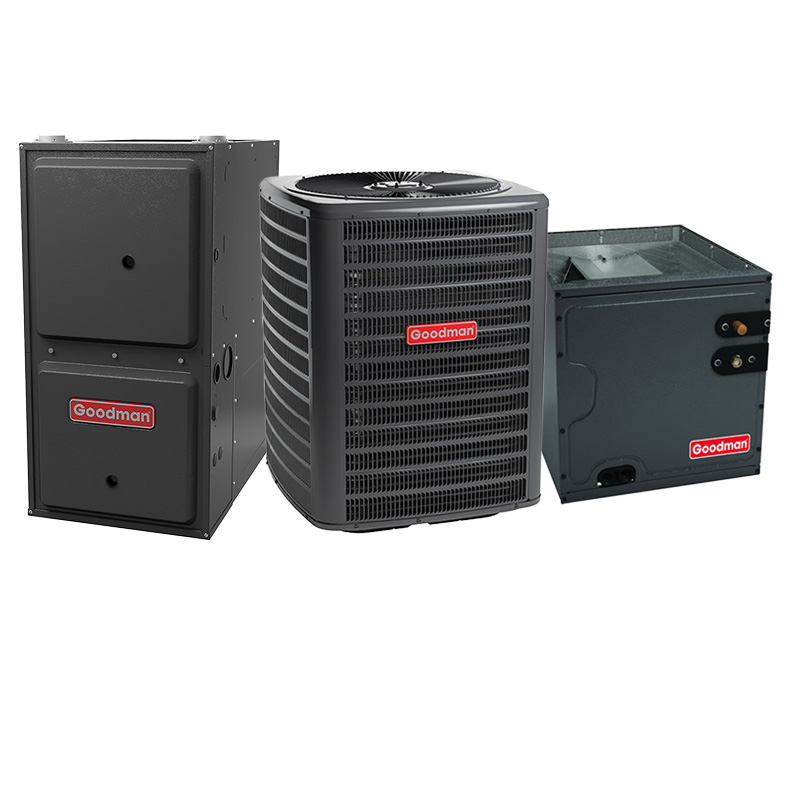
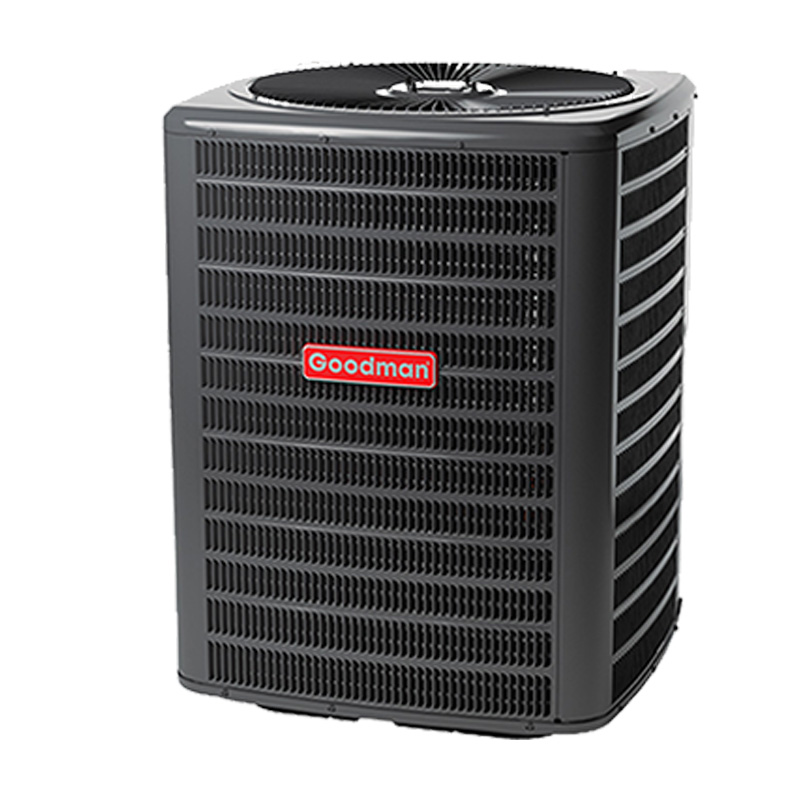
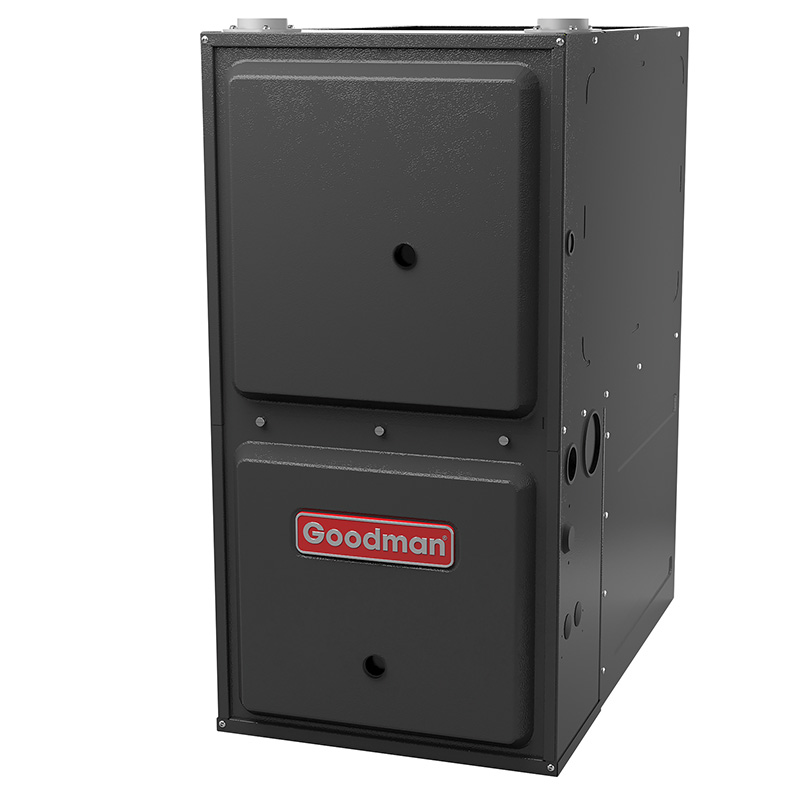
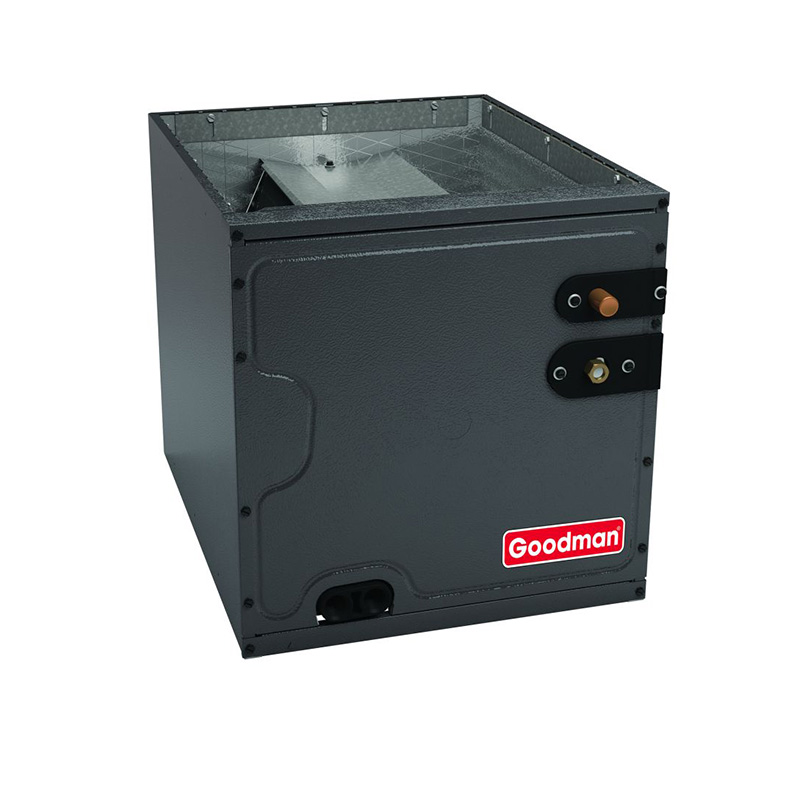
Goodman 2.5 Ton 13.6 SEER2 40000 BTU 96% AFUE Multi-Speed ECM Gas Furnace System – Downflow | R32
View on AC Direct see your lowest price →Check current price on AC Direct →
Key features
- 96% AFUE multi-speed ECM gas furnace reduces heating energy waste to 4 cents on the dollar
- 13.6 SEER2 cooling efficiency meets 2023 DOE regional minimums for compliant installation nationwide
- Downflow air discharge suits slab-foundation or crawlspace homes with floor-level ductwork
- R-32 refrigerant offers lower global warming potential than R-410A and is 2025-regulation ready
- ECM blower motor runs at multiple speeds for improved humidity control and lower blower operating costs
- 2.5-ton / 40,000 BTU capacity targets approximately 1,200 to 1,600 sq ft of conditioned space
About this system
The Goodman 2.5-ton 13.6 SEER2 / 96% AFUE downflow system pairs a mid-efficiency central air conditioner with a high-efficiency gas furnace in a downflow configuration, meaning the furnace discharges conditioned air downward through floor-level ductwork. That orientation is common in homes built on crawlspaces or slab foundations where the air handler sits in a closet or utility room and ducts run beneath the floor. At 40,000 BTU of heating output and 2.5 tons (30,000 BTU) of cooling capacity, this system is sized for roughly 1,200 to 1,600 square feet of well-insulated living space, though a proper Manual J load calculation should always confirm sizing before purchase.
The 96% AFUE furnace rating means 96 cents of every dollar spent on gas converts to usable heat, placing this unit firmly in the high-efficiency tier and making it eligible for federal tax credits under the Inflation Reduction Act (verify current thresholds at time of purchase). The 13.6 SEER2 cooling rating clears the 2023 Department of Energy minimum for the Southern region and meets it for the Northern region, so it is a compliant baseline choice rather than a premium efficiency upgrade. The multi-speed ECM blower motor improves comfort and humidity control compared to single-speed PSC motors and reduces blower electricity consumption meaningfully over the life of the system. R-32 refrigerant has a lower global warming potential than R-410A and is the industry’s transitional choice heading toward 2025 regulatory changes.
This Goodman bundle delivers a high-efficiency furnace and a code-compliant air conditioner at a price point that undercuts Carrier, Trane, and Lennox equivalents by 15 to 25 percent, making it a reasonable starting point for budget-conscious homeowners. The tradeoffs are real: compressor longevity trends shorter than premium brands, documented failure modes include capacitors and evaporator coil leaks, and the system's long-term performance depends heavily on installer quality. Buyers who prioritize upfront cost savings and plan to budget for potential mid-life repairs will find the value proposition solid; those who want a lower-maintenance system and plan to stay in the home 15 or more years should factor in the premium brands' track record.
Overall score is the average of the five ratings above.
What we like
- 96% AFUE furnace qualifies in the high-efficiency tier and can reduce annual heating costs compared to 80% AFUE alternatives
- Priced 15 to 25 percent below comparable Carrier, Trane, and Lennox systems, lowering the barrier to a full system replacement
- ECM multi-speed blower improves comfort consistency and uses less electricity than standard PSC motors
- R-32 refrigerant future-proofs the outdoor unit against near-term regulatory refrigerant changes
- Downflow configuration is purpose-built for slab and crawlspace homes, avoiding awkward duct transitions
Trade-offs
- Compressor lifespan averages 10 to 14 years versus 15 to 20 years typically seen in premium-brand equipment
- Dual-run capacitor failures are the most common reported repair, usually appearing after year 7 and costing $300 to $600 per occurrence
- Evaporator coil leaks appear in a meaningful share of owner reviews, a potentially costly repair outside warranty
- A minority of owners report refrigerant leaks within the first year, most tied to install or initial charge issues rather than factory defects, underscoring the critical importance of installer selection
What homeowners and pros say about Goodman
Homeowners who have bought Goodman systems give the brand mixed marks overall. On ConsumerAffairs, Goodman scores roughly 2.5 out of 5, though that platform skews heavily toward dissatisfied owners who seek out a place to vent frustrations, so it captures the worst outcomes rather than the average experience. The recurring complaint pattern on that channel is repair costs climbing after roughly year 7, which aligns with the documented failure modes: dual-run capacitors are the most commonly reported part failure and typically cost $300 to $600 to replace; evaporator coil leaks appear in a meaningful share of reviews and can be a more significant expense; and compressor lifespan in Goodman equipment tends to average 10 to 14 years, noticeably shorter than the 15 to 20 years owners of Carrier, Trane, and Lennox equipment often report. A minority of owners also report refrigerant leaks within the first year, and HVAC technicians generally attribute those to improper installation and refrigerant charge rather than factory defects.
On Google dealer reviews, where a broader cross-section of customers leaves feedback, Goodman-based installs earn around 3.8 out of 5, with affordability cited most often as the reason for satisfaction. HVAC professionals who work on both Goodman and premium-brand equipment generally acknowledge that Goodman components are functionally adequate and that the brand’s value position is real, but they consistently point to install quality as the variable that determines whether a Goodman system lasts a decade or pushes toward fifteen years. For this specific downflow, R-32, ECM system, that installer-dependency point is especially relevant: R-32 requires technicians to be properly certified and equipped to handle it safely, and a downflow configuration adds a layer of setup complexity compared to a standard upflow closet install. Choosing a contractor with direct experience on downflow Goodman furnaces and documented R-32 handling capability is not optional here, it is the most important purchase decision after picking the equipment itself.
Sources: ConsumerAffairs Goodman owner reviews, AHRI Directory of Certified Product Performance, U.S. DOE appliance and equipment efficiency standards, Goodman product specification sheets.
What it costs to run
At 13.6 SEER2, cooling this 2.5-ton system for a typical 1200-hour cooling season at the U.S. average electricity rate of $0.17/kWh works out to roughly $450 per year in cooling, about $7 less per year than a minimum-efficiency 13.4 SEER2 unit of the same size. Your real cost depends on your climate and local rate.
Method: (30,000 BTU/hr ÷ 13.6 SEER2) × 1200 hours ÷ 1000 × $0.17/kWh. Rate source: U.S. EIA average; cooling hours: moderate-climate estimate.
How it compares
| Brand | Comparable model | SEER2 | Stage | Price position |
|---|---|---|---|---|
| Goodman | GMVC96 / GSXH5 series (this system) | 13.6 | Multi-speed | Value pick |
| Carrier | Performance 96 / Comfort 13 series (58CVA / 24ACC) | 13.4-14.0 | Single-stage | Typically 15 to 25 percent more than this Goodman system |
| Trane | S9X2 / XR13B series | 13.4-14.0 | Single-stage | Typically 15 to 25 percent more than this Goodman system |
| Lennox | ML196 / 13ACX series | 13.4-14.0 | Single-stage | Typically 15 to 25 percent more than this Goodman system |
Competitor rows are comparable single-stage units at similar efficiency; price is relative position, not a quote.
Questions about this system
Is downflow the right configuration for my house, and can this furnace be converted to upflow or horizontal?
Downflow furnaces discharge air through the bottom of the cabinet, which is correct for homes where ductwork runs under the floor on a slab or through a crawlspace. Most Goodman furnaces in this line are not field-convertible between downflow and upflow orientations, so confirm your duct configuration with your installer before ordering. Installing a downflow unit in an upflow application is not permitted and will void the warranty.
What does the R-32 refrigerant mean for me compared to older R-410A systems?
R-32 has roughly one-third the global warming potential of R-410A and is the refrigerant Goodman and most manufacturers are transitioning to ahead of 2025 EPA regulations phasing down high-GWP refrigerants. In practical terms it means this system will remain serviceable and compliant longer than an R-410A unit purchased today, and refrigerant recharges should remain available without the supply constraints that sometimes affect older refrigerants being phased out.
What are the most likely repair costs I should budget for over the life of this system?
Dual-run capacitor failure is the most frequently reported issue in Goodman equipment and typically costs $300 to $600 to repair, often appearing after year 7. Evaporator coil leaks and eventual compressor replacement are also documented concerns; compressor replacement on a system this size can run $1,200 to $2,500 depending on labor rates and refrigerant costs. Setting aside a small annual maintenance fund from year 5 onward is a reasonable precaution.
How important is installer quality, and what should I ask a contractor before hiring them?
Installer quality is widely cited by HVAC technicians as the single biggest factor in how long a Goodman system performs reliably, and the documented first-year refrigerant leak reports are largely attributed to improper charging rather than factory defects. Ask contractors whether they perform a Manual J load calculation to confirm sizing, how they verify refrigerant charge (by weight and superheat/subcooling measurements, not guesswork), and whether they pull permits. A lower-cost install with shortcuts can turn a value-priced system into an expensive one quickly.
Does this system qualify for the federal energy-efficiency tax credit?
The 96% AFUE furnace generally meets the threshold for the federal Energy Efficient Home Improvement Credit (25C) as updated under the Inflation Reduction Act, which can cover up to 30 percent of qualifying equipment costs up to the annual cap. The 13.6 SEER2 air conditioner may or may not meet the SEER2 threshold for the cooling credit depending on current IRS guidance, so confirm eligibility with your tax preparer and retain the Manufacturer's Certification Statement provided with the equipment.
Specifications
| Cooling capacity | 2.5 Ton |
| Efficiency | 13.6 SEER2 |
| Furnace output | 40000 BTU |
| Furnace efficiency | 96% AFUE |
| Configuration | Downflow |
| Refrigerant | R-32 |