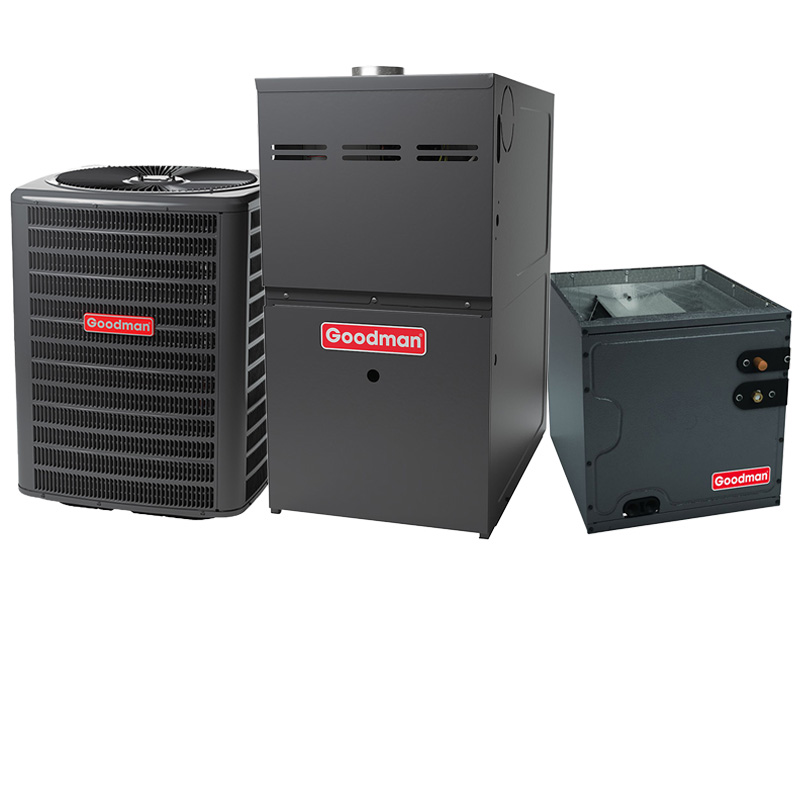
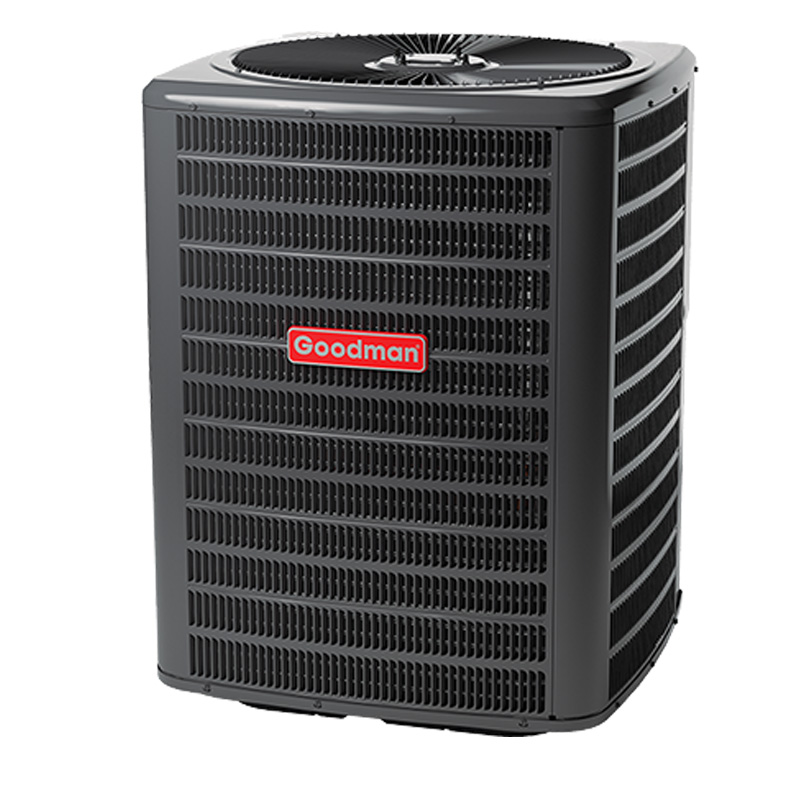
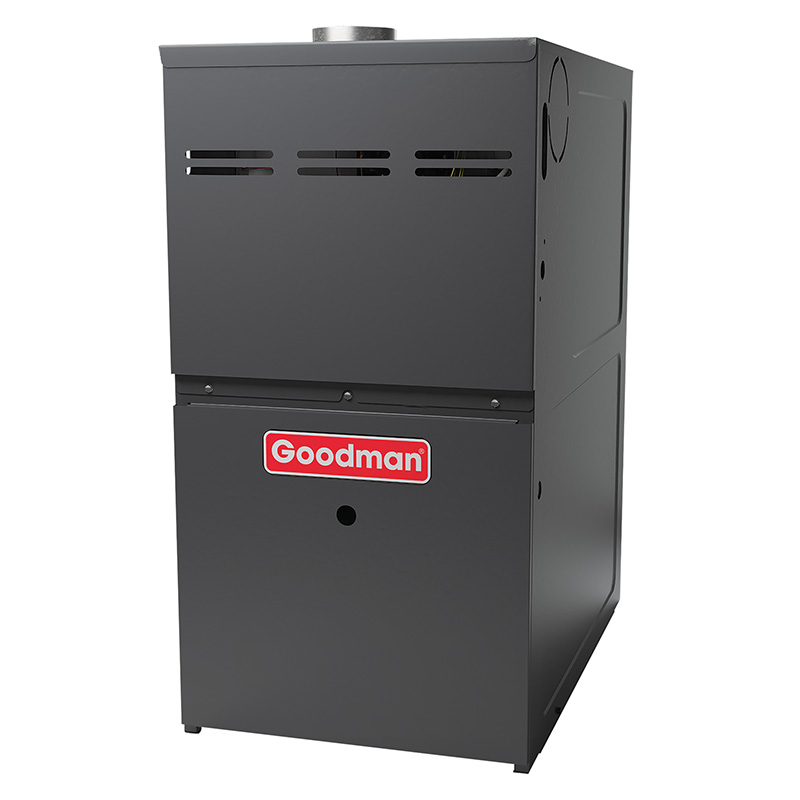
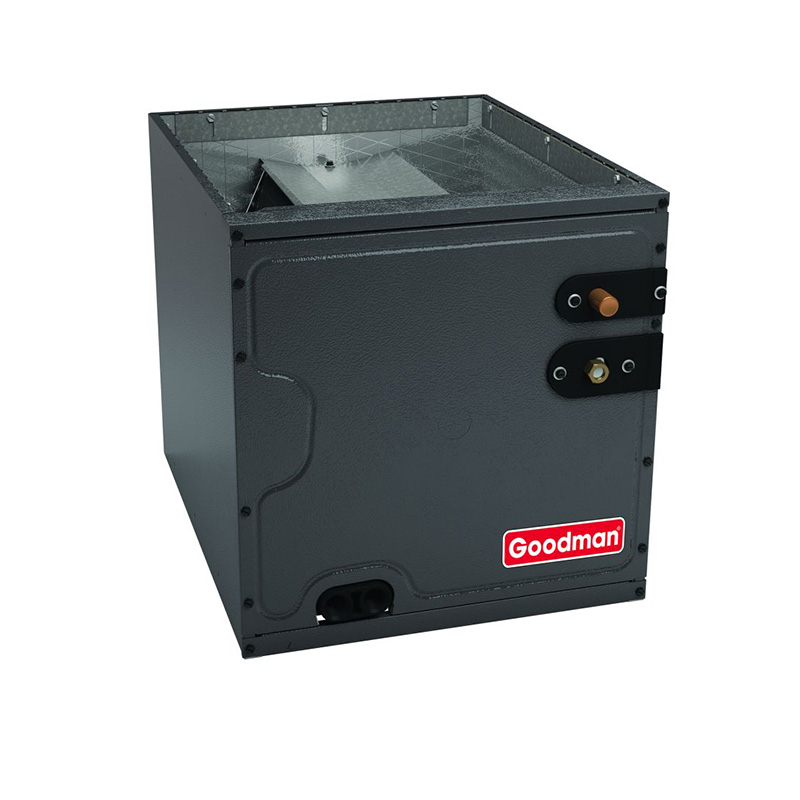
Goodman 2.5 Ton 13.6 SEER2 60000 BTU 80% AFUE Multi-Speed ECM Gas Furnace System – Upflow | R32
View on AC Direct see your lowest price →Check current price on AC Direct →
Key features
- 2.5-ton cooling capacity with 13.6 SEER2 efficiency rating
- 60,000 BTU 80% AFUE gas furnace for upflow installations
- Multi-speed ECM blower motor for quieter, more efficient airflow
- R-32 refrigerant with lower global-warming potential than R-410A
- Factory-matched coil and outdoor unit for simplified system matching
- Compatible with most standard single-stage thermostat controls
About this system
The Goodman 2.5-ton 13.6 SEER2 upflow system pairs a multi-speed ECM air handler with a 60,000 BTU 80% AFUE gas furnace and uses R-32 refrigerant, which carries a lower global-warming potential than the R-410A it replaces. At 2.5 tons, this system is sized for homes roughly in the 1,200 to 1,600 square-foot range, though a proper Manual J load calculation by your installer is the only reliable way to confirm fit. The ECM blower motor runs at multiple speeds rather than a single fixed speed, which means quieter low-demand operation and modestly better dehumidification compared to a standard PSC motor.
The 13.6 SEER2 efficiency rating sits at the federal minimum for most U.S. climate regions, so this is a code-compliant baseline system rather than a high-efficiency one. The 80% AFUE furnace similarly meets minimum efficiency standards; roughly 20 cents of every heating dollar goes up the flue. Together, the specs point to a system whose appeal is upfront affordability rather than long-term energy savings. Homeowners in mild climates or those planning to sell within a few years often find this trade-off acceptable, while those in cold climates or planning a long stay may want to weigh a 96% AFUE furnace upgrade. The upflow configuration means supply air exits the top of the air handler, a common setup for basement or closet installs where ductwork runs overhead.
This Goodman system delivers a code-compliant, honestly priced HVAC solution for buyers who want working comfort on a budget and understand they are not buying a premium product. The multi-speed ECM motor is a genuine upgrade over single-speed competitors at this price tier, but the 80% AFUE furnace and baseline SEER2 rating mean efficiency-focused buyers should look at higher-tier configurations. Long-term ownership costs depend heavily on installation quality and willingness to budget for component repairs after year seven.
Overall score is the average of the five ratings above.
What we like
- Priced 15 to 25 percent below comparable Trane, Lennox, and Carrier systems
- Multi-speed ECM motor improves comfort and humidity control versus single-speed alternatives
- R-32 refrigerant is more environmentally favorable and easier to source going forward
- Factory-matched system simplifies coil selection and may support warranty compliance
- Upflow configuration is widely compatible with common basement and closet duct layouts
Trade-offs
- 80% AFUE means meaningful heat loss up the flue; operating costs are higher than 95%+ alternatives over time
- 13.6 SEER2 is minimum code efficiency, not a selling point for homeowners focused on utility bills
- Goodman compressors average 10 to 14 years versus 15 to 20 for premium brands, so replacement timing can arrive sooner
- Dual-run capacitor failures and evaporator coil leaks are documented recurring issues that add to ownership costs after the first several years
What homeowners and pros say about Goodman
Goodman carries a polarized reputation among homeowners. On ConsumerAffairs, the brand scores around 2.5 out of 5, though that channel skews heavily toward people who had problems and felt motivated to write. The recurring theme there is repair costs climbing after roughly year seven, which aligns with the documented failure modes: dual-run capacitors are the most commonly reported issue, usually a straightforward low-cost fix, but evaporator coil leaks and compressor replacements are more serious expenses. Compressors on Goodman systems tend to average 10 to 14 years of service, compared to 15 to 20 years on premium brands, which is a real trade-off worth factoring into a long-term cost comparison. A minority of owners also report refrigerant leaks within the first year, which technicians generally attribute to installation or initial charge issues rather than factory defects.
On Google dealer reviews, Goodman averages around 3.8 out of 5 across locations, and affordability is the most common praise. HVAC technicians generally describe Goodman as a serviceable brand whose longevity is closely tied to how well it was installed and how consistently it is maintained. Technicians who install Goodman regularly say they see the equipment perform reliably when the refrigerant charge, airflow, and electrical connections are set correctly from day one. For this specific upflow system with an ECM motor and R-32 refrigerant, the equipment itself is a reasonable baseline package; the installer you choose is arguably as important as the brand name on the cabinet.
Sources: ConsumerAffairs Goodman owner reviews, AHRI Directory of Certified Product Performance, U.S. DOE appliance and equipment efficiency standards, Goodman product specification sheets.
What it costs to run
At 13.6 SEER2, cooling this 2.5-ton system for a typical 1200-hour cooling season at the U.S. average electricity rate of $0.17/kWh works out to roughly $450 per year in cooling, about $7 less per year than a minimum-efficiency 13.4 SEER2 unit of the same size. Your real cost depends on your climate and local rate.
Method: (30,000 BTU/hr ÷ 13.6 SEER2) × 1200 hours ÷ 1000 × $0.17/kWh. Rate source: U.S. EIA average; cooling hours: moderate-climate estimate.
How it compares
| Brand | Comparable model | SEER2 | Stage | Price position |
|---|---|---|---|---|
| Goodman | GSXH5/CAPT/GMSS96 series (this system) | 13.6 | Single-stage / multi-speed ECM | Value pick |
| Carrier | Comfort 14 (24ACC4) with FE4A air handler | 13.8 to 14.3 | Single-stage | Typically 15 to 25 percent more than this Goodman system |
| Trane | XR14 (4TTR4) with TEM4 air handler | 13.8 to 14.5 | Single-stage | Typically 15 to 25 percent more than this Goodman system |
| Lennox | Merit 14ACX with CBX32MV air handler | 13.8 to 14.4 | Single-stage | Typically 15 to 25 percent more than this Goodman system |
Competitor rows are comparable single-stage units at similar efficiency; price is relative position, not a quote.
Questions about this system
Will 2.5 tons be the right size for my home?
Ton sizing depends on your home's square footage, insulation, window area, local climate, and ceiling height, not a simple square-foot rule. The only reliable answer comes from a Manual J load calculation performed by your installer before equipment is ordered. Oversizing causes short cycling and poor humidity control; undersizing means the system runs constantly on the hottest days.
What does 80% AFUE actually cost me compared to a 96% furnace?
For every dollar of gas burned, an 80% AFUE furnace delivers 80 cents of heat and vents 20 cents outside. A 96% AFUE furnace delivers 96 cents. On a $1,200 annual gas bill, that gap is roughly $192 per year. Over ten years that adds up, though the upfront cost difference between the two tiers may take several years to recover depending on your gas rates.
Is R-32 refrigerant going to be hard to find or more expensive to service?
R-32 is already widely used in mini-split systems and its supply chain is established. It is not expected to face the supply constraints that drove R-22 costs up. Most licensed HVAC technicians who handle residential equipment are already certified to work with it.
What are the most common repairs I should budget for down the road?
Goodman owners most frequently report dual-run capacitor failures, which are typically a low-cost repair in the $300 to $600 range and a quick fix for any technician. Evaporator coil leaks show up in a notable share of owner reviews and are more expensive to address. After roughly year seven, repair frequency tends to increase based on owner feedback across review channels.
Does the multi-speed ECM motor make a noticeable difference compared to a standard single-speed blower?
Yes, in two practical ways. First, the ECM motor ramps down during low-demand periods, which reduces noise and can improve dehumidification because slower airflow gives the coil more time to pull moisture from the air. Second, ECM motors use significantly less electricity than comparable PSC motors at lower speeds, which adds a modest ongoing efficiency benefit beyond the rated SEER2 number.
Specifications
| Cooling capacity | 2.5 Ton |
| Efficiency | 13.6 SEER2 |
| Furnace output | 60000 BTU |
| Furnace efficiency | 80% AFUE |
| Configuration | Upflow |
| Refrigerant | R-32 |