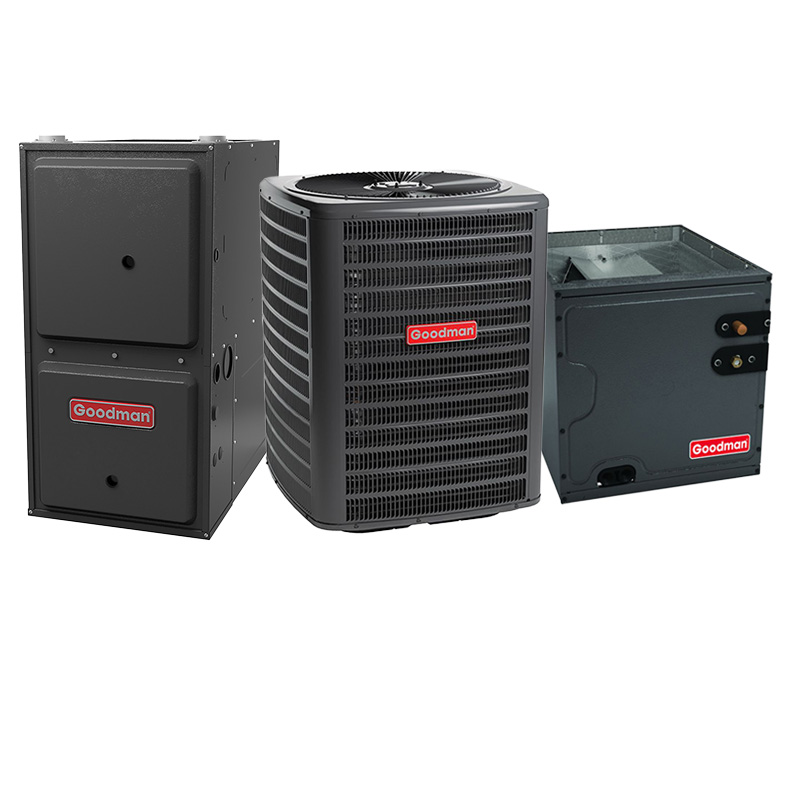
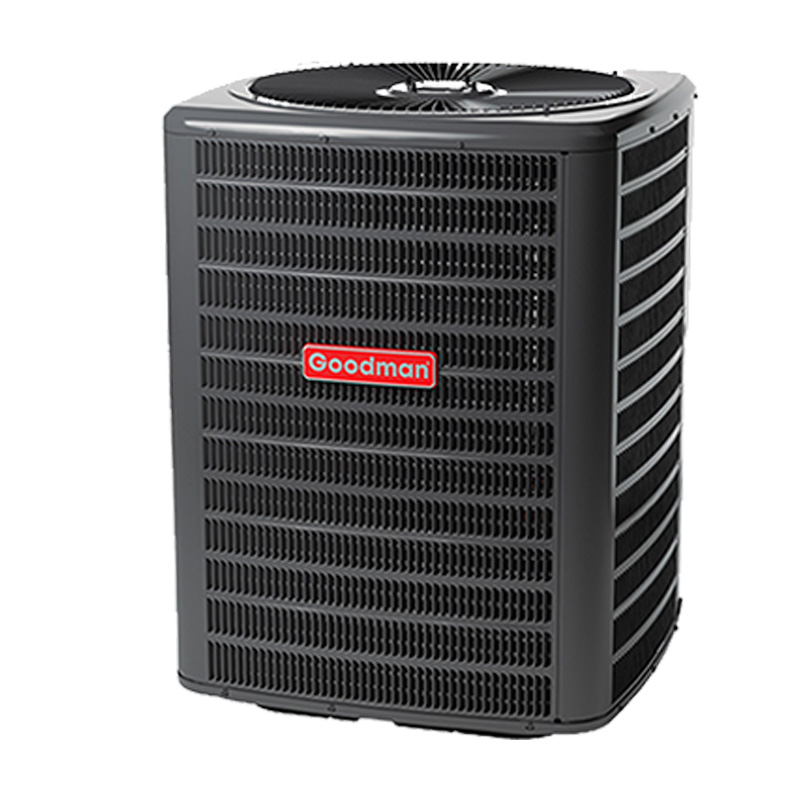
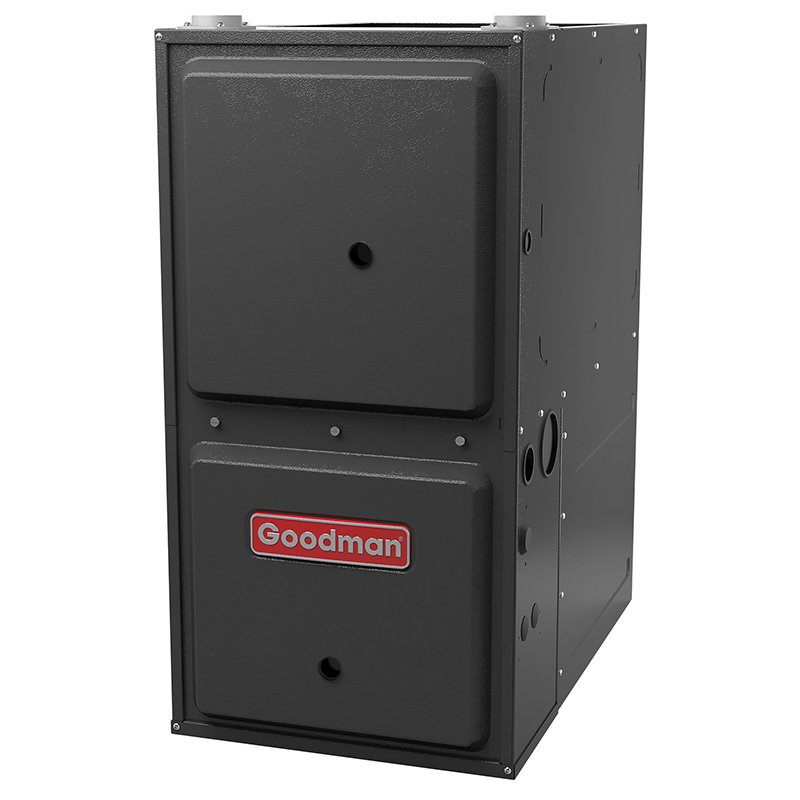
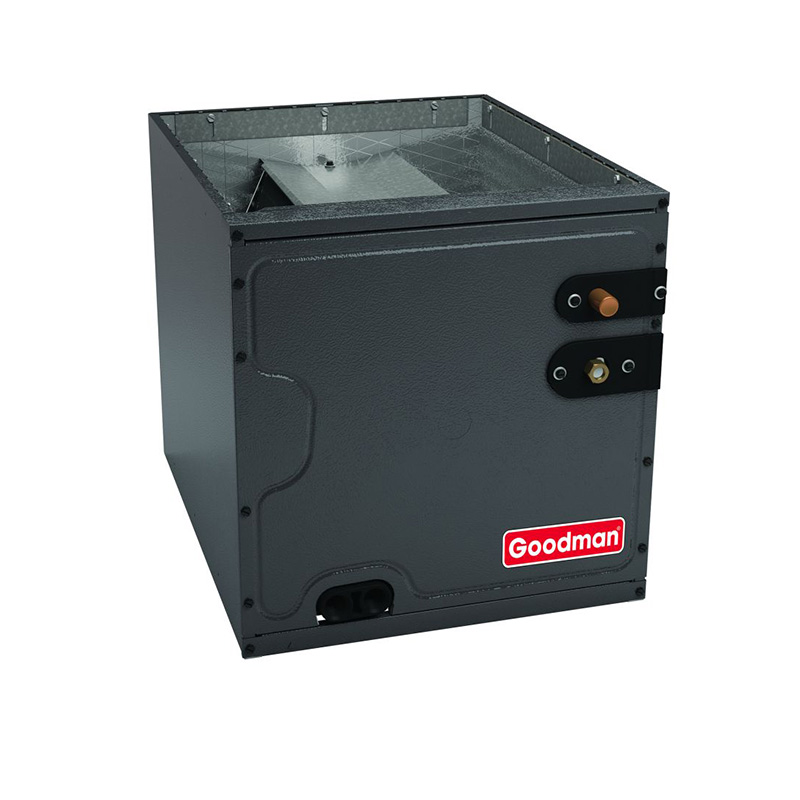
Goodman 2.5 Ton 13.6 SEER2 60000 BTU 96% AFUE Two Stage Multi-Speed ECM Gas Furnace System – Downflow | R32
View on AC Direct see your lowest price →Check current price on AC Direct →
Key features
- 13.6 SEER2 cooling efficiency meets current federal minimum standards for most U.S. climate zones
- 96% AFUE two-stage gas furnace reduces fuel waste and temperature swings
- Multi-speed ECM blower motor lowers electricity consumption versus PSC motors
- Downflow cabinet orientation for slab or crawlspace duct configurations
- R-32 refrigerant with lower global-warming potential than R-410A
- 2.5-ton / 60,000 BTU capacity suited to roughly 1,000 to 1,800 sq ft of conditioned space
About this system
This Goodman 2.5-ton downflow system pairs a 13.6 SEER2 R-32 air conditioner with a 60,000 BTU, 96% AFUE two-stage gas furnace. The two-stage furnace runs on low fire the majority of the time, which reduces temperature swings, cuts short-cycling, and keeps fuel consumption low. The multi-speed ECM blower motor further trims electricity use by matching airflow to the actual load rather than running flat-out every cycle. R-32 refrigerant carries a lower global-warming potential than the R-410A it replaces, and systems charged with it are increasingly the industry standard heading into the mid-2020s.
The downflow configuration means supply air exits through the bottom of the air handler, making this setup best suited for homes with a crawlspace or slab-on-grade construction where ductwork runs below the unit. Buyers in roughly 1,000 to 1,800 square feet of well-insulated space in a mixed or heating-dominant climate will find the sizing appropriate, though a proper Manual J load calculation by your installer should always confirm this. At 96% AFUE, nearly all fuel input converts to usable heat, which meaningfully reduces gas bills compared with an 80% furnace over a full heating season.
This Goodman bundle delivers genuine high-efficiency heating and respectable cooling performance at a price point well below comparable Trane, Lennox, or Carrier systems. The two-stage furnace and ECM motor are meaningful upgrades over entry-level single-stage equipment, and the 96% AFUE is hard to beat at this price tier. That said, Goodman's real-world longevity depends heavily on installation quality and ongoing maintenance, and buyers should budget for possible capacitor or coil service after the first several years.
Overall score is the average of the five ratings above.
What we like
- Priced 15 to 25 percent below comparable premium-brand systems, lowering the upfront barrier
- Two-stage furnace operation improves comfort and fuel efficiency over single-stage alternatives
- 96% AFUE is near the top of the efficiency range for gas furnaces at any price point
- ECM blower motor reduces electricity draw and supports better humidity control
- R-32 refrigerant positions the system for regulatory compliance over a longer service life
Trade-offs
- Dual-run capacitors are the most frequently reported failure point, with repairs typically running $300 to $600
- Evaporator coil leaks appear in a meaningful share of owner reports, potentially adding cost beyond the warranty window
- Compressor lifespan averages 10 to 14 years, notably shorter than the 15 to 20 years documented for premium brands
- A minority of owners report refrigerant leaks in year one, most often traced to install or factory charge issues rather than component failure
What homeowners and pros say about Goodman
Owners and installers who leave feedback on Google dealer pages give Goodman equipment an average of around 3.8 out of 5 stars, and the most consistent praise centers on price: buyers report getting heating and cooling capacity they could not have afforded from a premium brand. Technicians who install Goodman frequently note that the equipment performs well when the refrigerant charge is set precisely, airflow is balanced correctly, and annual maintenance is not skipped. That last point matters because the brand’s ConsumerAffairs rating sits at roughly 2.5 out of 5, a score pulled down by owners who ran into significant repair costs after year seven and felt the equipment underdelivered relative to expectations.
The specific failure modes that show up repeatedly in owner accounts are worth knowing before you buy this system. Dual-run capacitor failures are the most common complaint and are usually a straightforward, low-cost repair. Evaporator coil leaks appear in a meaningful share of longer-term owner reports and can mean more serious expense. Compressor longevity is documented at roughly 10 to 14 years on average, which is a real gap compared to the 15 to 20 years that premium-brand compressors tend to achieve. A smaller number of buyers have reported refrigerant leaks in the first year, most of which investigators trace back to the installation rather than a factory defect. For this specific two-stage, 96% AFUE downflow system, the two-stage operation and ECM motor represent a step up from Goodman’s most basic bundles, but those documented brand-level reliability patterns still apply and should factor into your decision alongside the attractive price point.
Sources: ConsumerAffairs Goodman owner reviews, AHRI Directory of Certified Product Performance, U.S. DOE appliance and equipment efficiency standards, Goodman product specification sheets.
What it costs to run
At 13.6 SEER2, cooling this 2.5-ton system for a typical 1200-hour cooling season at the U.S. average electricity rate of $0.17/kWh works out to roughly $450 per year in cooling, about $7 less per year than a minimum-efficiency 13.4 SEER2 unit of the same size. Your real cost depends on your climate and local rate.
Method: (30,000 BTU/hr ÷ 13.6 SEER2) × 1200 hours ÷ 1000 × $0.17/kWh. Rate source: U.S. EIA average; cooling hours: moderate-climate estimate.
How it compares
| Brand | Comparable model | SEER2 | Stage | Price position |
|---|---|---|---|---|
| Goodman | 2.5T 13.6 SEER2 / 60K BTU 96% AFUE Two-Stage Downflow R-32 | 13.6 | Two-stage | Value pick |
| Carrier | Comfort 14 series (24ACC4) with 96% AFUE Performance gas furnace | 14 | Single-stage | Typically 15 to 25 percent more than this Goodman |
| Trane | XR14c with S9X1 96% AFUE gas furnace | 14 | Single-stage | Typically 15 to 25 percent more than this Goodman |
| Lennox | Merit 14ACX with ML196E 96% AFUE gas furnace | 14 | Single-stage | Typically 15 to 25 percent more than this Goodman |
Competitor rows are comparable single-stage units at similar efficiency; price is relative position, not a quote.
Questions about this system
Why does this system have a downflow configuration, and how do I know if that is correct for my home?
Downflow means the furnace discharges conditioned air out the bottom cabinet and pulls return air in at the top. This orientation is designed for homes where supply ducts run beneath the unit, typically in a crawlspace or through a slab. If your ductwork is in an attic above the unit, you would need an upflow or horizontal configuration instead, so confirm with your installer before purchasing.
What does two-stage heating actually mean for comfort and my gas bill?
A two-stage furnace runs on a lower firing rate most of the time and only steps up to full capacity on the coldest days. This keeps indoor temperatures more even, reduces the on-off cycling that creates hot and cold spots, and burns less gas during mild weather. Over a full heating season in a climate with moderate winters, the difference versus a single-stage 96% AFUE furnace is modest but real.
Is R-32 refrigerant safe, and will I have trouble finding a technician who can service it?
R-32 is flammable in high concentrations, which is why it is classified A2L under ASHRAE standards, but it is widely used in residential equipment across Europe and Asia and is becoming standard in the U.S. market. Any EPA Section 608 certified technician can handle it, and most equipment suppliers already stock it, so finding service should not be a problem in most metro areas.
How worried should I be about the capacitor and coil failure issues Goodman is known for?
Dual-run capacitor failure is the most commonly reported Goodman repair, but it is also one of the least expensive HVAC fixes, typically $300 to $600 and resolvable in a single service call. Evaporator coil leaks are more serious and can be costlier; keeping the unit on a preventive maintenance plan and ensuring the install is done correctly reduces, but does not eliminate, that risk.
What warranty comes with this system, and what do I need to do to keep it valid?
Goodman generally offers a 10-year parts limited warranty when the equipment is registered within a specified window after installation, often 60 days. Registration typically must be completed by the homeowner online, and the unit must be installed by a licensed HVAC contractor. Failure to register usually drops coverage to a shorter base warranty, so confirming registration requirements before or immediately after install is important.
Specifications
| Cooling capacity | 2.5 Ton |
| Efficiency | 13.6 SEER2 |
| Furnace output | 60000 BTU |
| Furnace efficiency | 96% AFUE |
| Configuration | Downflow |
| Refrigerant | R-32 |