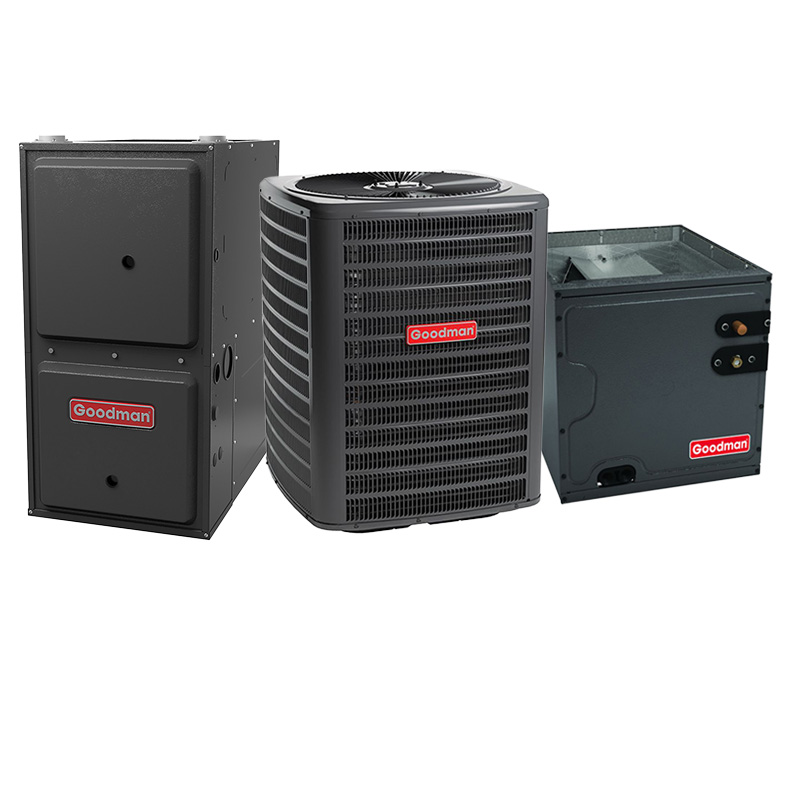
Goodman 2.5 Ton 13.6 SEER2 80000 BTU 96% AFUE Two Stage Multi-Speed ECM Gas Furnace System – Downflow | R32
View on AC Direct see your lowest price →Check current price on AC Direct →
Key features
- 96% AFUE two-stage gas furnace for steady, efficient heat output
- 13.6 SEER2 cooling efficiency meets 2023 federal minimums
- Multi-speed ECM blower motor reduces energy use and noise at part-load
- Downflow configuration suited for closet or platform installations above floor-level ductwork
- R-32 refrigerant charge with lower global warming potential than R-410A
- 80,000 BTU heating capacity sized for mid-range square footage in moderate to cold climates
About this system
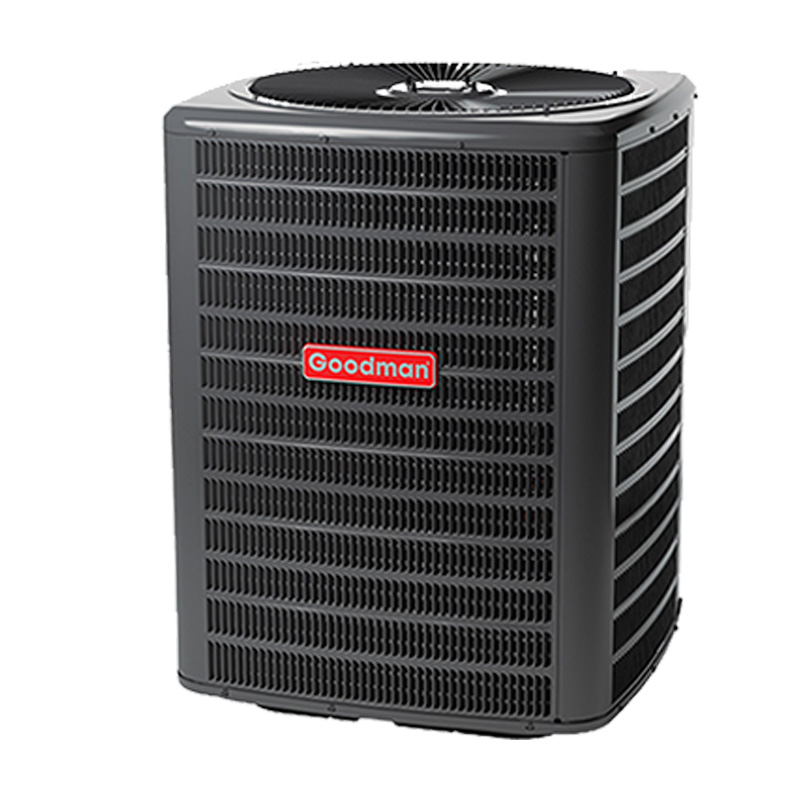
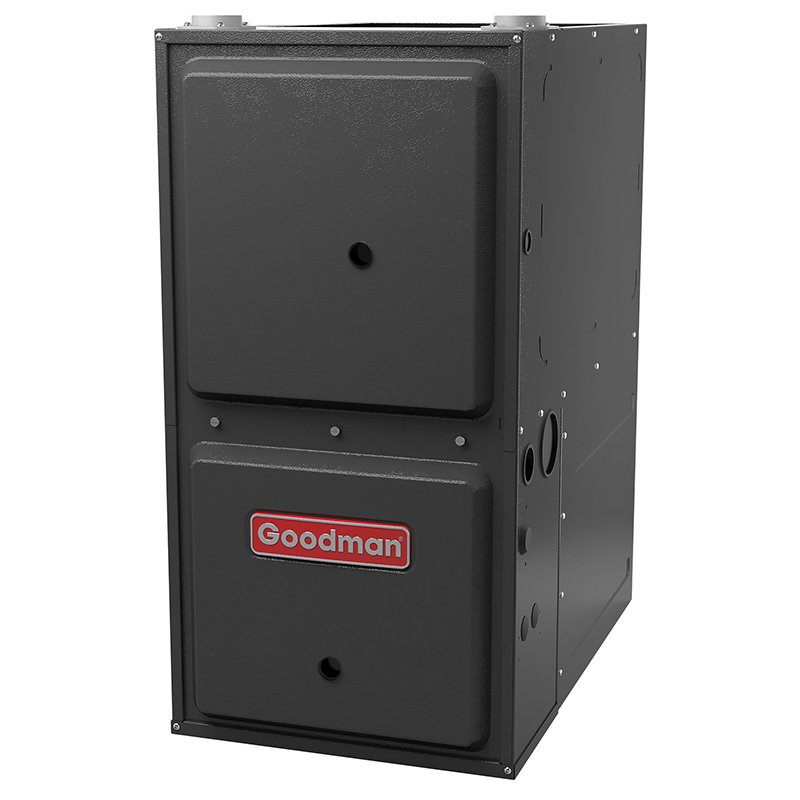
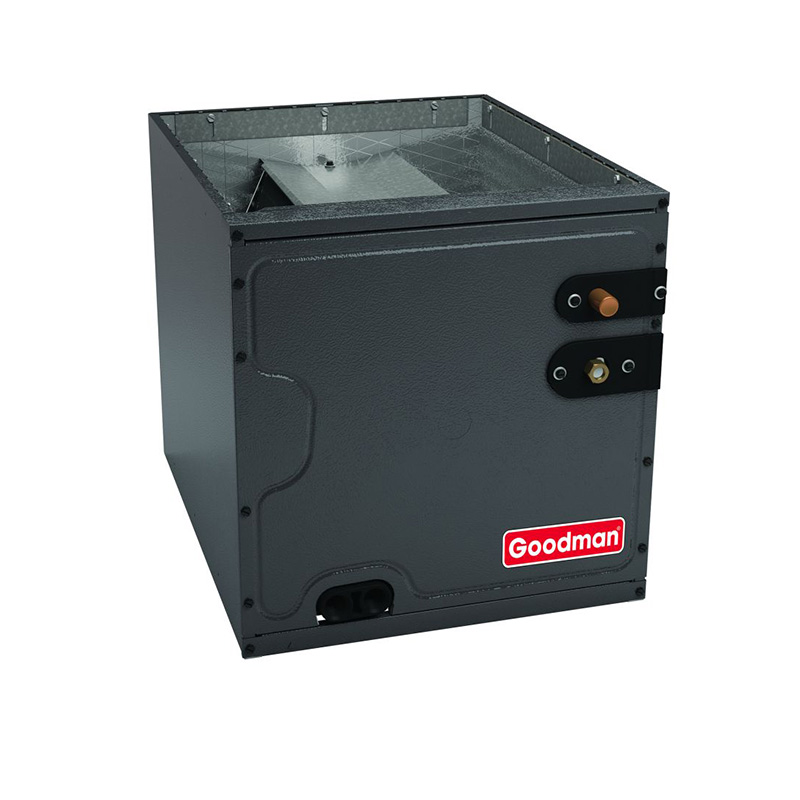
This Goodman package pairs a 2.5-ton, 13.6 SEER2 cooling system with an 80,000 BTU, 96% AFUE two-stage gas furnace in a downflow configuration, meaning the air supply exits through the bottom of the unit. That makes it a practical fit for homes where the air handler sits in a closet or utility room above a crawlspace or slab, with ductwork running beneath the floor. The R-32 refrigerant charge is a forward-looking choice: R-32 has a lower global warming potential than the R-410A it replaces, and it is increasingly the refrigerant technicians will be stocking and servicing in coming years.
The two-stage furnace and multi-speed ECM blower motor are the headline upgrades over a basic single-stage system. Two-stage operation means the furnace runs at a lower capacity most of the time, cycling on full output only during the coldest days. Combined with the variable-speed ECM blower, you get steadier temperatures, quieter operation at low speeds, and better humidity management in shoulder seasons. A 96% AFUE rating means only four cents of every fuel dollar goes unrecovered, which is competitive for a non-condensing budget-tier system. The 13.6 SEER2 cooling efficiency clears the 2023 federal minimums for most U.S. climate regions, though it sits near the lower end of mid-efficiency territory and will not produce the utility savings of a 17- or 18-SEER2 system.
This system offers a meaningful comfort upgrade over entry-level single-stage equipment at a price point that undercuts Carrier, Trane, and Lennox by 15 to 25 percent. The two-stage furnace and ECM blower genuinely improve day-to-day comfort, but Goodman's track record of capacitor failures, coil leak complaints, and shorter average compressor lifespan means long-term ownership costs can erode early savings. Installation quality is the single biggest variable in how this system performs and how long it lasts.
Overall score is the average of the five ratings above.
What we like
- Price typically 15 to 25 percent below comparable Carrier, Trane, and Lennox systems
- Two-stage furnace and ECM blower deliver more consistent temperatures than single-stage alternatives
- 96% AFUE is a strong efficiency rating that limits fuel waste throughout the heating season
- R-32 refrigerant is better positioned for long-term parts and service availability
- Downflow design covers an install scenario many competing packaged kits do not address
Trade-offs
- Dual-run capacitors are the most frequently reported failure, typically adding a 300 to 600 dollar repair bill around years 5 to 8
- Evaporator coil leaks appear in a meaningful share of owner reports and can be a costly mid-life repair
- Compressor lifespan averages 10 to 14 years versus 15 to 20 years for premium-brand compressors
- 13.6 SEER2 efficiency is near the regulatory floor and will not maximize utility savings for homeowners in hot climates or with high cooling loads
What homeowners and pros say about Goodman
Homeowners who bought Goodman equipment and had it installed by a careful, experienced contractor generally report solid early-year performance and point to the lower upfront cost as a genuine advantage. On Google dealer reviews, where Goodman systems average around 3.8 out of 5, affordability is the most consistent compliment. The complaints that surface on ConsumerAffairs, where the brand scores about 2.5 out of 5, follow a recognizable pattern: owners who had trouble-free first years begin reporting repair bills after roughly year 7, with dual-run capacitors as the single most cited failure point. Those repairs typically run 300 to 600 dollars and are not unique to Goodman, though the brand’s components appear to reach that failure threshold somewhat earlier than premium competitors.
HVAC technicians who work on Goodman equipment regularly tend to have a pragmatic view. They acknowledge that evaporator coil leaks show up more often in Goodman units than in higher-priced brands, and they note that Goodman compressors average 10 to 14 years in the field compared to 15 to 20 years for Trane or Carrier compressors. A first-year refrigerant leak, when it occurs, is almost always traced back to the installation rather than the factory. The professional consensus is that a Goodman system installed correctly, maintained annually, and paired with a capacitor replacement somewhere around years 5 to 7 as a proactive measure can deliver reasonable service life. The two-stage furnace and ECM blower in this specific configuration are considered genuine comfort upgrades that set it apart from the baseline Goodman lineup.
Sources: ConsumerAffairs Goodman owner reviews, AHRI Directory of Certified Product Performance, U.S. DOE appliance and equipment efficiency standards, Goodman product specification sheets.
What it costs to run
At 13.6 SEER2, cooling this 2.5-ton system for a typical 1200-hour cooling season at the U.S. average electricity rate of $0.17/kWh works out to roughly $450 per year in cooling, about $7 less per year than a minimum-efficiency 13.4 SEER2 unit of the same size. Your real cost depends on your climate and local rate.
Method: (30,000 BTU/hr ÷ 13.6 SEER2) × 1200 hours ÷ 1000 × $0.17/kWh. Rate source: U.S. EIA average; cooling hours: moderate-climate estimate.
How it compares
| Brand | Comparable model | SEER2 | Stage | Price position |
|---|---|---|---|---|
| Goodman | 2.5 Ton 13.6 SEER2 / 96% AFUE Two-Stage Downflow R-32 System | 13.6 | Two-stage | Value pick |
| Carrier | Performance Series 24ACC636 / 59SP6 | 14.0 | Single-stage | Typically 15 to 25 percent more than this Goodman system |
| Trane | XR14c / S9X1 | 14.0 | Single-stage | Typically 15 to 25 percent more than this Goodman system |
| Lennox | Merit ML14XC1 / ML196E | 13.8 | Single-stage | Typically 15 to 25 percent more than this Goodman system |
Competitor rows are comparable single-stage units at similar efficiency; price is relative position, not a quote.
Questions about this system
Why does this system use a downflow configuration, and how do I know if my home needs it?
Downflow means conditioned air is discharged out the bottom of the unit, which suits homes where the air handler is positioned above the ductwork, such as in a second-floor closet, a platform over a crawlspace, or a raised utility room with floor-level trunk lines. If your existing furnace supplies air downward or your ductwork runs beneath the unit, downflow is the correct match. Installing an upflow or horizontal unit in place of a downflow system requires major duct modifications.
What is the real-world difference between this two-stage furnace and a standard single-stage model?
A single-stage furnace fires at 100 percent capacity every time it starts, which can create temperature swings and short cycling in mild weather. This two-stage unit runs at a lower stage most of the time, reaching full output only on the coldest days. The result is longer, steadier heating cycles, quieter operation at low stage, and better moisture control when paired with the ECM blower.
R-32 refrigerant is newer to residential systems. Can local technicians service it?
R-32 is widely used in commercial equipment and is now rolling into residential systems industry-wide, so most established HVAC contractors are familiar with its handling requirements. It does require specific recovery equipment and is mildly flammable, so confirm your installer is certified for R-32 work before scheduling. Availability is increasing and is unlikely to be a service obstacle in most metro areas.
Goodman's ConsumerAffairs score is only 2.5 out of 5. Should I be concerned?
ConsumerAffairs is a complaint-skewed channel where frustrated owners are far more likely to post than satisfied ones, so the 2.5 score overstates failure rates relative to actual field experience. The recurring theme in those reviews is repair costs climbing after roughly year 7, which aligns with documented capacitor and coil issues. Goodman's Google dealer reviews average around 3.8 out of 5, where affordability is the most common positive theme. The honest picture is that Goodman is a capable budget brand whose longevity depends significantly on install quality and whether you budget for routine maintenance.
Are there reported first-year problems specific to Goodman systems I should watch for?
A minority of Goodman owners report refrigerant leaks within the first year, which technicians generally attribute to install or charge errors rather than factory defects. To protect against this, verify the refrigerant charge is confirmed by measurement during startup, keep your documentation, and register the warranty promptly so any early repair is covered. Dual-run capacitor failures, though typically a later-life issue, are worth monitoring as a low-cost maintenance item.
Specifications
| Cooling capacity | 2.5 Ton |
| Efficiency | 13.6 SEER2 |
| Furnace output | 80000 BTU |
| Furnace efficiency | 96% AFUE |
| Configuration | Downflow |
| Refrigerant | R-32 |