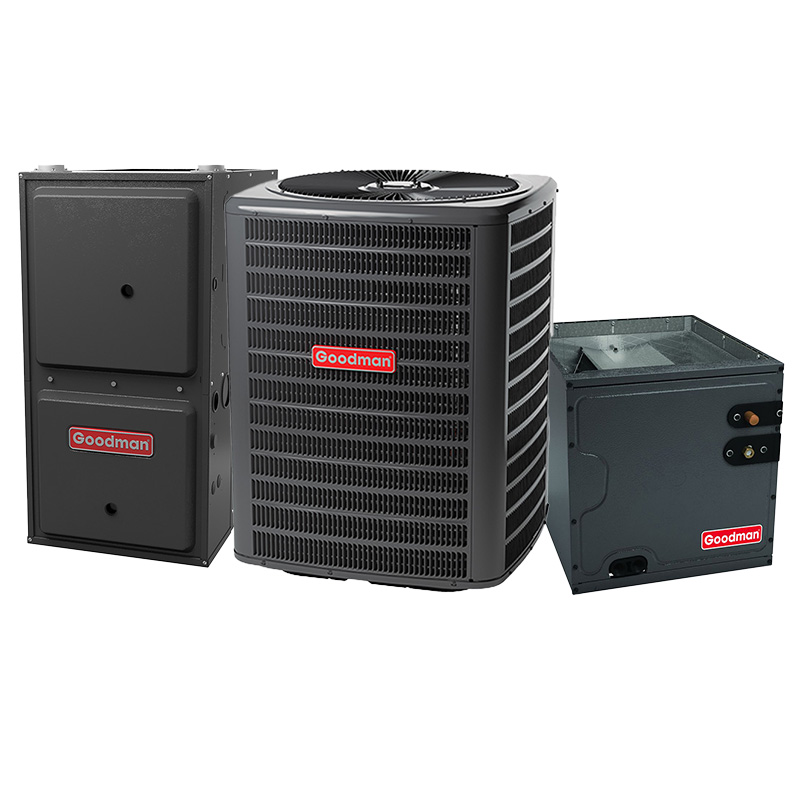
Goodman 2.5 Ton 13.6 SEER2 AC With 60000 BTU 96% AFUE 2-Stage Variable-Speed ECM Gas Furnace System – Downflow | R32
View on AC Direct see your lowest price →Check current price on AC Direct →
Key features
- 13.6 SEER2 cooling efficiency meets current federal minimum standards for most U.S. regions
- 96% AFUE two-stage gas furnace reduces fuel waste and temperature swings on mild heating days
- Variable-speed ECM blower motor cuts electricity use and lowers operating sound levels
- Downflow configuration for installations with ductwork below the air handler
- R-32 refrigerant with lower global warming potential than legacy R-410A systems
- 2.5-ton capacity suited to approximately 1,200 to 1,600 sq ft with proper load calculation
About this system
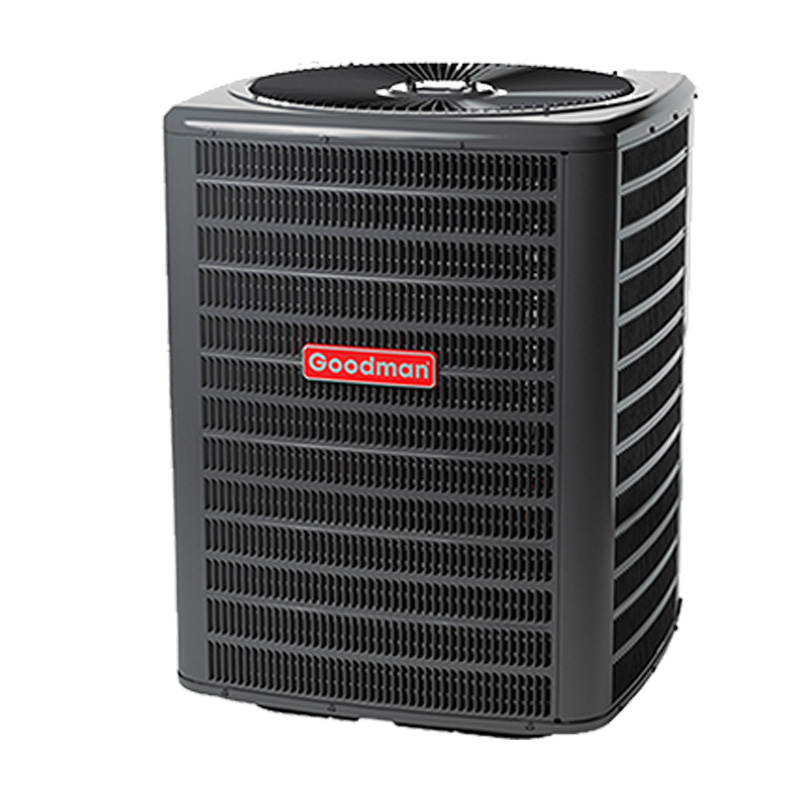
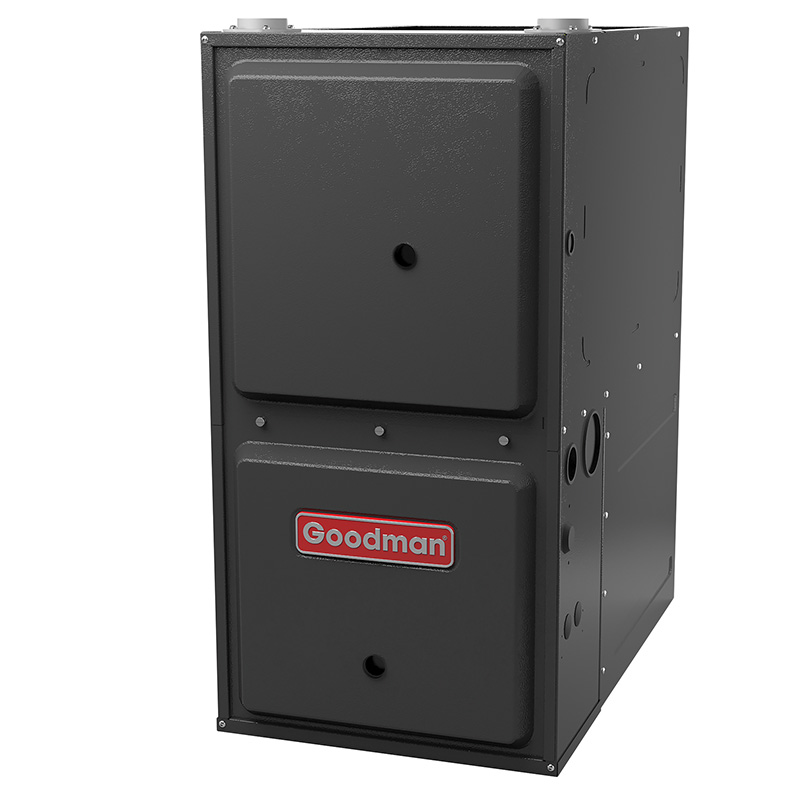
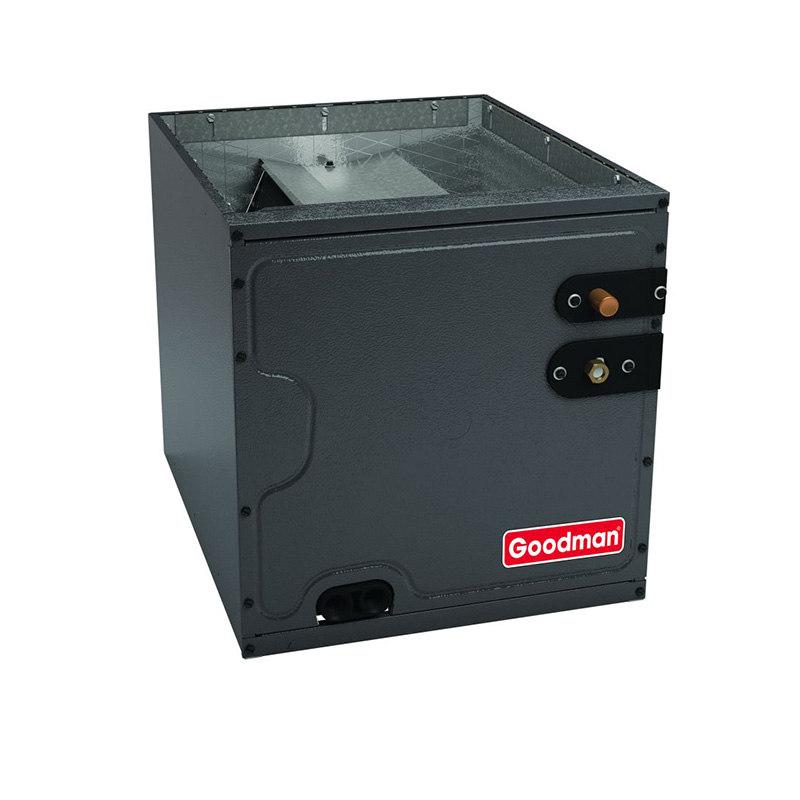
This Goodman bundle pairs a 2.5-ton, 13.6 SEER2 air conditioner with a 60,000 BTU, 96% AFUE two-stage gas furnace in a downflow configuration, making it a practical fit for homes where the air handler sits in a closet or utility space above a crawlspace or on a main floor with ductwork running beneath. The R-32 refrigerant charge is a forward-looking detail: R-32 has a lower global warming potential than the older R-410A it replaces, and equipment availability and technician familiarity with R-32 are growing steadily. At 2.5 tons, the system is sized for roughly 1,200 to 1,600 square feet of well-insulated living space, though a proper Manual J load calculation should always confirm sizing before purchase.
The heating side carries real performance credentials. A 96% AFUE rating means only four cents of every fuel dollar escapes as waste, which is solidly in the high-efficiency tier. Two-stage heating lets the furnace run at a lower capacity on mild days and ramp up only when temperatures drop sharply, reducing temperature swings and cycling noise. The variable-speed ECM blower motor moves air more quietly and consistently than a single-speed unit, and it draws significantly less electricity over the course of a season. Together, these features push comfort noticeably above entry-level single-stage systems, even if the outdoor cooling unit is closer to the budget end of the efficiency spectrum at 13.6 SEER2.
This Goodman system delivers genuine high-efficiency heating and competent cooling at a price point typically 15 to 25 percent below comparable Trane, Lennox, or Carrier bundles, making it a reasonable choice for budget-conscious buyers who prioritize furnace performance. The 13.6 SEER2 cooling side meets current minimums but won't impress in hot climates, and long-term reliability depends heavily on installation quality and a willingness to budget for repairs after year seven. Buyers who want lower ownership risk and longer compressor life should price out premium-brand alternatives before committing.
Overall score is the average of the five ratings above.
What we like
- 96% AFUE furnace is genuinely high-efficiency and meaningfully cuts heating bills versus mid-efficiency equipment
- Two-stage furnace operation reduces temperature swings and short-cycling for more consistent indoor comfort
- Variable-speed ECM motor runs quietly and uses less electricity than standard PSC motors
- R-32 refrigerant is a future-ready choice as the industry moves away from R-410A
- Purchase price is typically 15 to 25 percent lower than comparable Carrier, Trane, or Lennox bundles
Trade-offs
- 13.6 SEER2 is at the lower end of efficiency; buyers in hot climates may see limited cooling savings versus a higher-SEER2 system
- Compressor lifespan averages 10 to 14 years, shorter than the 15 to 20 years documented for premium brands
- Dual-run capacitor failures and evaporator coil leaks are documented recurring issues in owner feedback
- Downflow-only configuration limits installation flexibility; not usable in upflow or horizontal applications without a different model
What homeowners and pros say about Goodman
Homeowners who shop Goodman tend to split into two camps: those who praise the upfront savings and report years of trouble-free operation, and those who run into repair bills around year seven or eight that test whether the initial discount was actually a deal. On ConsumerAffairs, Goodman sits at roughly 2.5 out of 5, a score shaped by the fact that satisfied owners rarely log reviews while frustrated ones do. Google dealer reviews land closer to 3.8 out of 5 across hundreds of location-level entries, where affordability is the word that shows up most consistently in positive feedback. Neither number tells the complete story, but together they suggest a brand that performs adequately when installed well and maintained regularly, and less predictably when it isn’t.
HVAC technicians are generally candid about the recurring failure points on Goodman equipment: dual-run capacitors are the most common service call, though the repair typically runs between 300 and 600 dollars and is not unique to Goodman. Evaporator coil leaks appear with enough regularity in owner accounts to be worth noting, and compressors on Goodman systems tend to average 10 to 14 years compared to the 15 to 20 years technicians associate with Trane, Carrier, and Lennox compressors. A small share of owners have also reported refrigerant leaks within the first year, which experienced installers attribute almost entirely to charge errors or fitting issues at installation rather than to a product defect. For this specific system, the two-stage furnace and ECM motor are well-regarded features that reduce callbacks related to comfort complaints, which matters to installers and homeowners alike.
Sources: ConsumerAffairs Goodman owner reviews, AHRI Directory of Certified Product Performance, U.S. DOE appliance and equipment efficiency standards, Goodman product specification sheets.
What it costs to run
At 13.6 SEER2, cooling this 2.5-ton system for a typical 1200-hour cooling season at the U.S. average electricity rate of $0.17/kWh works out to roughly $450 per year in cooling, about $7 less per year than a minimum-efficiency 13.4 SEER2 unit of the same size. Your real cost depends on your climate and local rate.
Method: (30,000 BTU/hr ÷ 13.6 SEER2) × 1200 hours ÷ 1000 × $0.17/kWh. Rate source: U.S. EIA average; cooling hours: moderate-climate estimate.
How it compares
| Brand | Comparable model | SEER2 | Stage | Price position |
|---|---|---|---|---|
| Goodman | 2.5T 13.6 SEER2 AC + 60k BTU 96% AFUE 2-Stage ECM Furnace (Downflow, R-32) | 13.6 | Two-stage furnace / single-stage cooling | Value pick |
| Carrier | Performance 13 (24ACC3) with 96% AFUE Performance furnace | 13.4 | Single-stage cooling / two-stage furnace option | Typically 15 to 25 percent more than Goodman |
| Trane | XR13c with S9V2 96% AFUE furnace | 13.4 | Single-stage cooling / two-stage furnace | Typically 15 to 25 percent more than Goodman |
| Lennox | Merit 13ACX with ML96V 96% AFUE furnace | 13.4 | Single-stage cooling / variable-speed furnace | Typically 15 to 25 percent more than Goodman |
Competitor rows are comparable single-stage units at similar efficiency; price is relative position, not a quote.
Questions about this system
Why is this system downflow only, and can I use it in a horizontal application?
Downflow means the furnace discharges conditioned air through the bottom, directing it into ductwork below the unit. This configuration is not interchangeable with upflow or horizontal setups without a different cabinet model. Confirm your existing duct layout and mechanical closet orientation before ordering.
Does R-32 refrigerant require any special handling compared to R-410A?
R-32 is mildly flammable and classified A2L, so technicians need certification and equipment rated for A2L refrigerants to service it safely. Most modern HVAC contractors are already equipped or are becoming so, but it is worth confirming with your installer before scheduling work.
What is Goodman's warranty on this system, and are there conditions I should know about?
Goodman typically offers a 10-year parts warranty on registered systems, but registration must be completed within a set window after installation or the coverage drops to a shorter period. Labor is not covered, and warranty work generally requires a licensed contractor, so a service call during the coverage period still carries a labor cost.
Goodman has mixed reviews online. Should I be worried about reliability?
Goodman scores roughly 2.5 out of 5 on ConsumerAffairs, a channel that skews toward complaints, and around 3.8 out of 5 in Google dealer reviews. The documented weak points are dual-run capacitor failures (a low-cost repair), evaporator coil leaks, and compressors that tend to average 10 to 14 years rather than the 15 to 20 years associated with premium brands. Installation quality is consistently cited as the largest variable in how long a Goodman unit lasts.
Is 13.6 SEER2 efficient enough, or should I pay more for a higher-rated outdoor unit?
13.6 SEER2 meets current federal minimums for most regions and will cool your home reliably, but it offers limited operating-cost advantage over what you already have if your old system was already mid-efficiency. If you live in a climate with long, hot summers, stepping up to a 16 or 18 SEER2 unit could recover the price difference through utility savings over five to eight years. For shorter cooling seasons, the lower-efficiency unit is often the better financial decision.
Specifications
| Cooling capacity | 2.5 Ton |
| Efficiency | 13.6 SEER2 |
| Furnace output | 60000 BTU |
| Furnace efficiency | 96% AFUE |
| Configuration | Downflow |
| Refrigerant | R-32 |