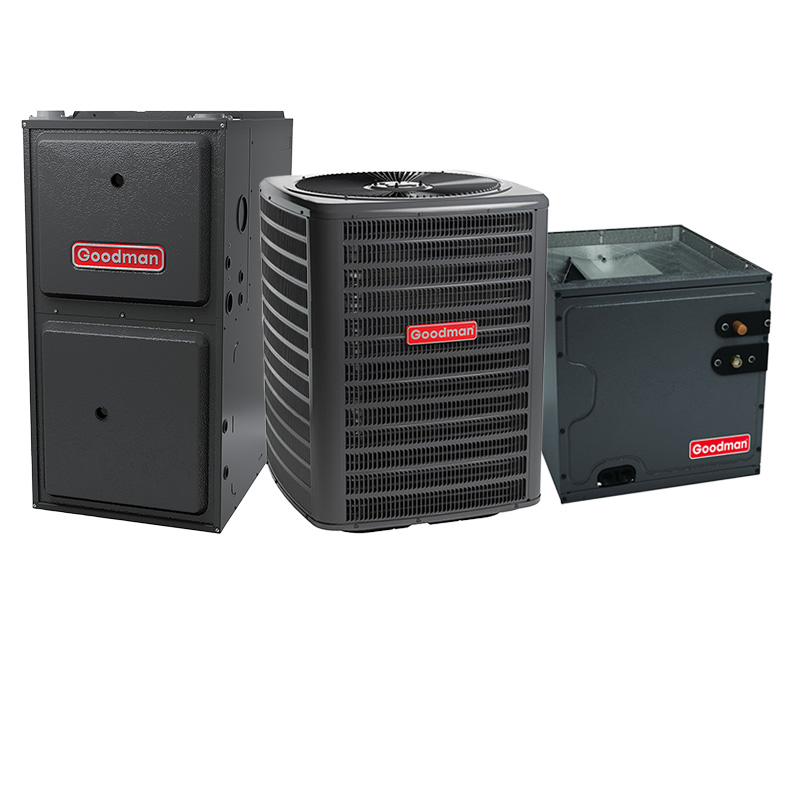
Goodman 2.5 Ton 13.8 SEER2 60000 BTU 96% AFUE Two Stage Multi-Speed ECM Gas Furnace System – Upflow | R32
View on AC Direct see your lowest price →Check current price on AC Direct →
Key features
- 2.5-ton cooling capacity with 13.8 SEER2 efficiency rating
- 60,000 BTU two-stage gas furnace at 96% AFUE
- Multi-speed ECM blower motor for quieter, more even airflow
- R-32 refrigerant with lower global-warming potential than R-410A
- Upflow configuration for standard basement or closet installations
- Two-stage heating reduces runtime noise and temperature swings
About this system
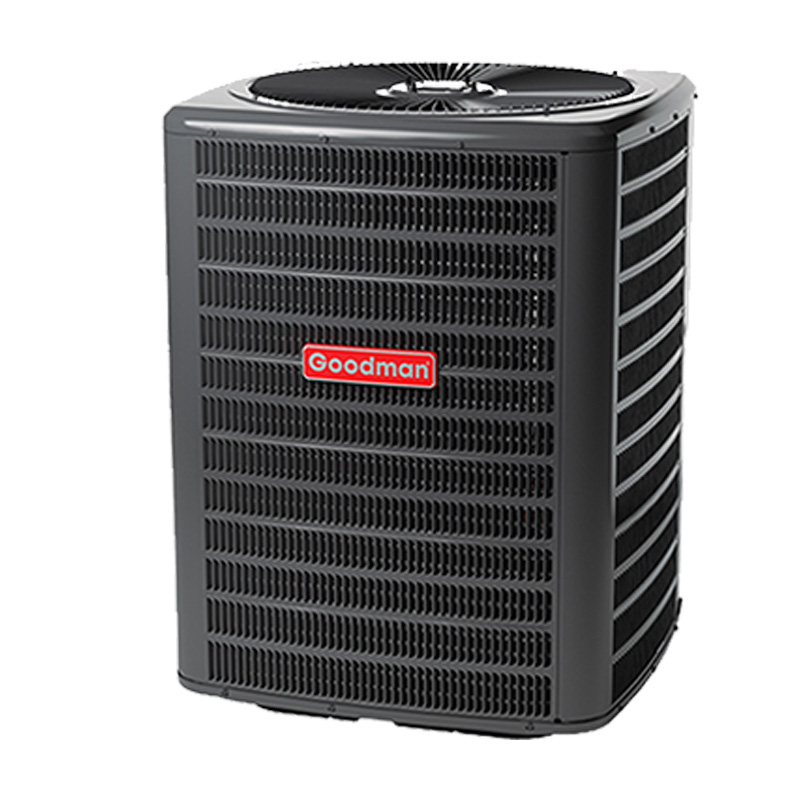
This Goodman bundle pairs a 2.5-ton, 13.8 SEER2 split-system air conditioner with a 60,000 BTU, 96% AFUE two-stage gas furnace in an upflow configuration. The refrigerant is R-32, a lower-global-warming-potential alternative to the R-410A found in older systems, and that matters for anyone thinking about long-term parts availability as the industry continues moving away from legacy refrigerants. At 13.8 SEER2, the cooling side clears the federal minimum for most U.S. regions without stretching into premium efficiency territory, which is exactly what keeps the price accessible.
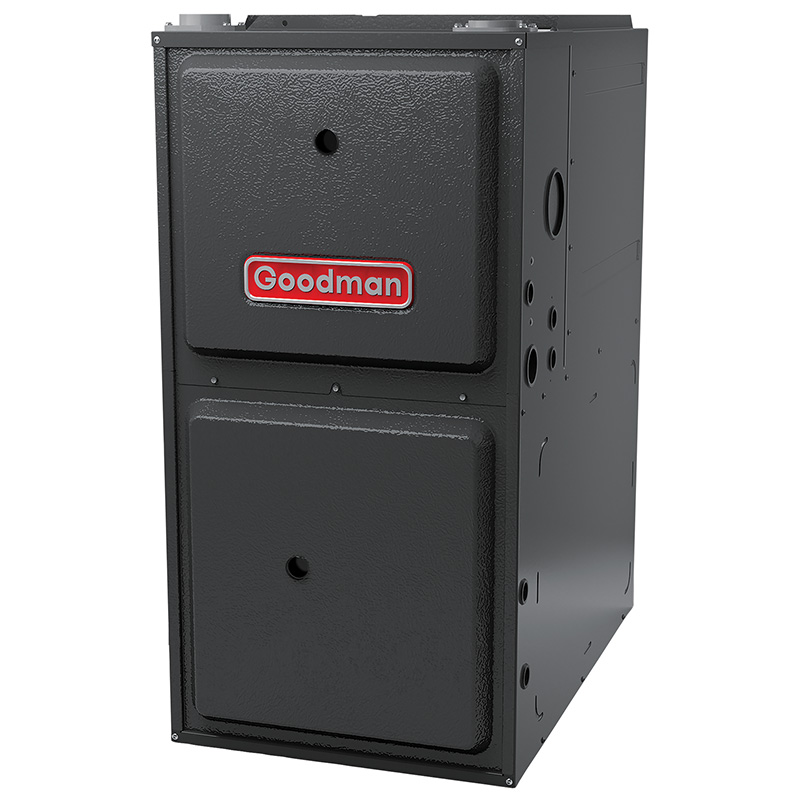
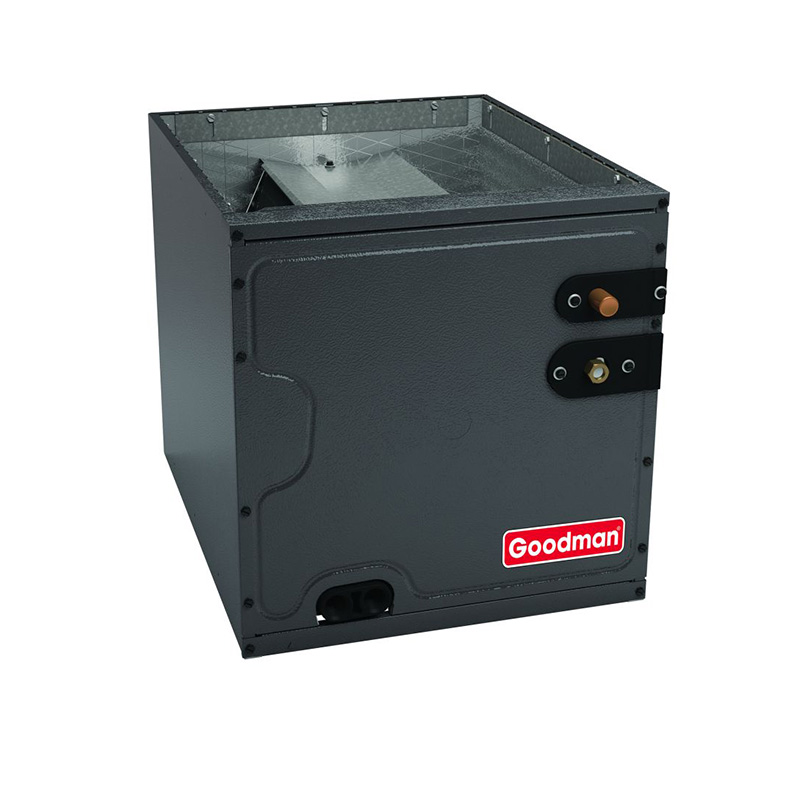
The furnace side is where this package earns its stripes for year-round comfort. A 96% AFUE two-stage burner means the unit fires at a reduced output most of the time, ramping to full capacity only during the coldest stretches. Paired with a multi-speed ECM blower motor, that translates to quieter operation, more even temperatures room to room, and modest efficiency gains on heating bills compared with single-stage equipment. Upflow configuration suits the most common basement or utility-closet install, where the furnace sits below the air handler and pushes conditioned air upward into the duct system.
This system is sized for homes roughly in the 1,200 to 1,800 square foot range depending on climate zone, insulation quality, and ceiling height. It suits buyers who want meaningful furnace upgrades over entry-level single-stage equipment without paying Trane or Lennox prices. The trade-off is accepting Goodman’s value-brand reliability track record and making sure installation is done carefully, because technicians consistently identify install quality as the dominant factor in how these units perform over time.
This Goodman system delivers genuinely good furnace technology at a price point that undercuts major competitors by 15 to 25 percent, making two-stage heating and an ECM blower accessible to buyers who would otherwise settle for single-stage equipment. The cooling side is competent but not exceptional at 13.8 SEER2, and the brand's documented history of capacitor failures, coil leaks, and shorter compressor lifespans means buyers should budget for maintenance and lean hard on warranty coverage. For cost-conscious homeowners who prioritize upfront affordability and heating comfort over long-term worry-free ownership, this package makes a reasonable case for itself.
Overall score is the average of the five ratings above.
What we like
- Two-stage furnace and ECM blower deliver noticeably quieter, more even heat compared with single-stage systems at this price
- 96% AFUE is near the top of the efficiency scale for gas furnaces, reducing heating fuel costs meaningfully over a single-stage 80% unit
- R-32 refrigerant positions the system better for long-term parts availability as the industry phases out older refrigerants
- Priced 15 to 25 percent below comparable Trane, Lennox, and Carrier configurations, making higher-spec furnace features more accessible
- Upflow design covers the most common residential installation scenario, simplifying contractor compatibility and ductwork transitions
Trade-offs
- 13.8 SEER2 cooling efficiency is only modestly above federal minimums; homeowners in hot climates will see limited savings on cooling bills versus a 16+ SEER2 system
- Dual-run capacitors are the most frequently reported failure point in Goodman equipment, typically requiring a service call around years 5 to 8
- Compressor lifespan averages 10 to 14 years based on documented owner experience, roughly 3 to 6 years shorter than premium-brand compressors
- A minority of owners report refrigerant or evaporator coil leaks, meaning install quality and first-year inspection matter more with this brand than with premium alternatives
What homeowners and pros say about Goodman
On Google dealer review pages, where installation companies carry the bulk of the ratings weight, Goodman equipment lands around 3.8 out of 5 stars across hundreds of reviews per location. Affordability is the word that comes up most often in positive feedback, and many homeowners specifically mention being able to get two-stage or variable equipment within budget that would otherwise require stepping down to single-stage at a premium brand. Installers who work with Goodman regularly note that the equipment performs close to spec when the setup is done carefully, and that corners cut during installation are what tend to create early problems rather than the hardware itself failing out of the box.
The ConsumerAffairs picture is rougher, sitting around 2.5 out of 5, though that platform draws disproportionately from owners who are frustrated enough to write about it. The pattern that emerges from those reviews points to repair costs climbing noticeably after year 7, which lines up with the documented failure modes for this brand: dual-run capacitors are the most commonly reported breakdown and usually run between 300 and 600 dollars to fix; evaporator coil leaks show up in a meaningful portion of owner accounts; and compressor longevity averages 10 to 14 years, which is a real gap compared with the 15 to 20 years premium brands tend to deliver. A smaller but notable share of first-year owners report refrigerant leaks, which technicians typically attribute to charge or connection issues at install rather than factory defects. None of these failure modes are unique to Goodman, but they occur at a higher reported rate than top-tier brands, which is part of what the price difference is buying you when you go with Carrier, Trane, or Lennox instead.
Sources: ConsumerAffairs Goodman owner reviews, AHRI Directory of Certified Product Performance, U.S. DOE appliance and equipment efficiency standards, Goodman product specification sheets.
What it costs to run
At 13.8 SEER2, cooling this 2.5-ton system for a typical 1200-hour cooling season at the U.S. average electricity rate of $0.17/kWh works out to roughly $443 per year in cooling, about $14 less per year than a minimum-efficiency 13.4 SEER2 unit of the same size. Your real cost depends on your climate and local rate.
Method: (30,000 BTU/hr ÷ 13.8 SEER2) × 1200 hours ÷ 1000 × $0.17/kWh. Rate source: U.S. EIA average; cooling hours: moderate-climate estimate.
How it compares
| Brand | Comparable model | SEER2 | Stage | Price position |
|---|---|---|---|---|
| Goodman | GSX14 / GMVC96 Bundle (this system) | 13.8 | Two-stage | Value pick |
| Carrier | Comfort 24ACC636 / 59SC2 Series | 14.0 | Two-stage | Typically 20 to 25 percent more than this Goodman bundle |
| Trane | XR14 / S9X2 Series | 14.0 | Two-stage | Typically 20 to 30 percent more than this Goodman bundle |
| Lennox | Merit 14ACX / ML96V Series | 13.8 | Two-stage | Typically 25 to 35 percent more than this Goodman bundle |
Competitor rows are comparable single-stage units at similar efficiency; price is relative position, not a quote.
Questions about this system
Is 13.8 SEER2 going to be enough efficiency for a hot southern climate like Texas or Florida?
It meets federal minimums for most regions and will run reliably, but homeowners in climates with long, intense cooling seasons will likely see higher annual utility costs compared with a 16 or 17 SEER2 system. The payback period on the furnace's 96% AFUE is also less impactful in climates where heating demand is low, so buyers in the South should weigh whether the furnace upgrade justifies the bundle versus a higher-SEER2 cooling-only or heat-pump approach.
What does R-32 refrigerant mean for me as an owner, and can my existing contractor service it?
R-32 is a single-component refrigerant with a lower global-warming potential than the R-410A it replaces across much of the industry, and it is becoming more common, so most licensed HVAC technicians are already equipped or training to handle it. The practical implication for you is slightly different handling procedures and potentially a small variation in recharge costs, but nothing that limits your service options in any meaningful way compared with R-410A systems today.
How long should I realistically expect the compressor to last?
Based on documented Goodman owner experience, compressors in this line tend to average somewhere in the 10 to 14 year range, compared with 15 to 20 years that premium brands like Trane and Lennox typically deliver. Keeping up with annual tune-ups, replacing the dual-run capacitor proactively when it shows wear, and making sure refrigerant charge is correct at installation are the most effective ways to push toward the longer end of that range.
What is Goodman's warranty on this system, and what does it actually cover?
Goodman typically offers a 10-year parts warranty on registered equipment, which covers major components including the compressor, heat exchanger, and coil. Registration must be completed within a defined window after installation or the warranty period shortens, so confirm that step with your contractor. Labor is not covered by the manufacturer, meaning you will pay for technician time on any warranty repair, and that can add up if a coil or compressor fails inside the covered period.
The two-stage furnace sounds appealing, but is it harder to maintain than a single-stage unit?
Two-stage gas furnaces are not significantly more complex to service than single-stage models for a qualified technician. The main additions are the two-stage gas valve and the ECM blower motor, both of which are standard components that any experienced HVAC contractor knows how to diagnose and replace. The ECM motor is actually more efficient and typically quieter than a PSC motor, and while it costs more to replace if it fails, failures are not especially common in the first decade of operation.
Specifications
| Cooling capacity | 2.5 Ton |
| Efficiency | 13.8 SEER2 |
| Furnace output | 60000 BTU |
| Furnace efficiency | 96% AFUE |
| Configuration | Upflow |
| Refrigerant | R-32 |