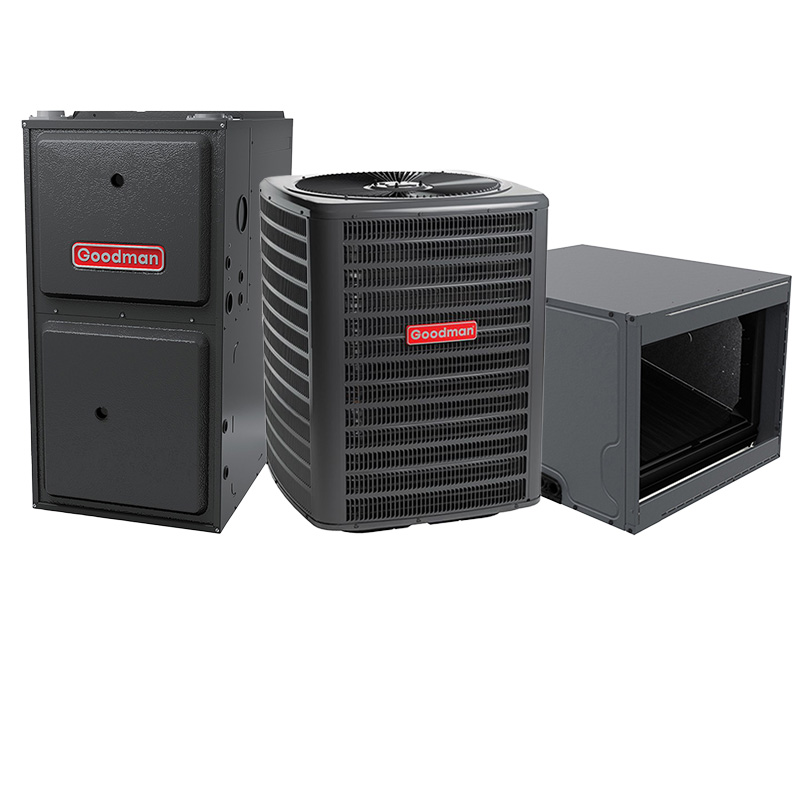
Goodman 2.5 Ton 13.8 SEER2 80000 BTU 96% AFUE Two Stage Multi-Speed ECM Gas Furnace System – Horizontal | R32
View on AC Direct see your lowest price →Check current price on AC Direct →
Key features
- 96% AFUE two-stage gas furnace reduces fuel waste and temperature swings
- 13.8 SEER2 rated cooling efficiency meets current federal minimum standards
- Horizontal-only configuration designed for attic, crawl space, and side-load installs
- Multi-speed ECM blower motor improves airflow efficiency and humidity management
- R-32 refrigerant with lower global-warming potential than legacy R-410A systems
- 2.5-ton capacity suited for roughly 1,200 to 1,600 sq ft depending on climate and insulation
About this system
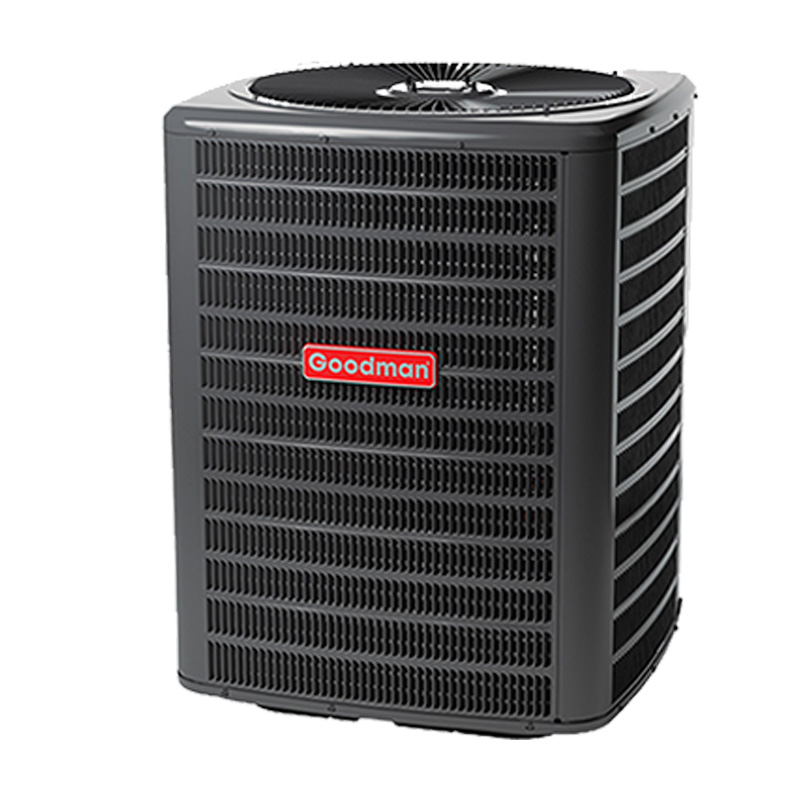
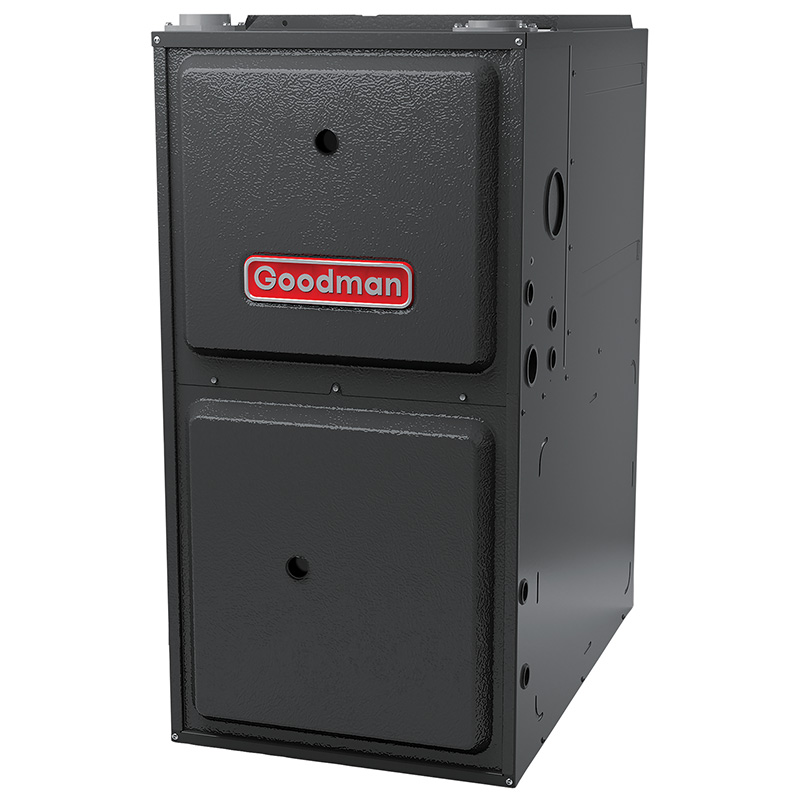
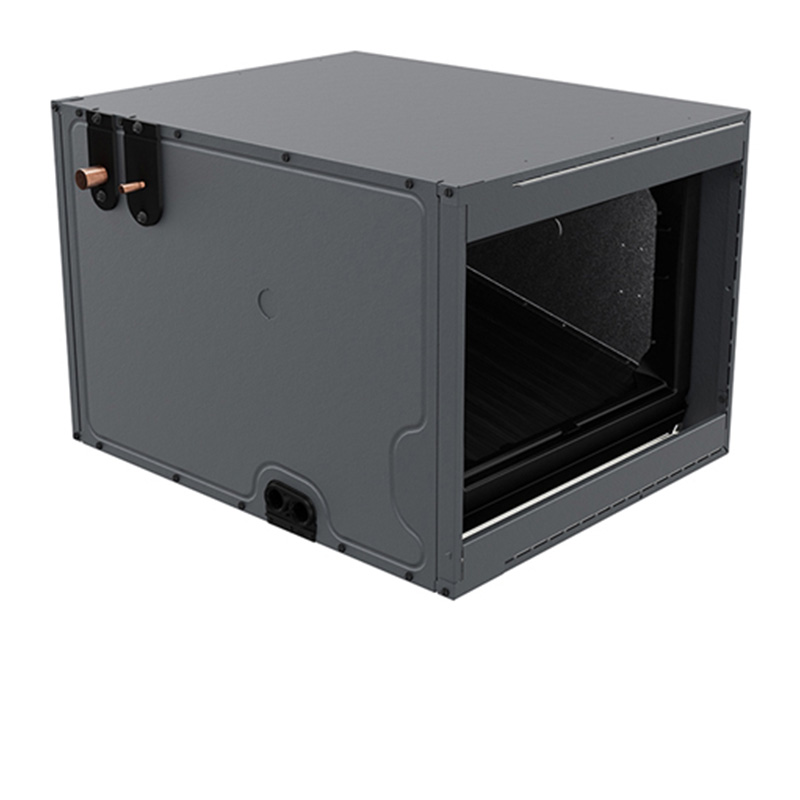
The Goodman 2.5-ton horizontal gas furnace and air conditioning system pairs a 96% AFUE two-stage furnace with a 13.8 SEER2 cooling system and uses R-32 refrigerant, a lower global-warming-potential refrigerant that is becoming the new standard as the industry moves away from R-410A. The horizontal configuration is built specifically for attic installations, crawl spaces, and utility closets where a vertical unit simply will not fit, making it a practical choice for ranch-style homes, mobile homes, or any structure where ceiling or floor space is limited.
The 80,000 BTU two-stage furnace runs on a lower first stage most of the time, which reduces temperature swings, lowers fuel consumption, and is noticeably quieter than a single-stage unit cycling on and off at full blast. The multi-speed ECM blower motor reinforces those gains by adjusting airflow precisely rather than running at one fixed speed, which also helps with humidity control in warmer months. At 96% AFUE, only about four cents of every fuel dollar is lost up the flue, putting this solidly in the high-efficiency tier. For a buyer in a cold climate who runs the furnace heavily through winter, the fuel savings over a mid-efficiency 80% AFUE unit can be meaningful over the life of the system.
This setup suits homeowners who need a horizontal-only configuration, want genuine two-stage heating performance without paying premium-brand pricing, and are comfortable working with a reputable local HVAC contractor for installation. It is not the right choice for buyers expecting appliance-level plug-and-play simplicity or for those who will stretch to skip professional commissioning, because, as with all Goodman equipment, installation quality is the single biggest variable in long-term performance.
This Goodman system delivers genuine two-stage and ECM technology at a price point that undercuts comparable Trane, Carrier, and Lennox systems by 15 to 25 percent, which is its clearest advantage. The 96% AFUE furnace is a real high-efficiency unit and the horizontal configuration fills a specific need that not every system addresses. The trade-off is a brand track record that shows shorter average compressor lifespan than premium competitors and recurring owner complaints about repair costs after year seven, so the savings at purchase need to be weighed against realistic long-term service costs.
Overall score is the average of the five ratings above.
What we like
- Two-stage furnace operation delivers noticeably steadier temperatures and quieter cycling than single-stage equipment
- 96% AFUE puts fuel efficiency in the top tier, reducing heating bills in cold climates
- ECM multi-speed blower improves humidity control and lowers blower motor electricity use
- R-32 refrigerant is forward-looking as the industry phases out R-410A
- Purchase price runs 15 to 25 percent below comparable Trane, Lennox, and Carrier systems, leaving room in the budget for a quality installation
Trade-offs
- Compressor lifespan averages 10 to 14 years versus 15 to 20 years reported for premium brands, raising the odds of a major repair in the system's second decade
- Dual-run capacitors are the most commonly reported failure point, and while the repair is usually low cost, it is a recurring theme in owner feedback
- Evaporator coil leaks appear in a meaningful share of owner reviews, a failure mode that can be expensive and disruptive
- A minority of owners report refrigerant leaks in the first year, most tied to install or charge quality, underscoring how much outcome depends on contractor skill
What homeowners and pros say about Goodman
Goodman sits at a 3.8 out of 5 across Google dealer reviews, where the most consistent praise centers on affordability and accessible parts availability. That score reflects a real middle ground: buyers who get a clean installation from a skilled contractor often report years of trouble-free operation, while those who encounter problems tend to find costs climbing after roughly year seven, a pattern that shows up clearly in Goodman’s ConsumerAffairs rating of about 2.5 out of 5. That channel skews toward complaints, but the recurring themes are consistent enough to take seriously: repair bills that feel disproportionate relative to the original purchase price once the system ages.
For this specific horizontal two-stage system, the conversation in the HVAC trade focuses on a few documented weak points. Dual-run capacitors are the most frequently reported failure, generally a low-cost fix but one that comes up often enough that experienced technicians recommend keeping a spare on hand after year five. Evaporator coil leaks appear in a meaningful share of owner accounts and are a more expensive repair. Compressor longevity averages 10 to 14 years across Goodman equipment, shorter than the 15 to 20 years commonly cited for premium brands, which is a real consideration for anyone planning a long ownership horizon. A minority of owners also report refrigerant issues in the first year, and technicians are consistent that these trace back to install and charge quality rather than the equipment itself, reinforcing the brand’s dependence on who puts it in.
Sources: ConsumerAffairs Goodman owner reviews, AHRI Directory of Certified Product Performance, U.S. DOE appliance and equipment efficiency standards, Goodman product specification sheets.
What it costs to run
At 13.8 SEER2, cooling this 2.5-ton system for a typical 1200-hour cooling season at the U.S. average electricity rate of $0.17/kWh works out to roughly $443 per year in cooling, about $14 less per year than a minimum-efficiency 13.4 SEER2 unit of the same size. Your real cost depends on your climate and local rate.
Method: (30,000 BTU/hr ÷ 13.8 SEER2) × 1200 hours ÷ 1000 × $0.17/kWh. Rate source: U.S. EIA average; cooling hours: moderate-climate estimate.
How it compares
| Brand | Comparable model | SEER2 | Stage | Price position |
|---|---|---|---|---|
| Goodman | 2.5 Ton 13.8 SEER2 96% AFUE Two-Stage Horizontal R-32 System | 13.8 | Two-stage | Value pick |
| Carrier | Performance Series (24ACC / 59TP6) | ~14 to 15 | Two-stage | Typically 15 to 25 percent more than this Goodman system |
| Trane | XR15 / S9X2 Series | ~14 to 15 | Two-stage | Typically 15 to 25 percent more than this Goodman system |
| Lennox | Merit Series (ML14XC1 / ML196E) | ~14 | Two-stage | Typically 15 to 25 percent more than this Goodman system |
Competitor rows are comparable single-stage units at similar efficiency; price is relative position, not a quote.
Questions about this system
Why does this system have to be installed horizontally, and can it be converted to upflow or downflow?
The horizontal designation means the unit is built and tested for a side-discharge orientation, typically lying on its side in an attic or crawl space. It cannot be field-converted to upflow or downflow without a different cabinet model, so confirm your installation space before purchasing.
What does R-32 refrigerant mean for me as an owner, and will it cost more to service?
R-32 is a newer refrigerant with a lower global-warming potential than R-410A and is increasingly available through HVAC distributors. Service costs are currently comparable to R-410A in most markets, though your technician must be certified to handle it. Availability is growing as more manufacturers adopt it.
Is the 96% AFUE furnace worth the extra cost over an 80% AFUE unit in a mild climate?
In climates with short heating seasons, the payback period on the efficiency premium stretches out, and an 80% AFUE unit may make more financial sense. In cold climates where the furnace runs heavily from October through March, the fuel savings from 96% AFUE can recoup the difference over several years.
What is Goodman's warranty on this system, and what does it actually cover?
Goodman typically offers a 10-year parts limited warranty on registered equipment, which covers components like the compressor, coil, and heat exchanger when registered within a set window after installation. Labor is not covered by the manufacturer, so a service contract or strong contractor relationship matters for managing out-of-pocket repair costs.
How often do the dual-run capacitors fail on Goodman equipment, and what does that repair cost?
Capacitor failure is the most commonly reported repair across Goodman cooling systems, and it tends to show up as the system ages. The repair is typically in the 300 to 600 dollar range for parts and labor, which makes it one of the more manageable service calls, but owners should budget for it as routine maintenance rather than a surprise.
Specifications
| Cooling capacity | 2.5 Ton |
| Efficiency | 13.8 SEER2 |
| Furnace output | 80000 BTU |
| Furnace efficiency | 96% AFUE |
| Configuration | Horizontal |
| Refrigerant | R-32 |