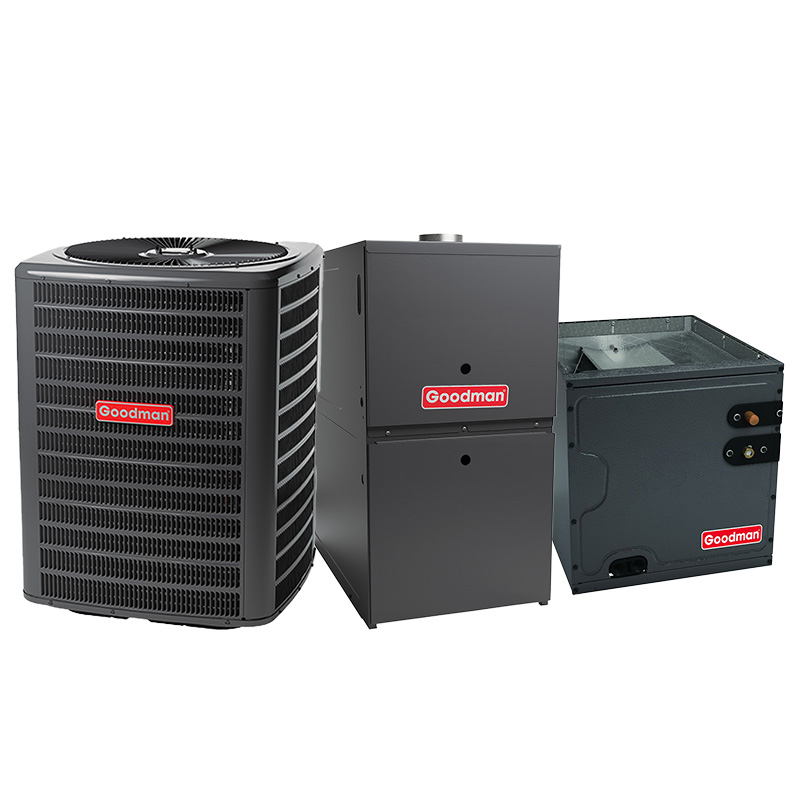
Goodman 2.5 Ton 13.8 SEER2 AC & Gas Furnace System – Two Stage Variable-Speed, 60000 BTU Gas Furnace, 80% AFUE, Upflow, R32
View on AC Direct see your lowest price →Check current price on AC Direct →
Key features
- Two-stage compressor runs at reduced capacity on mild days, reducing short-cycling and improving humidity control
- Variable-speed blower motor adjusts airflow continuously for quieter operation and more even temperatures
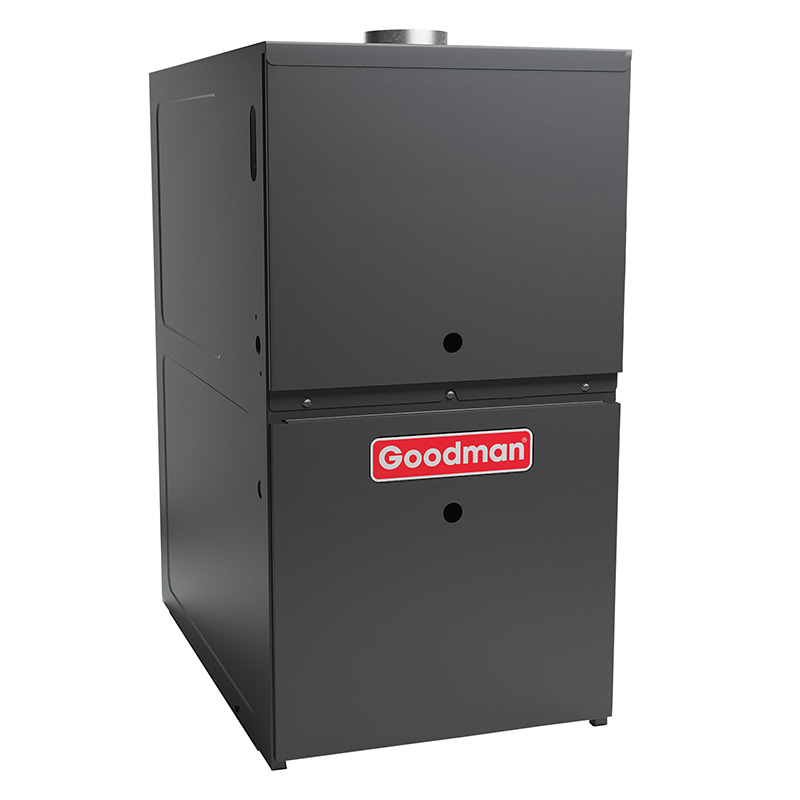
- 60,000 BTU upflow gas furnace rated at 80% AFUE for standard heating efficiency
- 13.8 SEER2 cooling efficiency meets current federal minimum standards for most U.S. regions
- R-32 refrigerant offers lower global warming potential than R-410A
- Upflow configuration designed for basement or utility-room installations with overhead ductwork
About this system
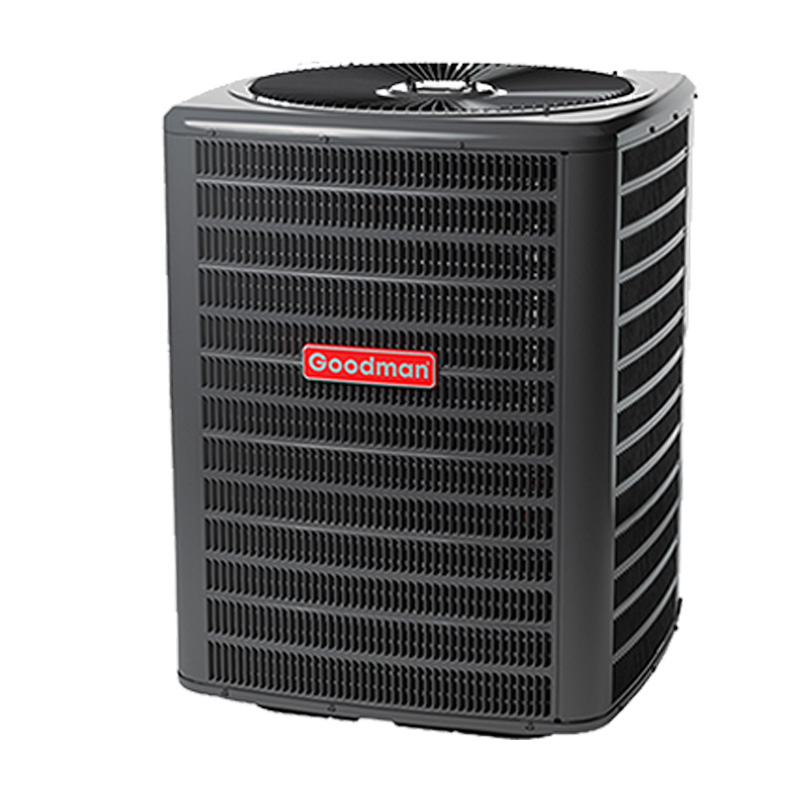
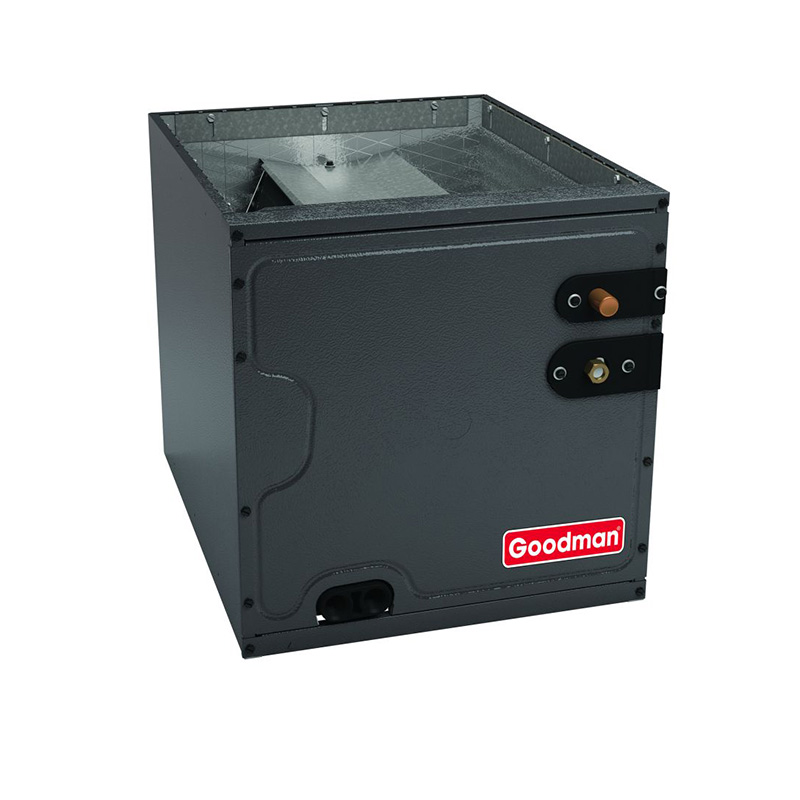
The Goodman 2.5-ton 13.8 SEER2 two-stage, variable-speed system pairs a central air conditioner with a 60,000 BTU upflow gas furnace rated at 80% AFUE. The two-stage compressor runs at a lower capacity on mild days and ramps up only when conditions demand it, which reduces short-cycling, keeps humidity more stable than a single-stage unit, and trims operating costs compared to a straight single-stage setup. The variable-speed air handler further stretches comfort by moving air quietly and continuously at low speeds for most of the season.
At 13.8 SEER2, this system sits right at the federal minimum efficiency tier for most U.S. climate zones, so it meets code without the premium price of a higher-efficiency system. The 80% AFUE furnace means roughly 20 cents of every heating dollar exits through the flue; homeowners in very cold climates who run the furnace heavily from October through March may find the long-term fuel savings of a 96% AFUE unit justify its higher upfront cost. For moderate heating climates or budget-focused buyers, 80% AFUE is a common and practical choice. The upflow configuration suits basement and utility-room installs where supply ducts run upward.
R-32 refrigerant is a newer choice with a lower global warming potential than the R-410A it is replacing across the industry, and it is also slightly more energy-dense, which can help system efficiency at the margins. Technicians who are not yet familiar with R-32 handling procedures will need to verify their certifications and equipment before working on this unit, which is worth factoring into your installer selection.
This Goodman bundle delivers two-stage comfort and a variable-speed blower at a price point noticeably below Carrier, Trane, and Lennox alternatives, making it a reasonable choice for budget-conscious homeowners who prioritize upfront cost. Efficiency sits at the code minimum rather than any meaningful premium tier, and Goodman's documented track record of capacitor failures and shorter average compressor lifespans means ongoing maintenance costs deserve a spot in your total-cost calculation. The system rewards buyers who invest in a quality installation and keep up with routine service.
Overall score is the average of the five ratings above.
What we like
- Two-stage cooling and variable-speed blower provide meaningfully better comfort and humidity control than single-stage systems at a similar price
- Priced 15 to 25 percent below comparable Carrier, Trane, and Lennox equipment, lowering the barrier to a multi-stage setup
- R-32 refrigerant is becoming the new industry standard and has a lower environmental impact than outgoing R-410A
- Upflow design is straightforward to install in the most common residential basement and closet configurations
- Two-stage operation reduces wear during mild weather by avoiding constant full-capacity cycling
Trade-offs
- Compressor lifespan averages 10 to 14 years versus 15 to 20 years seen in premium-brand equipment, which matters over a 15-year ownership horizon
- Dual-run capacitor failures are the most frequently reported repair, typically adding $300 to $600 in service costs, often around the seven-year mark
- 80% AFUE furnace leaves meaningful efficiency gains on the table for homeowners in cold climates with high annual heating loads
- A minority of owners report refrigerant leaks within the first year, most often traced to install or charge issues, underscoring how dependent performance is on installer quality
What homeowners and pros say about Goodman
Homeowners who shop Goodman overwhelmingly cite price as the deciding factor, and the Google dealer reviews that aggregate around 3.8 out of 5 stars reflect a buyer base that largely gets what it paid for in the early years. The picture shifts as systems age: the ConsumerAffairs profile sits around 2.5 out of 5, a complaint-weighted channel where the recurring pattern is repair bills climbing noticeably after roughly year seven. The two failure modes that show up most consistently in owner accounts are dual-run capacitor replacements, a relatively inexpensive fix in the $300 to $600 range that nonetheless frustrates owners who expected fewer service calls, and evaporator coil leaks, which carry a higher repair cost and appear in a meaningful share of longer-term ownership reviews. A smaller but notable group of owners reports refrigerant leaks within the first year, and HVAC technicians consistently point to installation quality or initial charge issues as the cause rather than a defect in the equipment itself.
Among HVAC professionals, Goodman carries a reputation as workable equipment whose longevity is heavily shaped by whoever puts it in. Technicians who install Goodman regularly note that compressors in their experience average somewhere in the 10-to-14-year range, which is shorter than the 15-to-20-year window they associate with Trane, Carrier, or Lennox compressors. For this specific two-stage, variable-speed bundle, the added mechanical complexity of the staged compressor and ECM blower introduces more components that require precise setup, making installer selection more consequential than it would be with a simpler single-stage system. Buyers who find a contractor with documented Goodman experience and a willingness to stand behind their labor often report satisfactory long-term outcomes; those who cut corners on installation to maximize savings on the equipment tend to account for a disproportionate share of the negative reviews.
Sources: ConsumerAffairs Goodman owner reviews, AHRI Directory of Certified Product Performance, U.S. DOE appliance and equipment efficiency standards, Goodman product specification sheets.
What it costs to run
At 13.8 SEER2, cooling this 2.5-ton system for a typical 1200-hour cooling season at the U.S. average electricity rate of $0.17/kWh works out to roughly $443 per year in cooling, about $14 less per year than a minimum-efficiency 13.4 SEER2 unit of the same size. Your real cost depends on your climate and local rate.
Method: (30,000 BTU/hr ÷ 13.8 SEER2) × 1200 hours ÷ 1000 × $0.17/kWh. Rate source: U.S. EIA average; cooling hours: moderate-climate estimate.
How it compares
| Brand | Comparable model | SEER2 | Stage | Price position |
|---|---|---|---|---|
| Goodman | GSXH5 / GMVC8 Two-Stage Variable-Speed Bundle | 13.8 | Two-stage | Value pick |
| Carrier | Comfort 14 (24ACC4) single-stage | ~14 | Single-stage | Typically 15 to 25 percent more than this Goodman bundle |
| Trane | XR14 (4TTR4) single-stage | ~14 | Single-stage | Typically 15 to 25 percent more than this Goodman bundle |
| Lennox | Merit ML14XC1 single-stage | ~14 | Single-stage | Typically 15 to 25 percent more than this Goodman bundle |
Competitor rows are comparable single-stage units at similar efficiency; price is relative position, not a quote.
Questions about this system
Does R-32 refrigerant mean my current HVAC technician can still service this system?
Not automatically. R-32 is mildly flammable (A2L classification), so technicians need specific training, updated recovery equipment, and in many jurisdictions an updated certification before handling it. Ask any prospective service company directly whether their techs are R-32 certified before you commit to an installer or service contract.
Is 80% AFUE worth upgrading to 96% AFUE for my climate?
The math depends on how many heating hours you log each year. In climates with short, mild winters the payback on a higher-efficiency furnace can stretch beyond ten years. In climates with six or more months of regular heating, a 96% AFUE unit often pays back the price difference in fuel savings within five to eight years. A load calculation from your installer using your local gas rates will give you a real number.
What is the warranty on this Goodman system and what does it actually cover?
Goodman typically offers a 10-year parts warranty on registered equipment, covering the compressor, coil, and most functional components. Registration must be completed within a set window after installation, usually 60 days, or coverage may default to a shorter period. Labor is not covered by the manufacturer warranty, so a service agreement or extended labor warranty through your installer is worth considering.
How likely are capacitor failures and what do they cost to fix?
Dual-run capacitor failure is the single most commonly reported repair across Goodman equipment, and it tends to show up after roughly seven years of operation. The good news is it is one of the simpler HVAC repairs, typically running $300 to $600 for a service call and part replacement. Keeping an annual maintenance visit on the calendar is the best way to catch a weakening capacitor before it causes a compressor lockout on a hot day.
My house is 1,200 square feet. Is 2.5 tons the right size or am I over- or under-sizing?
Square footage alone is not a reliable sizing guide. A proper Manual J load calculation factors in your climate zone, insulation levels, window area, ceiling height, and duct condition. In many mild-climate homes, 2.5 tons fits 1,400 to 1,800 square feet, meaning a 1,200-square-foot house could be over-served by this unit. Oversizing a two-stage system is less damaging than oversizing a single-stage unit, but it still causes shortened run cycles and reduced humidity control, so insist on a load calculation before finalizing sizing.
Specifications
| Cooling capacity | 2.5 Ton |
| Efficiency | 13.8 SEER2 |
| Furnace output | 60000 BTU |
| Furnace efficiency | 80% AFUE |
| Configuration | Upflow |
| Refrigerant | R-32 |