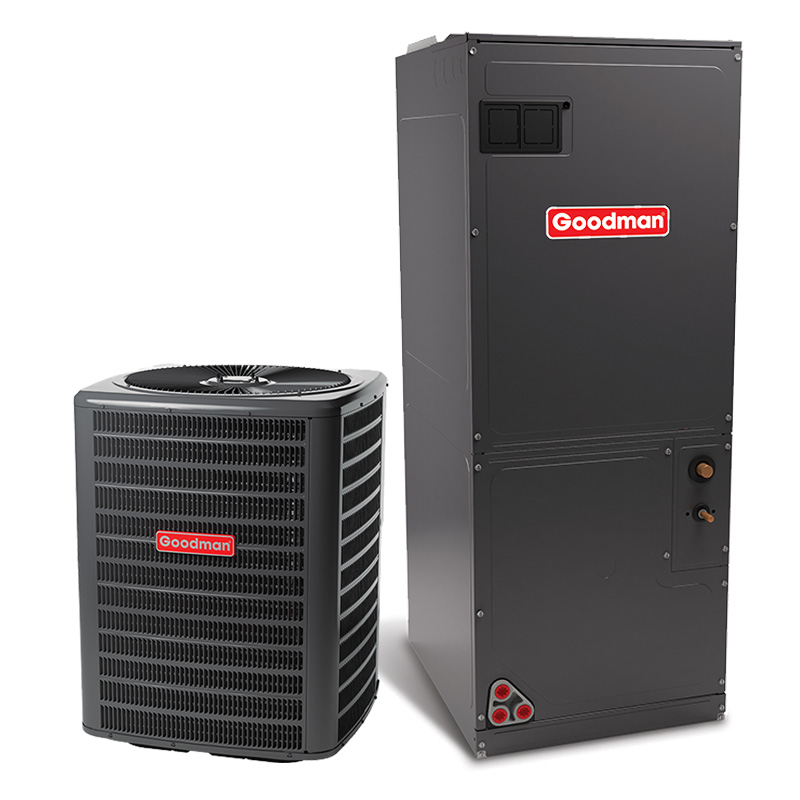
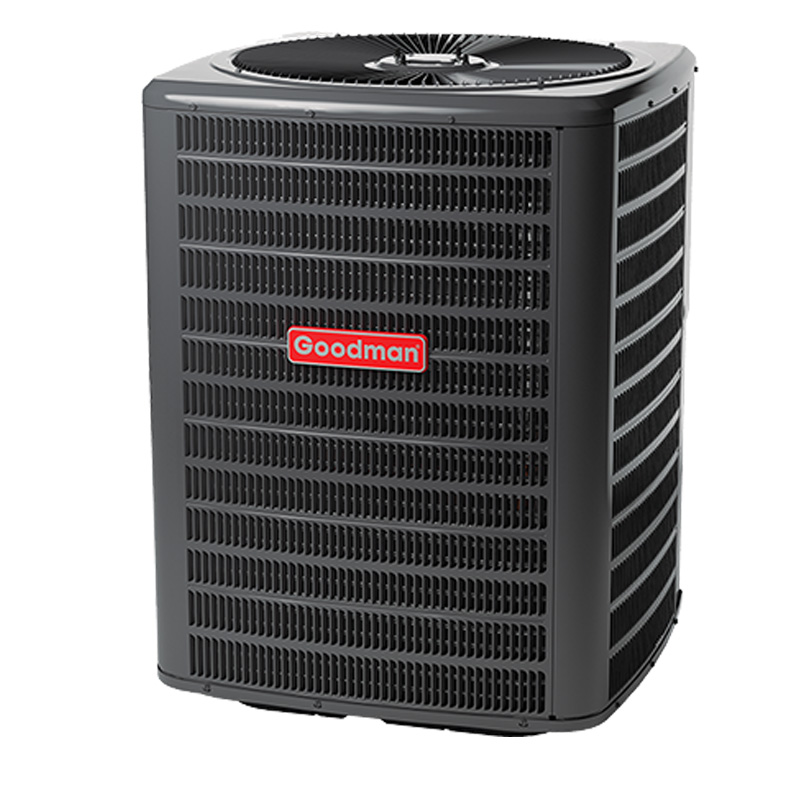
Goodman 2.5 Ton 13.8 SEER2 R32 Cooling Only System
View on AC Direct see your lowest price →Check current price on AC Direct →
Key features
- 2.5-ton capacity suited to homes roughly 1,200 to 1,600 sq ft depending on climate and load
- 13.8 SEER2 efficiency rating meets current federal minimums for the southern U.S.
- R-32 refrigerant with lower global warming potential than legacy R-410A
- Single-stage compressor operation for straightforward installation and servicing
- Cooling-only outdoor condensing unit requires a compatible indoor coil and air handler
- Goodman factory-installed copper tube and aluminum fin coil construction
About this system
The Goodman 2.5-ton 13.8 SEER2 cooling-only system is built around R-32 refrigerant, a lower-GWP alternative to the R-410A that dominated the market for decades. At 2.5 tons, this unit is sized for conditioned spaces roughly in the 1,200 to 1,600 square foot range, depending on climate, insulation quality, and local heat load. The 13.8 SEER2 rating sits at the entry tier of current federal minimum standards, meaning it will keep a home comfortable without delivering the utility bill savings that higher-efficiency two-stage or variable-speed systems can. For a buyer replacing an aging R-22 or R-410A unit and looking to get a functional, code-compliant system without a large upfront outlay, this configuration makes straightforward sense.
R-32 carries a few practical notes worth knowing before purchase. It operates at higher pressures than R-410A, which means any technician who services the unit needs certification and equipment rated for R-32 handling. The refrigerant is mildly flammable (A2L classification), so installation must follow updated code requirements regarding leak detection and airflow in confined spaces. On the upside, R-32 systems typically use less refrigerant by weight than R-410A equivalents, which can reduce recharge costs if a leak does occur. Goodman has been building R-32 equipment since the broader industry transition began, so this is not a first-generation design.
This system delivers reliable, code-compliant cooling at a price point that undercuts comparable Carrier, Trane, and Lennox offerings by a meaningful margin. The trade-off is a compressor lifespan and parts-failure record that trails premium brands, and long-term performance depends heavily on the quality of the installing contractor. Buyers willing to vet their installer carefully and budget for a possible capacitor or coil repair after year seven will find real value here.
Overall score is the average of the five ratings above.
What we like
- Purchase price typically 15 to 25 percent below comparable Carrier, Trane, and Lennox single-stage units
- R-32 refrigerant is lower-GWP and uses less charge by weight, potentially reducing future recharge costs
- Single-stage design is straightforward for most licensed HVAC technicians to service
- Replacement parts including capacitors are widely stocked and inexpensive relative to premium brands
- Meets current federal SEER2 minimums, making it a compliant drop-in replacement in most U.S. regions
Trade-offs
- Compressor longevity averages 10 to 14 years versus 15 to 20 years documented in premium brands
- Evaporator coil leaks appear in a meaningful share of owner reports and can be a costly mid-life repair
- Dual-run capacitor failures are the most commonly reported issue, typically surfacing after several years of use
- A minority of owners report refrigerant leaks within the first year, generally traced to install or initial charge quality rather than the unit itself
What homeowners and pros say about Goodman
Among homeowners who post about Goodman online, the conversation tends to split along two lines: satisfaction with the lower purchase price and frustration with repair costs that start climbing after year seven or so. On ConsumerAffairs, Goodman scores around 2.5 out of 5, and it is worth noting that platform attracts complaints more than praise, so the score skews negative. The recurring theme in those posts is unexpected repair bills in the mid-to-late years of ownership, with dual-run capacitor failures being the most commonly named culprit. A capacitor replacement typically runs in the 300 to 600 dollar range and is a quick fix, but it surprises owners who expected a longer trouble-free window. Evaporator coil leaks also appear in a notable share of reviews and represent a more significant repair. Compressor lifespan averaging 10 to 14 years versus the 15 to 20 years that owners of Trane or Lennox units sometimes report is a real and documented gap.
On Google dealer review pages, where buyers and technicians are rating their local contractor experience alongside the equipment, Goodman averages around 3.8 out of 5 across hundreds of reviews per location. Affordability is the word that comes up most, and many owners who went in with realistic expectations about the brand tier report solid satisfaction. HVAC technicians frequently note that a Goodman unit installed carefully by an experienced crew will outperform a premium brand installed carelessly, and that observation holds here given the documented link between installation quality and early refrigerant leaks. For a 2.5-ton R-32 cooling-only system at this efficiency tier, Goodman offers genuine value as long as the buyer accounts for the possibility of parts repairs in the back half of the system’s life.
Sources: ConsumerAffairs Goodman owner reviews, AHRI Directory of Certified Product Performance, U.S. DOE appliance and equipment efficiency standards, Goodman product specification sheets.
What it costs to run
At 13.8 SEER2, cooling this 2.5-ton system for a typical 1200-hour cooling season at the U.S. average electricity rate of $0.17/kWh works out to roughly $443 per year in cooling, about $14 less per year than a minimum-efficiency 13.4 SEER2 unit of the same size. Your real cost depends on your climate and local rate.
Method: (30,000 BTU/hr ÷ 13.8 SEER2) × 1200 hours ÷ 1000 × $0.17/kWh. Rate source: U.S. EIA average; cooling hours: moderate-climate estimate.
How it compares
| Brand | Comparable model | SEER2 | Stage | Price position |
|---|---|---|---|---|
| Goodman | 2.5-Ton 13.8 SEER2 R-32 Cooling Only | 13.8 | Single-stage | Value pick |
| Carrier | Comfort 13 (24ACC3 series) | 13.8 | Single-stage | Typically 15 to 25 percent more than Goodman |
| Trane | XR13 series | 13.8 | Single-stage | Typically 15 to 25 percent more than Goodman |
| Lennox | Merit 13ACX series | 13.8 | Single-stage | Typically 15 to 25 percent more than Goodman |
Competitor rows are comparable single-stage units at similar efficiency; price is relative position, not a quote.
Questions about this system
Do I need a special technician to work on an R-32 system?
Yes. R-32 is classified as an A2L mildly flammable refrigerant, so any technician who recovers, recharges, or repairs this system must have equipment rated for A2L handling and must follow updated code requirements for the space. Most established HVAC companies have already upgraded their tools, but it is worth confirming before you schedule service.
What is the warranty on this Goodman unit and what do I need to do to keep it valid?
Goodman typically offers a 10-year parts limited warranty when the unit is registered online within a set window after installation, often 60 days. Failure to register usually drops coverage to a shorter base period. The warranty covers parts but not labor, so a compressor replacement in year eight would still carry a real out-of-pocket labor cost.
How likely am I to need repairs in the first few years?
Most early-life issues with Goodman units trace back to installation quality rather than the equipment itself, and a small minority of owners report refrigerant leaks within the first year that are typically linked to improper charging. Choosing an experienced, licensed installer is the single biggest factor in avoiding early problems.
Is 13.8 SEER2 going to cost me noticeably more to run than a higher-efficiency unit?
Compared to a 16 or 17 SEER2 system, the annual energy cost difference on a 2.5-ton unit can range from roughly 50 to over 150 dollars per cooling season depending on local electricity rates and how many hours the system runs. In a moderate climate, the payback period on a higher-efficiency unit can stretch past a decade, so the lower upfront cost of this system can still make financial sense.
What indoor equipment does this outdoor unit need to work with?
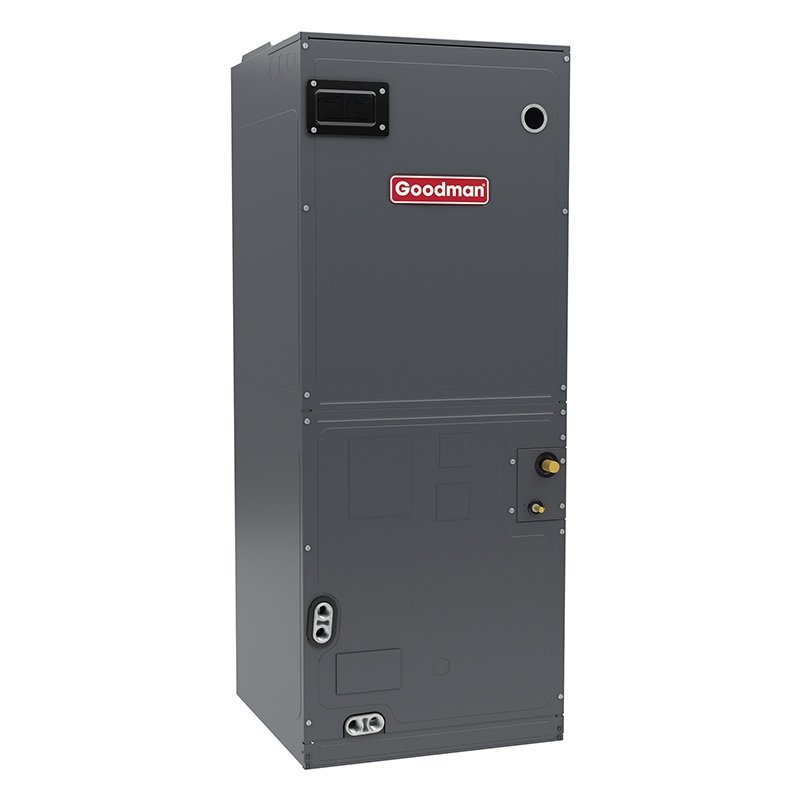
This is a cooling-only condensing unit, so it requires a compatible indoor evaporator coil and an air handler or furnace to move conditioned air through the home. You need to confirm that the indoor coil is rated for R-32 and that the full system combination meets SEER2 requirements for your region. Your installing contractor should verify matched-system documentation before ordering.
Specifications
| Cooling capacity | 2.5 Ton |
| Efficiency | 13.8 SEER2 |
| Refrigerant | R-32 |