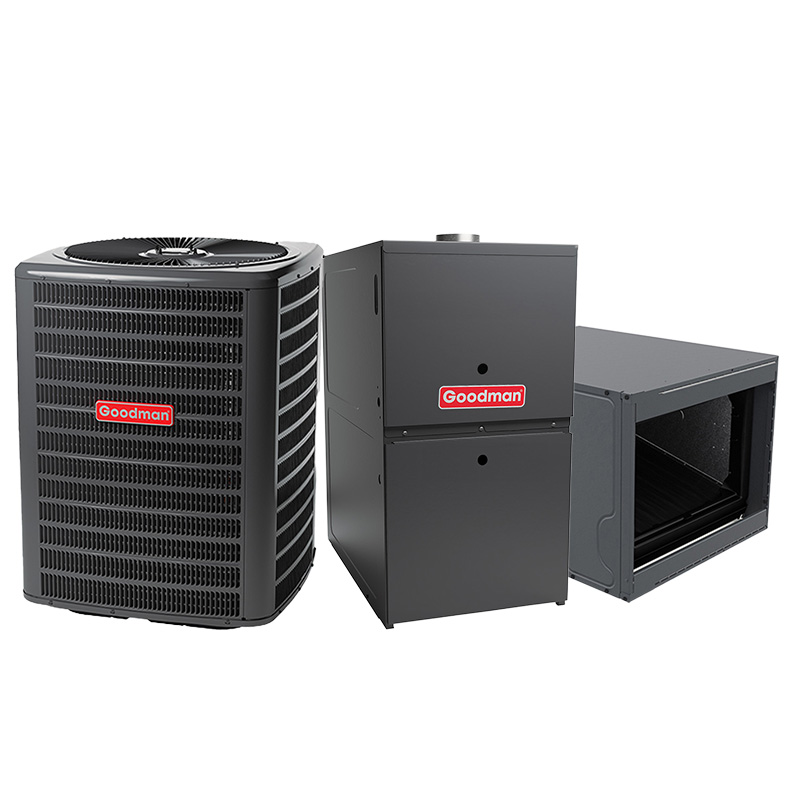
Goodman 2.5 Ton 14.3 SEER2 AC & Gas Furnace System – Two Stage Variable-Speed, 80000 BTU Low NOx Gas Furnace, 80% AFUE, Horizontal, R32
View on AC Direct see your lowest price →Check current price on AC Direct →
Key features
- Two-stage outdoor compressor reduces short-cycling and helps manage indoor humidity on partial-load days
- Variable-speed furnace blower adjusts airflow incrementally for more consistent temperatures and quieter operation
- Horizontal cabinet orientation designed for attic and crawl-space installations with limited vertical room
- R-32 refrigerant with a lower global-warming potential than R-410A
- 80,000 BTU output at 80% AFUE, sized for moderate heating loads in mixed climates
- 14.3 SEER2 rating meets current federal minimum efficiency standards for most U.S. regions
About this system
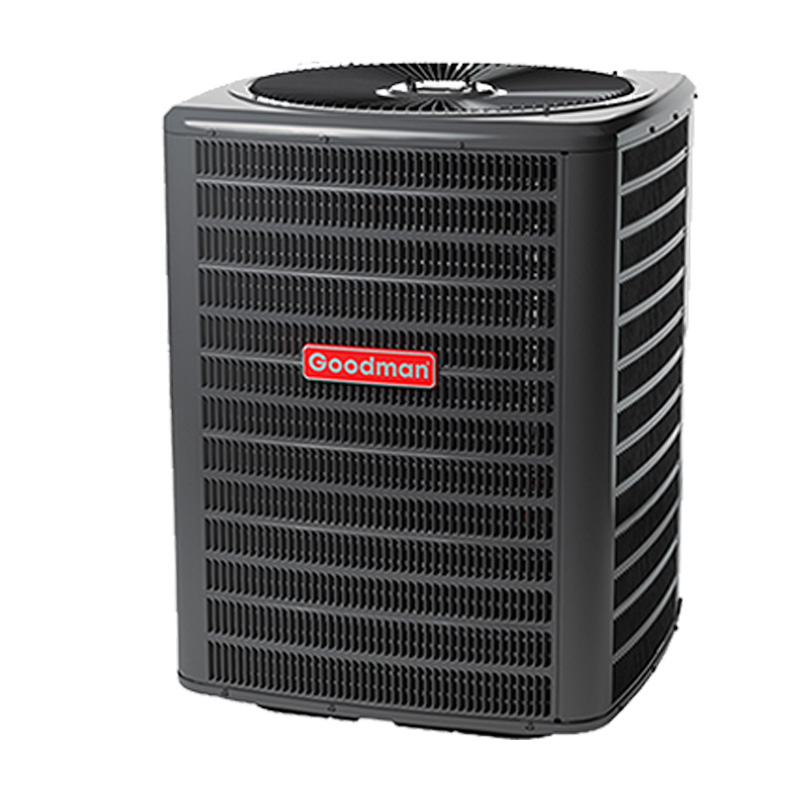
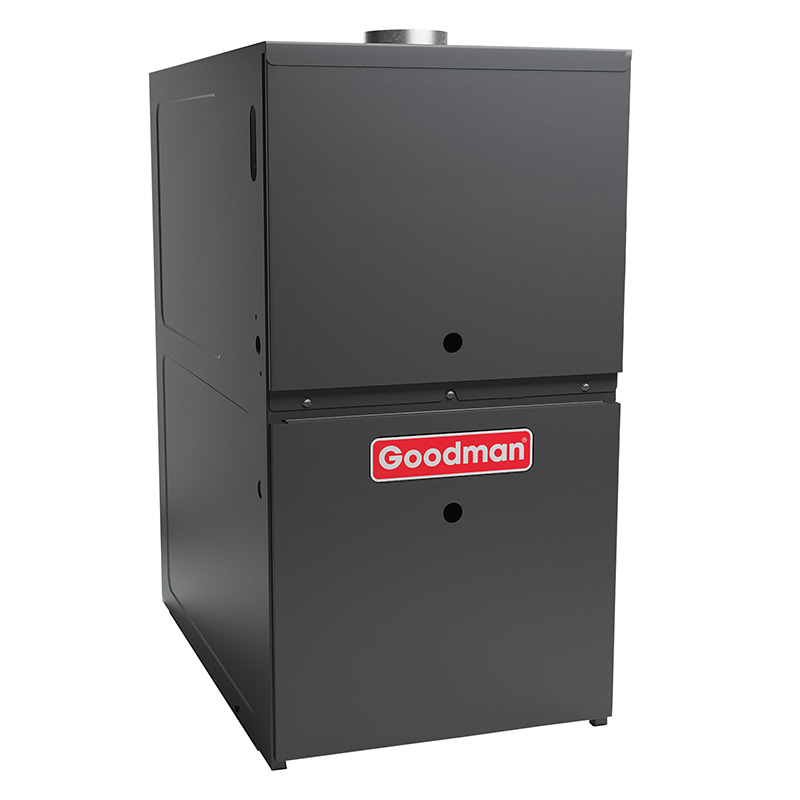
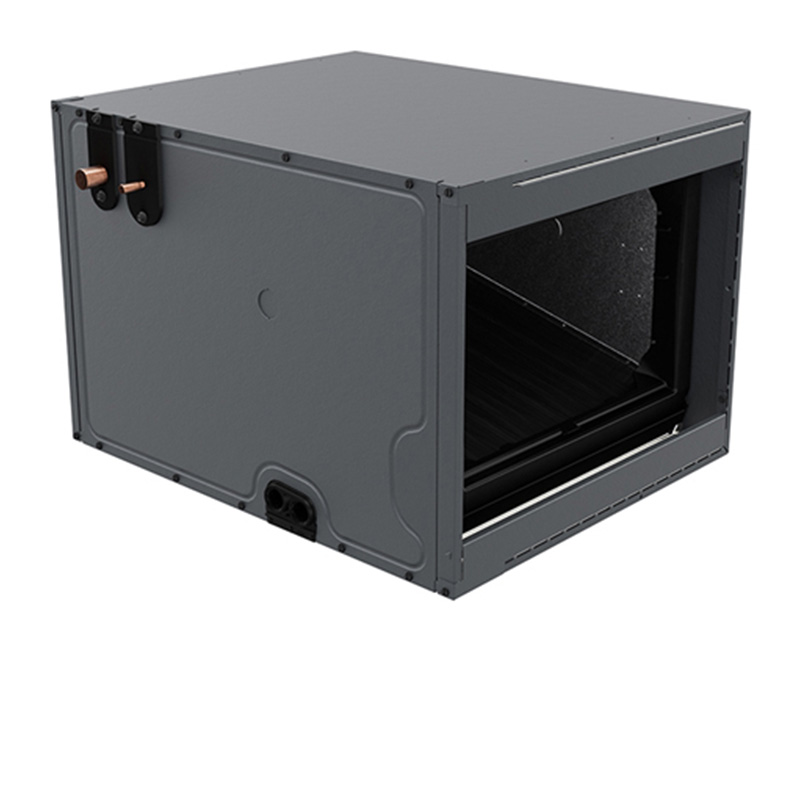
The Goodman 2.5-ton 14.3 SEER2 system pairs a two-stage air conditioner with a variable-speed, 80,000 BTU, 80% AFUE horizontal gas furnace. The horizontal configuration makes it a practical choice for attic or crawl-space installations where vertical clearance is limited. R-32 refrigerant carries a lower global-warming potential than the R-410A it replaces, and two-stage cooling lets the outdoor unit run at reduced capacity on mild days, cutting short-cycling and keeping humidity more in check than a single-stage unit can.
At 80% AFUE, roughly one-fifth of every fuel dollar exits as exhaust, so this furnace sits at the baseline efficiency tier rather than the high-efficiency category. That is a reasonable trade-off for homeowners in mixed or mild climates where heating loads are moderate, but households with long, cold winters may find that an upgrade to a 96% AFUE unit pays back the cost difference over time. The 14.3 SEER2 rating clears the current federal minimum for most U.S. regions and delivers a real improvement in operating cost over older 13 SEER equipment, though it falls short of the 16-plus SEER2 tier where efficiency gains become more pronounced.
This system suits a homeowner who needs a reliable replacement at a lower upfront cost, has an existing horizontal duct configuration, and is comfortable with the understanding that long-term cost of ownership depends heavily on a careful, certified installation and routine maintenance. It is not aimed at buyers prioritizing top-tier efficiency ratings or the longest possible service intervals without component work.
This Goodman bundle is a cost-conscious, functionally solid system for homeowners who need a horizontal-install replacement without stretching to a premium brand. The two-stage compressor and variable-speed blower add real comfort value at this price point, but buyers should budget for possible capacitor or coil service in the mid-life years and know that compressor longevity typically trails premium-brand equipment. Install quality will be the single largest factor in how this system performs over its lifetime.
Overall score is the average of the five ratings above.
What we like
- Purchase price typically 15 to 25 percent below comparable Carrier, Trane, and Lennox systems
- Two-stage cooling improves humidity control and comfort compared to single-stage alternatives at the same efficiency tier
- Variable-speed blower delivers quieter operation and more even temperature distribution
- Horizontal configuration covers an install scenario many other systems do not address without an accessory kit
- R-32 refrigerant is more environmentally responsible than R-410A and is expected to remain code-compliant well into the future
Trade-offs
- 80% AFUE is the baseline efficiency tier; homeowners in colder climates will pay notably higher fuel bills than with a 96% AFUE unit
- Dual-run capacitors are the most commonly reported failure point and often need replacement in the 7-to-10-year window, adding service cost
- Compressor lifespan averages 10 to 14 years versus 15 to 20 years for premium-brand compressors, which matters for long-term ownership planning
- A minority of owners have reported evaporator coil leaks and early refrigerant loss, often tied to install quality but still a documented pattern with the brand
What homeowners and pros say about Goodman
Goodman’s reputation in the trades is a study in honest trade-offs. On Google dealer review pages, the brand averages around 3.8 out of 5 stars across locations, where the consistent thread of praise is affordability and the observation that a well-installed Goodman system runs without drama for years. On ConsumerAffairs, the score drops to roughly 2.5 out of 5, a gap that reflects both the complaint-heavy nature of that channel and a real pattern: owners who encounter repair costs after year 7 often feel blindsided, particularly when dual-run capacitors fail or evaporator coil leaks require attention. These are not rare outlier events with Goodman equipment, and buyers should factor a moderate service budget into their long-term cost picture.
For this specific system, the most relevant documented concerns are capacitor failures in the mid-life window, a meaningful incidence of evaporator coil leaks in owner reviews, and compressor lifespans that historically average 10 to 14 years rather than the 15 to 20 years owners of Trane, Carrier, or Lennox equipment sometimes see. A small share of first-year refrigerant loss reports also appears in the record, and technicians are consistent in attributing that to installation or initial charge issues rather than to a factory defect. The takeaway for a buyer of this horizontal two-stage system is straightforward: choose a licensed, experienced installer, schedule annual maintenance, and treat the capacitor as a consumable part you will likely replace at least once before the compressor reaches the end of its service life.
Sources: ConsumerAffairs Goodman owner reviews, AHRI Directory of Certified Product Performance, U.S. DOE appliance and equipment efficiency standards, Goodman product specification sheets.
What it costs to run
At 14.3 SEER2, cooling this 2.5-ton system for a typical 1200-hour cooling season at the U.S. average electricity rate of $0.17/kWh works out to roughly $428 per year in cooling, about $29 less per year than a minimum-efficiency 13.4 SEER2 unit of the same size. Your real cost depends on your climate and local rate.
Method: (30,000 BTU/hr ÷ 14.3 SEER2) × 1200 hours ÷ 1000 × $0.17/kWh. Rate source: U.S. EIA average; cooling hours: moderate-climate estimate.
How it compares
| Brand | Comparable model | SEER2 | Stage | Price position |
|---|---|---|---|---|
| Goodman | GSZ-series / GMVM / CHPF horizontal bundle (this system) | 14.3 | two-stage | Value pick |
| Carrier | Comfort 14 series (24ACC4 / 58CVA) | 14.3 | single-stage | Typically 15 to 25 percent more than this Goodman system |
| Trane | XR14 series (4TTR4 / S8X1 80% furnace) | 14.3 | single-stage | Typically 15 to 25 percent more than this Goodman system |
| Lennox | Merit 14 series (14ACX / ML180 furnace) | 14.3 | single-stage | Typically 15 to 25 percent more than this Goodman system |
Competitor rows are comparable single-stage units at similar efficiency; price is relative position, not a quote.
Questions about this system
Is a horizontal furnace the same unit as a standard upflow model, just tipped on its side?
No. A horizontal furnace is specifically engineered for side-discharge airflow and has heat exchangers, drains, and cabinet bracing oriented for that position. Installing a standard upflow furnace on its side is not safe or code-compliant, so if your attic or crawl-space application requires horizontal orientation, this purpose-built configuration is the correct choice.
Why is R-32 being used instead of R-410A, and will parts and refrigerant be easy to find?
R-32 has a global-warming potential roughly two-thirds lower than R-410A and is part of the industry's shift away from high-GWP refrigerants ahead of regulatory deadlines. It is already widely used in equipment sold in Europe and Asia, and U.S. supply chains are expanding quickly, so availability should not be a concern for certified technicians going forward.
What does 80% AFUE actually cost me compared to a 96% AFUE furnace in a cold climate?
At 80% AFUE, 20 cents of every heating dollar is lost as exhaust. At 96% AFUE, that loss drops to about 4 cents. In a climate with 2,000 or more heating hours per year, the difference on a gas bill can be meaningful enough that a 96% unit pays back its cost premium within several years, depending on local gas prices and the size of your home.
How worried should I be about the documented capacitor failures with Goodman equipment?
Dual-run capacitor replacement is the most commonly reported service call for Goodman AC systems, typically surfacing around year 7 or later. The repair itself usually runs between 300 and 600 dollars with a technician, which is a manageable and predictable maintenance cost rather than a catastrophic failure. Keeping up with annual tune-ups often catches a weakening capacitor before it causes a no-cooling breakdown.
Does this system qualify for the federal energy efficiency tax credit?
As of current IRS guidance under the Inflation Reduction Act, the 25C tax credit for central AC requires a minimum 16 SEER2 rating, and the furnace credit requires 97% AFUE for gas units in most configurations. At 14.3 SEER2 and 80% AFUE, this particular system does not meet those thresholds, so buyers should not count on the federal credit. State or utility rebates vary and are worth checking separately.
Specifications
| Cooling capacity | 2.5 Ton |
| Efficiency | 14.3 SEER2 |
| Furnace output | 80000 BTU |
| Furnace efficiency | 80% AFUE |
| Configuration | Horizontal |
| Refrigerant | R-32 |