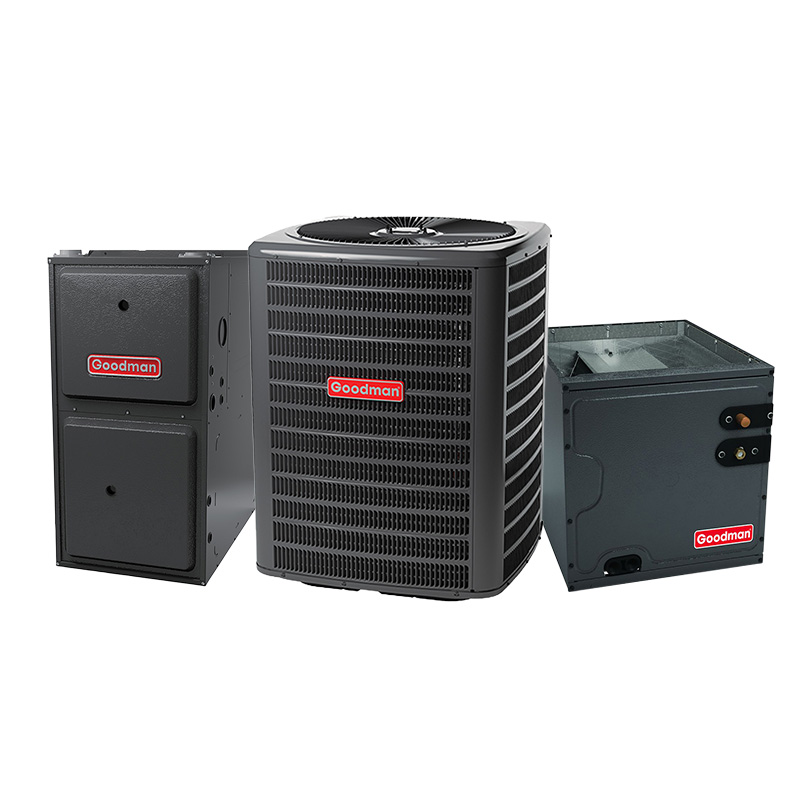
Goodman 2.5 Ton 14.3 SEER2 Dual Fuel Heat Pump & Gas Furnace Hybrid System – Modulating Variable-Speed, 60000 BTU Gas Furnace, 97% AFUE, Upflow, R32
View on AC Direct see your lowest price →Check current price on AC Direct →
Key features
- Dual fuel hybrid operation automatically selects heat pump or gas heat based on efficiency and outdoor conditions
- 97% AFUE modulating gas furnace minimizes combustion waste and allows fine-grained output adjustments
- Variable-speed blower improves comfort and humidity control compared to single- or two-stage blowers
- 14.3 SEER2 cooling efficiency meets current federal standards for most U.S. climate regions
- R-32 refrigerant offers a lower global warming potential than the R-410A used in older systems
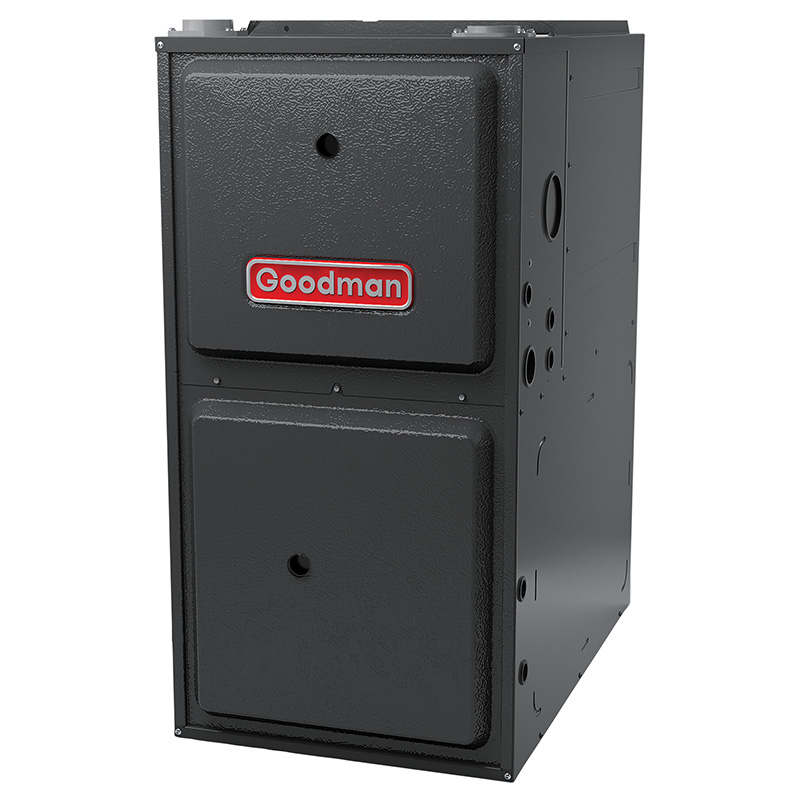
- Upflow configuration designed for basement, crawlspace, or utility-room installs where air is distributed upward
About this system
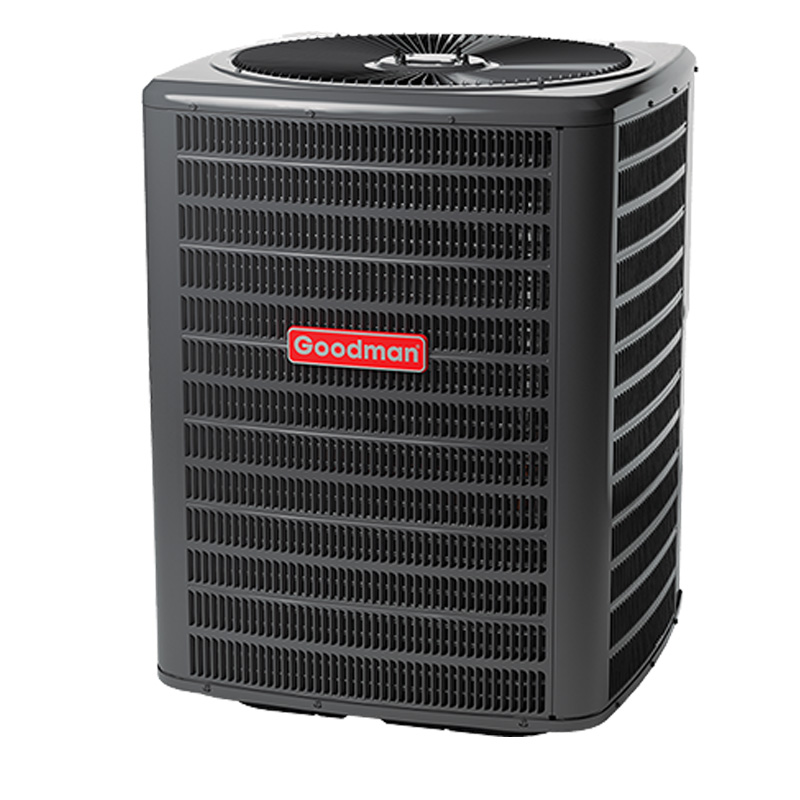
The Goodman GLZS4BA3010 is a 2.5-ton dual fuel hybrid system that pairs a variable-speed, modulating heat pump with a 60,000 BTU, 97% AFUE upflow gas furnace. The hybrid setup is the key selling point: the system automatically switches between electric heat pump operation and gas furnace heat depending on outdoor temperatures, leaning on whichever fuel source costs less to run at any given moment. That logic works especially well in climates that see mild winters punctuated by occasional cold snaps, where a heat pump alone would lose efficiency but a pure gas system would waste money on moderate days.
At 14.3 SEER2 and 97% AFUE, this system sits at a respectable efficiency tier without reaching the upper end of the market. The 14.3 SEER2 rating meets current federal minimums for most U.S. regions and will deliver meaningfully lower cooling bills than older 13 SEER equipment, though it falls short of the 17 to 20 SEER2 ratings available at a higher price point. The 97% AFUE furnace is a genuinely strong spec, meaning only about 3% of combustion energy escapes as exhaust. The R-32 refrigerant charge is a forward-looking choice: R-32 has a lower global warming potential than the R-410A it replaces and is increasingly standard in new residential equipment. The upflow configuration suits homes with basement or utility-closet installs where conditioned air rises into the living space.
This system is best suited to budget-conscious homeowners in mixed-climate regions who want the fuel-flexibility of a hybrid without the premium price of a Carrier, Trane, or Lennox equivalent. It rewards buyers who invest in a thorough installation by a licensed technician, since Goodman’s real-world longevity is more sensitive to install quality than that of some premium brands.
The Goodman GLZS4BA3010 delivers a solid combination of fuel-flexible hybrid operation and high-efficiency gas heat at a price point that is meaningfully lower than comparable Carrier, Trane, or Lennox systems. Its 97% AFUE furnace and variable-speed blower are genuine strengths, but buyers should go in knowing that compressor longevity and coil reliability are areas where Goodman trails premium competitors. A quality installation by an experienced technician is not optional here, it is the single biggest variable in how well and how long this system performs.
Overall score is the average of the five ratings above.
What we like
- Hybrid dual fuel logic can reduce heating costs in climates with variable winters by optimizing between electricity and gas
- 97% AFUE furnace is among the most efficient gas heat specs available at any price tier
- Variable-speed modulating operation improves dehumidification and reduces temperature swings compared to fixed-speed systems
- R-32 refrigerant is a more environmentally responsible choice with lower global warming potential
- Entry-level price point, typically 15 to 25 percent below comparable Trane, Carrier, and Lennox hybrid systems, lowers the upfront cost barrier
Trade-offs
- Dual-run capacitors are the most frequently reported failure on Goodman equipment, often needed within 5 to 8 years, adding service call costs
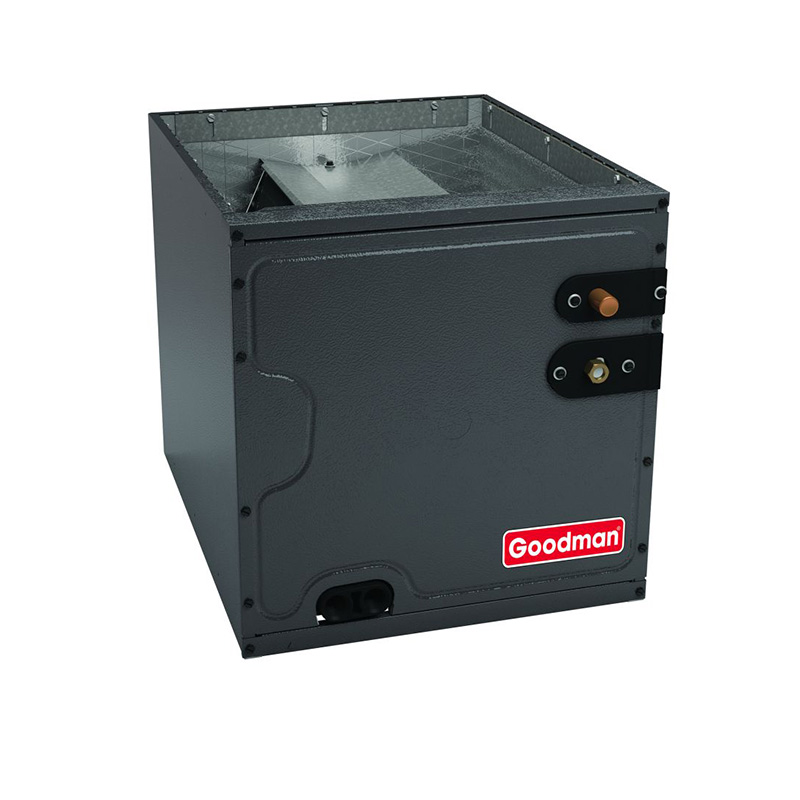
- Evaporator coil leaks appear in a meaningful share of owner reports, potentially requiring costly repairs outside the compressor warranty window
- Compressor lifespan averages 10 to 14 years versus 15 to 20 years documented for premium-brand compressors, a real long-term cost consideration
- A minority of first-year owners report refrigerant leaks, typically traced to installation or factory charge issues rather than a component defect, underscoring how critical installer selection is
What homeowners and pros say about Goodman
Owners and contractors who review Goodman equipment on channels like ConsumerAffairs give the brand roughly 2.5 out of 5, a score that reflects a complaint-heavy audience but also a real pattern: repair costs that climb noticeably after about year seven. Google dealer reviews land closer to 3.8 out of 5, where the most consistent praise is straightforward affordability relative to the competition. For this particular hybrid system, the feedback split tends to fall along installation lines. Technicians who spec the equipment correctly and take time with the refrigerant charge and balance point settings report satisfied customers. Those who cut corners on commissioning tend to see the first-year refrigerant leak complaints that show up in a minority of Goodman owner reports, almost always traced back to install or charge issues rather than a factory defect.
The failure modes most commonly cited for Goodman equipment in general apply here: dual-run capacitors are the most frequently replaced part and usually a low-drama, low-cost repair in the 300 to 600 dollar range; evaporator coil leaks are less common but more expensive when they do occur; and compressor lifespan averaging 10 to 14 years falls measurably short of the 15 to 20 years more often seen with Carrier, Trane, and Lennox compressors. For a dual fuel hybrid specifically, none of those failure modes change the core value proposition, but they do argue for budgeting a service agreement or extended labor warranty and for not skimping on contractor selection. The equipment price savings are real; the long-term math only stays favorable if the install is done right from the start.
Sources: ConsumerAffairs Goodman owner reviews, AHRI Directory of Certified Product Performance, U.S. DOE appliance and equipment efficiency standards, Goodman product specification sheets.
What it costs to run
At 14.3 SEER2, cooling this 2.5-ton system for a typical 1200-hour cooling season at the U.S. average electricity rate of $0.17/kWh works out to roughly $428 per year in cooling, about $29 less per year than a minimum-efficiency 13.4 SEER2 unit of the same size. Your real cost depends on your climate and local rate.
Method: (30,000 BTU/hr ÷ 14.3 SEER2) × 1200 hours ÷ 1000 × $0.17/kWh. Rate source: U.S. EIA average; cooling hours: moderate-climate estimate.
How it compares
| Brand | Comparable model | SEER2 | Stage | Price position |
|---|---|---|---|---|
| Goodman | GLZS4BA3010 (this system) | 14.3 | Variable / Modulating | Value pick |
| Carrier | Performance Dual Fuel Series (25HCB / 58MVC pairing) | 14.3–15.2 | Two-stage / Variable | Typically 15 to 25 percent more than Goodman |
| Trane | XR15 Heat Pump with S9V2 Gas Furnace Hybrid | 14.3–15.0 | Two-stage / Variable | Typically 15 to 25 percent more than Goodman |
| Lennox | Merit ML14XP1 Heat Pump with SL280V Gas Furnace Hybrid | 14.3–15.1 | Two-stage / Variable | Typically 15 to 25 percent more than Goodman |
Competitor rows are comparable single-stage units at similar efficiency; price is relative position, not a quote.
Questions about this system
How does the system decide when to use the heat pump versus the gas furnace?
The system uses a balance point temperature, typically set during installation, below which gas heat is more cost-effective and the furnace takes over. Above that threshold the heat pump handles heating. Your installer should set this balance point based on your local utility rates and climate to maximize fuel savings.
Is R-32 refrigerant safe, and will it be easy to find technicians who can service it?
R-32 is mildly flammable but has been used safely in residential equipment in Europe and Asia for years, and is increasingly standard in U.S. systems. Most licensed HVAC technicians are being trained on R-32 handling, but it is worth confirming your service contractor is certified before scheduling work.
What is the warranty on this Goodman system?
Goodman typically offers a 10-year parts warranty when the unit is registered within 60 days of installation, covering major components including the compressor and heat exchanger. Failure to register usually reduces coverage to 5 years, so registration shortly after install is important.
How concerned should I be about the capacitor and coil failure reports?
Capacitor failures are real but relatively inexpensive to fix, generally in the 300 to 600 dollar range including a service call, and they are a known maintenance item on Goodman equipment. Evaporator coil leaks are more expensive and less predictable, so budgeting for an extended labor warranty from your installer is a reasonable precaution.
Will a 2.5-ton, 60,000 BTU system be enough for my home?
Proper sizing depends on a Manual J load calculation based on your home's square footage, insulation, window area, and local climate, not a square-footage rule of thumb. Running oversized or undersized, especially in a hybrid system, reduces efficiency and comfort, so ask your contractor to perform this calculation before purchase.
Specifications
| Cooling capacity | 2.5 Ton |
| Efficiency | 14.3 SEER2 |
| Furnace output | 60000 BTU |
| Furnace efficiency | 97% AFUE |
| Configuration | Upflow |
| Refrigerant | R-32 |
| Model | GLZS4BA3010 |