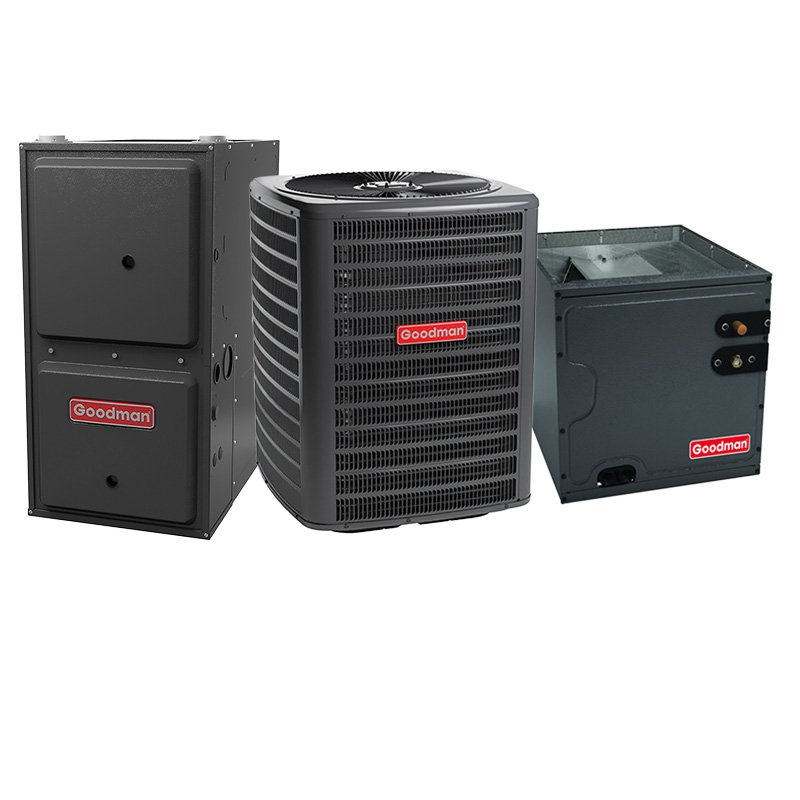
Goodman 2.5 Ton 14.5 SEER2 60000 BTU 80% AFUE Two Stage Multi-Speed ECM Gas Furnace System – Low NOX For California Downflow | R32
View on AC Direct see your lowest price →Check current price on AC Direct →
Key features
- 14.5 SEER2 cooling efficiency meets 2023 federal minimum for the western U.S.
- 60,000 BTU two-stage furnace at 80% AFUE reduces temperature swings vs. single-stage
- Multi-speed ECM blower motor lowers fan electricity use and improves airflow consistency
- Downflow configuration designed for floor-register duct systems and platform installs
- R-32 refrigerant with lower global warming potential than R-410A
- California Low NOX certified, meeting South Coast AQMD and CARB NOX emissions limits
About this system
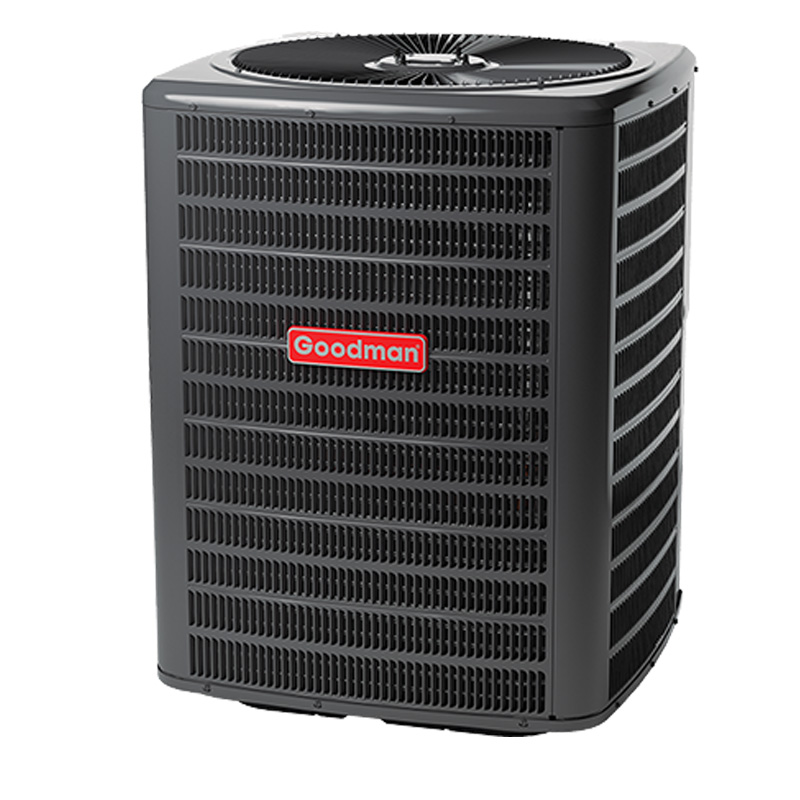
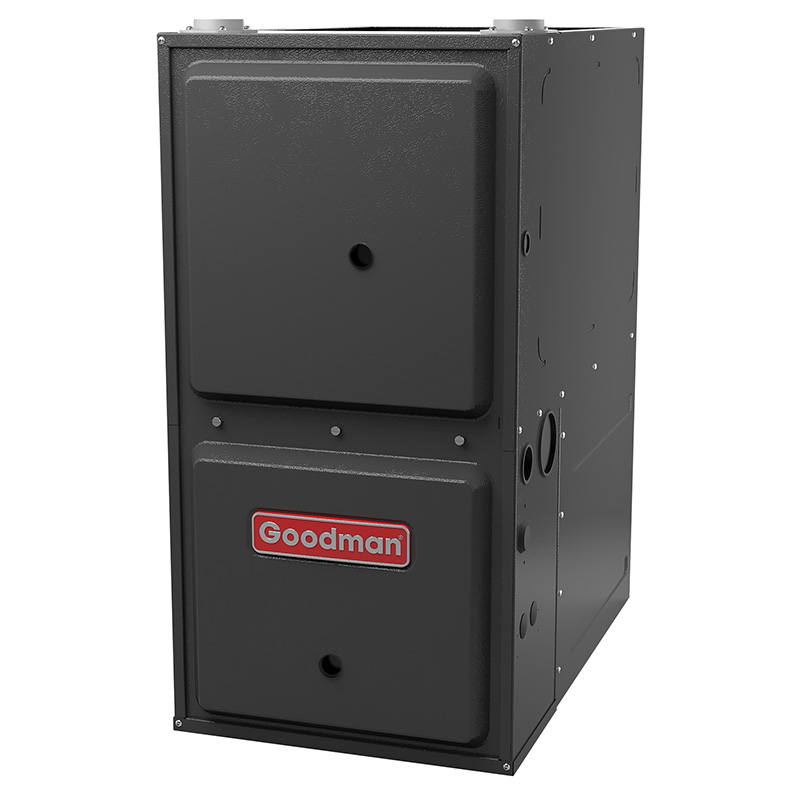
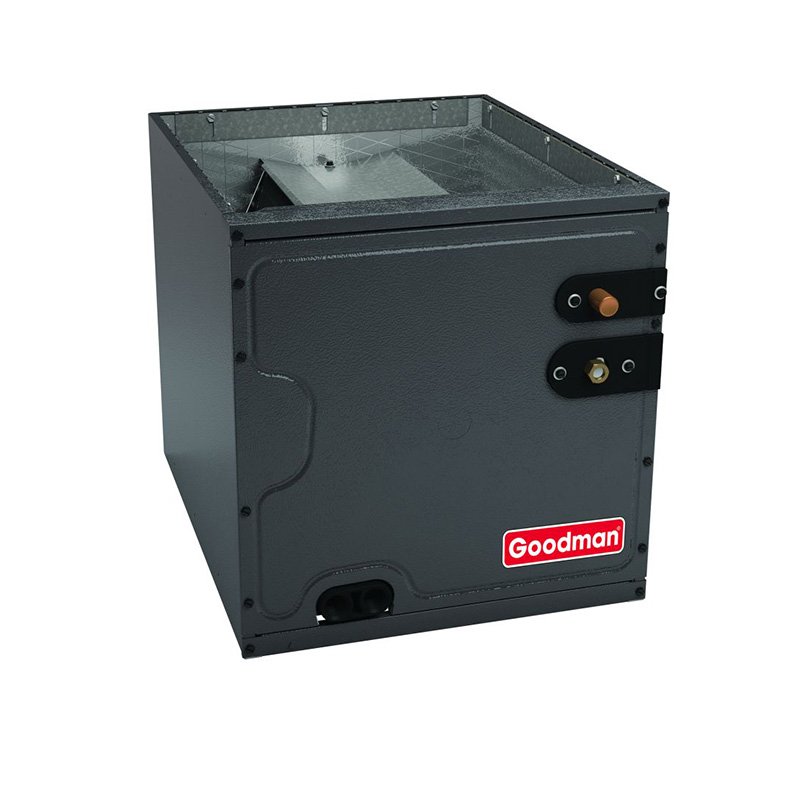
The Goodman GLXS4BA3010 is a 2.5-ton, 14.5 SEER2 split system paired with a 60,000 BTU, 80% AFUE two-stage gas furnace in a downflow configuration. It is built specifically for California’s Low NOX emissions requirements and uses R-32 refrigerant, which carries a lower global warming potential than the R-410A it replaces. The downflow orientation directs conditioned air downward through floor registers, making it a practical fit for homes with basement or crawlspace ductwork, or for platform-mounted installs in utility closets.
The two-stage furnace and multi-speed ECM blower are the standout features here. Two-stage heating means the furnace runs at a lower capacity most of the time, cycling up to full output only on the coldest days. That translates to fewer temperature swings, quieter operation compared to single-stage units, and marginally better fuel efficiency within the 80% AFUE tier. The ECM motor adjusts airflow continuously rather than running at a fixed speed, which reduces electricity use at the air handler and improves humidity management. At 14.5 SEER2, the cooling side meets the current federal minimum for the western U.S. but does not qualify for most utility rebate programs that start at 15 or 16 SEER2, so buyers chasing rebates should verify local thresholds before purchasing.
This system is a reasonable fit for mild-to-moderate California climates where cooling loads are not extreme and heating costs are the bigger annual concern. It suits budget-conscious homeowners who want a step up from a basic single-stage setup without paying for a variable-capacity system they may not need. The Low NOX certification is a requirement, not a bonus, for California buyers, so that box is already checked here.
This Goodman bundle delivers two-stage comfort features at a price point well below comparable Carrier, Trane, or Lennox systems, and the Low NOX, R-32 spec clears California regulatory hurdles out of the box. The 80% AFUE furnace and entry-level SEER2 rating mean long-term operating costs are higher than mid- or high-efficiency alternatives, and Goodman's documented reliability record requires buyers to budget realistically for components like capacitors and coil maintenance past the seven-year mark. It is a sensible choice when upfront cost is the priority and a quality installation is guaranteed.
Overall score is the average of the five ratings above.
What we like
- Priced 15 to 25 percent below comparable Trane, Lennox, and Carrier two-stage systems
- Two-stage furnace and ECM blower provide noticeably more even heating than single-stage alternatives at this price
- R-32 refrigerant satisfies current and near-term California refrigerant transition requirements
- Low NOX certification is pre-cleared for California sale and installation without additional modifications
- Downflow cabinet is purpose-built for the configuration, reducing install complexity versus a universal-fit unit
Trade-offs
- 80% AFUE leaves roughly 20 cents of every heating dollar as exhaust heat, a meaningful gap versus 95%+ condensing furnaces over a 10- to 15-year service life
- 14.5 SEER2 sits at the regulatory floor and falls short of the 15 to 16 SEER2 threshold required by many California utility rebate programs
- Goodman's documented failure points, including dual-run capacitors, evaporator coil leaks, and compressor lifespans averaging 10 to 14 years, mean repair costs tend to climb after year seven
- Final system performance is heavily dependent on installation quality; a rushed or imprecise charge or duct seal can undercut the efficiency and reliability numbers on the spec sheet
What homeowners and pros say about Goodman
Owners and dealers who leave Goodman reviews on Google tend to land around 3.8 out of 5 stars, with affordability showing up repeatedly as the main reason someone chose the brand. The message from that audience is consistent: you get a functional, recognizable system for meaningfully less money than a Carrier, Trane, or Lennox equivalent, and when the install is done right it runs without drama for the first several years. For this specific system, buyers in California add a practical note about R-32 and Low NOX compliance being built in, removing one layer of paperwork and contractor negotiation from the purchase process.
The harder reading comes from ConsumerAffairs, where Goodman scores closer to 2.5 out of 5 on a platform that skews toward people who had a bad experience worth writing about. The recurring theme there is not early catastrophic failure but rather repair costs that start adding up after roughly year seven, which lines up with the documented failure profile for the brand: dual-run capacitors are the most frequently cited repair, usually in the 300 to 600 dollar range; evaporator coil leaks appear in a meaningful slice of owner accounts; and compressor longevity averaging 10 to 14 years falls short of what premium brands tend to deliver. HVAC technicians who work on Goodman equipment regularly tend to frame it the same way: the equipment itself is adequate, but a sloppy installation will surface problems faster with Goodman than it would with a more forgiving premium unit, and that is worth factoring in when vetting your contractor.
Sources: ConsumerAffairs Goodman owner reviews, AHRI Directory of Certified Product Performance, U.S. DOE appliance and equipment efficiency standards, Goodman product specification sheets.
What it costs to run
At 14.5 SEER2, cooling this 2.5-ton system for a typical 1200-hour cooling season at the U.S. average electricity rate of $0.17/kWh works out to roughly $422 per year in cooling, about $35 less per year than a minimum-efficiency 13.4 SEER2 unit of the same size. Your real cost depends on your climate and local rate.
Method: (30,000 BTU/hr ÷ 14.5 SEER2) × 1200 hours ÷ 1000 × $0.17/kWh. Rate source: U.S. EIA average; cooling hours: moderate-climate estimate.
How it compares
| Brand | Comparable model | SEER2 | Stage | Price position |
|---|---|---|---|---|
| Goodman | GLXS4BA3010 (this system) | 14.5 | two-stage | Value pick |
| Carrier | Comfort 14 (24ACC4) with 58MCA furnace | 14.3-14.5 | single-stage | Typically 15 to 25 percent more than this Goodman bundle |
| Trane | XR14c with S8X1 furnace | 14.0-14.5 | single-stage | Typically 15 to 25 percent more than this Goodman bundle |
| Lennox | Merit 14ACX with ML180 furnace | 14.3 | single-stage | Typically 15 to 25 percent more than this Goodman bundle |
Competitor rows are comparable single-stage units at similar efficiency; price is relative position, not a quote.
Questions about this system
Does this system qualify for California utility rebates or the federal tax credit?
At 14.5 SEER2, it meets the 2023 federal minimum for the West but falls below the 15 to 16 SEER2 threshold most California utilities require for cooling rebates. The 80% AFUE furnace also does not qualify for the federal 25C tax credit, which requires 97% AFUE for gas furnaces. Check your specific utility program before purchasing if rebates are part of your budget math.
Why does the furnace use a downflow configuration, and can I install it in a different orientation?
Downflow means the blower pulls return air in at the top and pushes conditioned air out the bottom, directing it into floor-level ductwork. The GLXS4BA3010 cabinet is specifically rated for downflow installation only and should not be field-converted to upflow or horizontal; using the wrong orientation risks heat exchanger damage and carbon monoxide hazards.
What are the most likely repair costs I should budget for over a 10-year ownership period?
Based on documented Goodman failure patterns, dual-run capacitor replacement is the most common service call and typically runs 300 to 600 dollars. Evaporator coil leaks are also reported by a meaningful share of owners and carry higher repair costs. Goodman compressors tend to average 10 to 14 years versus 15 to 20 for premium brands, so budgeting for a potential compressor repair or system replacement in that window is realistic.
Is R-32 refrigerant readily available in California, and will service be more expensive than R-410A?
R-32 availability is growing as California accelerates its transition away from higher-GWP refrigerants, and most commercial HVAC suppliers stock it. Service costs are currently similar to R-410A in most markets, though technicians do need specific equipment and training to handle R-32 safely due to its mild flammability rating. Confirm your service contractor is R-32 certified before scheduling any refrigerant work.
A small number of Goodman owners report refrigerant leaks in the first year. What causes that, and how do I protect myself?
First-year refrigerant leaks on Goodman systems are most commonly attributed to improper installation or an inaccurate factory charge rather than a defect in the equipment itself. Protecting yourself means hiring a licensed contractor who will perform a nitrogen pressure test before charging, verify the charge with superheat and subcooling measurements, and provide documentation of the completed startup. Register the equipment with Goodman within the required window to preserve the full parts warranty coverage.
Specifications
| Cooling capacity | 2.5 Ton |
| Efficiency | 14.5 SEER2 |
| Furnace output | 60000 BTU |
| Furnace efficiency | 80% AFUE |
| Configuration | Downflow |
| Refrigerant | R-32 |
| Model | GLXS4BA3010 |