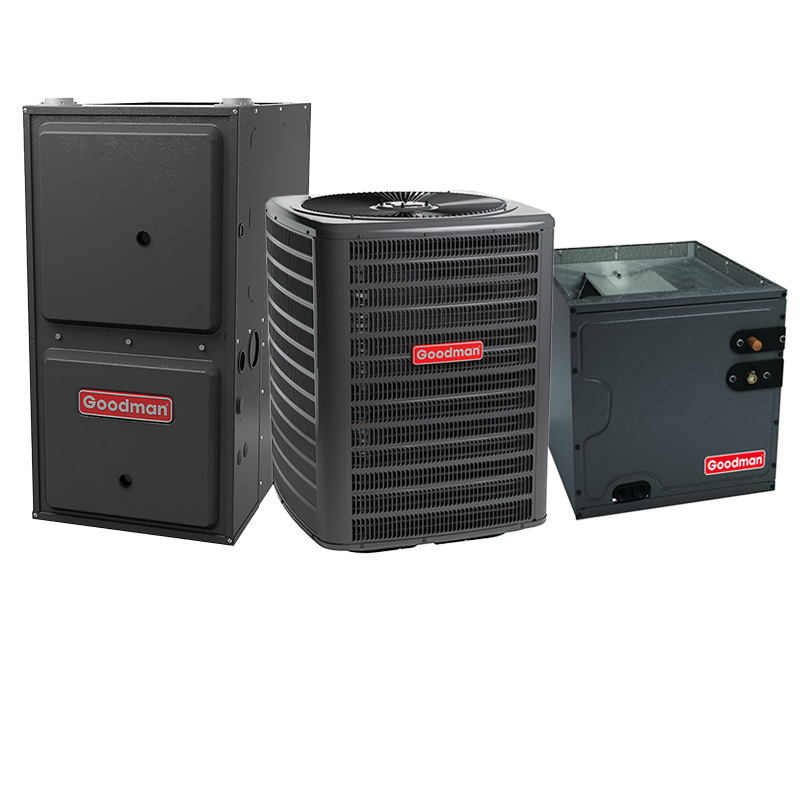
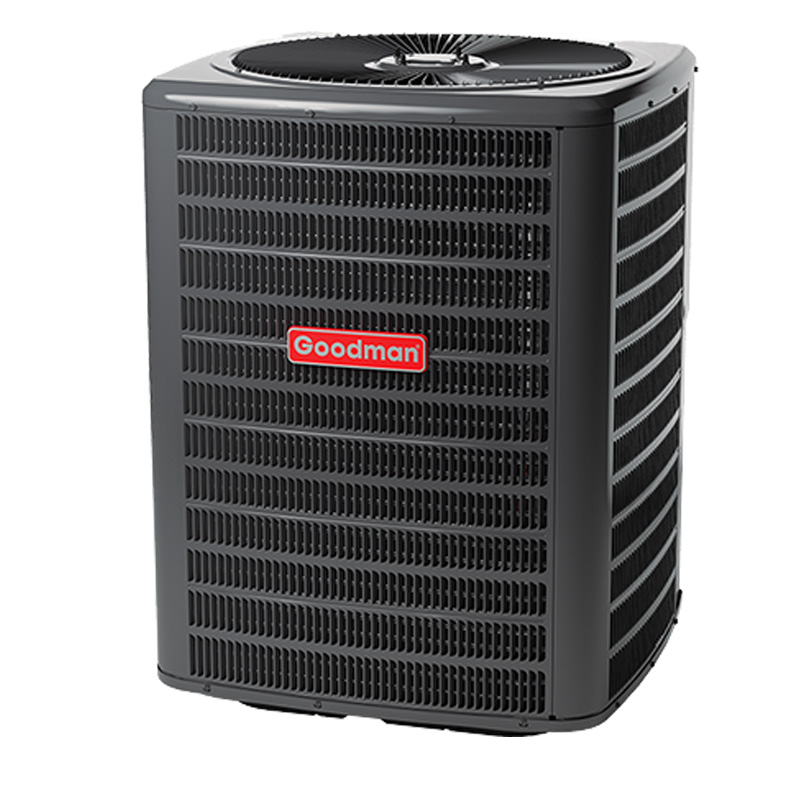
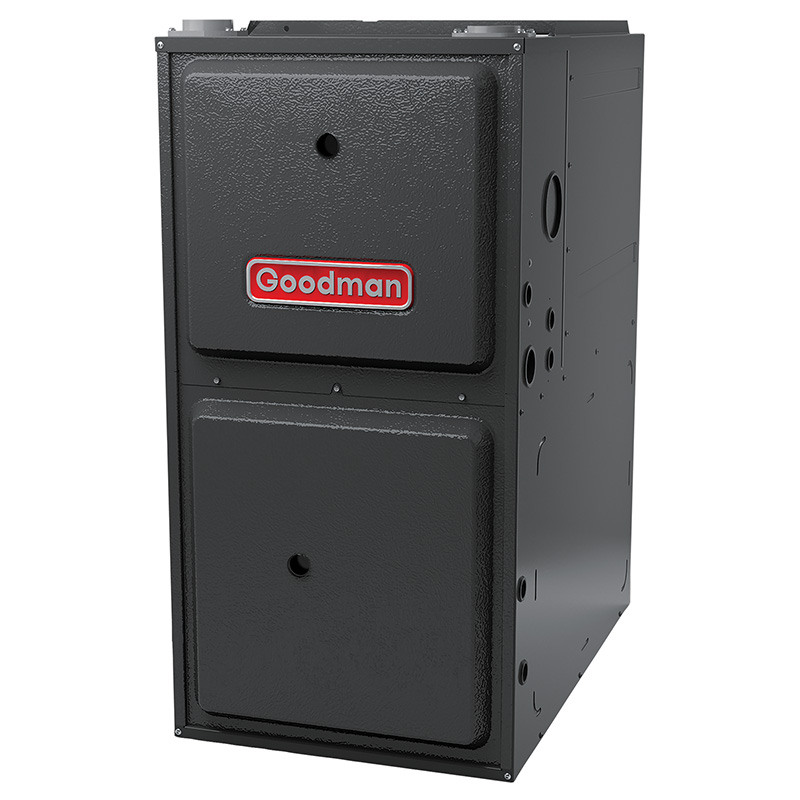
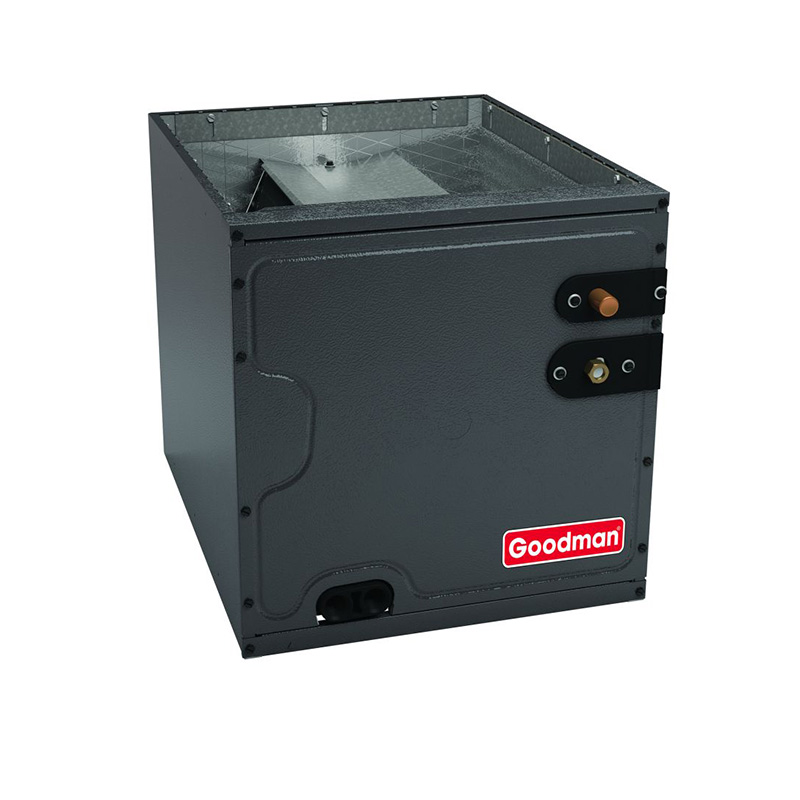
Goodman 2.5 Ton 14.5 SEER2 R32 AC System with 40,000 BTU 96% AFUE Gas Furnace – California & Colorado Ultra Low NOx, Upflow, Multi-Speed ECM
View on AC Direct see your lowest price →Check current price on AC Direct →
Key features
- California and Colorado Ultra Low NOx certified for both the furnace and outdoor unit
- R-32 refrigerant with lower global warming potential than legacy R-410A systems
- 96% AFUE upflow gas furnace minimizes fuel waste in heating-dominated climates
- Multi-speed ECM blower motor reduces fan electricity use and smooths airflow
- 14.5 SEER2 cooling efficiency meets current federal minimum standards for northern and western states
- 2.5-ton capacity sized for approximately 1,200 to 1,600 square feet depending on load conditions
About this system
The Goodman 2.5 Ton 14.5 SEER2 R-32 AC and 96% AFUE gas furnace package is engineered specifically for California and Colorado Ultra Low NOx requirements, meaning it meets the tightest nitrogen oxide emission standards in the country without needing an aftermarket add-on. The 2.5-ton cooling capacity is well-suited for conditioned spaces in the 1,200 to 1,600 square foot range, depending on local climate, insulation, and window area. The upflow furnace configuration is the most common residential orientation, directing heated air upward into a return-and-supply trunk system, so it fits naturally in a basement, closet, or utility room where ductwork runs overhead.
On the cooling side, 14.5 SEER2 sits at the federal minimum threshold for new equipment in most northern and western regions, so this is not a high-efficiency showcase unit. It will deliver meaningful energy savings over aging 10 to 13 SEER equipment but will not match the operating cost reductions of 17 or 18 SEER2 systems. The R-32 refrigerant is a forward-looking choice: it has a lower global warming potential than the R-410A it replaces and is becoming the industry standard, which should keep service refrigerant available long-term. The 96% AFUE furnace with a multi-speed ECM blower motor is the stronger efficiency story here, converting nearly all fuel to usable heat and running the fan at variable speeds to reduce electricity draw and improve humidity control across both heating and cooling seasons.
This system is a practical choice for budget-conscious homeowners in ULN jurisdictions who need a code-compliant replacement without paying a premium brand markup. It is not designed to impress on paper with top-tier SEER2 numbers, but the combination of a near-condensing furnace and a code-minimum air conditioner covers the basics reliably when professionally installed and maintained.
This Goodman system earns its place as a budget-friendly, code-compliant solution for ULN markets, pairing a genuinely efficient furnace with entry-level cooling efficiency at a price point well below Trane, Carrier, and Lennox equivalents. The 96% AFUE furnace and ECM blower are legitimate strengths, while the 14.5 SEER2 cooling rating leaves performance on the table compared to mid-tier options. Long-term ownership costs will depend heavily on install quality and whether you budget for proactive capacitor and coil maintenance after year seven.
Overall score is the average of the five ratings above.
What we like
- ULN-certified out of the box for California and Colorado, no additional compliance steps required
- 96% AFUE furnace is near the top of standard residential efficiency tiers, reducing gas bills meaningfully versus 80% AFUE units
- Multi-speed ECM blower cuts fan operating costs and improves dehumidification performance during cooling season
- R-32 refrigerant is the emerging industry standard, supporting long-term parts and refrigerant availability
- Priced 15 to 25 percent below comparable Carrier, Trane, and Lennox packages, freeing budget for professional installation or an extended service plan
Trade-offs
- 14.5 SEER2 is entry-level cooling efficiency; homeowners in hot climates will see a measurable gap in summer operating costs compared to 17+ SEER2 alternatives
- Dual-run capacitors are the most frequently reported failure point and typically need replacement between years 5 and 10, adding a recurring service cost
- Compressor lifespan averages 10 to 14 years versus 15 to 20 years commonly cited for premium brand compressors, raising the probability of a mid-life major repair
- A minority of owners have reported evaporator coil leaks and first-year refrigerant issues, which are more likely to surface with rushed or lower-quality installation
What homeowners and pros say about Goodman
Homeowners weighing this Goodman system will find a split picture online. On ConsumerAffairs, where the audience skews heavily toward people who had problems, Goodman lands around 2.5 out of 5, with the most consistent thread being repair costs that start climbing after roughly year 7. Google dealer reviews tell a more moderate story, averaging around 3.8 out of 5 across hundreds of location-level reviews, where the most common praise is straightforward: the price made a full replacement affordable when a budget alternative from a premium brand was not. Neither score reflects the install-quality variable that HVAC technicians consistently flag as the dominant factor in how any Goodman unit actually performs over time.
Among documented failure patterns, dual-run capacitors are the standout concern for this type of condensing unit. They fail more often and earlier than on premium brands, but the repair is quick and typically costs 300 to 600 dollars when caught before it takes the compressor with it. Evaporator coil leaks appear in a meaningful share of owner accounts, and a smaller group reports refrigerant issues within the first year, which technicians generally attribute to charge errors or fitting problems at installation rather than factory defects. Compressor longevity averaging 10 to 14 years versus 15 to 20 years for premium brands is the longer-term consideration, especially relevant if you are planning a 15-plus year stay in the home. For buyers who understand these trade-offs, price the equipment into their total-cost-of-ownership math, and commit to annual maintenance, this package represents a practical entry point into a compliant, reasonably efficient system.
Sources: ConsumerAffairs Goodman owner reviews, AHRI Directory of Certified Product Performance, U.S. DOE appliance and equipment efficiency standards, Goodman product specification sheets.
What it costs to run
At 14.5 SEER2, cooling this 2.5-ton system for a typical 1200-hour cooling season at the U.S. average electricity rate of $0.17/kWh works out to roughly $422 per year in cooling, about $35 less per year than a minimum-efficiency 13.4 SEER2 unit of the same size. Your real cost depends on your climate and local rate.
Method: (30,000 BTU/hr ÷ 14.5 SEER2) × 1200 hours ÷ 1000 × $0.17/kWh. Rate source: U.S. EIA average; cooling hours: moderate-climate estimate.
How it compares
| Brand | Comparable model | SEER2 | Stage | Price position |
|---|---|---|---|---|
| Goodman | GSX/GMVC96 R-32 ULN Package (this system) | 14.5 | Single-stage | Value pick |
| Carrier | Comfort 24ACC6 Series with 59SC2 Furnace | 14.5 | Single-stage | Typically 15 to 25 percent more than this Goodman package |
| Trane | XR14c Series with S9V2 Furnace | 14.5 | Single-stage | Typically 15 to 25 percent more than this Goodman package |
| Lennox | Merit ML14XC1 Series with ML196E Furnace | 14.5 | Single-stage | Typically 15 to 25 percent more than this Goodman package |
Competitor rows are comparable single-stage units at similar efficiency; price is relative position, not a quote.
Questions about this system
Does this system actually meet California and Colorado Ultra Low NOx rules without any modifications?
Yes. Both the furnace and the outdoor unit are factory-certified to Ultra Low NOx standards for California and Colorado, so no field modifications or add-on burner kits are required. Confirm the specific model numbers with your installer to ensure the ULN designation is on the equipment paperwork before installation.
Why does the system use R-32 instead of R-410A, and does that affect service costs?
R-32 is being adopted across the HVAC industry because it has roughly 68 percent lower global warming potential than R-410A, and regulatory pressure is accelerating that transition. In practical terms, most certified technicians are already trained on R-32 handling, and refrigerant availability is expected to remain stable and competitive. Service costs for leak repairs are not materially different from R-410A systems.
What maintenance should I plan for to avoid the most common Goodman failure points?
Dual-run capacitors are the most frequently cited failure on Goodman condensing units and can fail without warning, typically costing 300 to 600 dollars to repair. Having your technician test capacitor health annually and replacing proactively when readings drop is the most cost-effective preventive step. Keeping coils clean and ensuring refrigerant charge is correct at commissioning reduces the risk of evaporator coil stress and early leaks.
Is 14.5 SEER2 enough for a mild Northern California or Colorado mountain climate?
In climates with fewer than 1,000 to 1,200 cooling hours per year, the efficiency gap between 14.5 SEER2 and a 17 SEER2 unit produces a smaller dollar difference annually, so the lower purchase price can be reasonable. In areas with long, hot summers, the operating cost difference compounds over time and the payback on a higher SEER2 unit shortens considerably.
How does the multi-speed ECM blower improve comfort compared to a standard single-speed blower?
A multi-speed ECM motor ramps between preset speed levels rather than running full blast or stopping completely, which produces gentler airflow, more consistent temperatures across rooms, and better moisture removal during air conditioning operation. It also draws significantly less electricity than a standard PSC blower motor, which partially offsets the modest cooling efficiency of the 14.5 SEER2 rating during longer run cycles.
Specifications
| Cooling capacity | 2.5 Ton |
| Efficiency | 14.5 SEER2 |
| Furnace output | 40,000 BTU |
| Furnace efficiency | 96% AFUE |
| Configuration | Upflow |
| Refrigerant | R-32 |