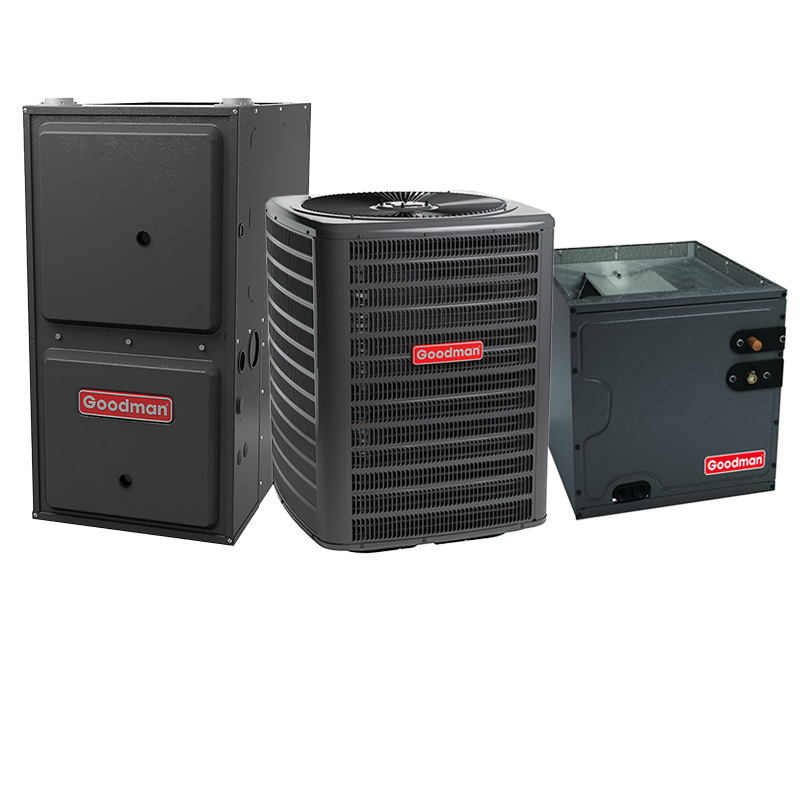
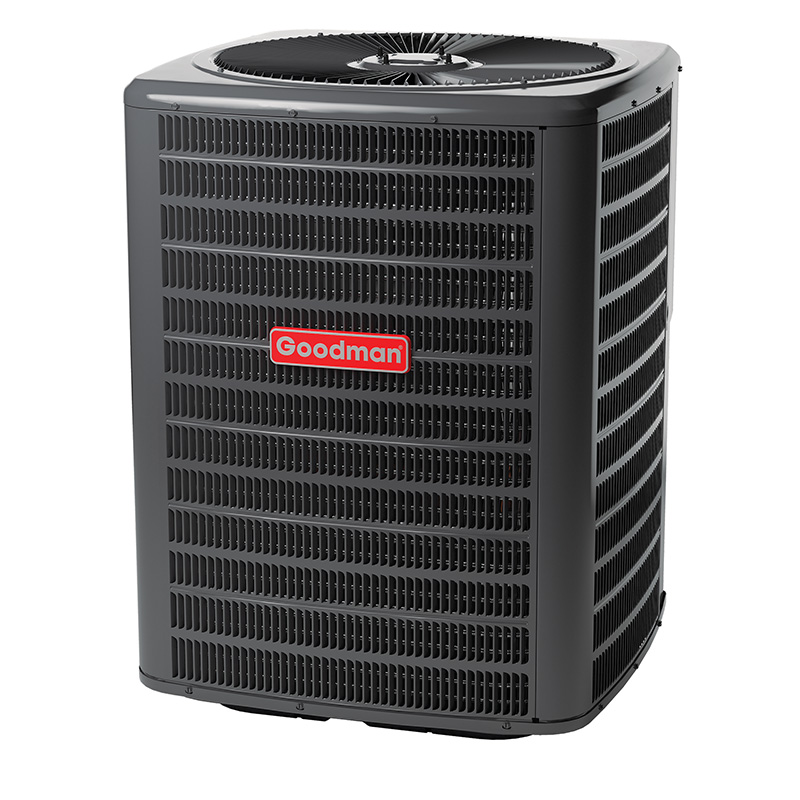
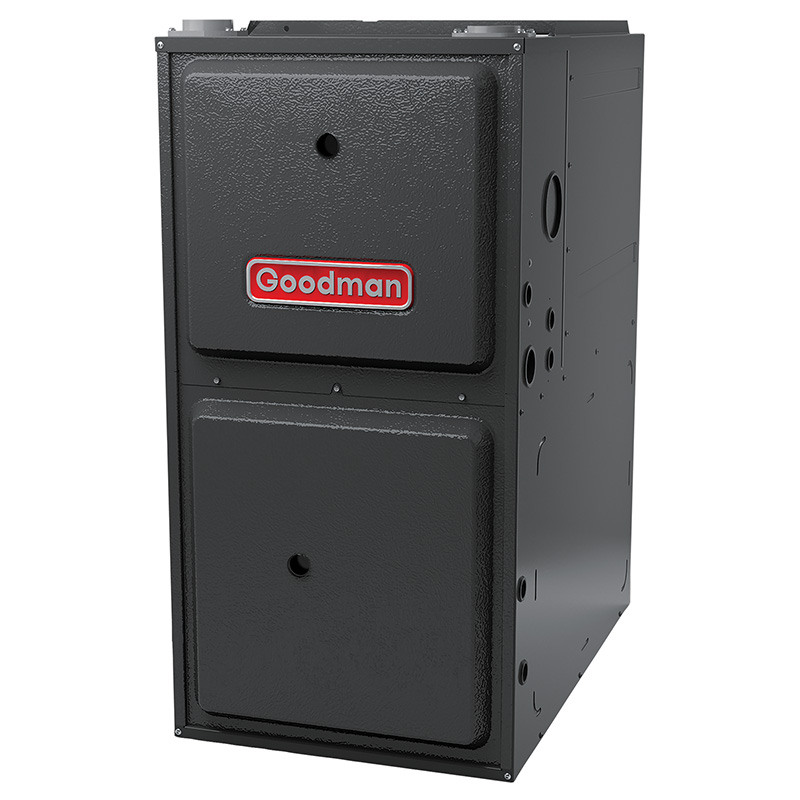
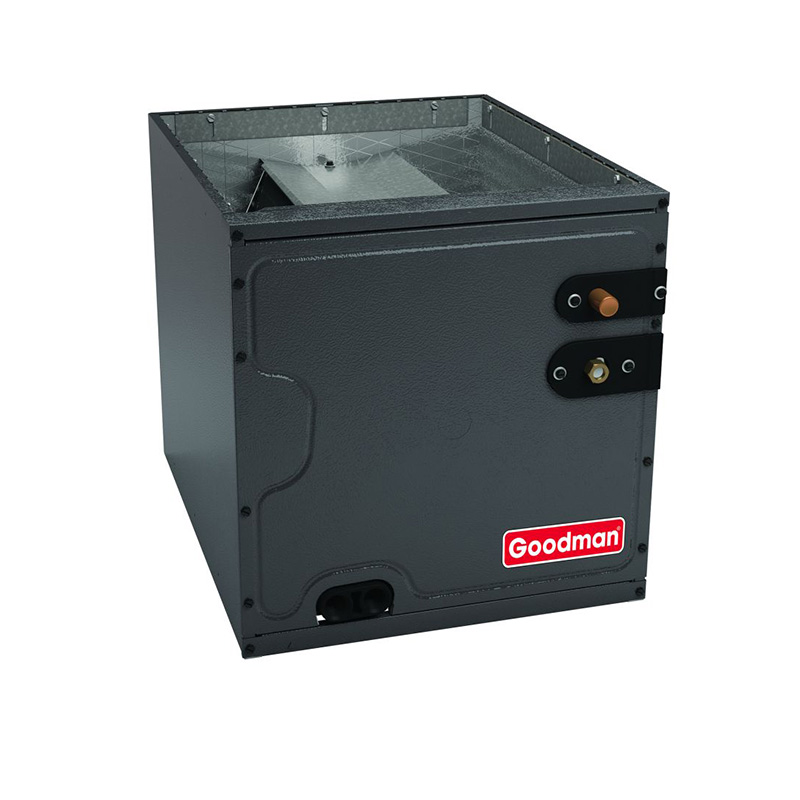
Goodman 2.5 Ton 14.5 SEER2 R32 AC System with 60,000 BTU 96% AFUE Gas Furnace – California & Colorado Ultra Low NOx, Upflow, Multi-Speed ECM
View on AC Direct see your lowest price →Check current price on AC Direct →
Key features
- 14.5 SEER2 cooling efficiency meets current federal minimums with a practical efficiency margin
- 96% AFUE gas furnace recovers nearly all combustion heat, qualifying as high-efficiency
- R-32 refrigerant with lower global warming potential than R-410A
- California and Colorado Ultra Low NOx certified for compliance in emissions-regulated markets
- Upflow configuration for basement, utility closet, or ground-level air handler placement
- Multi-speed ECM blower motor reduces electricity use and improves dehumidification at part load
About this system
The Goodman 2.5-ton 14.5 SEER2 R-32 air conditioning and 96% AFUE gas furnace combination targets homeowners in California and Colorado who need to meet strict Ultra Low NOx emissions requirements without paying premium-brand prices. The 14.5 SEER2 rating clears the federal minimum for most regions with a modest efficiency margin, which keeps operating costs reasonable without the higher upfront cost of a 17 or 18 SEER2 system. The 96% AFUE furnace recovers nearly all combustion energy, making it one of the more efficient gas heat options available and a genuinely strong performer for colder Colorado winters or cool California nights.
The upflow configuration sends heated or cooled air upward into the duct system, which suits the majority of basement and closet installs where the air handler sits below the living space. The multi-speed ECM blower motor runs at lower speeds during moderate conditions, reducing electricity use and improving dehumidification compared to a single-speed motor. R-32 refrigerant carries a lower global warming potential than R-410A and is the direction the industry is heading, so parts and recharge availability should remain strong for the foreseeable future. This system suits a homeowner replacing aging equipment in a 1,200 to 1,800 square foot home who wants a compliant, reasonably efficient system at a below-market price point and understands that install quality will largely determine how long it lasts.
This Goodman combination delivers compliant, adequately efficient HVAC performance at a price meaningfully below Carrier, Trane, and Lennox equivalents, making it a sensible budget replacement for modest homes. The trade-off is a brand history showing higher-than-average repair frequency after year seven and a compressor lifespan that tends to run shorter than premium competitors. Buyers who use a skilled installer and stay current on maintenance can get solid service life, but those expecting set-and-forget reliability may be disappointed.
Overall score is the average of the five ratings above.
What we like
- Priced roughly 15 to 25 percent below comparable Carrier, Trane, and Lennox systems
- 96% AFUE furnace delivers genuinely high heating efficiency for lower monthly gas bills
- Ultra Low NOx certification covers California and Colorado regulatory requirements out of the box
- ECM multi-speed blower cuts blower electricity use and handles humidity better than single-speed alternatives
- R-32 refrigerant positions the system well for long-term parts and service availability
Trade-offs
- Dual-run capacitors are the most commonly reported failure point, typically requiring a 300 to 600 dollar service call within the first decade
- Evaporator coil leaks appear in a meaningful share of owner reports and can be a costly mid-life repair
- Compressor lifespan averages 10 to 14 years, roughly shorter than the 15 to 20 years seen with premium brands
- A minority of owners report refrigerant leaks within the first year, most often tied to install or initial charge quality rather than the equipment itself
What homeowners and pros say about Goodman
Homeowners who share feedback about Goodman equipment tend to split along a familiar line. Those who had a skilled installer set up the system carefully, verified the refrigerant charge, and scheduled annual maintenance often report years of unremarkable, reliable operation. Those who report problems point disproportionately to repair costs climbing after roughly the seven-year mark, which aligns with the ConsumerAffairs score of around 2.5 out of 5, a channel where frustrated owners are more likely to post than satisfied ones. Google dealer reviews land closer to 3.8 out of 5, with affordability cited most often as the reason buyers chose Goodman in the first place. For this specific R-32 Ultra Low NOx system, there is an additional layer of attention required at install because R-32 charging tolerances are tighter than R-410A and any error shows up quickly.
HVAC technicians tend to describe Goodman as serviceable equipment that performs proportionally to how well it was installed and how consistently it is maintained. The dual-run capacitor is the component pros flag most often as a near-certain eventual replacement on Goodman condensing units, a relatively inexpensive repair but one that catches owners off guard if they were not expecting it. Evaporator coil leaks are the repair technicians describe as more disruptive and costly, and they appear in enough owner accounts to be a realistic planning consideration. Compressor longevity averaging 10 to 14 years, versus the 15 to 20 years typically reported for Trane, Carrier, and Lennox, is the long-term cost factor that separates the brands most clearly. For a homeowner who needs Ultra Low NOx compliance and wants to keep upfront costs down, this system represents a reasonable choice with honest trade-offs rather than a problem to avoid.
Sources: ConsumerAffairs Goodman owner reviews, AHRI Directory of Certified Product Performance, U.S. DOE appliance and equipment efficiency standards, Goodman product specification sheets.
What it costs to run
At 14.5 SEER2, cooling this 2.5-ton system for a typical 1200-hour cooling season at the U.S. average electricity rate of $0.17/kWh works out to roughly $422 per year in cooling, about $35 less per year than a minimum-efficiency 13.4 SEER2 unit of the same size. Your real cost depends on your climate and local rate.
Method: (30,000 BTU/hr ÷ 14.5 SEER2) × 1200 hours ÷ 1000 × $0.17/kWh. Rate source: U.S. EIA average; cooling hours: moderate-climate estimate.
How it compares
| Brand | Comparable model | SEER2 | Stage | Price position |
|---|---|---|---|---|
| Goodman | GSX15 / GMVC96 Series (R-32, Ultra Low NOx) | 14.5 | Single-stage / Multi-speed | Value pick |
| Carrier | Comfort 14 (24ACC4) Series | 14.3–15.0 | Single-stage | Typically 15 to 25 percent more than Goodman |
| Trane | XR14 Series | 14.3–15.0 | Single-stage | Typically 15 to 25 percent more than Goodman |
| Lennox | Merit ML14 Series | 14.3–15.2 | Single-stage | Typically 15 to 25 percent more than Goodman |
Competitor rows are comparable single-stage units at similar efficiency; price is relative position, not a quote.
Questions about this system
Does this system actually meet California and Colorado Ultra Low NOx rules without any modifications?
Yes. The furnace is factory-certified to Ultra Low NOx standards as configured, so no additional hardware or field modifications are required to pass inspection in California or Colorado emissions-regulated jurisdictions.
What does R-32 refrigerant mean for me as an owner, and will it be easy to service?
R-32 is a single-component refrigerant with a lower global warming potential than the R-410A it is replacing across the industry. Because it is a pure refrigerant rather than a blend, it can be topped off rather than requiring a full recharge if a small leak is repaired. Availability is growing rapidly as the industry transitions, so service should remain straightforward.
How significant is the ECM blower motor compared to a standard PSC motor?
ECM motors use significantly less electricity at lower speeds and allow the system to run longer cycles at reduced airflow, which improves humidity removal during mild weather. For most homeowners this translates to lower blower electricity costs and better comfort on humid days, not just when the system is running at full capacity.
What are the most likely repair costs I should budget for over the first ten years?
The most commonly documented failure on Goodman equipment is the dual-run capacitor, which typically runs 300 to 600 dollars to diagnose and replace. Evaporator coil leaks are the next most frequently reported issue and carry a higher repair cost. Keeping a service contract or scheduling annual tune-ups is the most practical way to catch capacitor wear before it causes a full system shutdown.
My house is about 1,500 square feet. Is 2.5 tons actually the right size, or should I go larger?
Tonnage should always be confirmed with a Manual J load calculation performed by your installer, not estimated by square footage alone, because ceiling height, insulation, window area, local climate, and orientation all affect the result. A 2.5-ton system is a common fit for roughly 1,200 to 1,800 square feet in moderate climates, but oversizing causes short cycling, poor dehumidification, and faster component wear, so insist on the calculation before the equipment is ordered.
Specifications
| Cooling capacity | 2.5 Ton |
| Efficiency | 14.5 SEER2 |
| Furnace output | 60,000 BTU |
| Furnace efficiency | 96% AFUE |
| Configuration | Upflow |
| Refrigerant | R-32 |