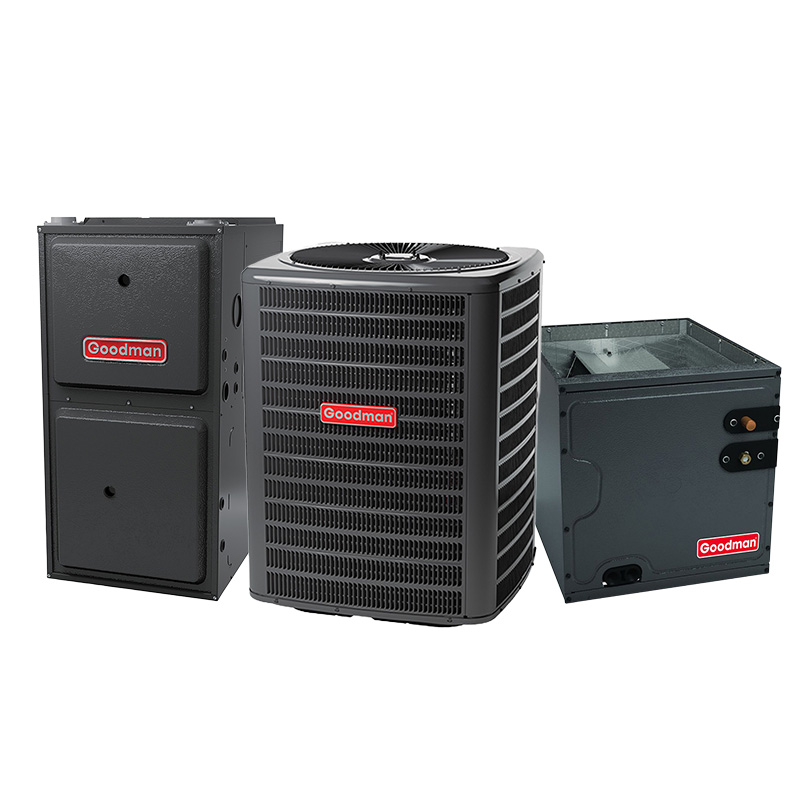
Goodman 2.5 Ton 14.5 SEER2 AC & Gas Furnace System – Two Stage Variable-Speed, 40000 BTU Gas Furnace, 96% AFUE, Upflow, R32
View on AC Direct see your lowest price →Check current price on AC Direct →
Key features
- 2.5-ton two-stage compressor for quieter operation and better humidity control on mild days
- 14.5 SEER2 seasonal efficiency rating, meeting current federal standards with room above the minimum
- 96% AFUE condensing gas furnace extracts heat from exhaust gases for lower fuel bills
- 40,000 BTU heating output sized for smaller to mid-size homes in moderate climates
- Upflow cabinet configuration for homes with overhead duct systems
- R-32 refrigerant with lower global-warming potential than legacy R-410A systems
About this system
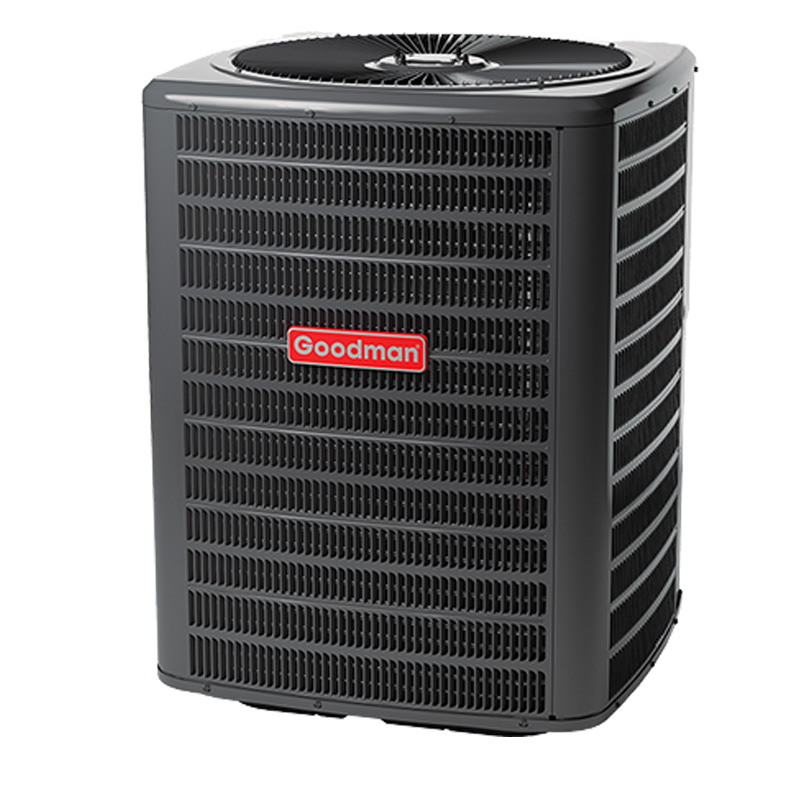
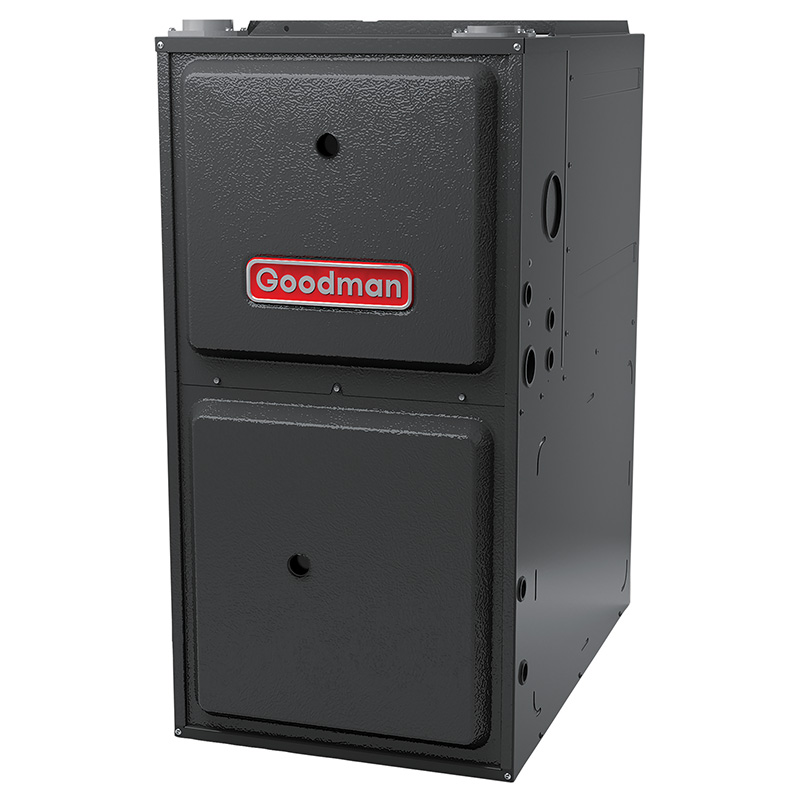
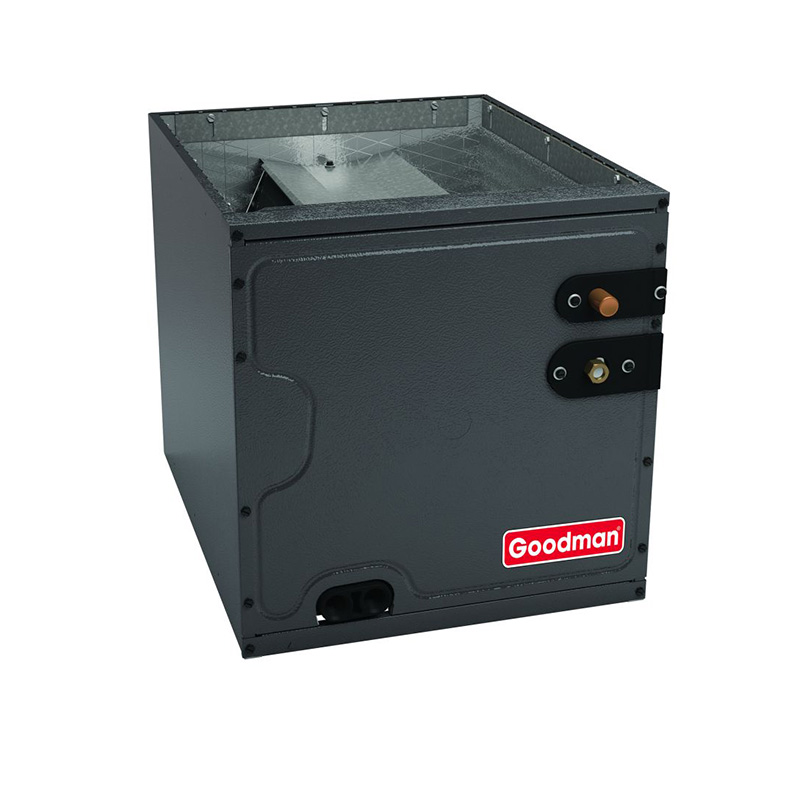
The Goodman GLXS4BA3010 pairs a 2.5-ton, 14.5 SEER2 two-stage air conditioner with a 40,000 BTU upflow gas furnace rated at 96% AFUE. Two-stage cooling means the compressor runs at a lower capacity during mild weather, which reduces short-cycling, keeps indoor humidity more stable, and puts less wear on the compressor than a single-stage unit would. The 96% AFUE furnace is a condensing design, meaning it extracts heat from combustion gases that a standard 80% furnace would exhaust, converting nearly all of the fuel you burn into usable heat. Together, these components sit solidly in the mid-efficiency tier, above the federal minimum but well below inverter-driven premium systems.
This configuration is built for upflow installation, meaning supply air exits the top of the furnace cabinet, which suits most homes where ductwork runs overhead through an attic or second floor. The system uses R-32 refrigerant, a lower global-warming-potential refrigerant compared to the R-410A that dominated the market for the past two decades. R-32 is mildly flammable (A2L classification), so not every technician is yet certified to handle it; confirming your installer is A2L-trained before booking is a practical step. A 2.5-ton capacity is well-matched to roughly 1,200 to 1,600 square feet in a moderately insulated home, though proper Manual J load calculation by your installer matters far more than any rule of thumb.
This system suits cost-conscious homeowners who want a meaningful efficiency upgrade over base-tier equipment, are replacing a unit in a well-supported market where Goodman dealers are plentiful, and understand that the long-term performance story depends heavily on installation quality and a willingness to budget for component-level maintenance after the seventh year or so.
The GLXS4BA3010 delivers a respectable combination of two-stage cooling and high-efficiency heating at a price point that typically undercuts comparable Carrier, Trane, and Lennox systems by 15 to 25 percent. It is a solid choice when installed correctly by an experienced technician, but Goodman's documented history of capacitor failures, evaporator coil leaks, and compressor lifespans that trail premium brands means the upfront savings can narrow over a 12-to-15-year ownership window. Budget for an annual maintenance plan and consider an extended labor warranty to reduce exposure after year seven.
Overall score is the average of the five ratings above.
What we like
- Two-stage operation improves humidity management and reduces short-cycling compared to single-stage systems at this price
- 96% AFUE is a genuine high-efficiency rating that cuts heating fuel costs relative to standard 80% furnaces
- Typically priced 15 to 25 percent below equivalent Trane, Carrier, and Lennox configurations, lowering the upfront barrier
- R-32 refrigerant has a lower environmental impact than R-410A and is a forward-looking choice as regulations tighten
- Wide Goodman dealer network means parts and service technicians are generally accessible in most U.S. markets
Trade-offs
- Dual-run capacitors are the most commonly reported failure point, typically needed around or after year seven, adding 300 to 600 dollars per occurrence
- Evaporator coil leaks appear in a notable share of owner reports, a failure that can be expensive and disruptive to address
- Compressor lifespan averages 10 to 14 years versus 15 to 20 years for premium-brand compressors, affecting long-term cost of ownership
- A minority of owners report refrigerant leaks within the first year, most traced to install or charge issues, underscoring how much performance depends on the installing contractor
What homeowners and pros say about Goodman
On review platforms, Goodman owners tend to split into two camps. The larger group on Google dealer pages, where the brand averages around 3.8 out of 5, emphasizes how much money they saved at purchase and notes that their units have run without incident for several years, particularly when installed by a contractor who takes the setup seriously. The smaller but louder group on ConsumerAffairs, where the score sits around 2.5 out of 5, tends to show up around the seven-year mark with stories about repair bills that started to erode the original savings. The complaints there follow a pattern that lines up with Goodman’s documented failure modes: dual-run capacitor replacements that cost 300 to 600 dollars per visit, evaporator coil leaks that are more disruptive and expensive to address, and compressors that give out earlier than owners expected based on premium-brand experience.
HVAC technicians who work on Goodman equipment frequently make the same observation: the brand is not a poor product, but it is a product that rewards good installation and punishes a sloppy one more than a Trane or Carrier might. They point to refrigerant leaks in the first year as almost always traceable to how the unit was charged and connected rather than a manufacturing defect, and they tend to recommend Goodman to customers who have a reliable local dealer rather than to those planning to use the lowest bidder for installation. For this specific system, the two-stage compressor and the 96% AFUE furnace represent genuine value at the price point, but technicians are consistent about one piece of advice: budget for a labor warranty extension after the equipment warranty period ends, because the parts coverage alone will not protect you from what typically happens between years eight and twelve.
Sources: ConsumerAffairs Goodman owner reviews, AHRI Directory of Certified Product Performance, U.S. DOE appliance and equipment efficiency standards, Goodman product specification sheets.
What it costs to run
At 14.5 SEER2, cooling this 2.5-ton system for a typical 1200-hour cooling season at the U.S. average electricity rate of $0.17/kWh works out to roughly $422 per year in cooling, about $35 less per year than a minimum-efficiency 13.4 SEER2 unit of the same size. Your real cost depends on your climate and local rate.
Method: (30,000 BTU/hr ÷ 14.5 SEER2) × 1200 hours ÷ 1000 × $0.17/kWh. Rate source: U.S. EIA average; cooling hours: moderate-climate estimate.
How it compares
| Brand | Comparable model | SEER2 | Stage | Price position |
|---|---|---|---|---|
| Goodman | GLXS4BA3010 | 14.5 | Two-stage | Value pick |
| Carrier | Comfort 14 Series (24ACC4) | 14.3 | Single-stage | Typically 15 to 25 percent more than this Goodman system |
| Trane | XR14 Series | 14.3 | Single-stage | Typically 15 to 25 percent more than this Goodman system |
| Lennox | Merit 14 Series (ML14XC1) | 14.3 | Single-stage | Typically 15 to 25 percent more than this Goodman system |
Competitor rows are comparable single-stage units at similar efficiency; price is relative position, not a quote.
Questions about this system
Is R-32 refrigerant safe, and will my local HVAC technician be able to work on it?
R-32 is classified A2L, meaning it is mildly flammable under specific conditions but is widely used in residential equipment globally without incident. The important practical point is that not every technician is yet certified or equipped to handle A2L refrigerants, so you should confirm your installer and any future service provider holds the appropriate certification before committing to this system.
What does two-stage cooling actually do for a house my size?
On most days the compressor runs at its lower stage, which moves less air for longer cycles, pulling more moisture out of the air before it enters your living space and keeping temperatures more even throughout the home. The high stage kicks in only during peak heat, so the compressor experiences less start-stop stress than a single-stage unit would accumulate over the same period.
Goodman has mixed reviews online. How worried should I be about reliability?
Goodman scores around 2.5 out of 5 on ConsumerAffairs, a channel that skews toward complaints, and roughly 3.8 out of 5 on Google dealer reviews where affordability is the most common positive. The documented failure modes are specific: dual-run capacitors (a relatively inexpensive fix in the 300 to 600 dollar range), evaporator coil leaks, and compressor lifespans that average shorter than premium brands. A strong install, annual tune-ups, and a labor warranty extension after year five are the most practical ways to manage those risks.
The furnace is rated 40,000 BTU. Is that enough for my home?
BTU sizing depends on your home's square footage, insulation levels, window area, local climate, and duct condition, so a published BTU number alone cannot answer the question. Your installer should perform a Manual J heat load calculation; installing a furnace that is oversized causes short-cycling and wasted fuel just as much as one that is undersized struggles on the coldest days.
What warranty comes with this system and what does it actually cover?
Goodman typically provides a 10-year parts warranty on registered units, covering components like the compressor, coil, and heat exchanger, but it does not cover labor costs, which can represent the majority of a repair bill. Reading the registration requirements carefully and asking your dealer about an extended labor warranty is worth the time, particularly given the documented component failure patterns in years seven and beyond.
Specifications
| Cooling capacity | 2.5 Ton |
| Efficiency | 14.5 SEER2 |
| Furnace output | 40000 BTU |
| Furnace efficiency | 96% AFUE |
| Configuration | Upflow |
| Refrigerant | R-32 |
| Model | GLXS4BA3010 |