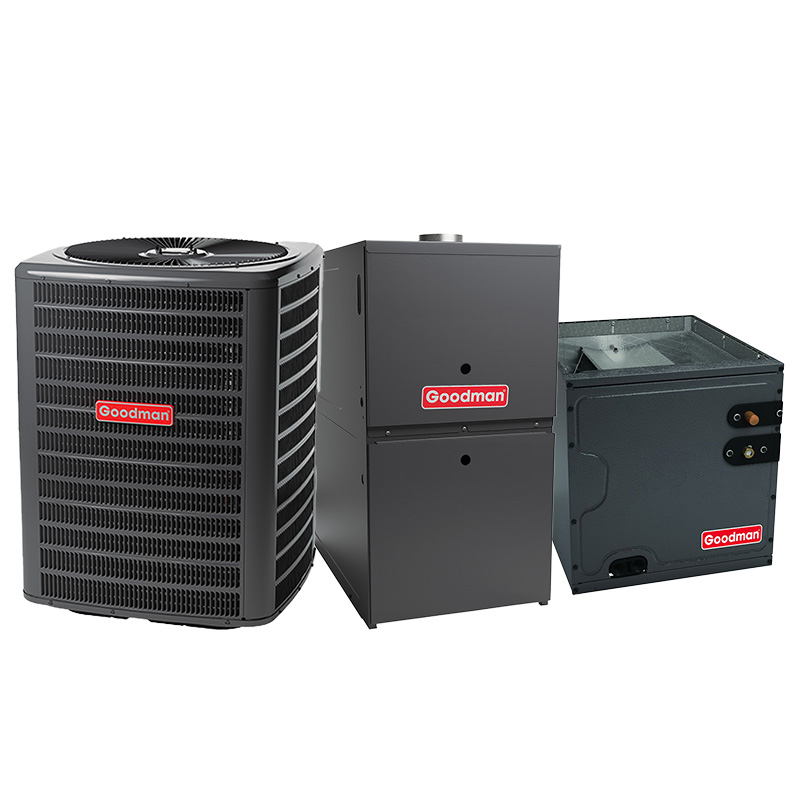
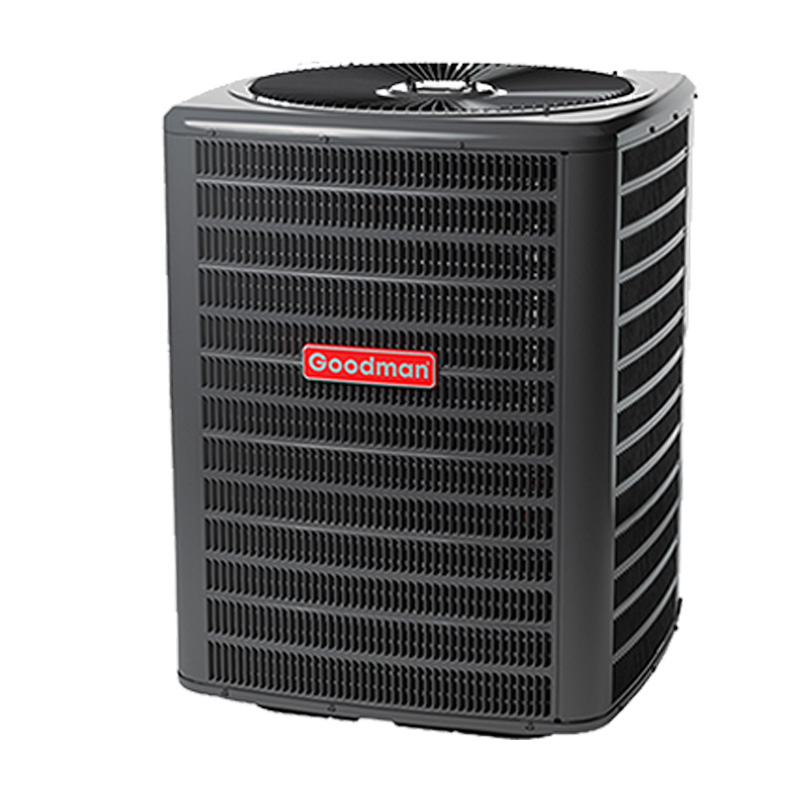
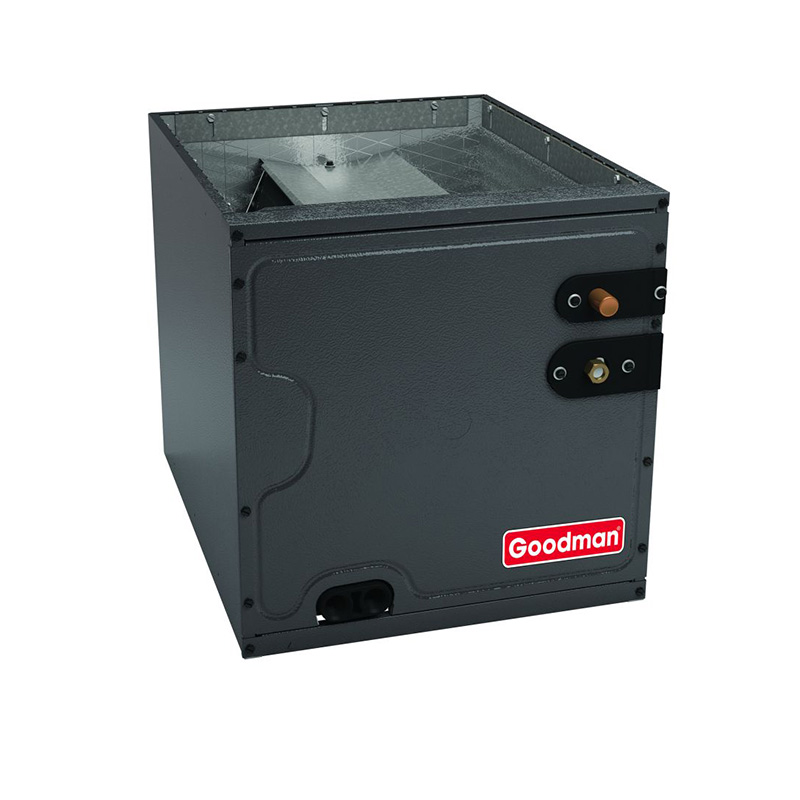
Goodman 2.5 Ton 14.5 SEER2 AC & Gas Furnace System – Two Stage Variable-Speed, 80000 BTU Gas Furnace, 80% AFUE, Upflow, R32
View on AC Direct see your lowest price →Check current price on AC Direct →
Key features
- 2.5-ton two-stage compressor for better part-load efficiency and humidity control vs. single-stage
- 14.5 SEER2 efficiency rating meets 2023 federal minimum standards for most U.S. regions
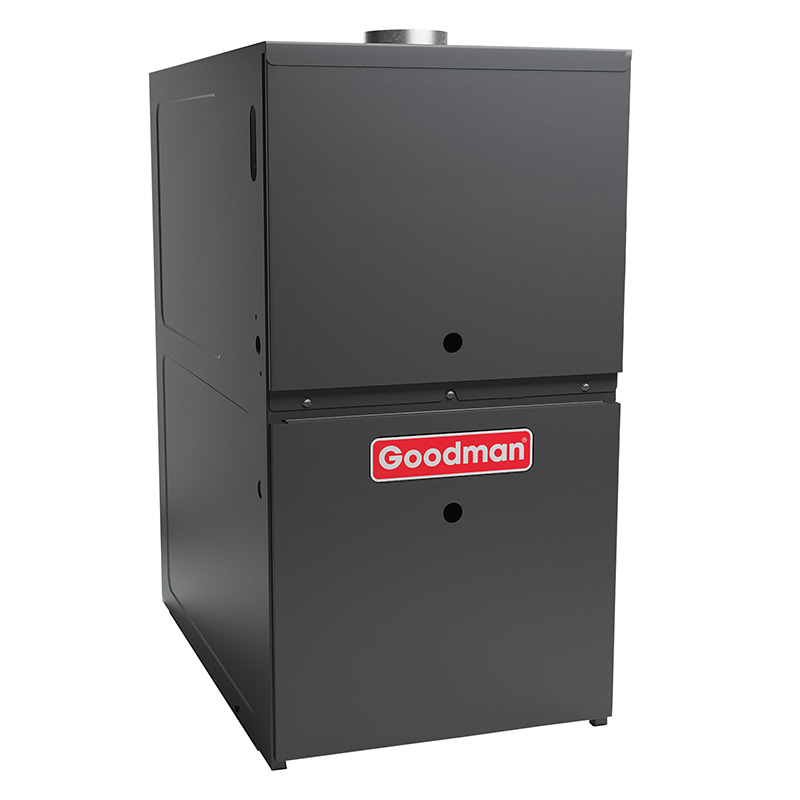
- 80,000 BTU gas furnace at 80% AFUE in upflow configuration for standard residential duct layouts
- Variable-speed ECM blower motor delivers quieter operation and more consistent airflow
- R-32 refrigerant with lower global warming potential and smaller required charge than R-410A
- Two-stage gas valve on the furnace matches heat output to demand, reducing temperature swings
About this system
The Goodman 2.5-ton 14.5 SEER2 split system pairs a two-stage, variable-speed air conditioner with an 80,000 BTU upflow gas furnace rated at 80% AFUE. The two-stage compressor runs at a lower capacity on mild days, reducing short-cycling, cutting humidity better than a single-stage unit, and trimming energy use during the hours that make up most of a cooling season. Variable-speed blower motor control on the furnace side means quieter, more even air distribution and better dehumidification on low-stage cooling runs. At 14.5 SEER2, this system meets the 2023 federal minimum efficiency standards for most U.S. climate regions and sits just above the regulatory floor, so it is not a high-efficiency purchase but it is a compliant, capable one.
R-32 refrigerant is a meaningful upgrade over older R-410A systems. It has a lower global warming potential, requires a smaller refrigerant charge to do the same work, and is increasingly the industry direction going forward. Upflow configuration means the furnace discharges warm air upward, the most common arrangement in homes with ductwork in the attic or ceiling. The 80% AFUE rating means one-fifth of combustion energy exits as exhaust, which is standard for a non-condensing furnace; homeowners in cold climates who run their heat heavily for six or more months per year should weigh whether a 96% AFUE system would recover the price difference through fuel savings. For moderate heating climates, 80% AFUE is often the practical choice.
This system is a reasonable fit for a 1,200 to 1,800 square-foot home in a mixed or warm climate where cooling is the primary operating season and the budget favors lower upfront cost. It will not deliver the compressor longevity or the quietest operation of a premium brand, and its long-term cost depends significantly on installation quality and the maintenance discipline of whoever owns it.
This Goodman system gives budget-focused buyers a two-stage, variable-speed feature set at a price point typically 15 to 25 percent below comparable Carrier, Trane, or Lennox equipment. The trade-off is a compressor lifespan that tends to average 10 to 14 years versus 15 to 20 for premium brands, and a reliability record that leans harder on installation quality than most competing systems. It earns its place when the install is done carefully and maintenance stays current, but it is not the lowest-risk choice for buyers who want to minimize service calls over a 15-plus year horizon.
Overall score is the average of the five ratings above.
What we like
- Two-stage cooling and variable-speed blower improve comfort and humidity control over entry-level single-stage systems
- Priced 15 to 25 percent below comparable Carrier, Trane, and Lennox equipment at similar efficiency
- R-32 refrigerant is future-oriented, with lower environmental impact and a smaller required charge
- 80,000 BTU output and upflow config covers the most common residential installation scenario
- Parts, including the frequently replaced dual-run capacitor, are widely available and inexpensive to service
Trade-offs
- Compressor life averages 10 to 14 years, meaningfully shorter than the 15 to 20 years typical of premium-brand compressors
- Evaporator coil leaks appear in a notable share of owner reports and can be costly to address out of warranty
- 80% AFUE furnace leaves one-fifth of fuel energy as exhaust heat; high-heat-load climates will see real long-term fuel cost differences versus 95 to 96% AFUE alternatives
- A minority of owners have reported refrigerant leaks within the first year, typically linked to charge or install issues rather than factory defects, meaning installer selection is critical
What homeowners and pros say about Goodman
Owners and HVAC professionals who comment on Goodman equipment tend to land in two camps, and both are worth understanding. On Google dealer reviews, where the aggregate score for Goodman dealers sits around 3.8 out of 5 across hundreds of location-level reviews, the most repeated praise is straightforward: the price is right, and the system works as expected when the install is clean. Technicians in those reviews frequently note that Goodman is a workable product when a homeowner cannot stretch the budget to a premium brand, and that a careful, thorough installation makes a bigger difference to long-term performance than the brand name on the cabinet. The dual-run capacitor is widely acknowledged as the weak link, a part that fails on many brands but seems to come up more often on Goodman units, though the repair is inexpensive and quick when caught early.
The harder feedback lives on ConsumerAffairs, where Goodman scores roughly 2.5 out of 5, a figure skewed by the fact that satisfied owners rarely write reviews on complaint-oriented platforms. The recurring pattern in those reviews is repair costs climbing after roughly year seven, with evaporator coil leaks and compressor wear cited most often. Compressor lifespan on Goodman units tends to average 10 to 14 years, which trails the 15 to 20 years that owners of premium-brand systems more commonly report. A smaller number of owners have encountered refrigerant leaks within the first year, something that installation and commissioning records suggest is more often a charge or connection issue than a factory defect. The honest summary from the field is that Goodman delivers real value when installed correctly and maintained on schedule, and it carries more financial exposure over a long ownership horizon than a Carrier, Trane, or Lennox system bought at a higher initial price.
Sources: ConsumerAffairs Goodman owner reviews, AHRI Directory of Certified Product Performance, U.S. DOE appliance and equipment efficiency standards, Goodman product specification sheets.
What it costs to run
At 14.5 SEER2, cooling this 2.5-ton system for a typical 1200-hour cooling season at the U.S. average electricity rate of $0.17/kWh works out to roughly $422 per year in cooling, about $35 less per year than a minimum-efficiency 13.4 SEER2 unit of the same size. Your real cost depends on your climate and local rate.
Method: (30,000 BTU/hr ÷ 14.5 SEER2) × 1200 hours ÷ 1000 × $0.17/kWh. Rate source: U.S. EIA average; cooling hours: moderate-climate estimate.
How it compares
| Brand | Comparable model | SEER2 | Stage | Price position |
|---|---|---|---|---|
| Goodman | GSZ2 / GMVC8 Series (this system) | 14.5 | two-stage | Value pick |
| Carrier | Comfort 14 Series (24ACC4) | 14.3 to 15.2 | single-stage | Typically 15 to 25 percent more than this Goodman system |
| Trane | XR14c Series | 14.3 to 15.0 | single-stage | Typically 15 to 25 percent more than this Goodman system |
| Lennox | Merit 14 Series (ML14XC1) | 14.3 to 15.0 | single-stage | Typically 15 to 25 percent more than this Goodman system |
Competitor rows are comparable single-stage units at similar efficiency; price is relative position, not a quote.
Questions about this system
What does the two-stage compressor actually do for me day to day?
On most summer days the compressor runs at its lower stage, which means longer, quieter cycles that pull more humidity out of the air before shutting off. The high stage kicks in only during peak heat. This generally means a more comfortable, less clammy indoor environment compared to a single-stage unit that runs full blast or not at all.
Is 80% AFUE good enough, or should I be looking at a 96% furnace?
For homes in mild to moderate heating climates where the furnace runs fewer than four months per year, 80% AFUE is usually cost-effective because the higher upfront cost of a 96% unit rarely pays back through fuel savings within the system's life. In cold climates with long heating seasons, a 96% condensing furnace can recover the price difference in five to ten years and is worth comparing seriously.
Why does R-32 matter, and is it harder for technicians to service?
R-32 has about one-third the global warming potential of R-410A and requires a smaller charge to do the same refrigeration work, which reduces leak-related environmental impact. Most certified HVAC technicians can work with R-32, but you should confirm your service provider has equipment rated for it before scheduling maintenance or a repair.
What is the most likely repair I will face, and what will it cost?
The dual-run capacitor is the single most commonly reported failure point on Goodman AC units. It is a straightforward, low-cost repair that typically runs between 300 and 600 dollars including labor. Evaporator coil leaks and, in older units, compressor failures are the more expensive issues owners report, underscoring the value of keeping the system under a service plan.
Does Goodman's warranty require professional registration, and what does it actually cover?
Goodman's full parts warranty (typically 10 years on covered components including the compressor and heat exchanger when registered within 60 days of installation) requires registration by a licensed HVAC contractor. Without registration the warranty period is shorter, so confirm your installer completes that step. Labor costs are not covered under the manufacturer warranty, so a separate labor or extended service agreement is worth considering.
Specifications
| Cooling capacity | 2.5 Ton |
| Efficiency | 14.5 SEER2 |
| Furnace output | 80000 BTU |
| Furnace efficiency | 80% AFUE |
| Configuration | Upflow |
| Refrigerant | R-32 |